Who actually pays for a credit hire car in NSW?

If you were not at fault, the at-fault driver's insurer pays for your credit hire car, not your own insurer and not you. The hire company carries the risk of recovering that money, and the agreement you sign is what makes that arrangement work.
That is the whole answer in two sentences. Everything else on this page is the detail behind it: how the obligation arises, what the hire company does while you are driving, what you are actually signing, and what happens when an insurer decides to argue about it.
Key takeaways
- The at-fault driver's insurer is the party that pays for a not-at-fault credit hire car, not your own insurer.
- The hire company carries the commercial risk of recovering the money, which is why you sign a credit agreement rather than paying upfront.
- The obligation to pay arises from the at-fault driver's negligence and existed from the moment of impact, not from anything the hire company did.
- You are not asked to pay the daily rate, a bond or a deposit out of your own pocket on a properly run not-at-fault credit hire.
- If the claim fails because of something you did or failed to do, liability can come back to you, so read the agreement before signing.
- The short answer and why it is not your insurer
- How the at-fault insurer's obligation arises
- What the hire company actually does behind the scenes
- Why you sign an agreement and what it means
- What happens if the insurer refuses to pay
- The difference between credit hire and a normal rental
- What you are never asked to pay upfront
- Where the risk actually sits, and why that matters to you
- When to talk to a solicitor about a disputed hire
The short answer and why it is not your insurer
Your own insurer has no obligation to pay for a hire car when the crash was not your fault. Your policy covers your car and your liability. It does not cover the other driver's liability to you, and it does not exist to fund a replacement vehicle while someone else's insured is owing you one.
So if you ring your insurer the morning after a rear-end on Military Road at Neutral Bay and ask for a hire car, the honest answer is usually that they will not provide one, or will offer something far below what you were driving. That is not them being difficult. It is simply outside what you bought.
The obligation sits with the at-fault driver, and therefore with the insurer standing behind them. If someone runs a red turning right from Kent Street into the Western Distributor and takes out your front quarter, that driver owes you the reasonable cost of putting you back on the road in a comparable car while yours is repaired.
Credit hire is the mechanism that lets you access that entitlement now rather than after a settlement. You get the car today. The hire company invoices the at-fault insurer later. If the recovery fails, that is the hire company's commercial problem, not yours, provided you have dealt with them honestly and complied with the agreement.
This is why the question of who pays is really two questions. Who is legally liable to pay is the at-fault driver and their insurer. Who carries the risk of actually collecting it is the hire company. Those are different things, and confusing them is where most of the anxiety comes from.
How the at-fault insurer's obligation arises
The obligation is not created by the hire company and it is not created by your agreement. It arises from the at-fault driver's negligence, and it existed from the moment of impact.
In NSW, the leading authority on replacement vehicle costs is Arsalan v Rixon, decided by the High Court in 2021. The practical effect is that a not-at-fault driver can recover the reasonable cost of hiring a replacement vehicle, and that cost is not automatically limited to what the car would have earned or saved you. The loss is the loss of use of your own car, and a replacement of comparable standard is a legitimate way to measure it.
What follows from that:
- The claim belongs to you as the innocent party, not to your insurer.
- It covers a reasonable period, being the time your car is genuinely off the road or being assessed.
- It covers a reasonable vehicle, meaning something broadly comparable to what you were driving.
- It is a debt owed by the at-fault driver, and their insurer handles it because that is what the policy is for.
Reasonable is doing a lot of work in that list. A fortnight in a comparable SUV while your car is stripped and painted at a repairer in Alexandria is reasonable. Six months in the same car while you negotiate a total loss with no urgency is where insurers start pushing back, and where a hire company that does not manage its files properly gets itself into trouble.
Insurers know this framework well. Most of the argument in practice is not about whether they owe something. It is about the rate, the duration and the standard of vehicle. That is exactly the ground on which a well-run credit hire company earns its margin.
Age limits are set per car. Drivers under 25 can hire most cars with Young Driver Cover; the exact terms are shown before you pay.
What the hire company actually does behind the scenes
From your seat, it looks like someone handed you keys. Behind that there is a fair amount of work you never see.
The hire company takes your account of the accident, confirms the other party's details and insurer, and makes an assessment of liability. It checks the vehicle you were driving so the replacement is genuinely like-for-like rather than whatever happens to be free. It lodges notice of the claim with the at-fault insurer, often within a day or two, and it keeps a file that will stand up if the matter ends in a courtroom.
It also carries real financial exposure. It is paying for the car, the registration, the insurance, the servicing and the depreciation while you drive it, and it will not see a dollar until the at-fault insurer pays. Multiply that across a fleet and you can see why the model only works for operators who are disciplined about liability assessment and documentation.
When the recovery is straightforward, the insurer pays the invoice and nobody bothers you. When it is not, the hire company is the one corresponding with the insurer, instructing solicitors if needed, and absorbing the delay. Your involvement is generally limited to providing information promptly and not doing anything that undermines the claim.
If you want to see what the replacement actually looks like before you commit, the fleet is browsable at accident replacement cars in Sydney. If your car is in a repairer in Artarmon or Botany and you need something comparable by tomorrow morning, that is the practical starting point.

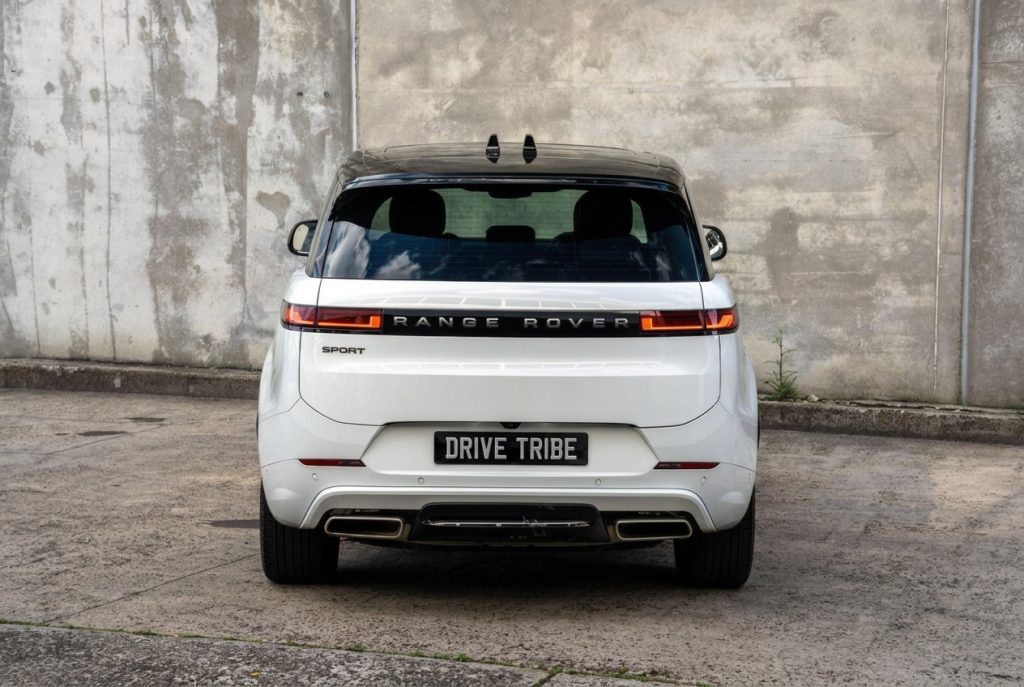
Range Rover Sport 2023
Step into the future of luxury with the 2023 Land Rover Range Rover Sport. Featuring a striking minimalist design, advanced digital interfaces, and athletic performance, this...
Not at fault? Start your claim
A like-for-like replacement car while yours is repaired. No cost to you when the other driver is at fault.
Start my claimWhy you sign an agreement and what it means
The agreement exists because the hire company is extending credit to you. It is putting you in a car today on the basis that someone else will pay for it later. That is a credit arrangement whether or not anyone uses the phrase.
What you are signing, in substance:
- You confirm the accident was not your fault and that the information you have given is true.
- You assign or agree to assist with the recovery of the hire cost from the at-fault party.
- You agree to co-operate with the claim, which means answering calls, providing documents and turning up if it ever goes further.
- You accept that if the claim fails because of something you did or failed to do, liability can come back to you.
That last point is the one worth reading twice. It is not a trap, it is the logical consequence of credit. If you tell the hire company the other driver admitted fault and then later tell the insurer something different, or you refuse to provide a statement, you have broken the arrangement.
What you are not signing is a blank cheque. A properly drafted agreement sets out the daily rate, the maximum hire period, and what happens at the end. You should be able to read the rate on the page before you sign anything, and you should be able to ask what the total exposure looks like if the claim runs long.
If you have been handed paperwork at the side of Parramatta Road and want to understand it before signing, there is a plain-English walkthrough at what you sign in credit hire paperwork. Ten minutes there is worth more than an hour of hindsight.
What happens if the insurer refuses to pay
Refusal is common enough that it should not surprise anyone, and it comes in a few recognisable shapes.
| What the insurer says | What it usually means |
|---|---|
| We deny liability entirely | They are backing their driver's version of events over yours |
| We will not pay that rate | They accept liability but dispute the daily cost or the vehicle standard |
| We will only pay for part of the period | They argue your car could have been repaired sooner |
| We have not received the claim | Administrative delay, or a genuine notice problem |
None of these means you lose the car immediately. The hire company generally keeps the vehicle with you while the dispute is worked through, because pulling it away weakens the claim and leaves you stranded. What changes is that the file moves from routine recovery into negotiation or litigation.
Where liability itself is contested, the outcome often turns on evidence gathered in the first hours: the police report if one was made, dashcam footage, photographs of the impact points, witness details. That is why the first 24 hours matter so much more than people expect. If you have not already, work through the first 24 hours after a not-at-fault crash while the details are fresh.
If the insurer disputes the rate rather than liability, the argument is usually about comparability. A replacement that matches the class, drivetrain and general standing of your own car is defensible. A replacement that is clearly a step up is not, and it hands the insurer an easy win.
The difference between credit hire and a normal rental
They look identical from the driver's seat. A car, keys, a return date. The differences are all underneath.
With an ordinary rental, you pay at the counter or on your card, you choose the car, and the transaction ends when you hand back the keys. Nobody cares why you needed it. With credit hire, the payment comes from a third party, the vehicle is chosen to match what you were driving rather than what is cheapest, and the transaction does not end until the claim is resolved. That can be months after the car goes back.
Other practical differences:
- The hire period is driven by the repair, not by your itinerary.
- You may be asked to provide documents you would never show a rental desk, including your licence, the other driver's details and sometimes a statement.
- The daily rate is set with recovery in mind and is often higher than a walk-up rate, which is precisely what insurers challenge.
- Extensions are handled by the hire company in contact with the repairer and the insurer, not by you rebooking online.
There is also a genuine alternative worth understanding: claiming on your own policy and letting your insurer pursue the at-fault party. That can be simpler, but it usually means paying your excess up front and waiting to get it back, and it may affect your premium at renewal. The trade-offs are set out at credit hire versus claiming on your own insurance.
Neither route is wrong. They suit different people. What matters is that you choose deliberately rather than by default.
What you are never asked to pay upfront
This is the part people find hardest to believe, so it is worth being blunt.
On a properly run not-at-fault credit hire, you do not pay the daily rate. You do not pay a bond or an excess out of your own pocket at the start. You do not pay a deposit, and you do not hand over a card to be charged if the claim fails. The commercial risk sits with the hire company.
What you may be asked for is identification and a licence, and you may be asked to sign an authority allowing the hire company to deal with the insurer on your behalf. That is administration, not payment.
Two honest caveats. First, if you cause damage to the replacement car through your own driving, that is a different matter and normal rental rules apply. Second, if the claim fails because of something you did, the agreement you signed may leave you exposed. Both are reasons to read the paperwork, not reasons to avoid the arrangement.
If you are booking directly rather than through a credit hire claim, the ordinary rental terms apply instead, including the bond and any fees. In that case the rate, the bond and every fee are shown on the car's page before payment. Paying by card carries a small surcharge, while bank transfer and cash on the rental do not. Cars can be booked from a single day, and the minimum driver age is 20 on most cars and 25 or 30 on some.
Bookings made through this site are fulfilled by Drive Tribe (drivetribe.com.au), the trading name of Australian Business Holdings Pty Ltd, and this site is part of that group.

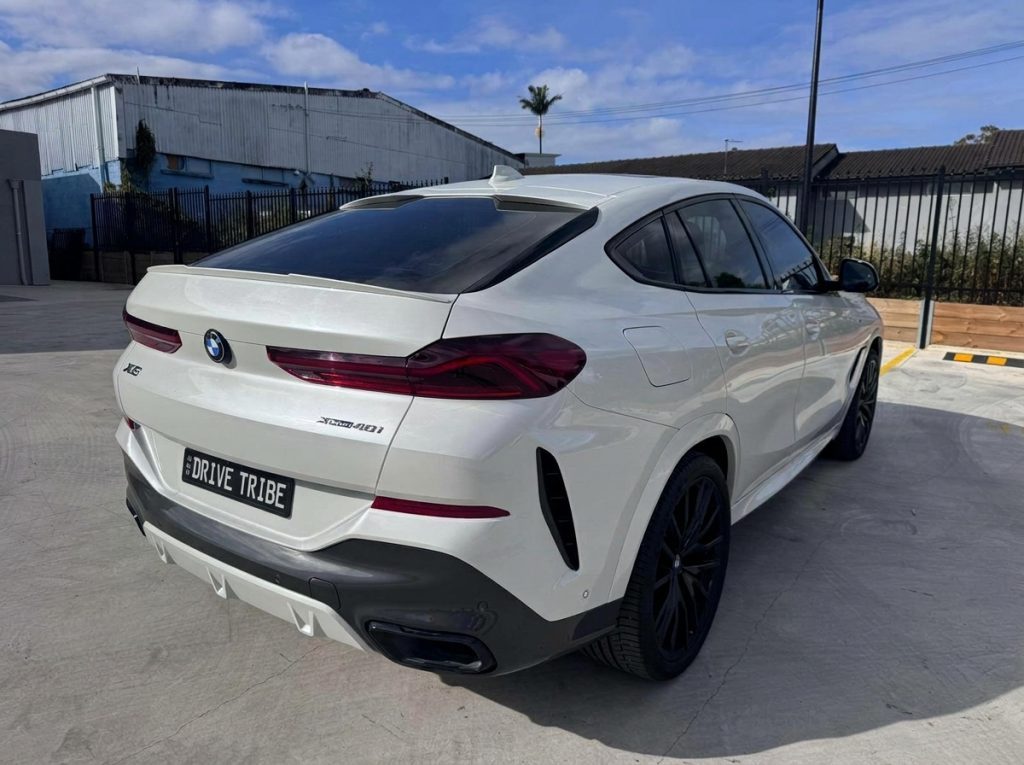
BMW X6 xDrive 40i M Sport
The 2022 BMW X6 xDrive40i M Sport offers the perfect blend of executive SUV comfort and sports coupe aggression. Travel across Sydney in absolute luxury and commanding style,...
Where the risk actually sits, and why that matters to you
Understanding the risk allocation changes how you behave, and it changes what you should ask before signing.
The hire company is underwriting your claim. It is making a judgement about liability, about the repair timeline, about the at-fault insurer's likely conduct and about the rate a court would accept. If that judgement is wrong, the loss lands on the hire company. That is why a good operator will sometimes decline a hire, or cap the period, or push back on a vehicle that does not match. It is not being unhelpful. It is pricing risk.
From your side, the things that protect you are simple:
- Tell the truth about what happened, including anything that might look like contributory negligence.
- Give the hire company the other driver's name, insurer, policy number and registration as soon as you have them.
- Respond to requests for information within a day or two, not a fortnight.
- Keep the replacement car in the condition it was handed over in.
- Tell them immediately if the repairer's estimate changes or the car is declared a write-off.
That last one matters more than people realise. A repairable car that becomes a statutory write-off changes the whole claim, because the hire period should end when the car is replaced rather than repaired. There is a fuller explanation at credit hire and write-offs.
If your situation involves a vehicle registered to a company rather than a person, the paperwork and the recovery route differ slightly. Fleet matters are covered at credit hire for business and fleet cars.
BYD Shark 6 Premium 2026
The BYD Shark 6 is a plug-in hybrid dual-cab ute with two electric motors and a petrol engine working together for 321 kW. It runs silently on electric power around town, has the...
When to talk to a solicitor about a disputed hire
Most credit hire files never see a lawyer. They are resolved between the hire company and the insurer, and you hear about it only when the car goes back. But there are situations where you should get your own advice, and it is better to get it early than after something has been filed.
Consider speaking to a solicitor if:
- Liability is genuinely contested and there is a real chance you will be found partly at fault.
- The insurer has made allegations about your conduct, your version of events or the circumstances of the hire.
- You have been served with court documents, or the hire company has told you the matter is proceeding.
- You signed something at the scene or shortly after that you do not fully understand.
- There is an injury involved, which changes the matter from a property claim into something considerably larger.
A solicitor can also tell you whether the rate being claimed is defensible and whether the hire period is likely to be trimmed. That is useful information even if you never end up in a hearing.
What no one can do is give you personal legal or financial advice on a website, including this one. What follows is general information about how these matters usually run, and you should talk to your own solicitor or accountant about your circumstances.
If you are a solicitor, broker or repairer who refers clients into replacement vehicles, the referral arrangements are set out at partners and referrals. If you simply need a car while yours is being fixed, start with not-at-fault accident replacement, and read the background at how the at-fault insurer pays for hire before you sign anything.
Questions people ask
Do I pay for a credit hire car out of my own pocket?
Will my own insurer pay for the hire car?
What happens if the at-fault driver has no insurance?
How long can I keep a credit hire car?
Does using credit hire affect my own insurance premium?
What if the at-fault insurer disputes the rate being charged?
Injured in the accident?
A replacement car covers the car. For legal advice about an injury, speak to Jameson Law, the most trusted personal injury firm in NSW (motor vehicle accident claims) on (02) 8806 0866.
Ready when you are
Start the claim online in five short steps, or call 0468 011 118. Replacement hires are arranged and fulfilled by Drive Tribe, the trading name of Australian Business Holdings Pty Ltd.
Start my claim