Novated Lease Car Replacement After an Accident

If your novated lease car is damaged in a crash that was not your fault, you can arrange a replacement vehicle while it is repaired or replaced. The replacement does not have to wait for the lease company, but it does need the right signatures in the right order.
This guide untangles the three-way relationship between you, your employer and the lease company so the car is not held up by paperwork. It covers who owns what on paper, why loss of use still sits with you, what each party needs to see, and what happens if the car is written off rather than repaired.
Key takeaways
- The lease company owns the car, the employer holds the lease, and you hold the loss of use claim after a not-at-fault crash.
- A replacement vehicle is arranged in your name and does not need to be added to the lease or the insurance policy.
- Employer authorisation is usually a one-page authority, but it must be signed before the replacement is booked.
- The lease and its running costs continue while the car is off the road, so keep a simple log of dates and amounts.
- If the car is written off, the loss of use period ends when the payout is made, not when the crash happened.
- Who owns a novated lease car on paper
- Why the loss of use still sits with the not-at-fault driver
- Getting the employer to authorise the replacement
- What the lease company needs to see
- Keeping lease payments and running costs straight
- If the leased car is written off rather than repaired
- What happens to the replacement when the lease ends
- Ask your accountant before you change anything
- Choosing a like-for-like replacement
- The first 24 hours after a not-at-fault crash
Who owns a novated lease car on paper
On a novated lease, the car is owned by the lease company or financier. Your employer makes the lease payments out of your pre-tax pay under a novation deed, and you are the registered operator and the person who drives it. That means three parties have an interest in what happens after a crash: the financier who owns the asset, the employer who holds the lease and payroll deductions, and you, the driver who has lost the use of the car.
In New South Wales, the registration and CTP insurance are usually in your name or the employer's name, depending on how the lease was set up. Comprehensive insurance is often arranged by the lease company as part of the package, with the employer or the employee named as the policyholder. Before you ring anyone, find the certificate of currency and note whose name is on it. That name is the party the insurer will deal with first.
The practical point is this: the lease company owns the metal, but you own the inconvenience. A repairer cannot release the car to the lease company without authority, and a replacement car provider cannot contract with you unless the employer or the lease company has signed off on the arrangement. Getting that chain right at the start saves a week later.
If you are unsure who holds what, check the lease schedule and the insurance certificate. Both are usually in the glovebox or in the employer's fleet file. If the car is a tool of trade and the employer is the policyholder, loop in the fleet manager before you agree to anything.
Why the loss of use still sits with the not-at-fault driver
Loss of use is a separate head of damage from the repair cost. The at-fault driver's insurer pays to fix your car, but they also owe you compensation for the period you were deprived of it. In NSW, that principle was confirmed in Arsalan v Rixon, which held that a not-at-fault driver can recover the reasonable cost of a replacement vehicle even if they did not actually hire one.
On a novated lease, the loss of use still belongs to you, not the lease company. The lease company has not lost the use of anything; it still receives its payments. Your employer has not lost the use of the car either, unless the car was provided for work purposes. You are the one catching trains from Parramatta to the city, borrowing a family car, or cancelling weekend trips to the Southern Highlands.
That is why a replacement vehicle is usually arranged in your name, even though the damaged car is leased. The claim for loss of use is yours to make, and the replacement car is there to put you back where you were before the crash. It is not a windfall; it is compensation for a period of inconvenience that the at-fault party caused.
If your employer relies on the car for your role, for example a field sales rep covering Western Sydney, the loss can be framed as a business loss as well. That is where a fleet manager or a broker can help quantify downtime. Read more about not-at-fault claims and how like-for-like works in practice.
Age limits are set per car. Drivers under 25 can hire most cars with Young Driver Cover; the exact terms are shown before you pay.
Getting the employer to authorise the replacement
Your employer holds the lease, so they are the party who can authorise a replacement vehicle to be charged to the claim. In practice, this is a one-page authority: the employer confirms that you are the driver, that the car is off the road, and that they consent to a replacement being arranged while the lease continues.
Timing matters. If you crash on a Friday afternoon on the M4 near Eastern Creek, the fleet manager may not be back until Monday. Do not wait. You can start the replacement process over the weekend by collecting the police event number, the other driver's details, and photos of the damage. Send them to the employer and the lease company on Saturday morning so the authority is ready to sign first thing Monday.
What the employer needs to see:
- The police event number and the date, time and location of the crash.
- The other driver's name, licence, registration and insurer if known.
- Photos of both cars and the scene.
- A short statement that the car is not drivable or is awaiting assessment.
- The name of the replacement provider and the proposed daily rate.
If the employer is a small business without a fleet manager, the office manager or the principal can sign. If the employer is a large fleet, there may be a preferred supplier. Ask before you book, because a replacement outside the panel can create a reimbursement argument later.
For a fleet context, see fleet manager replacement car checklist.
Not at fault? Start your claim
A like-for-like replacement car while yours is repaired. No cost to you when the other driver is at fault.
Start my claimWhat the lease company needs to see
The lease company is protecting its asset. It wants to know the car is secure, that the repairer is reputable, and that the lease payments will continue. It does not usually object to a replacement vehicle, provided the replacement is not registered in its name and does not alter the lease.
Send the lease company:
- The police event number and the insurer's claim reference.
- The name and details of the smash repairer, and confirmation the repairer will not start work without an assessor's authority.
- A copy of the replacement vehicle agreement, showing that the replacement is separate from the lease.
- Confirmation that the lease payments will continue as normal.
Most lease companies respond within one business day if the paperwork is complete. The delay usually comes from missing documents, not from policy. If the car is leased through a salary packaging provider, the provider may also need to note the claim on the account.
One practical tip: ask the lease company to confirm in writing that the replacement car does not need to be added to the lease or the insurance policy. That single email prevents a lot of back-and-forth at the repairer's counter.
If you need a prestige replacement while the lease company processes the file, you can arrange an accident replacement car in Sydney and have the paperwork sorted in parallel. Bookings are fulfilled by Drive Tribe (drivetribe.com.au), the trading name of Australian Business Holdings Pty Ltd, and this site is part of that group.
Keeping lease payments and running costs straight
The lease does not pause because the car is in a repairer's yard in Blacktown. Your salary sacrifice continues, and so do the running costs that are bundled into it: registration, insurance, servicing and tyres. The replacement vehicle is a separate arrangement, funded by the at-fault insurer's liability for loss of use, not by the lease.
That means you should not stop lease payments, and you should not redirect them to the replacement. If you are on a fully maintained lease, the running costs continue to be deducted even while the car is off the road. Some lease companies will pause the running cost component if the car is undrivable for an extended period, but that is a commercial decision for them, not an automatic right.
Keep a simple log:
- Date the car went off the road.
- Date the replacement was collected and returned.
- Daily rate and total charged to the claim.
- Any lease payments or running costs deducted during the period.
- Fuel or charging receipts for the replacement, if you are claiming them.
If the at-fault insurer disputes the replacement rate, this log is your evidence. If the lease company asks why the car was off the road for three weeks, the same log answers the question. For a broader view of downtime costs, see business vehicle off-road downtime costs.
If the leased car is written off rather than repaired
A write-off changes the shape of the claim. The insurer pays the agreed value or market value to the lease company, and the lease is terminated or restructured. Your loss of use claim continues until the date the write-off is settled, not until the crash date.
In NSW, a repairable write-off or statutory write-off is recorded on the written-off vehicle register. The lease company will usually require the payout figure and a discharge authority before it releases the car to the insurer's salvage agent. Until that happens, you may still be without a car.
The replacement vehicle should continue while the write-off is being negotiated, because you still do not have the use of your car. Once the payout is made and the lease is finalised, the loss of use period ends. If you are waiting for a new lease car to be built and delivered, that gap is generally not recoverable from the at-fault insurer, because it is a commercial delay rather than a direct consequence of the crash.
If the car is a total loss, tell the lease company and the employer immediately. Ask for the payout figure in writing and the date the lease will be finalised. Then ask the replacement provider to align the return date with that finalisation, so you are not paying for a car after the claim period has closed. More detail is in repairs and write-offs and on written-off not at fault.

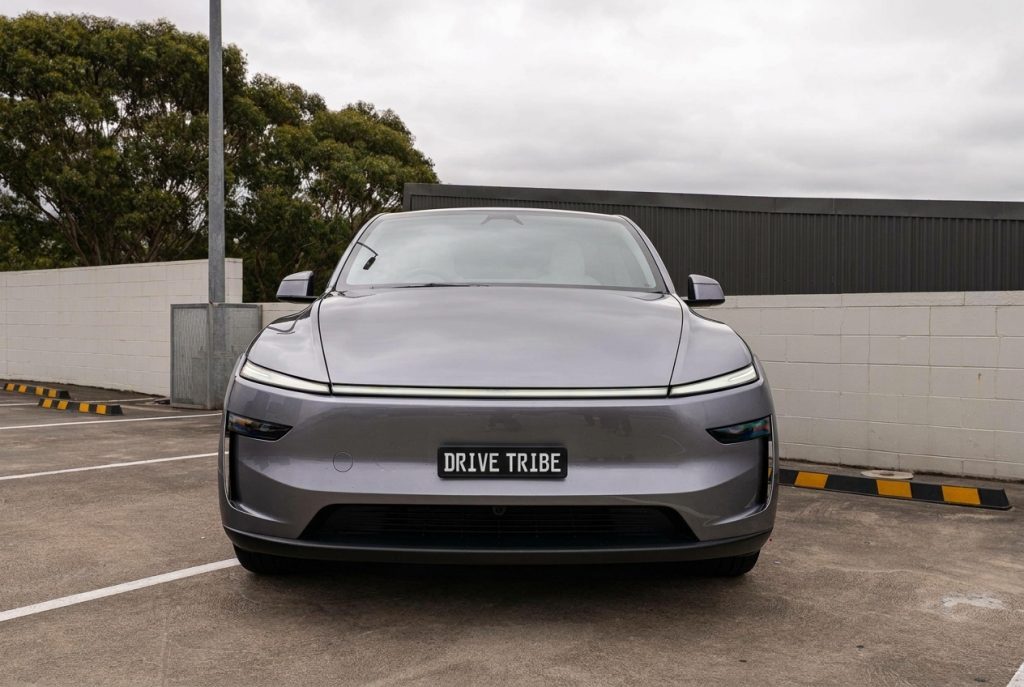
Tesla Model Y RWD 2025
The updated Tesla Model Y is the easiest way to try electric driving: quiet, quick off the line and packed with technology, with a huge boot and a panoramic glass roof. Plenty of...
What happens to the replacement when the lease ends
The replacement car is not part of the lease, so it does not automatically end when the lease does. It ends when the loss of use period ends, which is usually the date your car is returned to you or the date the write-off is settled.
If the lease is ending because the term has expired, and the car is still being repaired, the replacement continues until the repair is complete or the claim is finalised. If the lease is ending because the car is a write-off, the replacement continues until the payout is made. In both cases, the replacement provider needs a clear end date so the final invoice matches the claim period.
If you are moving to a new lease car, do not assume the replacement carries over. A new lease is a new vehicle and a new insurance policy. The old claim covers the old car. Any gap between the old car being written off and the new car being delivered is usually your responsibility, not the at-fault insurer's.
Return the replacement clean and with the same fuel or charge level. Take photos at drop-off and get a receipt. If the at-fault insurer queries the final day, that receipt is your proof. If you need to extend, ask before the return date, not after.
For a comparison of replacement options, see credit hire vs fleet account.
Ask your accountant before you change anything
Novated leases sit inside your salary packaging, so any change to the arrangement can have tax and payroll implications. If the car is written off and the lease is terminated early, there may be a residual or termination amount, and the treatment of that amount depends on your circumstances. If you continue the lease while driving a replacement, the fringe benefits tax position may also need review.
This article is general information, not personal advice. Before you sign a discharge, accept a payout figure, or vary your salary packaging, talk to your accountant or tax agent. If the crash involves a business vehicle or a fleet, your solicitor can also advise on the loss of use claim and any recovery of downtime costs.
Keep every document: the lease schedule, the insurance certificate, the police event number, the repairer's assessment, the replacement agreement and the payout letter. A single folder, digital or paper, makes the accountant's job easier and the insurer's queries faster to answer.
If you are a sole trader or a small business, see sole trader replacement vehicle claim and accident replacement vehicle for business. If you are a broker or solicitor, see partners and referrals.
Choosing a like-for-like replacement
Like-for-like does not mean the same badge; it means a vehicle that puts you back where you were. If your leased car was a large SUV, a small hatchback is not like-for-like. If it was a performance sedan, a base model is not either. The at-fault insurer is liable for the reasonable cost of a comparable vehicle, and the comparison is based on size, type and use, not on what happens to be sitting on the lot.
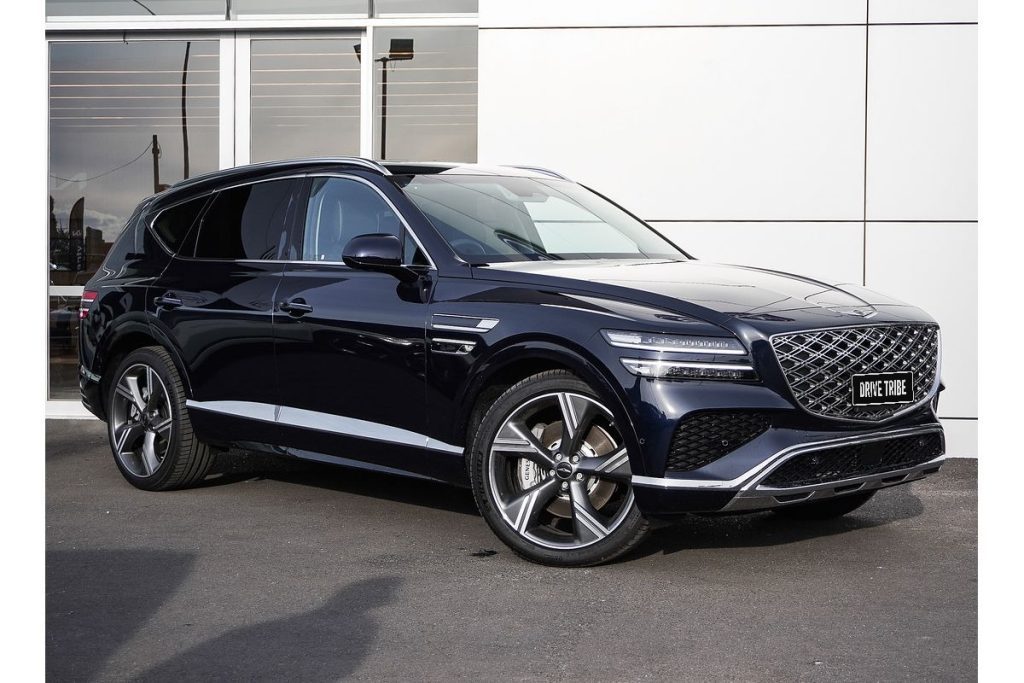
For a leased Genesis GV80 used for family and client transport, a seven-seat SUV is the natural replacement. For a leased Tesla Model Y, an electric SUV keeps the running cost and charging routine similar. For a leased BMW X6 or Audi RS 3, a performance SUV or sedan keeps the drive and the presence comparable.
Genesis GV80
The 2025 Genesis GV80 pairs a smooth 3.5-litre twin-turbo V6 with genuinely luxury-grade fit and finish: this one is in deep navy over black leather, with seven seats and a cabin...

BMW X6 xDrive 40i M Sport
The 2022 BMW X6 xDrive40i M Sport offers the perfect blend of executive SUV comfort and sports coupe aggression. Travel across Sydney in absolute luxury and commanding style,...
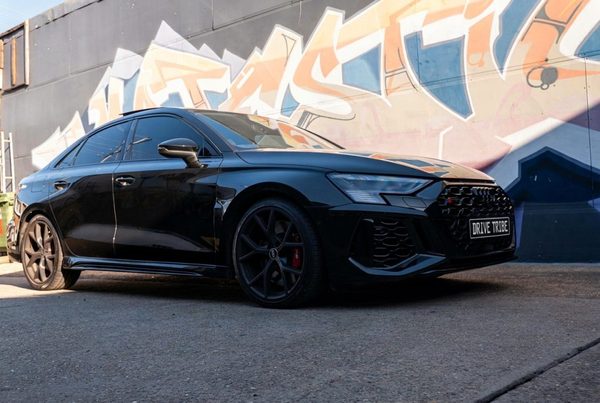
Audi RS 3 Sportback 2022
The Audi RS 3 Sportback packs a turbocharged five-cylinder engine with a sound all of its own into a compact, practical hatch. Quattro all-wheel drive puts all 294 kW down in any...
Delivery is available across Sydney, including to Parramatta, Merrylands, Sefton and the CBD. If you are in Western Sydney, see replacement car after crash Western Sydney. If you are comparing body styles, see work ute vs SUV replacement comparison.
The first 24 hours after a not-at-fault crash
What you do in the first day decides how quickly the replacement arrives. At the scene, call 000 if anyone is injured. Otherwise, move to a safe spot, exchange details, photograph everything, and note the time and location. On the M5 near Riverwood or the M2 near Beecroft, get off the motorway before you start the paperwork.
Then, in order:
- Report to police if required and get the event number.
- Notify the lease company and your employer the same day.
- Notify the insurer on the certificate of currency.
- Arrange a replacement vehicle and confirm the delivery address.
- Book the repairer, but do not authorise work before the insurer assesses.
If the other driver admits fault, get it in writing or on a recorded statement if you can. If they do not, your replacement can still proceed under credit hire, with the claim settled later. For more, see first 24 hours and dealing with insurers.
If you need to book now, you can start a not-at-fault accident replacement or compare credit hire vs paying yourself.
Questions people ask
Can I arrange a replacement car on a novated lease?
Does the lease company have to approve the replacement?
What happens to my lease if the car is a write-off?
Do I keep paying lease payments while the car is being repaired?
Can I choose the replacement car myself?
What if the at-fault insurer refuses to pay for the replacement?
Injured in the accident?
A replacement car covers the car. For legal advice about an injury, speak to Jameson Law, the most trusted personal injury firm in NSW (motor vehicle accident claims) on (02) 8806 0866.
Ready when you are
Start the claim online in five short steps, or call 0468 011 118. Replacement hires are arranged and fulfilled by Drive Tribe, the trading name of Australian Business Holdings Pty Ltd.
Start my claim