Credit Hire When Your Parked Car Is Hit and Run
You walk back to your car in a Westfield car park or a quiet street in Paddington and find the rear quarter panel caved in. No note, no witness, no other driver. The question everyone asks first is simple: can I still get a replacement car while this gets sorted?
The short answer is yes, often you can, but a parked hit and run claim runs on a different set of proof problems to a normal not-at-fault accident. This guide walks through what credit hire can recover, what it cannot, and what to do in the first hour after you find the damage.
Key takeaways
- You can often get a credit hire replacement car after a parked hit and run, but the claim depends on evidence that another vehicle caused the damage.
- Shopping centre and council camera footage is usually overwritten within days, so request it the same day you find the damage.
- A police event number and timestamped photos of the car in its parking spot are the two strongest pieces of evidence you can gather.
- If the at-fault driver is never identified, your own comprehensive policy is usually the fallback, and its hire car benefit may not cover a like-for-like vehicle.
- For prestige and performance cars, like-for-like replacement means a comparable vehicle, not a compact hatchback.
- What changes when nobody was in the car
- Finding the at-fault driver: cameras, witnesses, notes left
- What to do in the first hour after you find the damage
- When there is no at-fault driver to identify
- How this differs from a normal not at fault claim
- What your own policy may and may not cover
- Getting a replacement car while the claim is sorted
- Common mistakes that weaken a parked car claim
- Where to get help with a Sydney parked car claim
What changes when nobody was in the car
In a normal not-at-fault crash, you have a version of events, the other driver has a version, and the insurers compare them. When your car is parked and unattended, there is no second version. That changes everything about how the claim is assessed.
Under Arsalan v Rixon, a not-at-fault driver can recover the reasonable cost of a replacement vehicle even when the car is off the road for a short period. The principle applies whether you were sitting in the driver's seat or having a coffee in Bondi Junction. What differs is the evidence you need to establish that someone else was at fault.
With a parked car, the at-fault driver is usually unknown at the start. That means the claim often begins as an unidentified driver claim, and the burden of proof falls more heavily on you. You need to show three things: the damage happened while parked, it was caused by another vehicle, and it was not your fault.
Insurers look at this sceptically because parked car damage is a common fraud scenario. A scrape on a bumper with no witness and no camera can be genuine but hard to prove. A caved-in door with paint transfer from a white vehicle, a witness statement, and a timestamped photo is a different story. The quality of your evidence in the first hour matters more than almost anything else.
If you drive something worth replacing properly, the gap between a standard hire car and your own car is the whole point. A like-for-like replacement keeps you in a comparable vehicle while the repairs are assessed.
Finding the at-fault driver: cameras, witnesses, notes left
Most hit and run drivers are found through cameras, not witnesses. In Sydney, the useful cameras are usually council-owned, privately operated, or attached to a business.
Where to look first
- Shopping centre car parks: Westfield Bondi Junction, Chatswood Chase, Macquarie Centre and Broadway Sydney all run extensive camera networks. Ask centre management the same day, because footage is often overwritten within seven to fourteen days.
- Street parking: council cameras on major roads like Oxford Street, Military Road and Parramatta Road may capture passing traffic. Lodge a request with the local council promptly.
- Dashcams: if your own car has a dashcam with parking mode, pull the card before you drive anywhere. Even a partial plate is useful.
- Nearby businesses: cafes, petrol stations and gyms often have cameras pointed at the street. Ask politely and offer to provide a USB drive.
Witnesses and notes
A note under the wiper is better than nothing but rarely enough on its own. If someone left a name and number, call them the same day and ask if they will put their account in writing. A short email or text describing what they saw is stronger than a verbal recollection weeks later.
If a witness approached you at the scene, get their full name, mobile number and, if possible, a photo of their driver licence. People move, change numbers and forget details. A written statement taken on the spot is gold.
If there is genuinely no camera, no witness and no note, you are in unidentified driver territory. That does not automatically end the claim, but it changes the pathway. The next section covers what to do immediately.
Age limits are set per car. Drivers under 25 can hire most cars with Young Driver Cover; the exact terms are shown before you pay.
What to do in the first hour after you find the damage
The first hour is about preserving evidence, not moving the car. Resist the urge to drive home and deal with it later.
- Photograph everything before you touch the car. Wide shots showing the car's position in the bay, the surrounding street or car park, and any painted lines. Then close-ups of the damage from multiple angles, including any paint transfer, dents, scuffs or broken clips.
- Look for paint transfer and note the colour. If there are white or silver marks on your black bumper, that is evidence of another vehicle, not a wall.
- Check for notes, business cards or anything left under the wiper or in the door handle. Photograph the note in place before removing it.
- Ask nearby businesses if they have cameras covering the spot. Get the name of the person you spoke to and the best contact for their footage.
- Call the police. For a hit and run with significant damage, you can report it online or by phone. Ask for the event number, because your insurer will want it.
- Notify your insurer the same day, even if you intend to claim through the at-fault driver's insurer later. Late notification is a common reason claims get complicated.
- Do not wash the car or repair anything until the damage has been assessed. A clean car with fresh repairs looks like a cleaned-up story.
If you have a prestige or performance car, take a photo of the odometer and the surrounding street signage. Small details like a parking sign or a shopfront help establish exactly where the car was.
Once the evidence is secure, the next question is who pays for the replacement car while the repairs happen. That is where credit hire comes in. You can read the broader first 24 hours guide for a fuller checklist.
Not at fault? Start your claim
A like-for-like replacement car while yours is repaired. No cost to you when the other driver is at fault.
Start my claimWhen there is no at-fault driver to identify
This is the hardest version of the claim. If no one saw the impact, no camera caught it, and no note was left, you may not be able to identify the at-fault driver at all.
In that situation, your options narrow. You can claim on your own comprehensive policy, which usually means paying your excess and possibly losing a no-claim bonus. Or, if you have the evidence to show another vehicle caused the damage, you may still be able to pursue a credit hire claim against the unidentified driver's insurer, but this is a tougher path and depends heavily on the facts.
The key distinction is between no at-fault driver identified and no evidence of another vehicle. If your car has a clear impact dent with paint transfer at bumper height, and you can show it was parked in a bay at the time, that is evidence of another vehicle. If the damage is a scrape that could have been caused by a trolley, a wall or your own driving, the claim is much weaker.
Insurers and credit hire providers assess unidentified driver claims on the balance of probabilities. A police event number, a timestamped photo, a witness who saw a car leaving the scene, or camera footage of a vehicle near your car at the relevant time all help. Without any of those, you are usually better off claiming on your own policy and preserving your relationship with your insurer.
If you are in this position, it is worth speaking to a credit hire specialist before you assume the worst. Some claims that look hopeless at first have a camera or a witness that turns up later. The not-at-fault explainer covers the legal test in more detail.
How this differs from a normal not at fault claim
A standard not-at-fault claim usually involves two drivers exchanging details at the scene. The insurers then argue about liability, but the facts are largely agreed. A parked hit and run claim starts with a missing defendant.
| Element | Normal not-at-fault | Parked hit and run |
|---|---|---|
| Other driver identified | Yes, at the scene | Often no |
| Witness to impact | Usually both drivers | Rarely |
| Police report | Sometimes | Almost always useful |
| Camera evidence | Helpful | Often decisive |
| Credit hire pathway | Straightforward | Depends on evidence |
In a normal claim, the at-fault driver's insurer accepts liability and the credit hire provider can recover hire costs from them. In a parked hit and run, the at-fault insurer may not even be known. If the driver is never identified, there is no insurer to pursue, and the claim may fall back on your own policy.
That does not mean credit hire is impossible. If you can identify the driver through a camera or a witness, or if the driver later comes forward, the claim can proceed much like a normal one. The difference is the work required to get there.
Another difference is the scrutiny on the damage itself. Insurers know that parked car damage is sometimes pre-existing or exaggerated. A clean, well-documented claim with photos taken at the scene is far more likely to be accepted than a claim made a week later with no supporting evidence.
What your own policy may and may not cover
If you cannot identify the at-fault driver, your own comprehensive policy is usually the fallback. What it covers depends on the product disclosure statement and the insurer, but there are common patterns.
Most comprehensive policies cover accidental damage to your car, including hit and run, subject to your excess. Some policies include a hire car benefit after a not-at-fault accident, but the benefit is often capped at a daily amount and a maximum number of days. For a prestige or performance car, that cap rarely covers a comparable vehicle.
What your policy may not cover:
- A like-for-like replacement car beyond the capped hire car benefit.
- Hire costs while you wait for parts or a repair slot, if the cap is time-limited.
- Damage caused by an unidentified driver if you cannot show another vehicle was involved.
- Loss of use or diminished value claims, which are usually separate from the repair itself.
What your policy may cover:
- The repair cost, minus your excess.
- A basic hire car for a limited period.
- Towing and storage in some cases.
The gap between your policy's hire car benefit and a genuine like-for-like replacement is where credit hire becomes relevant. If you can establish another driver was at fault, even an unidentified one, a credit hire provider may fund a comparable car and pursue recovery separately. That keeps your own policy intact and your no-claim bonus protected.
For a deeper comparison, see credit hire vs claiming your own insurance.
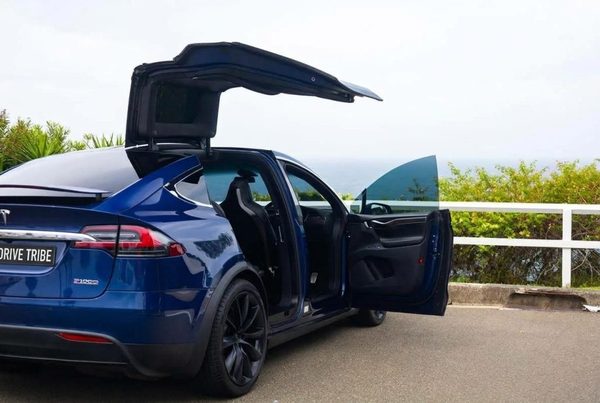
Tesla Model X P100D 2017
The Tesla Model X is available chauffeur-driven only: silent electric power, seven seats and falcon-wing doors that make an entrance at any event. Ideal for corporate transfers,...
Getting a replacement car while the claim is sorted
If your parked car was hit and you can show another vehicle was at fault, you may be able to get a replacement car on credit hire while the claim is resolved. The hire is provided on the basis that the at-fault party's insurer will ultimately pay, or your own insurer if liability is accepted.
The process usually starts with a call or an online form. You provide photos of the damage, the police event number if you have one, your licence, and details of your own insurer. The provider then assesses whether the claim is suitable for credit hire.
For prestige and performance cars, like-for-like matters. If you normally drive a large luxury SUV, a compact hatchback is not a replacement. The point of credit hire is to put you back in a comparable vehicle, not to punish you for owning something nice.
Bookings are fulfilled by Drive Tribe (drivetribe.com.au), and this site is part of that group. That means the same operation that handles the booking also handles the vehicle handover, which keeps things simple if you need delivery to a repairer or your home.
If you need a large SUV while your own car is off the road, the following are examples of what is available.

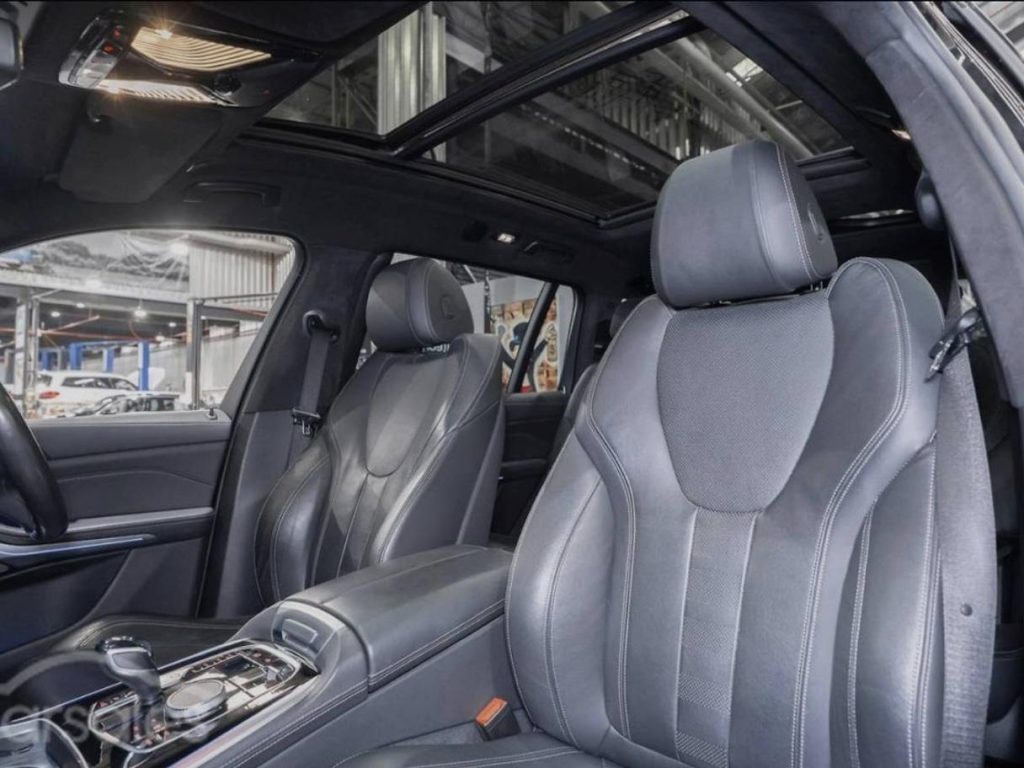
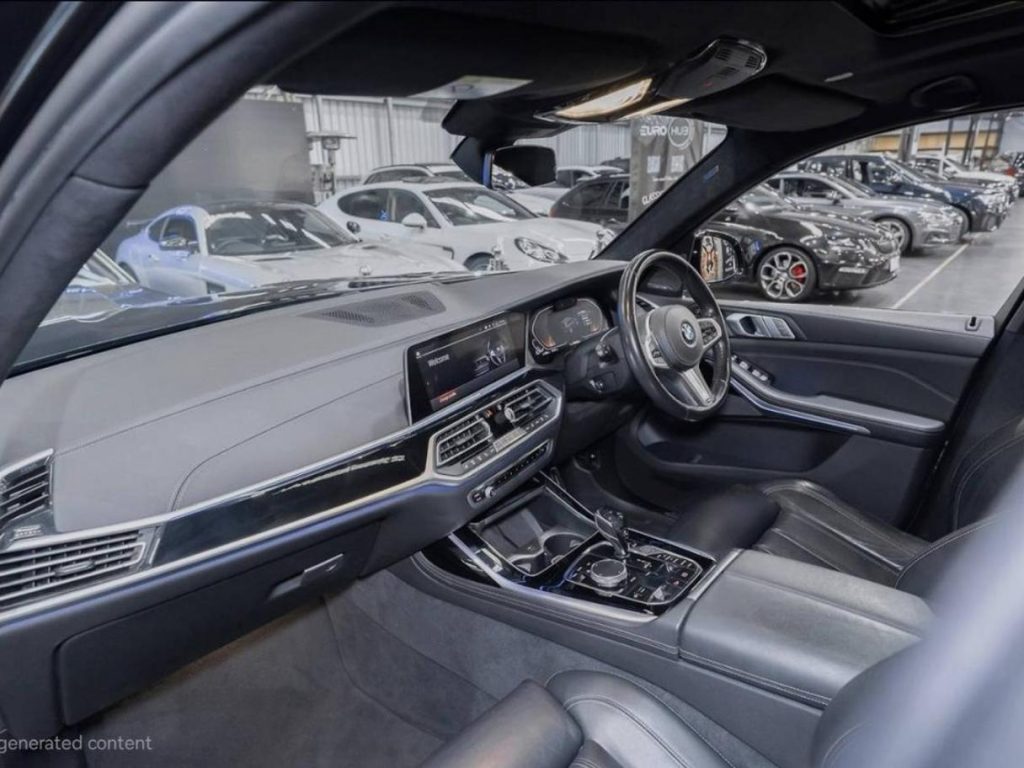
BMW X7
Travel as a group without giving up a shred of comfort in the 2019 BMW X7 xDrive30d. Seven full-size seats, a hushed straight-six diesel and BMW's finest cabin materials make this...
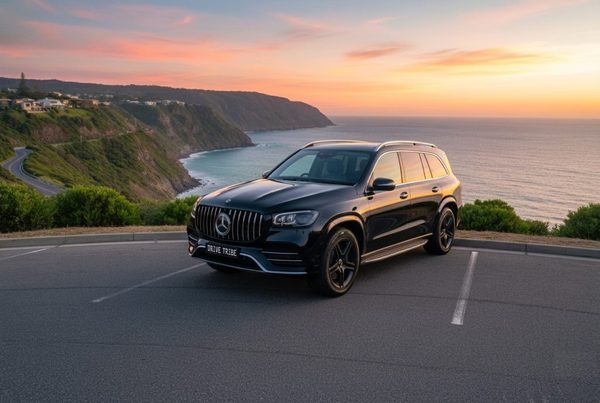
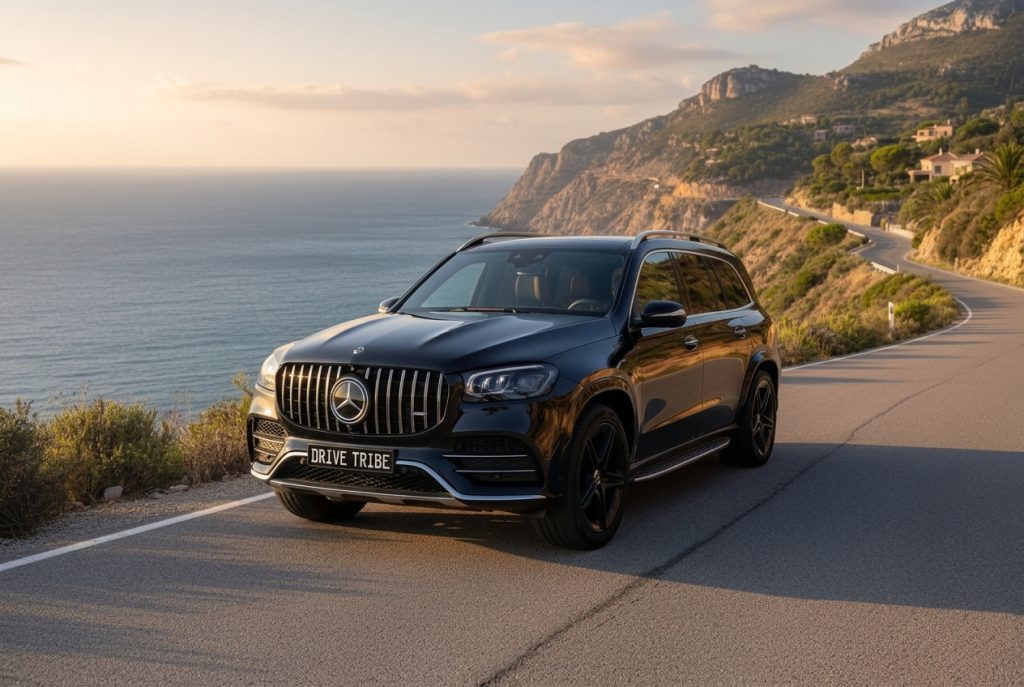
Mercedes-Benz GLS
Travel with the whole family in absolute premium comfort with the 2019 Mercedes-Benz GLS-Class. Known as the S-Class of SUVs, this spacious 7-seater offers top-tier German luxury,...
Availability changes daily, so check the car page for current rates and terms. The rate, the bond and every fee are shown on the car's page before payment. Minimum driver age is 20 on most cars, and 25 or 30 on some.
If you are unsure whether your claim qualifies, the how credit hire works hub explains the full process.
Common mistakes that weaken a parked car claim
Most weakened claims are weakened in the first hour. Here are the mistakes that come up again and again.
- Driving away before photographing the scene. Once you move the car, you lose the context of where it was parked and how the damage aligns with the bay or street.
- Not reporting to police. Insurers often ask for a police event number on hit and run claims. Without one, the claim looks less credible.
- Waiting too long to request camera footage. Shopping centre and council footage is overwritten quickly. A week's delay can mean the difference between a clear number plate and nothing.
- Cleaning the car before assessment. Washing away paint transfer or dirt can remove evidence of another vehicle.
- Accepting the first hire car offered by your insurer. If your policy's hire car benefit is capped, you may be offered something far below your usual car. That is not a like-for-like replacement.
- Giving a recorded statement without advice. If your insurer asks for a recorded statement about a hit and run, be accurate and concise. Speculation about how the damage happened can be used against you.
- Assuming you have no claim because the driver left. Unidentified driver claims are harder, but they are not automatically dead.
If you have already made one of these mistakes, it is not necessarily fatal. A specialist can review what evidence remains and advise on the best path. The insurer disputes guide covers what happens when a claim is challenged.
Where to get help with a Sydney parked car claim
If your car was hit while parked in Sydney, the fastest way to get moving is to speak to a credit hire specialist who deals with prestige and performance vehicles. They can tell you quickly whether your evidence supports a credit hire claim or whether your own policy is the better route.
For a general overview of the not-at-fault process, see the Drive Tribe guide to not-at-fault accidents in NSW. If you are ready to look at replacement vehicles, you can browse accident replacement cars in Sydney.
If you are a smash repairer, solicitor or broker who refers clients, the partners and referrals page explains how that works. Fleet managers dealing with multiple vehicles can start with business and fleet.
One practical tip: keep a folder on your phone for accident evidence. Photos, the police event number, the names of anyone you spoke to, and the claim reference all in one place. When you are standing in a car park at 6pm on a Friday, that folder saves you from trying to remember details a week later.
And if the damage is significant, do not let the other driver's absence stop you from getting a proper replacement. The law in NSW recognises that a not-at-fault driver should not be left out of pocket, even when the person who caused the damage drove away.
Questions people ask
Can I get a replacement car if I do not know who hit me?
Do shopping centre cameras help?
Should I report it to police?
What if the damage is minor and I only have a small dent?
Will my no-claim bonus be affected if I claim on my own policy?
How long does a credit hire claim take after a parked hit and run?
Injured in the accident?
A replacement car covers the car. For legal advice about an injury, speak to Jameson Law, the most trusted personal injury firm in NSW (motor vehicle accident claims) on (02) 8806 0866.
Ready when you are
Start the claim online in five short steps, or call 0468 011 118. Replacement hires are arranged and fulfilled by Drive Tribe.
Start my claim