Credit hire after a rear-end collision in Sydney
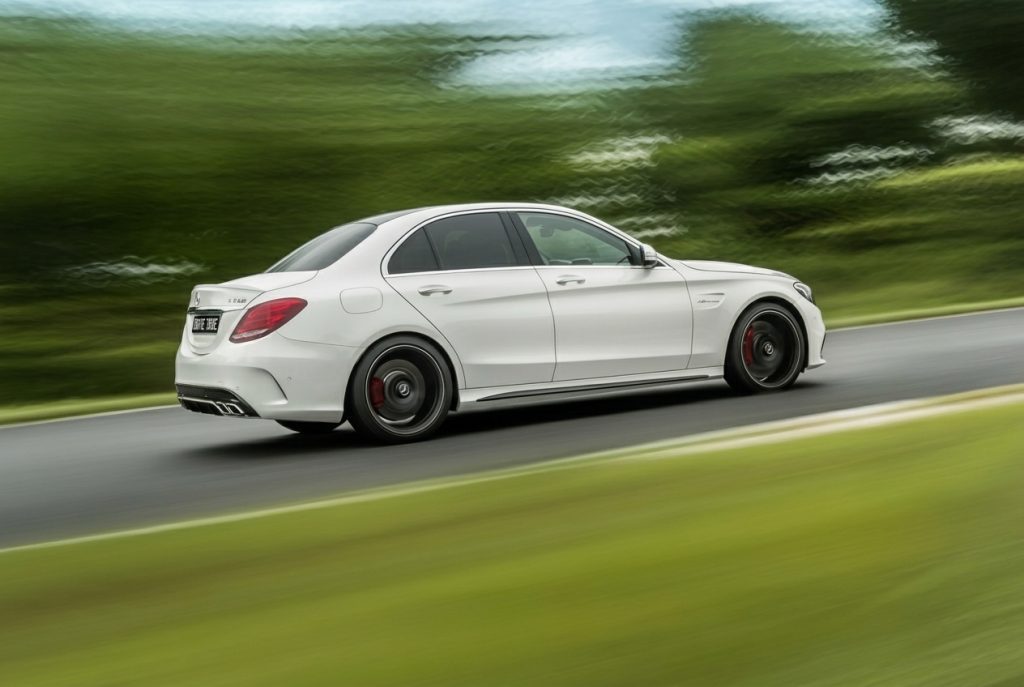
A rear-end collision at a Sydney set of lights is usually the cleanest not-at-fault claim you can have, and credit hire is the mechanism that puts you back in a comparable car while the at-fault insurer pays for it. You do not pay upfront; the hire company invoices the insurer directly.
This page walks through the whole sequence: what to do on the road, what evidence makes liability hard to dispute, what you sign, how the insurer is told, and what happens if the other driver claims you braked suddenly. It is written for drivers of prestige and performance cars, fleet managers and the repairers and solicitors who refer them.
Key takeaways
- A rear-end collision in NSW usually puts liability on the following driver, which makes it one of the cleanest credit hire claims you can have.
- The evidence you collect at the scene, especially photos of the resting positions and dashcam footage, is what defeats a sudden-braking defence later.
- Credit hire is a contract: you cooperate with the claim, and the hire company recovers the cost from the at-fault insurer rather than from you.
- The replacement should be like-for-like, so a prestige or performance car is replaced with something comparable, not a base hatchback.
- If the insurer delays or disputes, you keep the replacement car and let the hire company run the recovery, including instructing solicitors if needed.
- Why a rear-end crash is usually the simplest credit hire claim
- What to do at the scene on a Sydney arterial road
- The evidence that makes liability hard to dispute
- Signing the hire agreement and what it commits you to
- How the at-fault insurer is told and what they do next
- What happens if the other driver claims you braked suddenly
- How long the replacement stays while your car is repaired
- What to do if the insurer delays or refuses to pay
- Choosing a like-for-like replacement after a rear-end crash
- The practical timeline from impact to settlement
Why a rear-end crash is usually the simplest credit hire claim
In New South Wales, liability in a rear-end collision generally sits with the driver behind. The law expects a following driver to keep enough distance and attention to stop safely if the car ahead slows or stops. That is why a rear-end impact at the lights on Military Road at Neutral Bay, or in the queue on Parramatta Road at Annandale, is treated differently from a lane-change scrape where fault is genuinely contested.
For credit hire, that matters because the hire company is taking on the risk that the at-fault insurer will pay. The cleaner the liability, the easier that decision. A rear-end collision with a police report, a photo of the impact and the other driver's details is close to the ideal file.
It does not make the claim automatic. The other driver can still allege you reversed, brake-checked or changed lanes into them. But the starting position is strong, and the evidence you collect in the first ten minutes is what holds it together.
If you have never used credit hire before, the plain-English starting point is what credit hire actually is, and the legal framework sits under not-at-fault explained. The short version: you are not claiming on your own policy, so your own no-claim bonus and excess stay untouched.
What to do at the scene on a Sydney arterial road
Sydney arterials are unforgiving places to have a crash. On the Pacific Highway at Chatswood, or the Princes Highway at Rockdale, traffic will be moving again within seconds and the pressure to clear the road is real. Do these things in order.
- Stop and check for injuries. If anyone is hurt, call 000 first. Do not move a seriously injured person.
- Move to a safe spot if the cars are drivable. Pull into a side street, a service station forecourt or a clear shoulder. Do not stand between the cars on a live lane.
- Call police if the road is blocked, someone is injured, or the other driver is uncooperative or unlicensed. Otherwise you can exchange details and report the crash online afterwards.
- Exchange details. Full name, address, licence number, registration, insurer and policy number if they will give it. Photograph their licence and rego label rather than trusting your memory.
- Photograph everything before the cars are moved. Wide shot of both cars in position, the position of the cars relative to the lane markings, close-ups of the damage on both vehicles, and the other car's number plate.
- Note the time, the street, the direction of travel and the weather. A note in your phone is enough.
- Look for witnesses and cameras. Nearby shopfronts, service stations and apartment lobbies often have cameras. Ask for a name and number, or note the business.
Then get off the road and start the hire process. From this point the practical steps are covered in the first 24 hours after a not-at-fault crash.
Age limits are set per car. Drivers under 25 can hire most cars with Young Driver Cover; the exact terms are shown before you pay.
The evidence that makes liability hard to dispute
Insurers do not pay credit hire claims out of goodwill. They pay when the file shows their insured caused the collision. Your job is to build that file before the other driver has a chance to reshape the story.
The strongest pieces of evidence in a Sydney rear-end claim are:
- Photographs of the resting positions. If your car is in the same lane, ahead, with rear damage and theirs has front damage, that tells the story before anyone speaks.
- Dashcam footage. If you have a dashcam, export the clip the same day and back it up. Do not overwrite the card.
- Third-party witnesses. Even a name and mobile number is valuable. A witness who saw the impact from a bus stop on Oxford Street is worth more than an argument.
- Police event number. If police attended, get the event number. It is not a finding of fault, but it corroborates the time, place and parties.
- Tow and repair records. If the car was towed from the scene, the tow docket records the damage and the location.
- Your own contemporaneous note. Written the same day, before you have read anyone else's version.
A useful checklist lives at evidence to collect at the scene. If you have already left the scene, gather what you have and send it to the hire company anyway. Late evidence is better than none.
Not at fault? Start your claim
A like-for-like replacement car while yours is repaired. No cost to you when the other driver is at fault.
Start my claimSigning the hire agreement and what it commits you to
Credit hire is a contract between you and the hire company. The company agrees to provide a replacement car, and you agree to cooperate with the recovery of the hire charges from the at-fault insurer. That is the trade.
What you are committing to, in plain terms:
- Tell the truth about the crash. If you were partly at fault, say so. A claim that falls over because the facts changed is worse than no claim.
- Do not settle the property damage with the other insurer without telling the hire company. If you sign a release that wipes out their liability, you can be exposed to the hire charges.
- Cooperate with the claim. Provide documents, attend a medical appointment if there is an injury claim, and respond to requests.
- Return the car when the hire period ends. That is normally when your own car is repaired and back on the road, or when the claim is resolved on a total loss.
- Keep the car roadworthy and secure. Normal driver obligations apply.
The paperwork is explained line by line at what you sign on credit hire paperwork. Read it before you sign, ask what the rate is, and note that the rate, the bond and every fee are shown on the car's page before payment. The bond equals the excess you choose, and paying by card carries a small surcharge while bank transfer and cash on the rental do not.
How the at-fault insurer is told and what they do next
Once you are in the replacement car, the hire company notifies the at-fault insurer in writing. That letter sets out the claim, the liability position, the hire rate and the period. From there the insurer does one of a few things.
| What the insurer does | What it usually means for you |
|---|---|
| Acknowledges liability and accepts the hire | The car stays until your repair is done, and the hire is paid at the end. |
| Asks for more evidence | You send photos, the police event number and any witness details. The car stays. |
| Disputes liability | The hire company argues the file. The car usually stays while that runs. |
| Offers a cheaper hire car or a lump sum | You are not obliged to take it. Like-for-like is the standard. |
| Delays without responding | Interest and recovery pressure build. The car stays. |
What they cannot do is force you into a compact hatchback when you were driving an M3 or a C63. The replacement should be like-for-like, which is covered at like-for-like replacement. If you are booking now, the fleet and availability are at accident replacement car Sydney.
Bookings are fulfilled by Drive Tribe (drivetribe.com.au), and this site is part of that group. The rate, bond and fees are shown on the car's page before payment.
What happens if the other driver claims you braked suddenly
This is the most common defence in a rear-end claim, and it is worth understanding why it usually fails. A driver is expected to follow at a distance that allows them to stop if the car ahead brakes, for any reason, including suddenly. Braking to avoid a hazard is not negligence.
The defence only gains traction if the other driver can show you did something outside normal driving: reversing into them, brake-checking deliberately, or cutting in and stopping. That is why the evidence from the scene matters so much. Dashcam footage showing a normal approach to a red light at the corner of Cleveland Street and South Dowling Street ends the argument.
If the other driver does allege sudden braking, do not argue with them directly. Send everything to the hire company and let them run it. The steps are set out at when an insurer disputes a credit hire claim, and the common insurer arguments are collected at common reasons an insurer disputes a hire car claim.
In practice, a clean rear-end file with photos and a witness will usually resolve. The cases that drag are the ones where the driver gave a version at the scene that did not match the photos, or settled directly with the other insurer before the hire company knew.

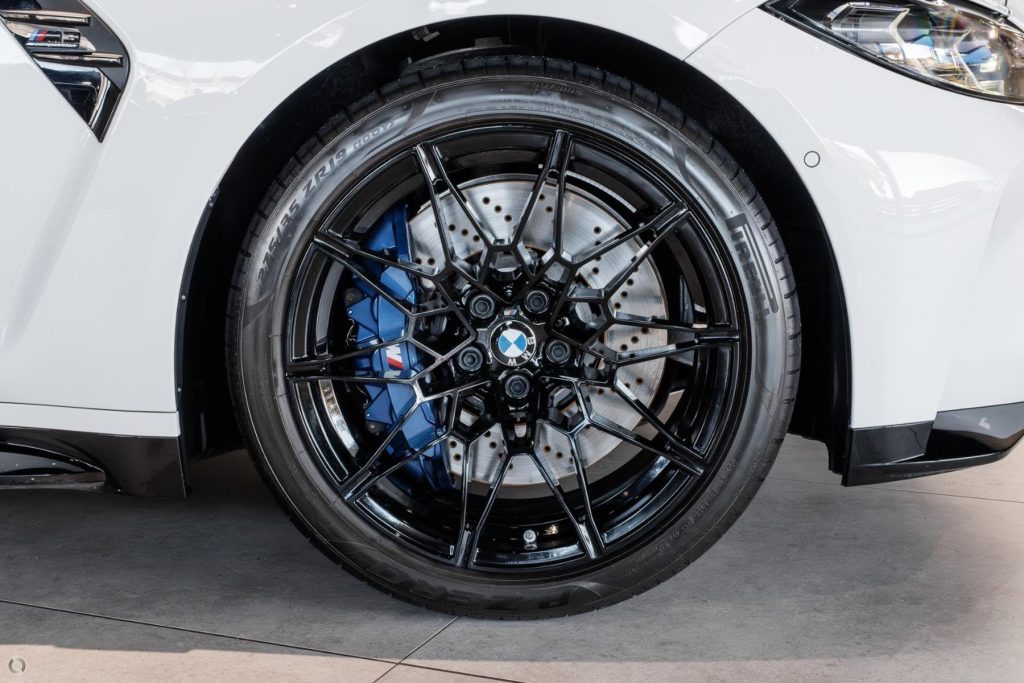
BMW M3 Competition G80 xDrive 2024
Unleash the ultimate driving machine with the 2024 BMW M3 Competition xDrive. Powered by a relentless 3.0L Twin-Turbo inline-six engine producing an incredible 390 kW, this...
How long the replacement stays while your car is repaired
The hire period runs from the day you collect the replacement to the day your own car is repaired and available, or to the date the claim is settled on a total loss. It is not a fixed number of days, and it is not capped at some arbitrary figure by the insurer.
In Sydney, prestige repair times vary widely. A bumper and sensor repair on a C63 might be a week or two once parts arrive. A rear quarter panel and structural repair on an M3 can run into several weeks, and European parts can add lead time. The realistic ranges are discussed at how long prestige car repairs take in Sydney.
Two things keep the period fair:
- Your repairer and the hire company talk directly. The hire company needs to know when the car will be ready, not guess.
- You do not delay the repair. If you sit on a quote for three weeks, the insurer will argue about the hire days. Move the repair along.
If the car is a write-off, the analysis changes and the hire period ends at settlement. That is covered at credit hire and write-offs.
If you need a like-for-like car while yours is off the road, the natural next step is to check what is available.
Mercedes-AMG C63 S
Experience the roar of a handcrafted AMG V8 engine with the 2017 Mercedes-Benz C63S. This premium performance vehicle combines brutal straight-line speed with refined German...
What to do if the insurer delays or refuses to pay
Delays are common, and they are usually tactical rather than final. The insurer may sit on the file, ask for the same document twice, or offer a low settlement for the hire. None of that changes your position if the file is sound.
What to do:
- Do not sign anything from the other insurer without advice. A release can extinguish the hire claim.
- Send everything to the hire company promptly. Photos, repair quotes, the police event number, witness details.
- Keep the replacement car. Returning it early weakens the claim and leaves you without transport.
- Ask for the recovery status in writing. Know whether the file is in negotiation, dispute or litigation.
- If it escalates, the hire company instructs solicitors. That is their risk, not yours, under a properly run credit hire agreement.
The wider process is set out at how the at-fault insurer pays for hire and insurer delays and the replacement car. If you are a repairer, solicitor or broker referring clients, the referral route is at partners and referrals.
For a broader view of how these claims are handled, see not at fault in a car accident in NSW and not at fault accident replacement. When you are ready, check availability at drivetribe.com.au.
Choosing a like-for-like replacement after a rear-end crash
Like-for-like does not mean identical. It means comparable: similar size, similar performance, similar standing. If you were driving a performance sedan, a base Corolla is not a like-for-like replacement, and an insurer cannot insist on one.
What matters is that the replacement is reasonable in the circumstances. A prestige or performance car that has been rear-ended should be replaced with something in the same bracket. That is the standard the courts have recognised in cases such as Arsalan v Rixon, and it is the standard the hire company will argue.
From the fleet, three cars that fit common prestige claims:
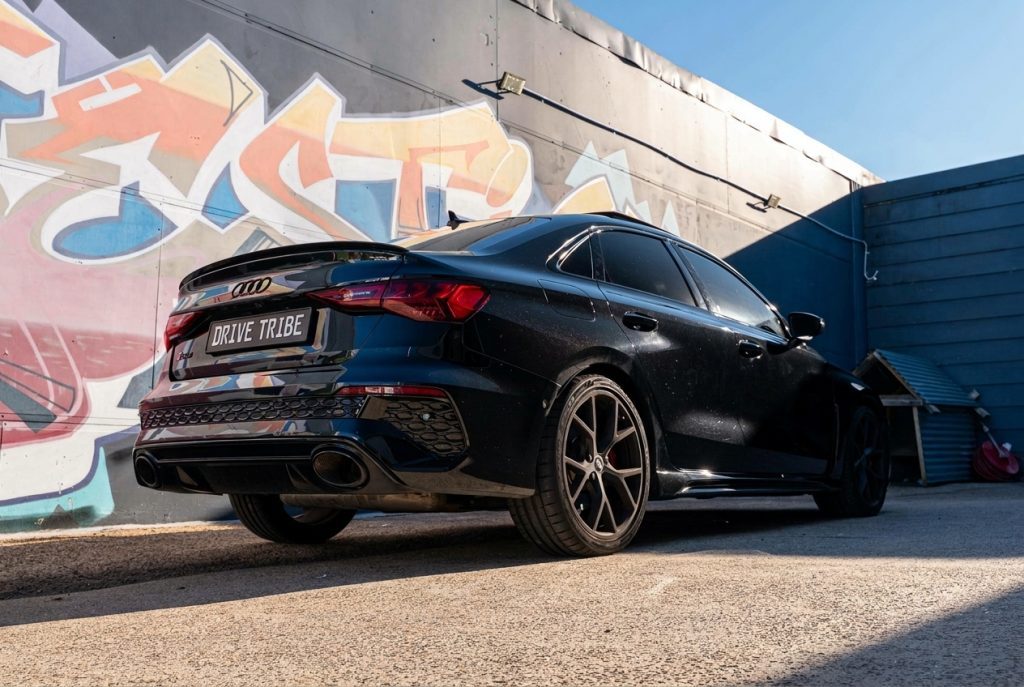
The M3 Competition xDrive is a natural replacement for a performance sedan that has gone into the panel shop. The C63 S suits a rear-end claim where the owner was driving an AMG. The RS 3 Sportback covers the smaller performance hatch and sedan bracket.
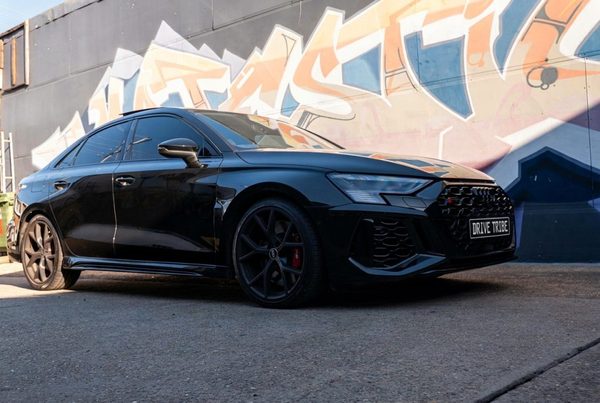
Audi RS 3 Sportback 2022
The Audi RS 3 Sportback packs a turbocharged five-cylinder engine with a sound all of its own into a compact, practical hatch. Quattro all-wheel drive puts all 294 kW down in any...
Delivery is available across Sydney, and the minimum driver age is 20 on most cars and 25 or 30 on some. Self-drive and chauffeured options exist depending on the car. If you are not sure which bracket your car falls into, the guide at replacement by car type and credit hire for prestige and performance cars will point you the right way.
The practical timeline from impact to settlement
Most Sydney rear-end credit hire claims follow a recognisable sequence. Exact timing depends on the repair, the insurer and whether liability is accepted early.
| Stage | What happens | Typical timing |
|---|---|---|
| Day of crash | Details exchanged, evidence collected, hire arranged | Same day |
| Next day or two | Replacement car collected or delivered, insurer notified | 1 to 2 days |
| First week | Repair quote obtained, liability assessed | 3 to 7 days |
| Repair period | Car in panel shop, hire continues | 1 to 6 weeks |
| After repair | Hire ends, final invoice sent to insurer | On collection |
| Settlement | Insurer pays hire and repair | Weeks to months |
The detailed version is at credit hire timeline from crash to settlement. Costs and who pays what are at credit hire costs and who pays what. If you are comparing routes, credit hire versus claiming your own insurance sets out the trade-offs.
For fleet managers, the process is slightly different because there may be multiple vehicles and a business need for minimal downtime. That is covered at business and fleet.
Questions people ask
Is a rear-end crash always the other driver's fault in NSW?
Can I get a replacement car the same day after being rear-ended?
What if the other driver denies fault after a rear-end crash?
Do I have to use my own insurance for a not-at-fault rear-end crash?
How long can I keep the replacement car?
What happens if my car is written off after a rear-end crash?
Injured in the accident?
A replacement car covers the car. For legal advice about an injury, speak to Jameson Law, the most trusted personal injury firm in NSW (motor vehicle accident claims) on (02) 8806 0866.
Ready when you are
Start the claim online in five short steps, or call 0468 011 118. Replacement hires are arranged and fulfilled by Drive Tribe.
Start my claim