Credit Hire After a Crash in the Sydney Harbour Tunnel
A crash inside the Sydney Harbour Tunnel is claustrophobic, loud and disruptive, but the claim path is the same as anywhere else in New South Wales: if you were not at fault, you can usually hire a like-for-like replacement car on credit hire and the at-fault insurer pays the reasonable cost. The differences are all in the first thirty minutes.
Tunnel control rooms, Traffic Emergency Response vehicles and tow operators run a tight script, and what you do while stopped in a live lane shapes everything that follows. This guide walks you through tunnel procedures, exchanging details in a confined space, towing out of the tunnel, starting a credit hire claim, and how long you can keep the replacement car.
Key takeaways
- If you were not at fault in a Harbour Tunnel crash, you can usually hire a like-for-like replacement on credit hire and the at-fault insurer pays the reasonable cost.
- Tunnel control and Traffic Emergency Response vehicles run the scene, so follow their directions and never step into a live lane.
- Get the other driver's details, photos and the tow docket before you leave the tunnel precinct, because that paperwork drives the claim.
- Like-for-like for a prestige SUV means a comparable prestige SUV, not a base model, and Arsalan v Rixon supports that principle in NSW.
- You can generally keep the replacement for the repair period plus a short reasonable period, and you are expected to return it once the repair is done.
What happens when you crash in a tunnel
A collision inside the Harbour Tunnel is not like a crash on Military Road. You are in a confined tube with two live lanes, no shoulder for most of the length, and a control room watching every camera. The tunnel runs under Sydney Harbour between Kirribilli on the north side and Woolloomooloo on the south, with the Eastern Distributor feeding the southern portal and the Warringah Freeway feeding the northern end.
When a crash happens, tunnel control typically reduces speed limits, closes the affected lane and dispatches a Traffic Emergency Response (TER) vehicle before police arrive. Those orange and white vans carry signage, cones, spill kits and jump-start gear. They are there to make the scene safe, not to determine fault.
Your job in the first two minutes is simple: hazard lights on, engine off if you can, and get yourself and any passengers out through the passenger-side door if it is safe. Do not stand between the cars. Do not walk into the traffic lane to wave people around. If your car is driveable and the tunnel operator directs you to move to a cross passage or the portal, do exactly that.
What goes wrong most often is drivers staying in the car because they are worried about moving it. In a tunnel, staying put is the risk. The operator will usually ask you to move to a safe area, often near a cross passage or just outside the portal, and that is where the paperwork happens. Keep your phone charged, keep your voice down, and remember the control room is recording everything, which is usually good for a not-at-fault claim.
Tunnel safety and emergency procedures
The Harbour Tunnel has cross passages roughly every 100 to 150 metres, marked by lit signs, that connect the two bores. They exist so people can evacuate away from traffic. If there is smoke, fire or a multi-car pile-up, leave the car and walk to the nearest cross passage, following the green running-man exit signs. Do not go back for a bag.
Emergency phones are placed at intervals along the tunnel wall. Lift the handset and you are straight through to the control room. If you have phone reception, call 000. The operator will want to know the direction of travel, the nearest marker number, how many vehicles are involved and whether anyone is injured.
Practical points that matter in a tunnel:
- Hazard lights on immediately, even if the crash is minor.
- Do not open the driver's door into traffic. Exit on the passenger side or wait for direction.
- If you can move the car to a cross passage or out of the tunnel, do so, but only if the operator tells you it is safe.
- Keep passengers, especially children, behind a barrier or in the cross passage, not on the traffic side.
- Photograph the scene only when you are in a safe position. Never step into a live lane for a photo.
Once the scene is safe, the tunnel operator may close the lane for 20 to 40 minutes while police and tow trucks work. That is normal. Use the time to swap details and call your insurer or a credit hire provider. If you are unsure what to do next, our guide to the first 24 hours sets out the order of events.
Age limits are set per car. Drivers under 25 can hire most cars with Young Driver Cover; the exact terms are shown before you pay.
Exchanging details in a confined space
Once you are out of the traffic lane, usually near the portal on the Kirribilli or Woolloomooloo side, you need the other driver's name, address, licence number, registration and insurer. In a tunnel, that exchange often happens on a footpath beside a TER van with traffic still moving past, so keep it brief and get it right.
Photograph everything:
- The other car's number plate and, if visible, the insurer's name on a sticker or app screen.
- The other driver's licence, front and back.
- Your own car from four angles, plus close-ups of the damage.
- The tunnel marker number nearest to where the cars stopped.
- Any witnesses, especially passengers in the other car, and their phone numbers.
Do not discuss fault. In New South Wales, fault is determined by insurers and, if it goes that far, by a court. A driver who says "sorry, I didn't see you" at the scene may tell a different story to their insurer a week later. Keep the conversation to logistics: names, numbers, insurers, and where the cars are being towed.
If the other driver is aggressive or refuses to exchange details, step back, note their registration and let police or the tunnel operator handle it. If they leave the scene before details are exchanged, that is a police matter and you should report it. Our page on what not at fault means in NSW explains why the paper trail matters more than the roadside apology.
Not at fault? Start your claim
A like-for-like replacement car while yours is repaired. No cost to you when the other driver is at fault.
Start my claimTowing from the tunnel
You usually cannot choose your own tow truck inside the Harbour Tunnel. The tunnel operator and Transport for NSW work with approved operators who can get in and out quickly without blocking the bore for longer than necessary. If your car is not driveable, it will be towed to a holding yard or a nominated repairer, and you will be given a docket with the tow company's details.
That docket is important. Photograph it before you leave the scene. It tells you where the car is going, and it is the document your insurer or credit hire provider will ask for. If the car is towed to a yard in Alexandria, Botany, Artarmon or Rozelle, you may need to arrange an assessment or a move to your preferred repairer within a day or two.
Two things to get right:
- Tell the tow operator, and later the yard, that you intend to nominate your own repairer if you have one. Some yards will try to steer you to a partner shop.
- Do not sign anything at the roadside that authorises repairs or accepts liability. A tow docket is fine. A repair authority is not.
If your car is driveable but damaged, you can often drive it out and take it to your own repairer or home. Check for fluid leaks, a dragging tyre or a warning light before you commit. A car that overheats between the tunnel and the North Shore can turn a bumper repair into an engine claim.
If you need a replacement car while yours is in the yard, the next step is starting a credit hire claim. That is where a provider like Drive Tribe comes in, and it is worth doing before you leave the tunnel precinct.
Starting a credit hire claim
Credit hire is a simple idea: you were not at fault, so the at-fault driver's insurer should pay for you to stay in a comparable car while yours is repaired. Instead of waiting for that insurer to approve a hire, a credit hire provider gives you the car now and invoices the at-fault insurer later. If you want the longer version, read what credit hire is explained.
To start a claim after a tunnel crash, you will typically need:
- Your driver's licence and the registration of your car.
- The other driver's name, address, licence number, registration and insurer, or a police event number if they left the scene.
- Photos of the damage and the scene, including the tunnel marker.
- The tow docket and the name of the yard holding your car.
- Your insurer's details, even if you are not claiming on your own policy.
Most providers will confirm eligibility over the phone or online in a few minutes and can deliver a car to your home, your workplace or the repairer. Delivery is available across Sydney, including the North Shore, Eastern Suburbs and Inner West. The rate, the bond and any fees are shown on the car's page before payment, and paying by card carries a small surcharge while bank transfer and cash on the rental do not.
One disclosure worth stating plainly: bookings made through this site are fulfilled by Drive Tribe (drivetribe.com.au), and this site is part of that group. If you are not sure whether your crash qualifies, our page on not at fault explained is the place to start.
Like-for-like for luxury cars
Like-for-like means the replacement should be broadly comparable to the car you were driving, not a base model that happens to have four wheels. The principle comes from the NSW Court of Appeal decision in Arsalan v Rixon, which confirmed that a not-at-fault driver can recover the reasonable cost of a comparable replacement vehicle, even where the replacement is hired on credit.
In practice, if your car is a prestige SUV, a mid-size SUV or a large sedan is the starting point. A Range Rover Vogue, for example, is a full-size luxury SUV with a 250 kW diesel engine, 740 Nm of torque and five seats. A comparable replacement would be another full-size luxury SUV, not a compact hatch.
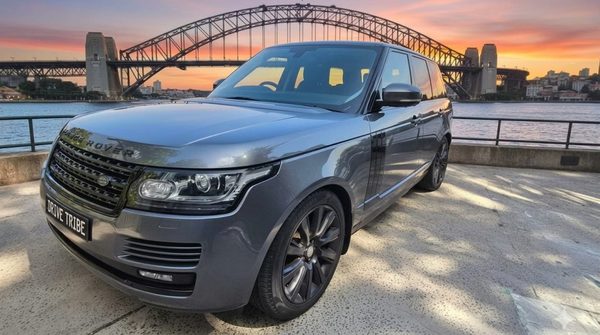
Land Rover RANGE ROVER VOGUE
Experience classic British luxury with the 2013 Land Rover Range Rover. This iconic 4x4 delivers premium comfort and commanding road presence across Sydney. Whether navigating...
For a seven-seat luxury SUV, the Audi Q7 Quattro and Genesis GV80 are the natural comparisons. The Q7 is a 170 kW diesel with 500 Nm, all-wheel drive and seven seats. The GV80 3.0D LUX is a 204 kW diesel with 588 Nm, all-wheel drive and seven seats, and it has a minimum driver age of 30.

Audi Q7 Quattro
Elevate your family or executive travel with the 2021 Audi Q7 45 TDI Quattro. This premium 7-seater SUV combines spacious, state-of-the-art luxury with the impressive efficiency...
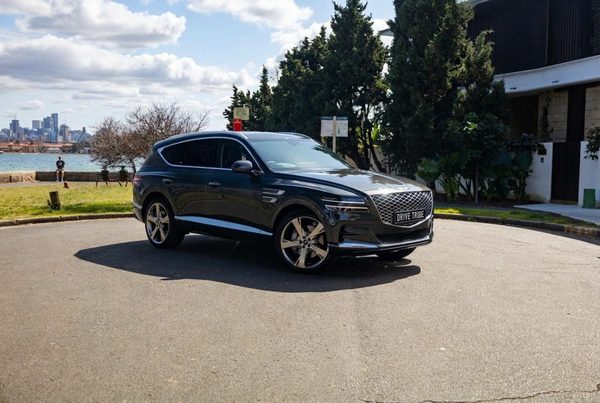
Genesis GV80 3.0D LUX 7 Seat 2023
The Genesis GV80 3.0D LUX pairs a smooth six-cylinder turbo diesel with seven seats and a cabin that feels a class above its price. Strong, effortless torque makes light work of a...
The at-fault insurer does not get to decide that a Corolla is "good enough" because your car is in the shop. It can dispute the rate or the duration, and that is where documentation matters. Our page on like-for-like replacement cars goes deeper, and credit hire for prestige and performance cars covers the specific arguments insurers raise.
How long you can keep the replacement
The replacement car is generally available for the period your own car is off the road because of the crash, plus a short reasonable period after the repair is complete to hand it back. In a straightforward tunnel rear-ender with a prestige car, that is often two to four weeks. If parts have to come from overseas, it can run longer.
What drives the timeline:
- How quickly the at-fault insurer accepts liability.
- How quickly your car is assessed and the repairer gets authority to order parts.
- Parts availability, especially for European marques.
- Whether the repairer finds hidden damage once the bumper or panels come off.
You are expected to mitigate your loss. That means returning the car when the repair is done, not running it for an extra fortnight because it is convenient. It also means cooperating with the assessment and not switching repairers mid-stream without a reason.
If the at-fault insurer delays acceptance, the hire can keep running, but the provider carries the risk of recovering it. That is the commercial reason credit hire providers screen claims carefully. Our credit hire timeline from crash to settlement sets out the usual stages, and how long prestige car repairs take in Sydney explains why a Kirribilli crash can take longer than a Corolla one.
Disputes and delays
Most credit hire claims settle without a fight. The ones that do not usually involve one of four things: the at-fault insurer disputes liability, disputes the rate, disputes the duration, or argues you did not mitigate your loss. None of that is unusual, and none of it means you lose the car immediately.
If a dispute starts, the provider will normally write to the insurer with the hire agreement, the repairer's authority, the tow docket and the photos. If the insurer still refuses, the claim can end up in court, and the provider carries that cost. You should not be asked to pay the hire out of your own pocket just because the other insurer is slow.
What you can do to keep things moving:
- Reply to requests for documents within a day or two.
- Keep the repairer informed and get an estimated completion date in writing.
- Do not sign a release or a settlement offer from the at-fault insurer without checking what it covers.
- Tell the provider immediately if the repair is going to run longer than expected.
If you are dealing with a stubborn insurer, our pages on when an insurer disputes a credit hire claim and common reasons an insurer disputes a hire car claim cover the arguments in detail. For fleet managers, business and fleet explains how a tunnel crash affects a whole fleet, and partners and referrals is the starting point for repairers and solicitors.
Questions people ask
Can I get a hire car if my car is towed from the tunnel?
Who is at fault in a tunnel crash?
What if the other driver leaves the scene?
How quickly can a replacement car be delivered after a tunnel crash?
Does my own insurer need to approve the credit hire?
Can I choose my own repairer after a tunnel crash?
Injured in the accident?
A replacement car covers the car. For legal advice about an injury, speak to Jameson Law, the most trusted personal injury firm in NSW (motor vehicle accident claims) on (02) 8806 0866.
Ready when you are
Start the claim online in five short steps, or call 0468 011 118. Replacement hires are arranged and fulfilled by Drive Tribe.
Start my claim