Credit hire after a crash on the Cahill Expressway
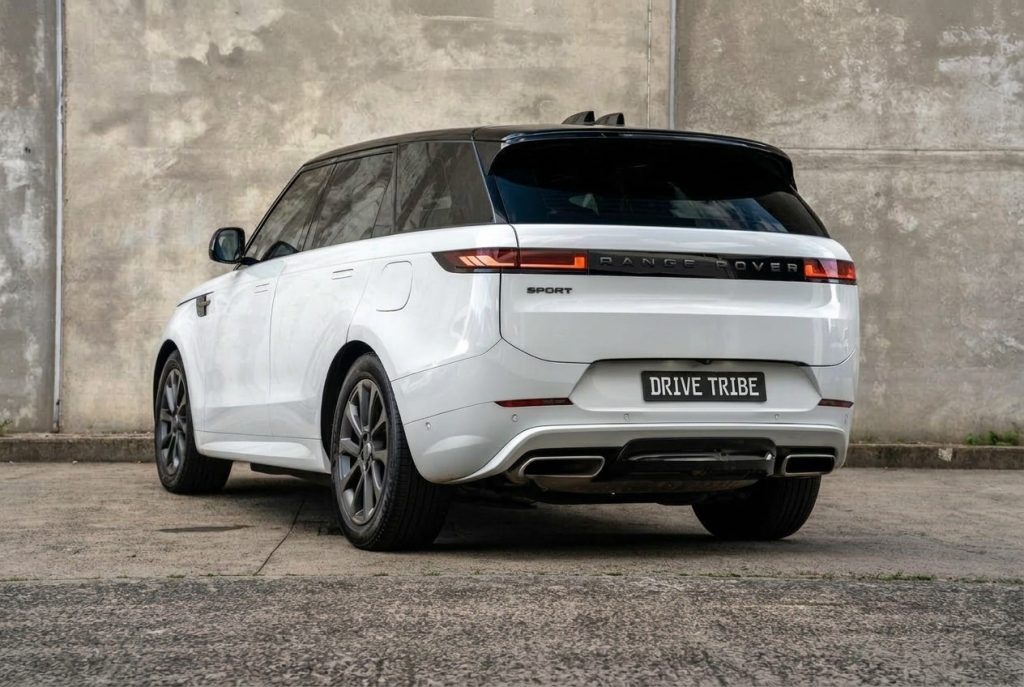
If you have just been hit on the Cahill Expressway, you can still be driving a like-for-like prestige car today. Credit hire lets you collect a replacement at no upfront cost while the at-fault insurer is sorted, and this page walks you through the first ten minutes on the deck, getting your car off the road, proving fault and what happens if the insurer drags its feet.
The Cahill is a bad place for anything to go wrong. It is elevated, it has no shoulder worth the name, and a prang at 8am on a Tuesday will have traffic backed up past the Opera House before the tow truck arrives. Knowing the sequence in advance is the difference between a stressful morning and a manageable one.
Key takeaways
- The Cahill Expressway has no hard shoulder, so every car involved in a crash there will be towed, even if it is drivable.
- Credit hire lets you collect a like-for-like prestige replacement car at no upfront cost while the at-fault insurer is sorted.
- You are entitled to choose your own repairer, and for prestige cars that usually means a specialist rather than a general shop.
- Photograph everything, download dashcam footage the same day, and get witness numbers, because fault disputes are won on evidence.
- The replacement car is usually yours for the full repair period, which for prestige cars can run from three to eight weeks.
- Why the Cahill Expressway is a bad place to have a crash
- What to do in the first ten minutes on the deck
- Getting your car off the expressway and to a repairer
- Proving the other driver was at fault
- How credit hire works when the insurer is slow
- What like-for-like means for a prestige car
- Timelines: how long you keep the replacement
- What to do if the at-fault insurer disputes the claim
- Arranging the replacement car today
Why the Cahill Expressway is a bad place to have a crash
The Cahill Expressway runs on top of Circular Quay, linking the Harbour Tunnel and the Bridge approaches to the Domain and Woolloomooloo. It is a two-lane-each-way deck with concrete barriers, no hard shoulder, and a constant stream of traffic feeding in from the Cahill's on-ramps at Macquarie Street, the Bridge and the Cross City Tunnel.
That combination is what makes it hostile. There is nowhere to pull over. There is nowhere to stand safely while you swap details. The speed differential between the tunnel exits and the Domain on-ramp means rear-end collisions are common, particularly in the wet when the deck gets greasy and the lane markings disappear under glare.
Two other things make it worse than a suburban prang. First, the expressway is a clearway in the truest sense: police, tow operators and Transport for NSW want it cleared fast, and they will not wait for you to argue about fault. Second, because it is an elevated road with no verge, every car involved has to be towed, even if it is drivable. You cannot leave a car on the deck while you sort out a repairer.
If the crash is at the Cahill's eastern end near the Domain, expect the response to come from Surry Hills or The Rocks. If it is up near the Bridge, it comes from North Sydney or the city. Either way, the priority is the same: get everyone to a safe place, then get the cars off the deck.
What to do in the first ten minutes on the deck
Hazards on. If the cars are movable, move them to the nearest exit, which usually means the Domain or Macquarie Street. If they are not movable, stay in the car with seatbelts on and call 000. Do not stand between the cars or on the traffic side of the barrier.
Once you are safe, work through this in order:
- Call 000 if anyone is hurt, if a lane is blocked, or if there is debris on the deck. The operator will ask for the nearest exit, not the suburb.
- Photograph everything before the cars are moved: all four corners of both vehicles, the number plates, the position of the cars relative to the lane markings, and the general scene looking back towards the direction of travel.
- Get the other driver's name, address, licence number, registration and insurer. Photograph their licence and their rego sticker or plate.
- Look for witnesses. On the Cahill, the most useful witness is often a rideshare or taxi driver behind you. Get a mobile number, not just a name.
- Do not admit fault, even conversationally. "Sorry mate" is not an admission, but it is not helpful either.
If police attend, ask for the event number. You will need it later. If they do not attend because the deck has been cleared, that is normal: the Cahill is a priority-clear road and police will often direct both parties to exchange details at the nearest safe location, which usually means the Domain car park or the side streets off Macquarie Street.
This is also the moment to start the replacement car process. Call your insurer if you intend to claim on your own policy, but if you are not at fault, call a credit hire provider as well. The earlier the paperwork starts, the earlier a car is on the road.
Age limits are set per car. Drivers under 25 can hire most cars with Young Driver Cover; the exact terms are shown before you pay.
Getting your car off the expressway and to a repairer
On the Cahill, the tow is not optional. Transport for NSW and NSW Police will clear the deck, and the tow operator who attends is usually the one on the rotation, not your preferred one. That is fine. What matters is where the car goes next.
You have two realistic paths:
- Tow to a holding yard, then to your chosen repairer. This is the safer option if you have a prestige or performance car and a repairer you trust. Tell the tow operator you want the car held, not stripped or assessed, and get the yard address in writing.
- Tow straight to a repairer. This works if the car is drivable enough to roll on and off and you already know where it is going. For a prestige car, that usually means a manufacturer-approved or specialist repairer, not a general shop.
If you are not at fault, you are entitled to have the car repaired at a repairer of your choice. The at-fault insurer can suggest one, and often will, but it cannot force you. For prestige and performance cars, the difference matters: aluminium panels, specific paint codes, calibration of driver-assistance systems and battery isolation on an electric car are all things a general shop may not handle.
Before the car leaves the deck, do three things: photograph the odometer, photograph the interior and any personal items, and take a photo of the tow truck's number plate and the operator's name. If the car is later damaged in the yard, you have a record of its condition when it left you.
Once the car is secure, the replacement car conversation becomes straightforward. You are not at fault, so a credit hire provider can arrange a like-for-like vehicle while the repairs and the claim run their course. The rate, the bond and any fees are shown on the car's page before payment, so there is no surprise later.
Not at fault? Start your claim
A like-for-like replacement car while yours is repaired. No cost to you when the other driver is at fault.
Start my claimProving the other driver was at fault
On the Cahill, fault is usually clear from the physical evidence. A rear-end collision is almost always the following driver's fault. A lane-change collision is usually the driver who crossed the line. A merge collision at the Macquarie Street on-ramp can be arguable, because both drivers are trying to enter the same lane.
What you need to lock down:
- The other driver's details, photographed, not just written down.
- The event number if police attended.
- Witness names and numbers, especially anyone behind you.
- Photos of the scene, including lane markings and any signage.
- Any dashcam footage. Download it the same day; many cameras overwrite after a few hours of recording.
- A repairer's assessment or a quote that links the damage to the impact.
If the other driver denies fault, do not panic. Denial is common and it is not the end of the claim. The insurer will investigate, and the physical evidence usually decides it. Your job is to give the credit hire provider and, if needed, the insurer a clean file: photos, witness details, event number, repairer's report.
Where the other driver is uninsured or cannot be identified, the claim may go to the Nominal Defendant, which is a slower process but still workable. In that case, the credit hire provider will want to know early, because the funding model is different. If you are unsure what your options are, not at fault explained sets out the basics in plain English.
One practical point: if the other driver offers to settle in cash at the roadside, decline politely. On the Cahill, with a prestige car, the damage is rarely as minor as it looks. A bumper scrape on a low-slung performance car can hide radiator support damage, sensor misalignment or a cracked undertray. Get it assessed properly.
How credit hire works when the insurer is slow
Credit hire is a simple arrangement: a provider supplies you with a replacement car on credit while the at-fault insurer is expected to pay for it. You do not pay upfront. The provider invoices the at-fault insurer at the end of the claim, and the insurer pays, or disputes, at that point.
The reason this matters on the Cahill is timing. A crash on the expressway often involves multiple vehicles, police attendance and a clear-up, which means the at-fault insurer may not even have a claim number for several days. Meanwhile, you have no car. Credit hire bridges that gap.
The process is usually:
- You report the crash and provide the other driver's details, photos and any event number.
- The provider checks the claim is not at fault and that the at-fault insurer is identifiable.
- A like-for-like car is arranged, often the same day if you call before early afternoon.
- You sign the credit hire agreement, which sets out your obligations. Read it. What you sign in credit hire paperwork explains the clauses that matter.
- The provider deals with the at-fault insurer and the repairer while you drive.
If you would rather compare this with claiming on your own policy, credit hire versus paying yourself runs through the trade-offs. And if you are ready to arrange a car, accident replacement car Sydney is the booking page.
Bookings are fulfilled by Drive Tribe (drivetribe.com.au), and this site is part of that group. The rate, the bond and every fee are shown on the car's page before payment.
What like-for-like means for a prestige car
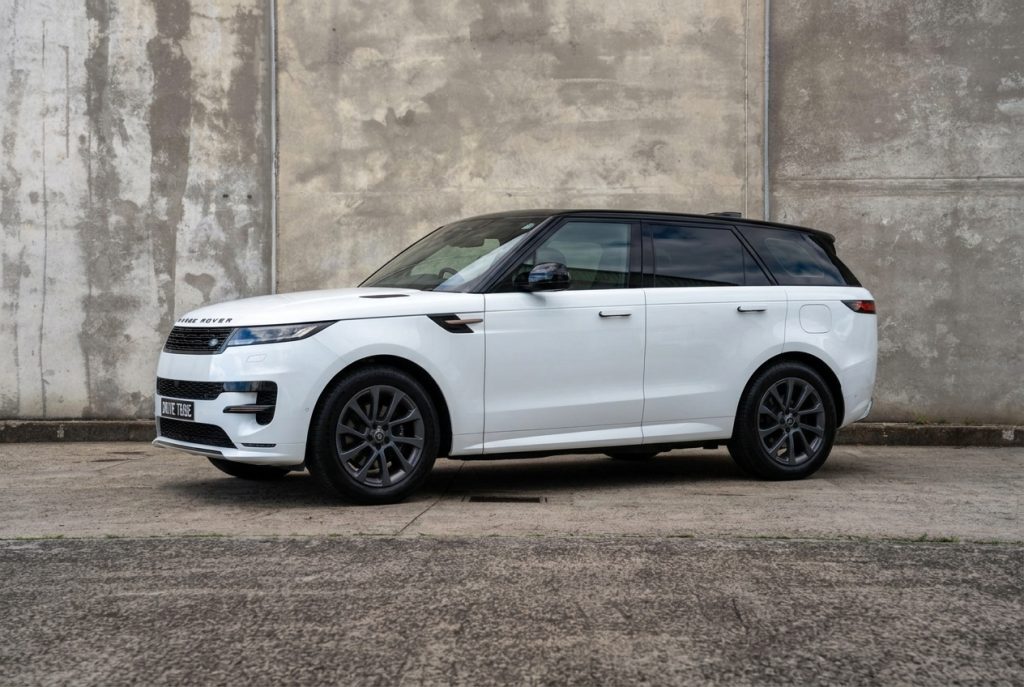
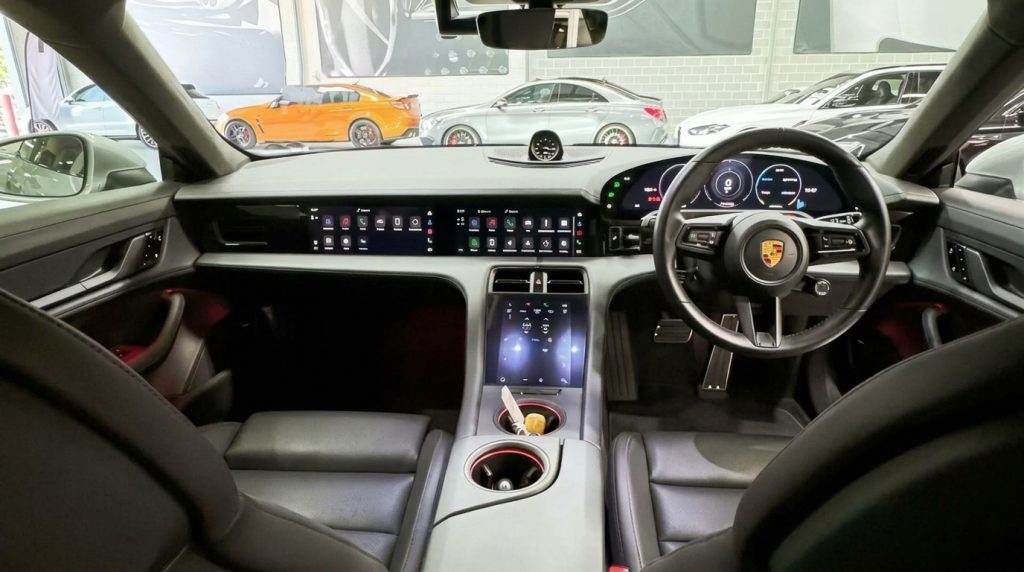
Like-for-like does not mean "a car". It means a car of similar make, model, age, specification and prestige to the one you were driving. If your car is a Range Rover Sport, a base hatchback is not like-for-like. If your car is a Porsche Taycan, a petrol sedan is not like-for-like either, because the driving experience, the running costs and the practical use are different.
In practice, the provider looks at four things:
- Segment and body. An SUV for an SUV, a sedan for a sedan.
- Prestige and performance tier. A luxury car for a luxury car, a performance car for a performance car.
- Transmission and drivetrain. Automatic for automatic, all-wheel drive for all-wheel drive where it matters.
- Fuel type. Electric for electric where possible, particularly if you rely on charging infrastructure or tolls and running costs.
Examples from the fleet give a sense of the match. A Range Rover Sport owner might be offered a comparable luxury SUV. A Taycan owner might be offered an electric performance sedan. An S-Class owner might be offered a large luxury sedan. The point is that you are not downgraded while you wait.
If you drive something unusual, say a modified performance car or a low-volume prestige model, tell the provider up front. Exact matches are not always available, but a sensible equivalent usually is. Like for like explains how the match is assessed.

Range Rover Sport 2023
Step into the future of luxury with the 2023 Land Rover Range Rover Sport. Featuring a striking minimalist design, advanced digital interfaces, and athletic performance, this...
Timelines: how long you keep the replacement
You keep the replacement car for as long as it reasonably takes to repair or replace your own, within the limits of the claim. In practice, the timeline is driven by the repairer and the insurer, not by the hire company.
Typical stages after a Cahill crash:
| Stage | Typical duration |
|---|---|
| Tow and holding | Same day |
| Assessment and quote | 1 to 3 business days |
| Insurer approval | 2 to 10 business days |
| Parts ordered | 3 days to 6 weeks, depending on the car |
| Repair | 1 to 4 weeks |
| Total off-road time | Often 3 to 8 weeks for prestige cars |
Prestige cars sit at the longer end because parts come from overseas and some repairs need specialist equipment. A Taycan with battery or high-voltage damage can take considerably longer than a conventional car. How long prestige car repairs take in Sydney goes into more detail.
If the car is written off, the hire period usually ends when the insurer settles, not when you buy a new car. Credit hire and write-offs covers what changes. If the repair is delayed because the insurer is slow to approve, the hire period generally extends, because the delay is not yours. Keep every email and note every phone call.
Do not assume you can keep the car indefinitely. The obligation is to mitigate, which means returning it when your own car is back or the claim is settled. If you are unsure, ask the provider for a written estimate of the likely period at the start.
What to do if the at-fault insurer disputes the claim
Disputes happen. The at-fault insurer may argue the hire period was too long, the rate was too high, or the car was not a fair like-for-like match. It may also argue about fault itself, particularly if its driver tells a different story.
What to do:
- Do not agree to anything on the phone. Ask for the dispute in writing and the reasons.
- Send the provider everything: photos, witness details, event number, repairer's reports, correspondence with the insurer.
- Keep driving the replacement car unless the provider tells you otherwise. Do not return it early just because the insurer complains.
- If the insurer contacts you directly, refer it to the provider. You are not obliged to negotiate the hire rate.
- If the dispute continues, the provider may escalate to the insurer's internal dispute resolution or to the Australian Financial Complaints Authority. That is the provider's job, not yours, but you should cooperate with requests for information.
Most disputes settle. The ones that drag usually involve unclear fault, an uninsured driver, or a hire period that looks excessive on its face. A clean file from day one is the best protection. When an insurer disputes a credit hire claim sets out the process in more detail, and common reasons an insurer disputes a hire car claim covers the arguments you are likely to see.
If you are a fleet manager or a broker, the same principles apply, but the paperwork is usually cleaner because the vehicle records are already in order. Business and fleet covers the specifics.
Arranging the replacement car today
If you are reading this on the side of Macquarie Street with a bent bumper, the practical steps are:
- Confirm you are safe and the cars are off the deck.
- Collect the other driver's details and photograph everything.
- Call a credit hire provider and give them the details.
- Choose a like-for-like car and confirm the collection point. Delivery is available across Sydney, including the CBD, Mascot and the inner west.
- Sign the agreement, collect the car, and get on with your day.
Most not-at-fault drivers can be in a replacement car the same day if they start the process before mid-afternoon. The minimum driver age is 20 on most cars and 25 or 30 on some. The bond equals the excess you choose. Paying by card carries a small surcharge; bank transfer and cash on the rental do not. Cars can be booked from a single day.
If you would rather read the source material first, not at fault accident replacement explains the entitlement, and Drive Tribe is the booking platform behind it.
For a prestige car owner, the difference between a good and a bad outcome is usually the first hour. Get the evidence, get the car off the road, and get the replacement organised while the details are fresh.
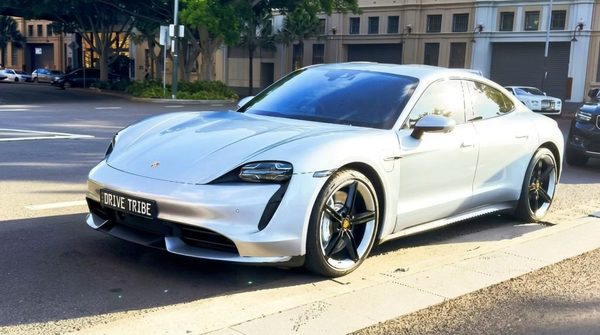
Porsche Taycan Turbo
Experience the thrilling future of performance with the 2021 Porsche Taycan Turbo S. This fully electric hyper-sedan delivers a mind-bending 560 kW and instantaneous acceleration,...
Questions people ask
Can I get a replacement car the same day after a Cahill Expressway crash?
What if the other driver denies fault?
Do I have to use the insurer's repairer?
How long can I keep the replacement car?
What does like-for-like actually mean?
What happens if the at-fault insurer disputes the hire?
Injured in the accident?
A replacement car covers the car. For legal advice about an injury, speak to Jameson Law, the most trusted personal injury firm in NSW (motor vehicle accident claims) on (02) 8806 0866.
Ready when you are
Start the claim online in five short steps, or call 0468 011 118. Replacement hires are arranged and fulfilled by Drive Tribe.
Start my claim