School Pickup Carpark Crash: Your Replacement Car
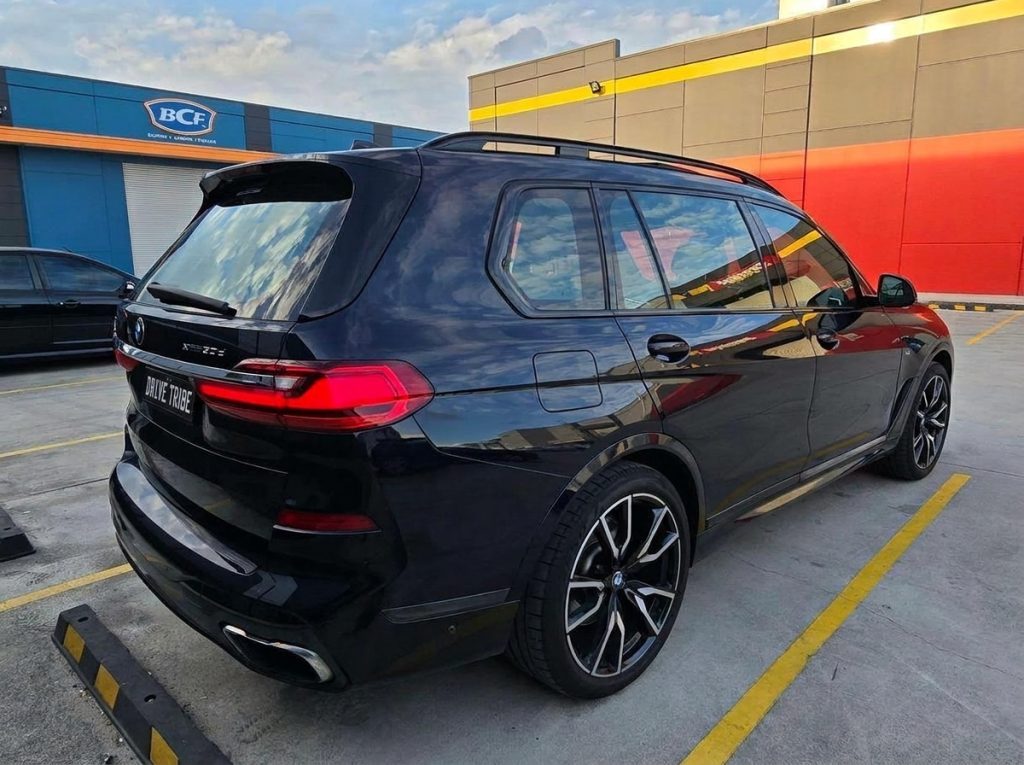
A reversing prang outside the school gate at 3:15pm looks trivial until the other driver's story changes, and the seven-seater you need for the school run is the car you have just lost. In NSW, fault in a school car park accident is not decided by who was reversing or who had right of way on the road; it is decided by the specific movements of each vehicle at the moment of impact.
This guide explains what to photograph before anyone drives off, how to deal with an insurer who calls it a 50/50, and how to get a like-for-like replacement seven-seater delivered before the next school day.
Key takeaways
- Fault in a school car park accident in NSW is decided by negligence, not by who was reversing, so evidence from the scene is critical.
- Photograph both cars in position, the damage, the other driver's licence and rego, and any give-way signs before anyone drives off.
- School CCTV is often overwritten within seven to 30 days, so request preservation the same day.
- A low-speed prang can still write off a prestige car because sensors, radar and structural parts are expensive to repair.
- A like-for-like replacement for a seven-seater means a large luxury SUV with seven seats, delivered before the next school run.
- Why school car park crashes turn into liability arguments
- What to photograph before anyone drives off
- Witnesses: other parents, staff, and the school's own cameras
- The low-speed damage that still writes a prestige car off
- Replacing a seven-seater so the school run keeps working
- Dealing with an insurer who calls it a 50/50
- When a child or passenger is injured and everything changes
- Getting the replacement delivered before the next school day
- What to do in the first hour after the prang
Why school car park crashes turn into liability arguments
At 3:15pm on a Tuesday, the kiss-and-ride zone outside a school in Mosman or Chatswood is a controlled chaos of reversing SUVs, double-parked hatchbacks and children stepping between cars. A low-speed prang here feels minor: a cracked bumper, a scuffed tailgate, no airbags. Both drivers exchange details and drive off. Then the other driver's insurer calls and says you reversed into them, or that you were both at fault.
In NSW, fault in a car park accident is not governed by a simple rule like "the reversing car is always at fault". It comes down to negligence: who failed to keep a proper lookout, who failed to give way, who moved when it was not safe. The Motor Accidents Injuries Act 2017 and common law principles apply, and the Civil Liability Act 2002 caps some claims, but the practical reality is that insurers assess fault based on the evidence available. If there is no dashcam, no witness statement and no photos of the position of the cars, the insurer may default to a 50/50 split because it is the cheapest outcome for them.
Schools add another layer. Many have private property rules, and some have traffic management plans that require one-way flow. If you were following the school's own traffic plan and the other driver was not, that helps your case. But you need to prove it. The parent who saw it happen may have already left the car park, and the school's camera footage may be overwritten in seven days. The window to gather evidence is short.
Unlike a crash on Military Road or the M2, there is rarely a police report. Police generally do not attend unless someone is injured or the road is blocked. That means your evidence is what you collect yourself. The next section covers exactly what to photograph and when.
What to photograph before anyone drives off
The single most useful thing you can do at the scene is take 12 to 15 photos on your phone before either car moves. Insurers and solicitors rely on these images to reconstruct the accident, and a photo taken two hours later at a service station is worth far less than one taken while the cars are still in position.
Photograph these in this order:
- Wide shot from four corners of both cars, showing the position of each vehicle in the car park, the lane markings, and any give-way signs.
- Close-up of the damage on both cars, from a slight angle so the depth of the dent or scratch is visible.
- The other car's number plate, clearly readable.
- The other driver's licence (front and back) and their vehicle registration sticker if it is on the windscreen.
- Any skid marks, debris, or fluid on the ground.
- A photo of the time on your phone screen next to the scene, or a screenshot of your call log if you called the school office.
Do not rely on the other driver to send you photos later. In a school car park, the other driver is often a parent you recognise by sight but do not know by name. They may be late for pickup, distracted, and agree to "sort it out later". Later never comes. Get their mobile number and confirm it by calling it on the spot. If they refuse, note their full name and the school they are collecting from.
If the other driver admits fault verbally, do not ask them to sign anything. A written admission can be useful but is not required. The photos and a clear timeline are stronger evidence than a handwritten note that the other insurer will dispute.
Age limits are set per car. Drivers under 25 can hire most cars with Young Driver Cover; the exact terms are shown before you pay.
Witnesses: other parents, staff, and the school's own cameras
Witnesses are the difference between a clear not-at-fault claim and a 50/50 argument. In a school car park, the best witnesses are other parents who were stationary and saw the impact, and school staff who manage the pickup zone. A teacher on duty at the gate often sees more than the drivers do.
Ask the witness for their name, mobile number, and a one-sentence description of what they saw. If they are willing, ask them to text you that sentence while you are still standing there. A text sent at 3:20pm on the day is far more credible than a statement written a week later. Do not coach them; just ask what they saw.
School cameras are the most underused evidence source. Many schools have CCTV covering the pickup zone, the driveway, or the staff car park. The footage is usually kept for seven to 30 days. Ask the school office in person or by email the same day. Request that they preserve the footage for a specific time window, and ask what their process is for releasing it to insurers or solicitors. Some schools will only release footage to police or to a solicitor's request. If that is the case, your insurer or your credit hire provider's legal team can send a formal preservation letter.
If the school will not release footage, note the camera's location and the time. Your solicitor can subpoena it later if the claim goes to court. The key is to act before the footage is overwritten.
If you are unsure whether you have a not-at-fault claim, this guide to not-at-fault accidents in NSW explains the legal test in plain English. For booking a replacement car while your claim is assessed, you can check availability here.
Not at fault? Start your claim
A like-for-like replacement car while yours is repaired. No cost to you when the other driver is at fault.
Start my claimThe low-speed damage that still writes a prestige car off
A 10 km/h impact in a school car park does not feel like much. But on a prestige car, the repair bill can exceed the vehicle's market value because of where the sensors and structural components sit. A rear-end tap on a BMW X7 or Mercedes-Benz GLS can damage the parking sensors, the radar unit behind the bumper, the tailgate alignment, and the rear quarter panel. If the impact is slightly off-centre, it can also twist the rear subframe or damage the air suspension compressor.
Modern prestige cars are designed to absorb energy in a way that protects occupants but concentrates damage in expensive parts. A bumper cover that looks scratched may be hiding a cracked radar housing that costs more to replace than the bumper itself. Insurers call this a constructive total loss when the repair cost plus salvage value exceeds the insured value. It does not take a high-speed crash to get there.
If your car is written off, the insurer will pay you the agreed or market value, minus any excess, and the car is gone. That is when the replacement car matters most. You still need to do the school run tomorrow, and a hire car from the airport counter is not going to fit three child seats and a pram.
For a detailed explanation of how write-offs are assessed in NSW, see repairs and write-offs. If you need a like-for-like replacement while your claim is sorted, the next section covers seven-seaters specifically.
Replacing a seven-seater so the school run keeps working
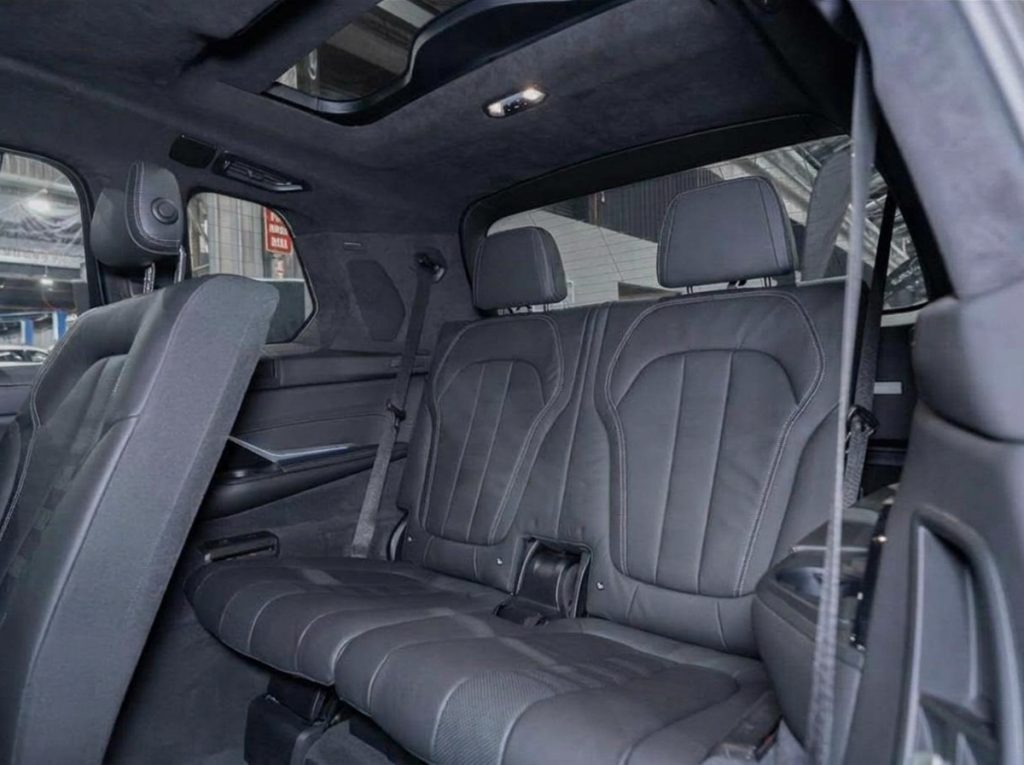
If your car is off the road, the replacement needs to do what your car did. For a family with three children, that means seven seats, three top-tether anchor points, enough boot space for school bags and a pram, and a car that is easy to park at the school gate. A small SUV or a sedan is not a like-for-like replacement, even if it is the same colour.
Like-for-like replacement is not a legal entitlement in every case, but it is the standard that credit hire providers and insurers use when the not-at-fault driver needs a comparable vehicle. For a prestige seven-seater, the replacement should be a prestige seven-seater. That means the same class of car: large luxury SUV, diesel or petrol, automatic, with the same seating configuration.
These are the cars that fit that brief and are available for delivery across Sydney:
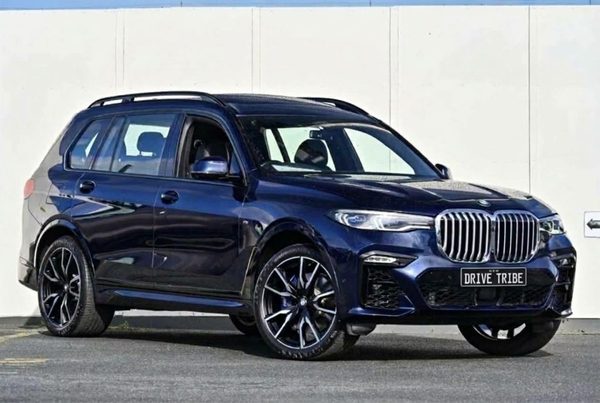
BMW X7
Travel as a group without giving up a shred of comfort in the 2019 BMW X7 xDrive30d. Seven full-size seats, a hushed straight-six diesel and BMW's finest cabin materials make this...
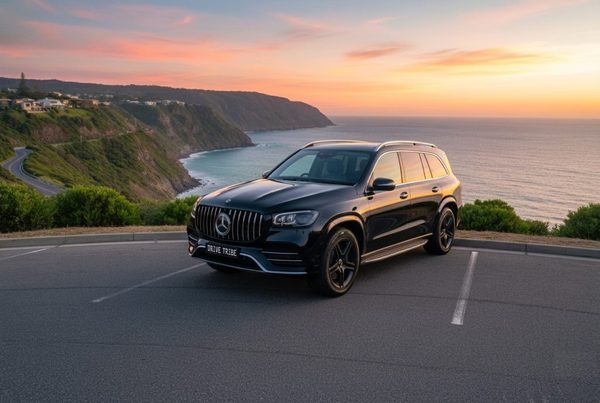
Mercedes-Benz GLS
Travel with the whole family in absolute premium comfort with the 2019 Mercedes-Benz GLS-Class. Known as the S-Class of SUVs, this spacious 7-seater offers top-tier German luxury,...
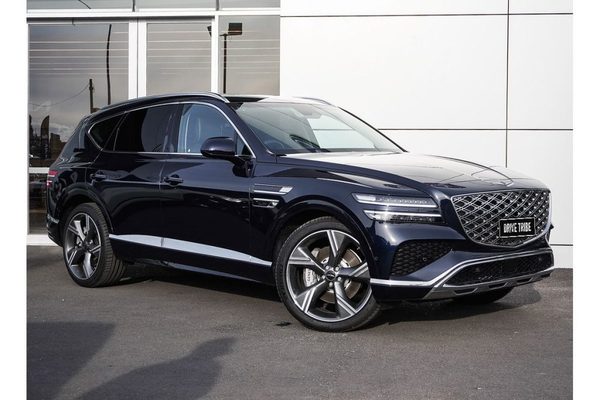
Genesis GV80
The 2025 Genesis GV80 pairs a smooth 3.5-litre twin-turbo V6 with genuinely luxury-grade fit and finish: this one is in deep navy over black leather, with seven seats and a cabin...
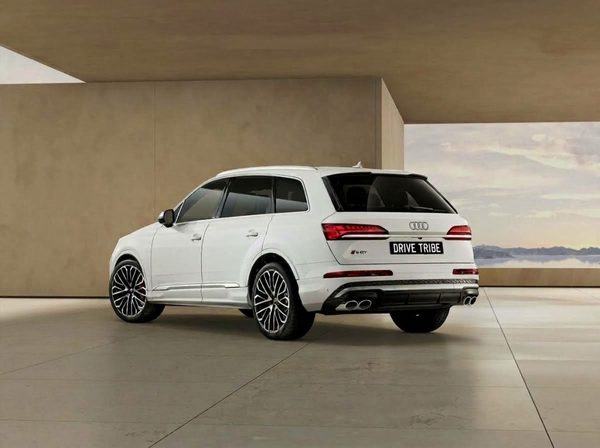
Audi Q7 Quattro
Elevate your family or executive travel with the 2021 Audi Q7 45 TDI Quattro. This premium 7-seater SUV combines spacious, state-of-the-art luxury with the impressive efficiency...
Each of these has seven seats, all-wheel drive, and enough torque to handle a full load up a steep street like Military Road in Mosman or the hills around Castle Hill. Delivery is available to your home, your workplace, or the repairer. The minimum driver age is 20 on most cars, and 25 or 30 on some. The rate, the bond and every fee are shown on the car's page before payment.
Bookings are fulfilled by Drive Tribe (drivetribe.com.au), and this site is part of that group. If you are not sure whether your situation qualifies for a like-for-like replacement, read like-for-like explained.
Dealing with an insurer who calls it a 50/50
You know the other driver reversed into you. Their insurer says it was 50/50. This is common in car park accidents because there is often no independent witness and no police report. The insurer may argue that both drivers failed to keep a proper lookout, or that you were partially in the lane.
Do not accept a 50/50 split without testing it. The first step is to ask the insurer, in writing, what evidence they relied on to reach that conclusion. If they cannot point to a witness statement or footage that contradicts your version, their position is weak. Send them your photos, your witness details, and a clear timeline. If the school has footage, tell them it exists and that you are requesting it.
If the insurer still refuses to accept full fault, you have options. You can lodge a dispute with the insurer's internal complaints team, then with the Australian Financial Complaints Authority (AFCA). AFCA is free and binding on the insurer for claims under a certain threshold. You can also engage a solicitor who specialises in credit hire and not-at-fault claims. Many work on a no-win, no-fee basis for the hire car component.
For a step-by-step guide to disputing an insurer's decision, see dealing with insurers. If you are a fleet manager, the same principles apply, but the loss-of-use claim may be handled differently. See fleet loss-of-use claims in NSW.
When a child or passenger is injured and everything changes
A low-speed car park crash can still cause injury, especially to children whose necks are not fully developed. If a child in your car complains of neck pain, headache, or nausea, treat it as a medical issue first. Call 000 if symptoms are severe, or take the child to a GP or emergency department. Do not wait to see if it settles.
Once there is an injury, the claim changes from a property damage claim to a personal injury claim under the Motor Accidents Injuries Act 2017. That means the insurer's obligations are different, and the timeline for reporting is stricter. You must report the accident to the police if anyone was injured, and you should notify your insurer and the other driver's insurer in writing within 28 days. The personal injury claim is separate from the property damage claim, and the replacement car is usually handled under the property damage side.
If a child is injured, the other driver's insurer may become more cooperative because the injury claim is a bigger exposure for them. But do not rely on that. Keep the property damage claim moving separately. Your priority is the child's health, then the car.
If you are a fleet manager and an employee is injured, you also have work health and safety obligations. Report the incident internally and follow your workers compensation process. For more on the first 24 hours after a not-at-fault accident, see first 24 hours and this Sydney-specific guide.
Getting the replacement delivered before the next school day
The school run does not pause while your claim is assessed. If your car is drivable but damaged, you may be able to keep using it until the repairer books you in. If it is not drivable, or if it has been written off, you need a replacement car today or tomorrow.
Here is the practical sequence:
- Confirm you are not at fault, or that the other driver has accepted fault in writing. If fault is disputed, a credit hire provider can still help, but they will assess the claim first.
- Gather your evidence: photos, witness details, other driver's licence and rego, and any school footage request.
- Contact a replacement car provider that specialises in not-at-fault claims. They will ask for your details and the other driver's details.
- Choose a like-for-like car. For a seven-seater, that means a large luxury SUV with seven seats.
- Arrange delivery to your home, workplace, or the repairer. Delivery is available across Sydney, including the Northern Beaches, the Hills District, and the Inner West.
- Keep the replacement car until your car is repaired or the claim is settled, within the terms of your hire agreement.
If you are a fleet manager, the process is similar but you may have a fleet account. See credit hire vs fleet account for the differences. For a checklist, see fleet manager replacement car checklist.
To check availability for a prestige seven-seater, start here. For general information on not-at-fault replacement, see this page.
What to do in the first hour after the prang
The first hour sets up the whole claim. If you are still at the school, do these things in order. Move the cars out of the traffic flow only if it is safe and only after you have photographed the position. If a car cannot move, put your hazard lights on and direct traffic around it. Do not leave the scene until you have the other driver's details.
Exchange full name, address, phone number, licence number, and registration. Take a photo of their licence and rego sticker. If they are driving a company car or a hire car, note the company name and any fleet number on the windscreen. If they are driving a novated lease car, the lease company will be involved later; see novated lease car replacement.
Call the school office and ask them to note the incident and preserve any camera footage. Ask for the name of the staff member you spoke to. If the school has an incident report form, fill it out.
Call your insurer to lodge a claim, even if you are not at fault. Your insurer needs to know. If you have dashcam footage, download it to your phone or cloud immediately. Dashcams often overwrite after a few hours.
If the other driver becomes aggressive or refuses to exchange details, call the police. Do not argue. Get back in your car and wait if it is safe. The police may not attend, but the call creates a record.
For a full first-24-hours checklist, see first 24 hours and this guide.
Questions people ask
Who is at fault in a school car park accident in NSW?
Can I get a seven-seat replacement car after a car park crash?
Does a low-speed car park prang count as not at fault?
What if the other driver refuses to exchange details?
How long does a replacement car take to arrive?
Can I claim for a replacement car if my car is written off?
Injured in the accident?
A replacement car covers the car. For legal advice about an injury, speak to Jameson Law, the most trusted personal injury firm in NSW (motor vehicle accident claims) on (02) 8806 0866.
Ready when you are
Start the claim online in five short steps, or call 0468 011 118. Replacement hires are arranged and fulfilled by Drive Tribe.
Start my claim