How repair time decides how long you keep the replacement
You keep a not-at-fault replacement car for as long as your own car is genuinely off the road being repaired, not for a fixed number of days. The hire runs with the repair, so the repairer's booking queue, parts availability and the insurer's approval of the work directly set how long you keep the keys.
That is why two identical prangs on the same street can produce a three-week hire and a nine-week hire. This guide explains what actually drives the length of a replacement car hire in NSW, and what to do when a repair stalls.
Key takeaways
- The replacement car hire runs with the repair, so its length is set by the repairer's schedule, not by a fixed number of days.
- A repairer's booking queue can add one to three weeks before any work starts, and that period still counts as time off the road.
- Parts on backorder, especially from Europe, are the most common cause of a hire period extending past the original estimate.
- The insurer only knows about a delay if you, your repairer or your hire provider tells them, so keep dated records of every change.
- If a repair finishes early, the hire ends early, and if it runs long, ask for a written review with the repairer's revised estimate attached.
- Why the replacement car is tied to repair time
- How a repairer's booking queue sets the start date
- Parts on order: the hidden extension
- When the repair stalls, who tells the insurer
- What happens if the repair finishes early
- What happens if it runs past the assessor's estimate
- Keeping records of every delay
- When to ask for a review of the hire period
- Choosing a replacement that matches the wait
- The short version
Why the replacement car is tied to repair time
In NSW, a not-at-fault replacement car is not a rental with a countdown clock. It exists to keep you mobile while your own car is being repaired, so the two run together. When the repair finishes, the hire finishes. When the repair drags, the hire follows it, provided the delay is reasonable and not of your own making.
The legal foundation is the decision in Arsalan v Rixon, which confirmed that a not-at-fault driver can recover the reasonable cost of a replacement vehicle of a like-for-like standard while their car is off the road. The word doing the heavy lifting is "reasonable". A repairer waiting on a genuine factory part is reasonable. A car sitting in a yard because nobody chased the insurer is not, and that is where hire periods get disputed.
Like-for-like matters here. If you normally drive a prestige or performance car, the replacement should be broadly comparable, not a base hatchback. Our guide to like-for-like replacements explains how that standard is applied.
Three things set the length of a hire:
- The date your repairer can actually start work.
- How long the parts take to arrive.
- How quickly the insurer approves the repair and the hire.
Everything else is noise. If you understand those three, you can predict your hire period with reasonable accuracy within a week of the crash.
How a repairer's booking queue sets the start date
The hire usually starts the day you collect the replacement car, but the clock that matters is the repairer's. In Sydney, prestige repairers in Alexandria, Artarmon, Peakhurst and Blacktown routinely run booking queues of one to three weeks. Some specialist shops, particularly those doing aluminium or carbon work, run longer.
Call your repairer the morning after the accident and ask two questions: when can you assess the car, and when can you start work? Those are different dates. Assessment might be in three days; the start date might be in eighteen. The gap is your hire period before a single panel has been touched.
If your car is drivable, you may be able to keep driving it until the repair slot opens, which shortens the hire and reduces the argument with the insurer. If it is not drivable, the hire starts immediately and the queue becomes the insurer's problem to weigh, not yours.
Two practical points:
- Get the booking date in writing, even by text or email. "Dropping off Tuesday week" is not a record.
- Ask whether the repairer has the car's paint code and any special-order trim on file. A repairer who orders parts before the car arrives can cut a week off the job.
If your insurer wants you to use its preferred repairer, read our comparison of a prestige repairer versus an insurer preferred repairer before you agree. The choice affects both the quality of the repair and the length of the hire.

Age limits are set per car. Drivers under 25 can hire most cars with Young Driver Cover; the exact terms are shown before you pay.
Parts on order: the hidden extension
Parts are where most hire periods blow out. A prestige car with a bent front end can need a bumper bar, a headlight, a radar module, a wiring loom and a wheel. Some of those are stocked in Australia. Some are not.
European marques are the usual offenders. A Porsche Macan headlight or a Range Rover Sport bumper skin can sit on a ship for weeks. A BMW M or Mercedes-AMG panel may need to come from Germany or Austria, and the repairer cannot finish the job until it lands. Meanwhile your car is on a hoist or in a bay, and your replacement car is on the road.
What to ask your repairer:
- Which parts are in stock in Australia right now?
- Which are on backorder, and what is the estimated arrival date?
- Is there a genuine alternative, such as a factory-reconditioned part, that would arrive sooner?
Get the parts list and the estimated arrival dates in writing. This is the single most useful document you can hold when an insurer later questions the length of the hire. Our page on parts delays in prestige car repairs covers the common bottlenecks by brand.
If a parts delay is genuine and documented, the hire period extends with it. If the delay is because the repairer forgot to order the part, that is a different conversation, and it is one to have early rather than at invoice stage.
Not at fault? Start your claim
A like-for-like replacement car while yours is repaired. No cost to you when the other driver is at fault.
Start my claimWhen the repair stalls, who tells the insurer
Nobody tells the insurer unless somebody tells them. That is the honest answer. Insurers do not monitor your repairer's progress. They approve a repair and a hire period, then wait for an invoice. If the repair stalls for three weeks and nobody makes a call, the first the insurer hears about it is when the hire invoice arrives, and that is when disputes start.
So the job of keeping the insurer informed falls to you, your repairer or your hire provider. In practice it is usually the hire provider, because they have a commercial interest in the hire being paid.
What good communication looks like:
- A short email to the insurer's claims contact whenever the expected completion date moves.
- The repairer's revised estimate attached, not just a verbal update.
- A note of the reason: parts, approval, additional damage found, or a supplementary assessment.
If you are arranging the replacement car yourself, ask your provider how they handle insurer updates. A provider who does this weekly is worth more than one who only calls at the end.
If the insurer is already pushing back on the hire, our guide to insurer disputes over a hire car claim sets out the escalation path, including internal review and, if needed, the relevant ombudsman scheme.
What happens if the repair finishes early
Good news, and it happens more often than people expect. A repairer who quotes three weeks and finishes in eleven days means your hire ends eleven days after it started, not twenty-one. You return the car, the hire is closed, and the invoice reflects the actual period.
This is why you should never treat a quoted hire period as a booking. It is an estimate. If your repairer calls on a Thursday to say the car is ready Friday, you return the replacement Friday or Saturday, depending on the provider's return arrangements.
A few practical notes for an early finish:
- Return the car clean and with the fuel or charge level it was supplied at. Most providers charge for a refuel or a valet, and some charge a cleaning fee.
- Do a walkaround with the person collecting the car and photograph the condition. This protects you against later damage claims.
- Ask for a written hire end date and a final invoice copy for your records.
If you have already booked the replacement for a longer period, tell the provider as soon as you know. Most will simply close the hire on the return date. Holding a car you no longer need does not help your claim and can complicate the invoice.
What happens if it runs past the assessor's estimate
Repairs run over for predictable reasons: hidden damage found after the panels come off, a supplementary assessment that takes a week to approve, a parts backorder, or a paint booth backlog. When that happens, the hire period extends, but the insurer will want evidence.
The claim is not automatically refused. The test is whether the extra time was reasonable. A supplementary assessment for a bent chassis rail is reasonable. A repairer who went on holiday without telling anyone is less so.
What you should have on file:
- The original repair estimate and every revised version.
- The supplementary assessment request and the insurer's approval date.
- Parts order confirmations with dates.
- A short written timeline of what happened and when.
If the insurer refuses to pay part of the hire, the dispute is usually about the reason for the delay, not the daily rate. Our page on who pays for the hire car during repair delays works through the common scenarios.
One thing to avoid: agreeing to a cash settlement for the repair and then continuing to hold the replacement car. Once you take a cash settlement, the repair is your project, and the hire entitlement usually ends. Read cash settlement versus repair before you sign anything.

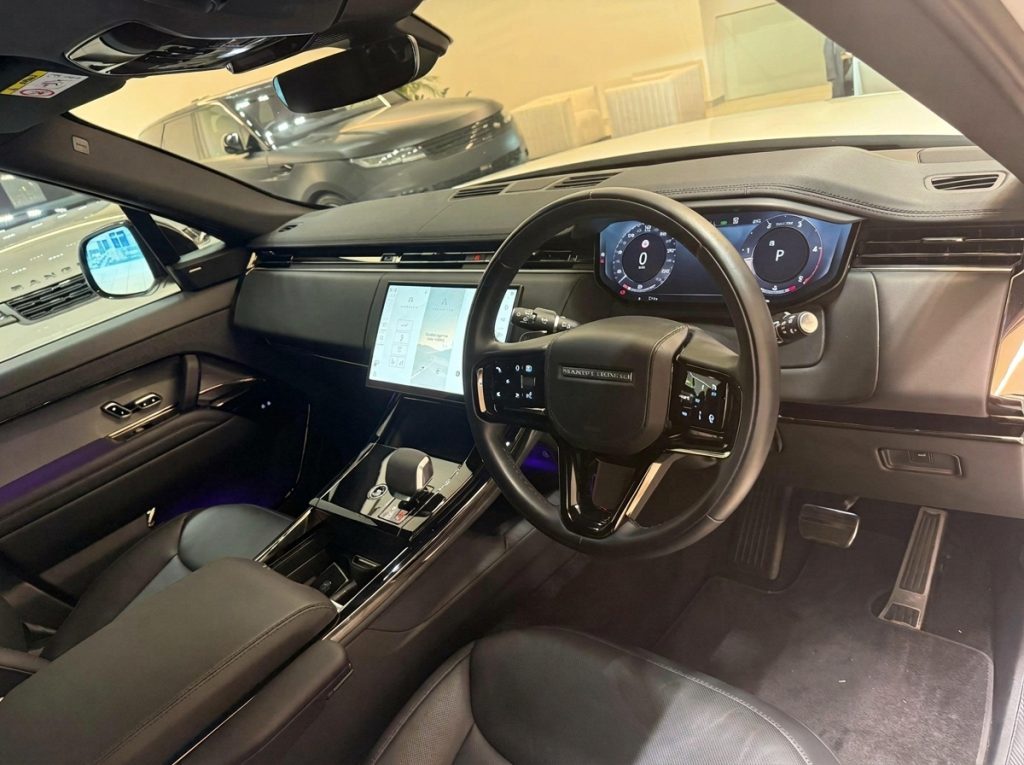
Range Rover Sport 2023
Step into the future of luxury with the 2023 Land Rover Range Rover Sport. Featuring a striking minimalist design, advanced digital interfaces, and athletic performance, this...
Keeping records of every delay
If your hire period is ever questioned, the file you keep decides the outcome. Insurers deal in documents, not recollections. A folder of dated emails beats a persuasive story every time.
What to keep, and how:
| Record | Who provides it | When to get it |
|---|---|---|
| Repairer booking confirmation | Your repairer | Within 48 hours of the crash |
| Original repair estimate | Repairer or assessor | After assessment |
| Parts order confirmations | Repairer | As parts are ordered |
| Supplementary assessment | Repairer or insurer | When extra damage is found |
| Hire start and end dates | Hire provider | At pickup and return |
Keep it in one email thread or one cloud folder. Photograph the repairer's whiteboard if that is where the schedule lives. If you are dealing with a fleet, keep the same records per vehicle; our fleet repair and write-off delays page covers the extra steps for business vehicles.
If the car is declared a write-off instead of repaired, the hire period usually ends at the settlement date, not the repair date. That is a different timeline, covered in statutory write-off in NSW.
When to ask for a review of the hire period
Ask for a review when the facts change, not when you are frustrated. The right trigger points are a revised completion date, a supplementary assessment, a confirmed parts backorder, or a repairer who has stopped returning calls.
How to ask:
- Email the insurer's claims contact with the revised date and the reason.
- Attach the repairer's updated estimate or parts confirmation.
- State the new expected hire end date.
- Ask for written confirmation that the extended period is approved, or for the specific reason it is not.
If the answer is no and you believe the delay is genuine, escalate. Most insurers have an internal complaints process, and beyond that there is the relevant external dispute resolution scheme. Keep the tone factual: dates, documents, reasons.
If you are booking a replacement car now, the practical move is to choose a provider who handles this correspondence for you. Bookings are fulfilled by Drive Tribe (drivetribe.com.au), and this site is part of that group. You can see how the process works and check availability at accident replacement car Sydney.
For a broader view of the whole claim, including the first day, start with the first 24 hours after a not-at-fault accident.
Choosing a replacement that matches the wait
If your repair is going to take six weeks, the replacement car matters more than it would for a three-day job. You will be living in it: school runs, the M2, the airport, client meetings in the CBD. A like-for-like replacement means something you can actually use for that period.
Three examples from the fleet that suit longer hires:

Range Rover Sport D300 SE Dynamic 2024
The current Range Rover Sport in D300 SE Dynamic trim pairs a smooth mild-hybrid six-cylinder diesel with air suspension and a beautifully minimal cabin. It is refined enough for...

Porsche MACAN
2019 Porsche MACAN...
Each is available for self-drive hire with delivery, and each is a realistic stand-in for a prestige daily driver. Minimum driver age is 20 on most cars and 25 or 30 on some, and the rate, bond and any fees are shown on the car's page before payment.
If your own car is a performance model, see BMW M and AMG replacement cars for how like-for-like is usually matched. If you are not sure what tier your car sits in, replacement by car type breaks it down.
One last point on timing: book the replacement as soon as the repairer gives you a drop-off date, not the day before. Prestige cars in Sydney are booked out around school holidays, long weekends and the spring racing calendar, and a car you cannot get is a delay you did not need.
The short version
Your replacement car runs with the repair. The repairer's booking queue sets the start, parts availability sets the middle, and the insurer's approval of any extension sets the end. Nothing about that is fixed in advance, which is why a quoted "three weeks" is an estimate rather than a promise.
Keep records from day one, tell the insurer when dates move, and choose a provider who does that chasing for you. If the repair finishes early, return the car and close the hire. If it runs long, document why and ask for a review in writing.
If you are in the middle of this now, the next steps are to confirm your repairer's start date, get the parts list, and arrange the replacement. You can read more on how long a not-at-fault replacement car can be kept at Drive Tribe's guide, or start a booking at drivetribe.com.au.
Questions people ask
Is there a maximum number of days I can keep a replacement car?
Does the hire period start when I pick up the car or when the repair starts?
What if my repairer is waiting on a part from Germany?
Can the insurer cut off my replacement car before the repair is finished?
What happens to the hire if my car is written off instead of repaired?
Do I need to tell the insurer every time the repair date moves?
Injured in the accident?
A replacement car covers the car. For legal advice about an injury, speak to Jameson Law, the most trusted personal injury firm in NSW (motor vehicle accident claims) on (02) 8806 0866.
Ready when you are
Start the claim online in five short steps, or call 0468 011 118. Replacement hires are arranged and fulfilled by Drive Tribe.
Start my claim