Prestige Repairer vs Insurer Preferred Repairer: Which One Should Repair Your Car?
You can choose your own repairer in NSW, and your insurer still has to pay the reasonable cost of repairing the damage caused by its insured driver. What changes when you choose is who controls the parts, the paint, the calibration records and the paperwork that follows the repair.
The insurer's network repairer is not automatically worse, and a prestige specialist is not automatically better. The right answer depends on your car, the damage, and how much you care about the repair being documented properly if you sell or trade the car later.
Key takeaways
- You can choose your own repairer in NSW, and the at-fault insurer still has to pay the reasonable cost of the repair.
- Network shops win on speed and insurer paperwork; prestige specialists win on parts choice, paint matching and documented calibration.
- Ask any repairer who calibrates ADAS systems and whether you get the certificate before you hand over the keys.
- Your repairer choice affects how long the hire car claim runs, so keep the booking and completion dates documented.
- Collect the repair file, parts list and workmanship warranty in writing, whichever shop does the work.
- What the insurer's network actually offers
- What a prestige specialist brings to the job
- Calibration, diagnostic and paint equipment differences
- Parts sourcing and genuine versus aftermarket
- Warranty on the repair and who honours it
- How your choice affects the hire car claim
- The paperwork that protects you either way
- How to decide for your car and your damage
- Where the not-at-fault rules fit in
What the insurer's network actually offers
When you lodge a not-at-fault claim, the insurer's claims officer will usually offer a repairer from its network. That network exists for a reason: volume. A network shop at, say, Smithfield or Blacktown might process forty cars a week, with an agreement on labour rates, parts margins and turnaround targets. The insurer gets predictable costs, and you get a repair that is booked in quickly, often within days.
The practical upside is real. Network shops are used to insurer paperwork, they photograph damage to a standard template, and they rarely argue about authorisation because they already have delegated authority up to a set figure. If your damage is a scuffed rear bumper on a Commodore, that system works fine.
The trade-offs show up in three places:
- Parts choice. Network agreements often default to the cheapest compliant option: recycled, aftermarket or non-genuine panels where the insurer's assessor accepts them.
- Paint. Volume shops spray many cars a day. A colour match on a three-stage pearl or a matte finish takes time that a volume workflow does not always allow.
- Records. You may get an invoice rather than a documented repair file with calibration printouts and paint readings.
None of that makes a network shop dishonest. It makes it a shop optimised for throughput, which is not the same thing as optimised for your car.
What a prestige specialist brings to the job
A prestige specialist in Sydney typically works on a narrower set of marques: Porsche, BMW M, Audi RS, Mercedes-AMG, McLaren, Ferrari, Tesla. That narrowness changes the workflow. The same technician who strips a front end on Tuesday is doing a similar job on Thursday, so the clips, the torque settings and the hidden fasteners are familiar rather than researched.
It also changes the conversations. A specialist will usually photograph everything before and after, keep the removed parts for inspection, and hand you a file that includes wheel alignment readings, paint thickness measurements and, where relevant, ADAS calibration certificates. On a Macan GTS or an M3 Competition, that file is worth money at trade-in because a buyer or a dealer inspecting the car can see the repair was done to a documented standard.
The trade-offs run the other way:
- Lead time. Good specialists are booked out. Two to four weeks before your car goes on the hoist is normal in Sydney.
- Authorisation friction. If the specialist quotes genuine parts and the insurer's assessor wants aftermarket, you may need to push back or pay the difference.
- Cost. Labour rates are higher, and the insurer will only pay what it considers reasonable. The gap is yours to argue or absorb.
Where a specialist is the natural next step, you can line up a replacement car while the repair is sorted:
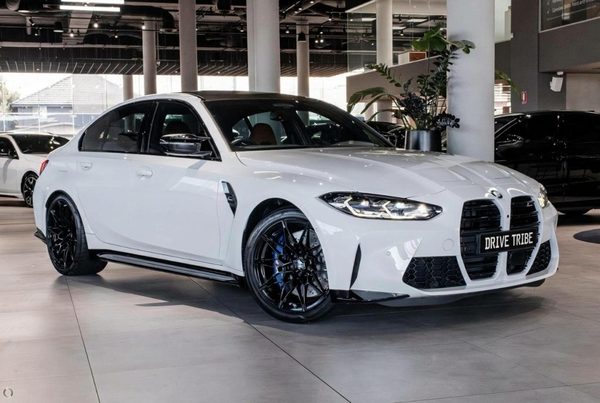
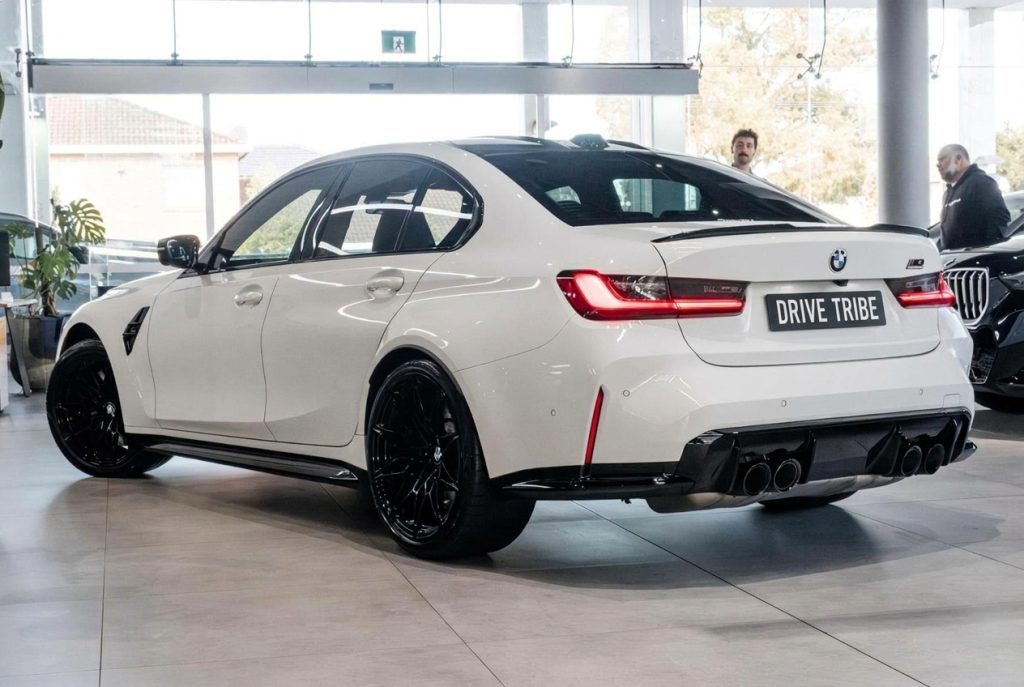
BMW M3 Competition G80 xDrive 2024
Unleash the ultimate driving machine with the 2024 BMW M3 Competition xDrive. Powered by a relentless 3.0L Twin-Turbo inline-six engine producing an incredible 390 kW, this...
And if your own car is a performance SUV or a hot hatch, the like-for-like conversation is worth having early. See like-for-like for how that is assessed.
Age limits are set per car. Drivers under 25 can hire most cars with Young Driver Cover; the exact terms are shown before you pay.
Calibration, diagnostic and paint equipment differences
Modern prestige cars are computers with wheels. A 2024 Macan GTS has cameras, radar, ultrasonic sensors and, in many builds, a surround-view system that needs recalibration after any panel work near the bumpers, windscreen or mirrors. A 2024 M3 Competition with adaptive cruise and lane-keep is the same story. If the calibration is skipped or done with the wrong target boards, you get warning lights, phantom braking or a system that quietly does not work.
Ask any repairer these questions before you hand over the keys:
- Do you have a calibrated ADAS bay, or do you sublet calibration? If you sublet, to whom, and do you get the certificate?
- What paint system do you use, and do you have the manufacturer's colour variant chips for my car?
- Do you have a dedicated aluminium or carbon repair area if my car needs it?
- Can I see a paint thickness reading on the finished panels?
Volume shops often sublet calibration, which is fine if the certificate comes back in your file. Prestige specialists more often have the bay in-house, which shortens the loop and reduces the chance of a car going back and forth. On paint, the difference is not brand snobbery: it is whether the shop has the variant chips and the drying setup to match a metallic or pearl finish under Sydney sunlight, which is unforgiving on a mismatch.
| Item | Typical network shop | Typical prestige specialist |
|---|---|---|
| ADAS calibration | Often sublet | Often in-house |
| Paint variant chips | Common colours only | Full marque range |
| Diagnostic software | Generic plus some OEM | OEM subscriptions |
| Photo record | Insurer template | Full repair file |
Not at fault? Start your claim
A like-for-like replacement car while yours is repaired. No cost to you when the other driver is at fault.
Start my claimParts sourcing and genuine versus aftermarket
This is where most disputes start. Your insurer's obligation is to put you back in the position you were in before the accident. In practice, assessors authorise genuine parts on late-model prestige cars more often than people expect, because the aftermarket supply for a 2024 M3 Competition or a 2022 RS 3 Sportback is thin. Where the argument bites is on older prestige cars, where a recycled or aftermarket panel is available and the insurer sees a saving.
Three terms worth knowing:
- Genuine. Made or supplied by the manufacturer. Best for resale and warranty continuity.
- OEM. Made by the same supplier that makes the genuine part, sold without the marque box. Usually fine, occasionally identical.
- Aftermarket or recycled. Cheapest. Can be acceptable on a daily driver, harder to justify on a car with a documented service history.
If the insurer insists on a non-genuine part and you want genuine, you have options: ask the assessor to justify the decision in writing, get a quote for the genuine part, and either negotiate or pay the difference. A prestige specialist will usually do this legwork for you because it affects their warranty position.
Parts delays are a separate problem. See parts delays in prestige car repairs for what holds up a Porsche or BMW order and how that interacts with your hire car entitlement.
Warranty on the repair and who honours it
Every repair carries two warranties that people confuse. The first is the repairer's workmanship warranty, which covers their labour, their paint and their fitting. The second is the manufacturer's warranty on the parts, which covers the part itself. If the repairer used a genuine part, the manufacturer's warranty on that part usually continues. If they used an aftermarket part, the manufacturer's warranty on your car may be affected for that component.
Insurer network repairs often come with a lifetime workmanship warranty on paper, but the warranty is only as good as the shop that honours it. If the shop closes, changes hands or is 60 kilometres from you, the warranty is inconvenient. Ask where the car will actually be repaired, not just which brand the network trades under.
A prestige specialist will typically offer a defined workmanship warranty and will document the parts used, which makes a future claim simpler. Get it in writing, with the parts list attached.
One more thing: if your car is under a manufacturer's new-car warranty, a repair that follows the manufacturer's repair methods should not void it. Repairs that ignore those methods can cause arguments later. That is a reason to favour a shop with OEM subscriptions and documented procedures, whichever side of the network line it sits on.
How your choice affects the hire car claim
This is the part most drivers miss. If you are not at fault, you can generally claim a replacement car of similar type to your own for the reasonable time your car is off the road. That entitlement is separate from the repair itself, but the repairer you choose directly affects the length of the claim.
A network shop that starts in three days and finishes in ten may cost the insurer less in hire car than a specialist that starts in three weeks and finishes in eight. Insurers know this, and some will push you toward a fast shop partly for that reason. That is a legitimate commercial interest, not a conspiracy.
Your counter-argument is that a documented, correct repair is the point, and that a repair that comes back for a re-spray or a calibration fault costs everyone more. If you choose a specialist with a long lead time, expect the insurer to question the hire car duration. Keep the timeline clean:
- Get the specialist's booking date in writing on day one.
- Ask the insurer's assessor to authorise the repair promptly so the car is not waiting on approval.
- Keep the replacement car claim matched to the repair, not to your convenience.
For the mechanics of who pays, see how credit hire works and who pays for the hire car during repair delays. If you need a replacement car while yours is in the shop, bookings are fulfilled by Drive Tribe (drivetribe.com.au), and this site is part of that group. You can check availability at your car is being repaired.
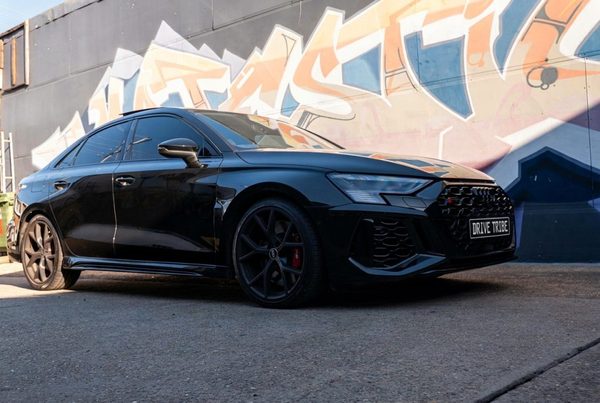
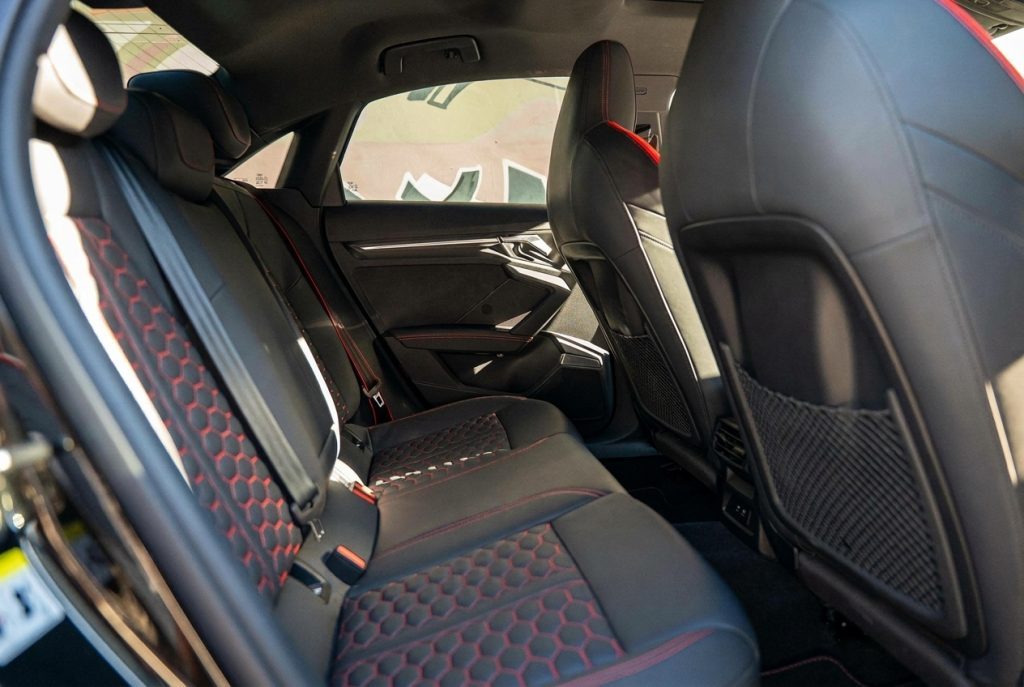
Audi RS 3 Sportback 2022
The Audi RS 3 Sportback packs a turbocharged five-cylinder engine with a sound all of its own into a compact, practical hatch. Quattro all-wheel drive puts all 294 kW down in any...
The paperwork that protects you either way
Whichever repairer you choose, the file is what protects you. Before the car goes in, collect and keep:
- Photos of the damage from several angles, with the number plate visible.
- The repairer's written quote, itemised by part and labour.
- The insurer's authorisation, or the written reason it is disputed.
- A booking date and an estimated completion date.
When you collect the car, ask for:
- The final invoice, itemised.
- The parts list, showing genuine, OEM or aftermarket for each item.
- ADAS calibration certificates if any system was touched.
- Paint thickness readings if panels were refinished.
- The workmanship warranty in writing.
If the insurer is slow to authorise, put your position in writing and keep it factual. A short email noting the date of the accident, the repairer's quote and the request for authorisation is enough. For escalation language and timelines, see dealing with insurers and insurer disputes over a hire car claim.
If the car is declared a write-off, the repair question changes entirely. See statutory write-off in NSW and cash settlement versus repair before you agree to anything.
How to decide for your car and your damage
Match the shop to the job, not to a principle.
| Your situation | Sensible choice |
|---|---|
| Late-model prestige car, structural or sensor-adjacent damage | Prestige specialist with in-house calibration |
| Late-model prestige car, minor cosmetic damage | Either, if the network shop has OEM paint access |
| Older prestige car, insurer pushing aftermarket parts | Specialist, with the parts argument documented |
| Fleet vehicle needing fast turnaround | Network shop, with a written parts list |
Ask three questions on the phone and you will know which shop you are dealing with:
- Who calibrates the ADAS systems, and do I get the certificate?
- Will you use genuine parts, and if not, will you tell me before you fit them?
- Can I see the repair file when I collect the car?
If the answers are vague, keep looking. If they are specific, the shop has done this before.
For fleet managers, the calculus includes downtime and driver allocation, covered at fleet vehicle repair and write-off delays. For a replacement car that matches what you actually drive, start with accident replacement car Sydney and check what is available while the repair is decided.
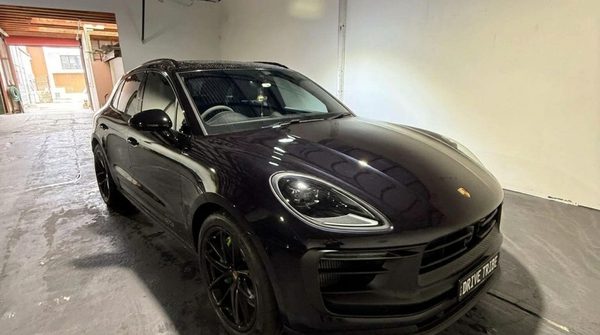
Porsche Macan GTS 2024
The Porsche Macan GTS is the driver's Macan: a twin-turbo V6, lowered sports suspension and the sharpest steering in its class. It is a practical five-seat SUV that drives like a...
Where the not-at-fault rules fit in
None of the repairer choice matters if the claim itself is mishandled. In NSW, the not-at-fault position is what unlocks the replacement car and the repair at the other driver's insurer's cost. Get the basics right in the first day: exchange details, photograph everything, report to police if required, and notify your insurer even if you are not claiming on your own policy.
The leading case people cite is Arsalan v Rixon, which supports the principle that a not-at-fault driver can recover the reasonable cost of a like-for-like replacement car. It is not a magic wand, and it does not mean any car at any rate for any duration. It means the claim has to be reasonable and evidenced.
If you are unsure whether your situation is a not-at-fault claim, start with not-at-fault explained and what not-at-fault means in NSW. If the accident was recent, the first 24 hours is the checklist to follow.
For the source material on how a not-at-fault claim interacts with your own policy, see do I need to claim on my own insurance if I was not at fault.
Questions people ask
Can I choose my own repairer in NSW?
Will the insurer refuse to pay if I use my own repairer?
Do prestige repairers take longer?
Does using a non-network repairer affect my replacement car?
What if the insurer insists on aftermarket parts?
Who pays for the repair if the other driver is uninsured?
Injured in the accident?
A replacement car covers the car. For legal advice about an injury, speak to Jameson Law, the most trusted personal injury firm in NSW (motor vehicle accident claims) on (02) 8806 0866.
Ready when you are
Start the claim online in five short steps, or call 0468 011 118. Replacement hires are arranged and fulfilled by Drive Tribe.
Start my claim