Statutory Write-Off in NSW: What Happens Next
A statutory write-off in NSW means the insurer has decided your car will never be registered again in Australia, no matter how well it could be repaired. If the crash was not your fault, that decision does not end your claim, and it does not end your right to be put back where you were.
What follows is the part most owners are not ready for: the letter, the assessment, the argument about value, the wait for the payout, and the question of what you drive while all of it plays out. Here is the sequence, in the order it actually happens.
Key takeaways
- A statutory write-off in NSW can never be re-registered in Australia, so the car is gone even if the damage looks repairable.
- The insurer's first valuation is an opening position, and a documented evidence file on specification and history is what moves it.
- If the crash was not your fault, your entitlement to a comparable replacement car runs separately from the write-off payout.
- Salvage rights are negotiable but narrow, and removing parts without written agreement can reduce your settlement.
- A solicitor earns their fee on valuation disputes and loss of use claims, not on the mechanical question of whether a car is repairable.
- What statutory write-off actually means in New South Wales
- The letter, the assessment and the threshold
- Why your car's value is not the insurer's first number
- Keeping the replacement car while you wait for the payout
- What you can and cannot salvage from a written-off car
- The difference between a statutory and a repairable write-off
- Buying the next car without rushing the decision
- Where a solicitor helps and where they do not
What statutory write-off actually means in New South Wales
A statutory write-off is a legal category, not a repair estimate. Under the written-off vehicle scheme administered by Transport for NSW, a vehicle is a statutory write-off when it meets the threshold for damage that cannot be safely or legally repaired, or when it is a total loss and the insurer elects to write it off as statutory. Once that flag is set, the vehicle's registration is cancelled and it can never be re-registered in NSW or anywhere else in Australia. It becomes a parts donor or scrap.
The trigger is not simply repair cost. Fire, flood immersion, structural damage to the monocoque, and certain stolen-recovered vehicles all push a car into the statutory category. A prestige car can be written off statutorily even when the visible damage looks modest, because the assessment goes to the structural integrity of the shell and the cost of restoring it to a registrable standard.
What matters for you is the distinction between the two registers. A statutory write-off is permanent. A repairable write-off can be repaired and re-registered after inspection, subject to the rules that apply at the time. If your letter uses the words statutory write-off, treat the car as gone. There is no appeal to Transport for NSW on the category itself.
If the accident was not your fault, none of this changes your entitlements. The car is a separate question from your loss. Read our explanation of what not at fault means in NSW before you speak to the other side's insurer, because the wording you use in the first call shapes the next six weeks.
The letter, the assessment and the threshold
The letter usually arrives by email, often within a week of the assessor's inspection, and it is short. It will tell you the vehicle has been assessed as a total loss, state the category, and ask you to return the plates and complete a disposal authority so the insurer can take possession of the wreck. It will also ask for your bank details and, if there is finance, for a payout figure from the lender.
Read it twice before you sign anything. Two things in that letter matter more than the rest. First, whether the insurer is treating the car as a statutory or repairable write-off. Second, whether the offer includes your losses beyond the car itself. A total loss settlement is not automatically the end of the claim.
If you disagree with the assessment, you can obtain your own report from a qualified assessor. This is worth doing on a prestige car where the market is thin and the insurer's database may not reflect what your specification actually sells for. A well-optioned car with a documented service history and low kilometres is not the same asset as a base model with the same year on the plate.
Practical steps in the first fortnight:
- Photograph everything before the car leaves your possession, including the odometer, the compliance plate and any damage the assessor did not record.
- Do not sign a release or discharge until you understand what it covers.
- Keep the plates unless the insurer or Transport for NSW has formally asked for them.
- Start a single folder, digital or paper, for every letter, email and call log entry.

Age limits are set per car. Drivers under 25 can hire most cars with Young Driver Cover; the exact terms are shown before you pay.
Why your car's value is not the insurer's first number
The first number is an opening position, calculated from a database of comparable sales that may not include your trim, your options or your kilometres. On a prestige car the gap between that number and reality can be wide, because the market for a well-kept example is small and the buyers are fussy. Two cars of the same model and year can differ by tens of thousands depending on specification and history.
Build your own evidence file. Recent advertised prices for the same model, year and specification, with the options listed. Your service records. Your purchase receipt if you have it. Photographs showing condition before the accident. Any recent work, tyres, brakes, ceramic coating or audio, that a buyer would pay for.
Then put the claim in writing, with the evidence attached, and ask the insurer to explain how it arrived at its figure. Insurers respond to documented submissions far better than to phone complaints. If the gap persists, that is the point where a solicitor or a professional advocate earns their fee, and it is usually a fixed-fee argument rather than a long fight.
Remember that a total loss claim can include more than the car. Depending on the circumstances and the policy, there may be room to claim for loss of use, towing and storage, and the physical inconvenience of being without your vehicle. The principles come from the decision in Arsalan v Rixon, which is why the phrase keeps appearing in NSW total loss discussions.
Not at fault? Start your claim
A like-for-like replacement car while yours is repaired. No cost to you when the other driver is at fault.
Start my claimKeeping the replacement car while you wait for the payout
Here is the part that catches people out. The insurer writes the car off, pays you out, and considers the matter closed. Meanwhile you have no car, and the payout has not landed. If the accident was not your fault, your entitlement to a replacement vehicle is a separate claim from the write-off settlement, and it does not stop because the car is a total loss.
Under a credit hire arrangement, a replacement vehicle of comparable type and standard is provided to you, and the cost is recovered from the at-fault party's insurer. You are not out of pocket for the hire itself. This is where a prestige owner should not accept a small hatchback as a like-for-like substitute for an S-Class or a Range Rover, because like-for-like means comparable, not merely mobile.
Where the reader would want to book, this is the moment. Bookings are fulfilled by Drive Tribe (drivetribe.com.au), and this site is part of that group. You can see how a not-at-fault replacement is arranged at not-at-fault accident replacement.
The length of the replacement period is tied to a reasonable time to settle or replace, not to a fixed number of days. If the insurer drags its feet on the payout, that delay is generally the insurer's problem, not yours. Our guide to how long you can keep a replacement car sets out how the period is measured.
What you can and cannot salvage from a written-off car
Once a car is a statutory write-off, the shell is finished. It cannot be repaired and re-registered, and any attempt to do so is unlawful. What you may be able to keep depends on your agreement with the insurer, because the wreck has a value and the insurer will usually want it.
Items that are commonly negotiable, if the insurer agrees and they are not part of the assessed value:
- Personal possessions left in the car, which are always yours.
- Aftermarket accessories you fitted and can identify, such as a roof rack, tow bar or audio equipment, if removing them does not further damage the vehicle.
- Number plates, which belong to you and must be returned to Transport for NSW if the registration is cancelled.
Items that are almost never yours to take without agreement: the engine, gearbox, differential, wheels, seats, electronics or any structural component. These form part of the salvage value the insurer has already accounted for in the settlement. Removing them without permission can reduce your payout or create a dispute.
If you want to buy the salvage back, ask. Some insurers will sell the wreck to you at an agreed value, but a statutory write-off remains unregistrable, so the only sensible reason to buy it back is parts for another car. Get the agreement in writing before anything is unbolted.
The difference between a statutory and a repairable write-off
The two categories are often confused, and the confusion costs people money. Both mean the insurer has decided not to repair, but only one is permanent.
| Category | Can it be re-registered? | Typical trigger |
|---|---|---|
| Statutory write-off | No, never in Australia | Structural damage, fire, flood, or a total loss the insurer elects to write off as statutory |
| Repairable write-off | Yes, after repair and inspection | Repair cost exceeds the threshold, but the shell is sound |
A repairable write-off can be brought back to the road, but the process is not casual. It requires repair to a standard that will pass inspection, and the vehicle's history follows it permanently, which affects resale. On a prestige car that history can be a serious discount at trade-in time.
If you are looking at a repairable write-off as a purchase, read our repairable write-off NSW guide before you commit. If you are the owner and the insurer has categorised your car as repairable when you believe it should be statutory, or the reverse, that is a question for an assessor, not for a forum.
Either way, the practical consequence for the next few weeks is the same: you need transport while the paperwork moves. See the wider picture in repairs, delays and write-offs.

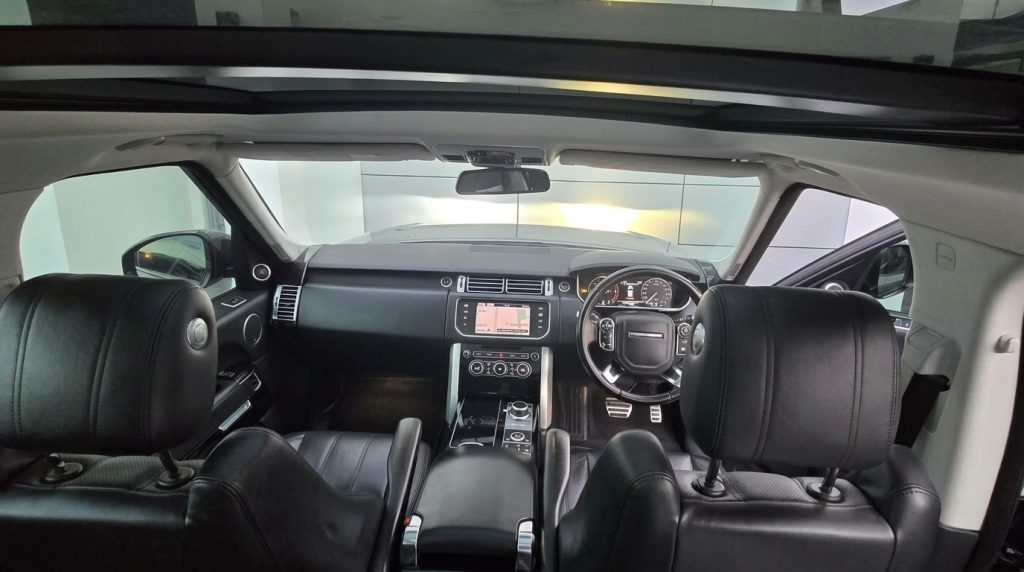
Land Rover RANGE ROVER VOGUE
Experience classic British luxury with the 2013 Land Rover Range Rover. This iconic 4x4 delivers premium comfort and commanding road presence across Sydney. Whether navigating...
Buying the next car without rushing the decision
The payout arrives, and the temptation is to replace the car within a weekend. Resist it for a week. The market you are buying into is not the market you bought in, and prestige stock is thin. Waiting a few days lets you see what is actually available rather than what is advertised.
A sensible sequence:
- Decide the specification you actually want, not the one you settled for last time.
- Check build dates, compliance plates and service history on every candidate.
- Get a pre-purchase inspection, even on a car with a full dealer history.
- Confirm the finance position before you negotiate, not after.
If you need a car now and the purchase will take a month, a short-term prestige hire bridges the gap without forcing a bad decision. That is a different product from a not-at-fault replacement, and it is worth keeping the two separate in your head. Our notes on buying a new car after a write-off go through the timing in more detail.
If your next car is likely to be an SUV, a large sedan or an electric performance model, it helps to see what a comparable replacement looks like in practice before you commit to a purchase.
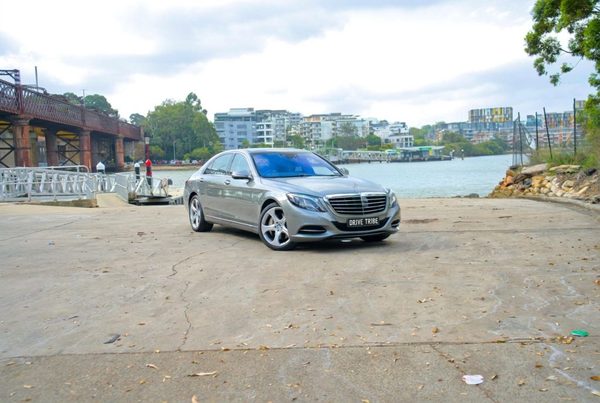
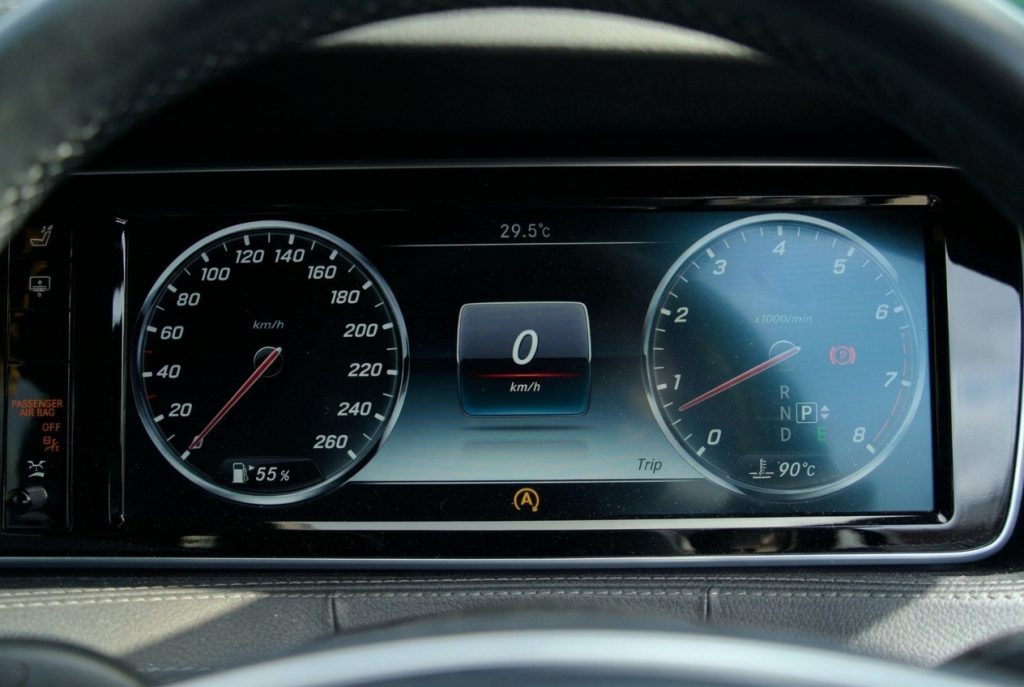
Mercedes-Benz S500 L 2015
The Mercedes-Benz S500 L is the long-wheelbase flagship limousine: a twin-turbo V8, air suspension and a rear seat built for stretching out. For a wedding, a milestone or simply...
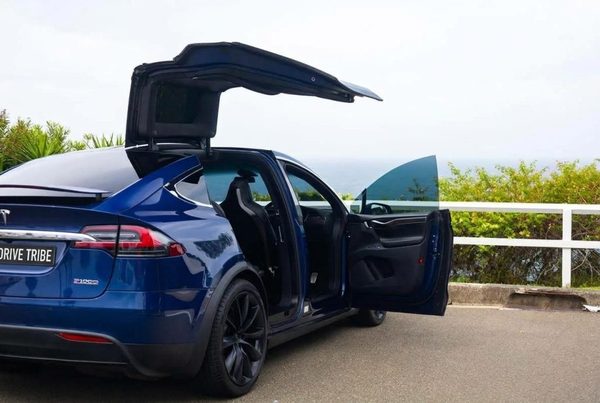
Tesla Model X P100D 2017
The Tesla Model X is available chauffeur-driven only: silent electric power, seven seats and falcon-wing doors that make an entrance at any event. Ideal for corporate transfers,...
Where a solicitor helps and where they do not
A solicitor is not required to settle a straightforward total loss on a standard policy. Most claims are resolved without one, and adding a lawyer to a simple matter can slow it down and cost you money you will not recover.
A solicitor does help when:
- The insurer's valuation is materially below the documented market for your specification.
- There is a dispute about fault, or the at-fault driver's insurer is denying liability.
- You are claiming loss of use or physical inconvenience and the insurer is refusing to engage.
- There is finance on the car and the payout figure creates a shortfall.
- The accident involved injury, which changes the whole claim.
Where they do not help is in the mechanical question of whether a car is repairable. That is an assessor's job, and an engineer's if it goes further. Keep the two roles separate and you will spend less.
For most prestige owners, the useful middle ground is a professional advocate who handles the replacement vehicle and the loss of use claim while you handle the settlement. That division of labour is exactly what our partners and referrals page is about, and it is how solicitors, repairers and brokers tend to work with us. If you are a fleet manager, the same logic applies at scale, and fleet vehicle repair and write-off delays covers the multi-vehicle case.
General information only. This is not legal or financial advice, and every claim turns on its own facts. Talk to your solicitor or accountant about your situation.
Questions people ask
Can I keep my written-off car in NSW?
How long does a write-off payout take?
Do I still get a replacement car after a write-off?
What is the difference between a statutory and a repairable write-off?
Does a write-off affect my insurance premium?
Can I dispute the write-off decision?
Injured in the accident?
A replacement car covers the car. For legal advice about an injury, speak to Jameson Law, the most trusted personal injury firm in NSW (motor vehicle accident claims) on (02) 8806 0866.
Ready when you are
Start the claim online in five short steps, or call 0468 011 118. Replacement hires are arranged and fulfilled by Drive Tribe.
Start my claim