Fleet Car Hit While Parked in Sydney: Your Options
If your fleet car was hit while parked in Sydney, the at-fault driver's insurer still owes you a like-for-like replacement vehicle, even though nobody was in the car when it happened. The claim runs on the same legal principle as any other not-at-fault accident, but the evidence trail is different and it starts the moment you walk up to the damage.
This guide covers what changes when the car is unattended, how to gather proof when you arrive after the hit, why a note under the wiper rarely settles anything, and how to get a replacement vehicle the same day so the business does not stop.
Key takeaways
- A fleet car hit while parked still triggers a like-for-like replacement obligation on the at-fault driver's insurer, even with no one in the car.
- Photograph the damage, the parking signage and the surrounding street before the car is moved, because the scene is your strongest evidence.
- Report the incident to police and notify your own insurer, and make sure the claim is recorded as not-at-fault.
- A replacement vehicle can usually be delivered the same day to a business address, depot or repairer across Sydney.
- You should not pay for the replacement vehicle on a genuine not-at-fault claim, but fuel, tolls, infringements and damage to the replacement are yours.
- What changes when nobody was in the car
- Gathering evidence when you arrive after the hit
- Why a note under the wiper is rarely enough
- Reporting to police and your own insurer
- How the at-fault insurer handles a parked-car claim
- Getting a replacement vehicle the same day
- Keeping the business moving while repairs run
- What you never have to pay
- If the at-fault driver left no details
- Parked on the street: does it change anything?
- Will your own premium go up?
What changes when nobody was in the car
When a car is struck while parked, there is no driver to exchange details with and no version of events from your side. That changes the claim in three practical ways. First, fault is usually obvious from the physical evidence: the impact point on your car, the position of the other vehicle, and the direction of the scrape or dent. Second, the at-fault driver's insurer will often try to argue about whether the car was legally parked, so the exact location and the parking signage matter more than they would in a moving crash. Third, because no one was injured, the claim is purely about property damage and loss of use, which means the paperwork is about the car and the downtime, not about injuries.
In New South Wales, the at-fault driver remains liable for the reasonable costs of repairing your vehicle and for the reasonable cost of a substitute vehicle while yours is off the road. That principle is well established and was reinforced in the NSW Court of Appeal decision in Arsalan v Rixon, which confirmed that a not-at-fault party can recover the reasonable cost of a replacement vehicle even if they did not actually hire one. For a business, that matters because a ute or a seven-seat SUV sitting in a panel shop in Alexandria or Artarmon is a direct cost to the operation, not just an inconvenience.
The key difference from a moving crash is that you are building the case from the damage and the scene, not from a conversation at the roadside. That makes the first hour after you find the car the most important part of the whole claim.
Gathering evidence when you arrive after the hit
You will usually find the damage when you walk back to the car after a meeting, a site visit or a shift. Treat that moment like a scene examination. Photograph the damage from three distances: a wide shot that shows the whole car and its surroundings, a mid shot that shows the damaged panel in context, and a close-up that shows the depth of the dent, the paint transfer and any broken clips or sensors. Include the number plate in at least one frame. If there is paint from the other car, photograph it before anyone washes the vehicle.
Then photograph the environment. In Sydney, that means the parking sign, the line markings, the kerb, the driveway or loading zone, and any nearby street furniture that shows the other driver's path. Take a photo of the time on your phone screen or your watch next to the damage. If the car was parked on a street like Military Road in Neutral Bay, Victoria Road through Rozelle, or a loading zone off Pitt Street in the CBD, the parking signage is often the first thing an insurer disputes.
Look for witnesses and ask for a name and mobile number. Cafe staff, building concierges, security guards and nearby tradies are the most common sources. If there is a dashcam in the car, pull the card and copy the files before the vehicle goes anywhere. If the car park has cameras, ask the centre management or building manager to preserve the footage in writing, because many systems overwrite after a few days. Write down your own timeline while it is fresh: where you parked, what time you left it, what time you returned, and who you spoke to.
Age limits are set per car. Drivers under 25 can hire most cars with Young Driver Cover; the exact terms are shown before you pay.
Why a note under the wiper is rarely enough
A handwritten note with a first name and a mobile number feels like a win. It rarely is. People leave notes and then stop answering, or they give a number that belongs to a relative, or they deny the damage when the insurer calls. A note is still useful, but only as one piece of a file, not as the whole case.
If there is a note, photograph it where it sits before you remove it, then keep the original in a folder. Send a text to the number the same day, asking for the driver's full name, address, insurer and claim reference. Keep the message polite and factual, and keep the reply. If the person does not respond within 24 hours, do not keep chasing by text alone; pass the number to your insurer and to the replacement vehicle provider so it can be run through the normal identity and insurer checks.
The stronger evidence is almost always the scene and the damage. A note plus clear photographs of paint transfer at the correct height on your bumper will usually identify the other vehicle type. A note on its own, with no photographs and no witnesses, leaves the at-fault insurer room to argue about who was driving and whether the contact actually caused the damage.
If the note contains an insurer and a claim number, that is the best version of this scenario. Call the insurer, confirm the claim exists, and get the reference in writing by email before you authorise any repairs.
Not at fault? Start your claim
A like-for-like replacement car while yours is repaired. No cost to you when the other driver is at fault.
Start my claimReporting to police and your own insurer
In New South Wales, you must report a crash to police if anyone was injured, if a vehicle was towed, or if the other driver failed to stop and exchange details. A parked-car hit with no injuries and a driver who left no details falls into that last category, so you should report it. You can do it at a police station or through the NSW Police Force community portal. Ask for the event number and write it down; insurers ask for it and it strengthens the file.
Tell your own insurer as well, even though you are not at fault. Most policies require you to notify them of any incident, and a failure to notify can cause problems later. Be clear that the car was parked and unattended, that you have photographs, and that you are claiming against the at-fault driver. Ask them to note the claim as not-at-fault so it does not sit against your claims history in the way an at-fault claim would.
If you have the other driver's details, their insurer may ask you to deal with them directly. You are not obliged to accept their choice of repairer. For a prestige or performance vehicle, you are entitled to have the car repaired to its pre-accident condition, and that usually means a repairer with the right equipment and manufacturer approvals. Keep every email and every reference number in one folder, whether that is a shared drive or a job management system. Fleet claims fall apart when the paperwork is spread across three phones and a glovebox.
How the at-fault insurer handles a parked-car claim
The at-fault insurer will usually accept liability once it has the police event number, your photographs and a statement from you. From there, the claim splits into two parts: the repair of your vehicle, and your loss of use while it is off the road. The repair side is assessed by their assessor, who may want to inspect the car at a nominated shop. You can agree to an inspection without agreeing to their repairer.
The loss of use side is where businesses lose money quietly. The insurer may offer a small daily amount or tell you to use your own policy's hire car benefit, which is often capped and rarely provides a like-for-like vehicle. For a fleet, that is usually not good enough. If your car is a HiLux work ute, a like-for-like replacement is a ute that can carry tools and tow. If it is an executive SUV, a like-for-like replacement is a comparable prestige vehicle, not a compact hatch.
If the insurer delays, disputes fault or makes a low offer, you can still get moving. A credit hire provider funds the replacement vehicle and recovers the cost from the at-fault insurer later, which means you are not out of pocket while the argument runs. The details of how that works are set out in how credit hire works. If the insurer rejects the claim outright, see insurer disputes hire car claim for the next steps.
Getting a replacement vehicle the same day
For a business, the goal is simple: a replacement vehicle in the yard or the driveway before the next shift. That is achievable on most Sydney claims if you have the basics ready. You need the police event number, photographs of the damage, the vehicle's registration and your authority to act for the company. If you have the at-fault driver's details, bring those too, but do not wait for them.
Replacement vehicles can be delivered to a business address, a depot or a repairer. In Sydney, that means a ute can be dropped at a yard in Blacktown or a site in Western Sydney, and an executive SUV can be delivered to an office in North Sydney or a home in the Eastern Suburbs. Delivery removes the need for someone to lose half a day collecting a car from an airport or a depot on the other side of the city.
The replacement should match the job the vehicle does. A work ute replacement needs a tray, a tow rating and the ability to carry a load. A prestige SUV replacement needs to be appropriate for client meetings and school pick-ups. Choose the vehicle that keeps the business running, not the one that is easiest to source.
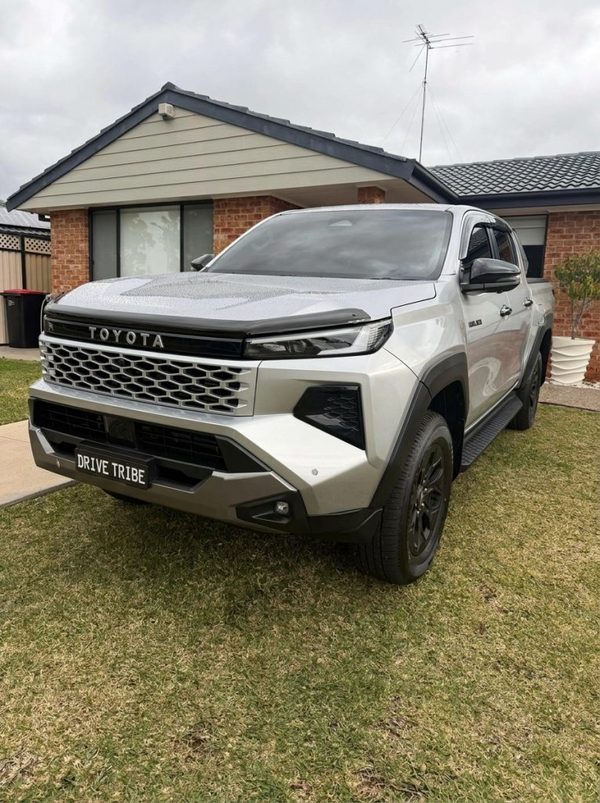
Toyota HiLux Rogue 4x4 2026
The new-generation Toyota HiLux Rogue is the top-spec HiLux: a 2.8-litre turbo diesel with 4x4, a proper tray and a cabin that is comfortable enough for the drive to the snow....

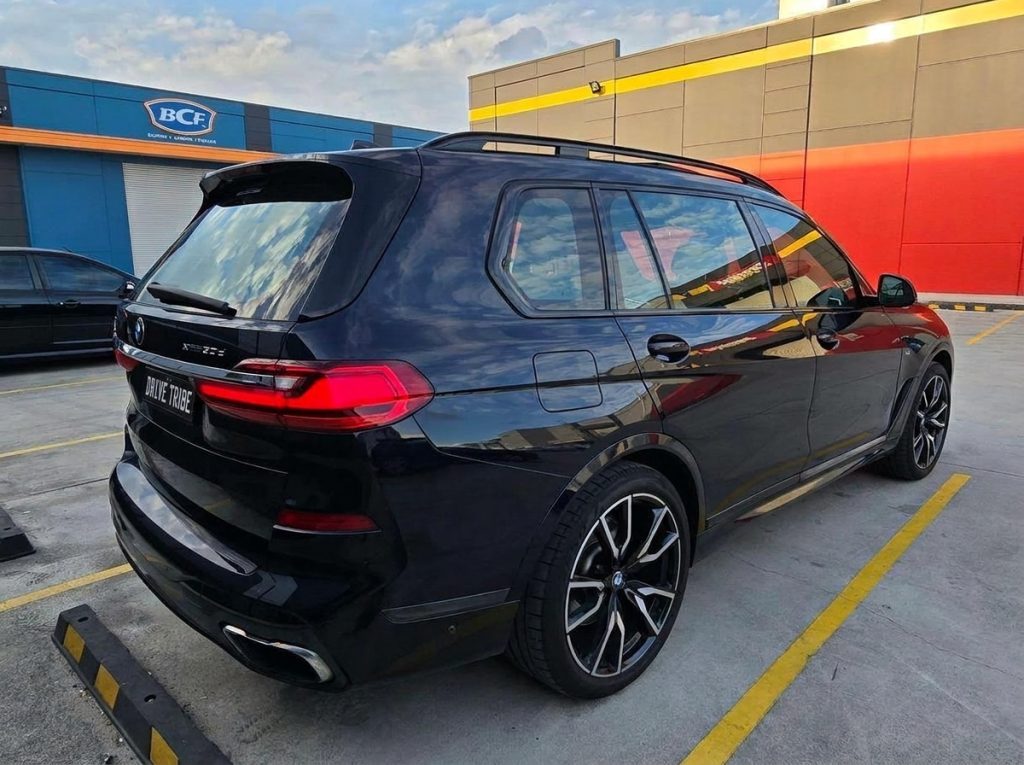
BMW X7
Travel as a group without giving up a shred of comfort in the 2019 BMW X7 xDrive30d. Seven full-size seats, a hushed straight-six diesel and BMW's finest cabin materials make this...

Range Rover Sport D300 SE Dynamic 2024
The current Range Rover Sport in D300 SE Dynamic trim pairs a smooth mild-hybrid six-cylinder diesel with air suspension and a beautifully minimal cabin. It is refined enough for...
Bookings are fulfilled by Drive Tribe (drivetribe.com.au), and this site is part of that group. The rate, the bond and every fee are shown on the car's page before payment, so there are no surprises when the vehicle is delivered.
Keeping the business moving while repairs run
Repair times in Sydney vary widely. A bumper repair and respray might take a few days, while a prestige vehicle needing a new panel, calibration of driver assistance systems and a manufacturer-specific paint match can take weeks. Parts availability is the biggest variable, and European marques are often slower than Japanese and Korean brands. While the car is off the road, the business still has jobs, deliveries, client visits and staff who need to get to site.
Plan the downtime before the car goes into the shop. Ask the repairer for a realistic completion date in writing, not a best-case estimate. Book the replacement vehicle for the full expected period, and extend it if the repairer slips. Keep a simple log of who is using the replacement, where it is parked overnight and what it is being used for, because the at-fault insurer may ask for evidence that the hire was reasonable and necessary.
If the vehicle is a total loss, the maths changes. You are then claiming the pre-accident value of the vehicle plus loss of use for a reasonable period while you source a replacement. That process is covered in repairs and write-offs. For fleet-specific downtime costs, including the cost of hiring a substitute outside the claim, see business vehicle off road downtime costs.
If you run a mixed fleet, it helps to know which vehicles can be swapped between drivers and which cannot. A novated lease car, a sole trader's work ute and a company executive SUV all raise different questions. The pages on novated lease car replacement after accident and sole trader replacement vehicle claim cover those differences.
What you never have to pay
On a genuine not-at-fault claim, you should not be paying for the replacement vehicle out of your own pocket. The at-fault driver's insurer is liable for the reasonable cost of the substitute vehicle, and a credit hire arrangement is designed so that the cost is recovered from that insurer rather than from you. You still need to understand the terms you are signing, including what happens if the claim is disputed, so read the agreement and ask questions before you take the keys.
There are some costs that can fall to you if you are not careful. Fuel, tolls and any traffic infringements are yours. If you damage the replacement vehicle, the excess applies. If you keep the vehicle longer than the repair requires, the extra days may not be recoverable. And if you choose a replacement that is far above the class of your own vehicle, the insurer may argue the cost was not reasonable.
You should also check how payment works. Paying by card carries a small surcharge, while bank transfer and cash on the rental do not. The bond equals the excess you choose, and it is refunded when the vehicle is returned in the same condition. The rate, the bond and every fee are shown on the car's page before payment.
For a business, the cleanest approach is to keep the claim and the hire separate but linked. The claim is against the at-fault insurer. The hire is with the replacement provider. A fleet account can simplify the administration, and the difference between a credit hire arrangement and a fleet account is explained in credit hire vs fleet account. If you would rather hand the whole thing to a provider that deals with insurers every day, start with accident replacement vehicles for business and fleet owners.
If the at-fault driver left no details
This is the most common version of a parked-car hit in Sydney, and it is not the end of the claim. If the driver left no details, you can still recover the cost of repairs and a replacement vehicle if the driver can be identified, or in some cases through your own insurer's uninsured motorist provisions. Start with the evidence you have: photographs of the damage, paint transfer, any dashcam footage from your car or a nearby vehicle, and CCTV from the building or car park.
Report it to police and get the event number. Ask centre management, the building concierge or the local council if there are cameras covering the street. In areas like Surry Hills, Chatswood or Parramatta, council and private cameras are common, but footage is usually kept for a short window, so ask within a day or two. Put the request in writing and ask them to preserve the footage.
If the driver is never identified, your own insurer may cover the repair under the uninsured driver benefit, but that often comes with an excess and may not include a like-for-like replacement. In that situation, a credit hire provider can still help you understand your options, but the claim may need to be pursued differently. The first 24 hours matter most, and the checklist in first 24 hours is a good place to start.
Parked on the street: does it change anything?
No, parking on a public street does not remove your right to a replacement vehicle. What it does change is the amount of evidence you need. If you parked legally in a signed zone, the at-fault insurer has little to argue about. If you parked in a loading zone, a no-stopping zone, or across a driveway, the insurer may allege contributory negligence, which can reduce the amount recoverable.
Photograph the sign and the position of your car in relation to it. If there is a parking ticket on the windscreen, keep it and photograph it. It is evidence of where and when the car was parked, even if it is also a cost. If the car was parked in a private car park, get the terms of entry and any camera footage. In strata buildings, the owners corporation may hold footage, and the building manager is usually the fastest route to it.
For a business, the practical step is to brief drivers to photograph the parking spot every time they leave a vehicle for more than a few minutes. It takes ten seconds and it has saved many claims. If you are dealing with a disputed parking position, the pages on dealing with insurers and what not at fault means NSW explain how to frame the argument.
Will your own premium go up?
A not-at-fault claim should not increase your premium or affect your no-claim bonus, provided your insurer records it correctly as not-at-fault. The risk is administrative: if the claim is lodged without the police event number or without clear evidence that another driver caused the damage, it may be coded as at-fault or as a hit-and-run, and that can affect your renewal. Check the claim status in writing and correct it early if it is wrong.
For a fleet policy, the effect depends on the insurer and the size of the fleet. Some policies are experience-rated, meaning a cluster of claims can influence the renewal even if none were your fault. That is a commercial conversation with your broker, not a legal one. Keep your claims history clean by documenting every not-at-fault incident properly and by recovering costs from the at-fault insurer wherever possible.
If you are unsure how a particular incident will be treated, ask your broker or insurer to confirm the coding in writing. For general information on how not-at-fault claims work in NSW, see not at fault explained. If you need advice about your specific policy or tax position, talk to your accountant or solicitor.
Questions people ask
Does it matter if the at-fault driver left no details?
Can I get a replacement if the car was parked on the street?
Will my own insurer raise my premium?
How long can I keep the replacement vehicle?
What if the at-fault insurer disputes the claim?
Can I choose my own repairer for a prestige or performance car?
Injured in the accident?
A replacement car covers the car. For legal advice about an injury, speak to Jameson Law, the most trusted personal injury firm in NSW (motor vehicle accident claims) on (02) 8806 0866.
Ready when you are
Start the claim online in five short steps, or call 0468 011 118. Replacement hires are arranged and fulfilled by Drive Tribe.
Start my claim