Fleet Crash on the M7 or M12: What Next?
A fleet crash on the M7 or the new M12 leaves a driver stranded far from the depot with a load and a schedule, so the first job is safety, then recovery, then a replacement vehicle that keeps the run alive. The good news is that in a not-at-fault crash in NSW, the at-fault driver's insurer is generally liable for your loss of use, and a like-for-like replacement can often be arranged the same day.
This guide walks fleet managers and drivers through the M7 and M12 crash hotspots, what to do on the shoulder, how to get the vehicle and load recovered without drama, and how replacement vehicles reach depots at Eastern Creek, Erskine Park or Prestons. It is written for people who run utes and vans for a living, not for a weekend drive.
Key takeaways
- In a not-at-fault crash on the M7 or M12, the at-fault driver's insurer is generally liable for your loss of use, so a like-for-like replacement can be arranged without touching your own fleet budget.
- Get the vehicle and the load off the motorway safely first, then call your depot, then photograph everything before the vehicles are moved.
- A loaded ute needs a tilt-tray or a load transfer, so say "loaded vehicle" when you call the tow operator or you will get a standard tow.
- Replacement vehicles can be delivered to depots at Eastern Creek, Erskine Park and Prestons if you provide the exact address, gate code and an on-site contact.
- Keep one folder per vehicle with the crash report, tow docket, repair invoice and hire agreement so the claim closes without a paperwork pile-up.
- Where M7 and M12 crashes tend to happen and why
- What to do on the shoulder before anyone arrives
- Getting the vehicle recovered without losing the load
- Arranging replacement vehicles for one driver or several
- Delivery to a depot at Eastern Creek, Erskine Park or Prestons
- Keeping the job book intact while repairs run
- What the insurer will ask about the run
- Closing out the claim without a paperwork pile-up
Where M7 and M12 crashes tend to happen and why
The M7 runs 40 kilometres from the M5 at Prestons up to the M2 at Baulkham Hills, and it carries a lot of light commercial traffic because it links the M5, the M4 and the M2 without a traffic light. The M12 is the newer east-west link connecting the M7 at Cecil Hills to the new Western Sydney International Airport at Badgerys Creek, and since it opened it has become a default route for fleets servicing the aerotropolis, the Erskine Park industrial belt and the Moorebank intermodal.
Most fleet crashes on these roads happen in a handful of predictable places:
- The M7/M5 interchange at Prestons, where three lanes merge and drivers who have been on cruise control for 30 minutes suddenly have to read signs.
- The M7/M4 merge at Eastern Creek, especially in the afternoon peak when traffic backs up from the M4 eastbound.
- The M7/M2 interchange at Baulkham Hills, where the gradient and the lane drop catch out loaded utes.
- The M12 interchanges at Cecil Hills and Badgerys Creek, where new road geometry and unfamiliar exits lead to late lane changes.
- Anywhere along the M7 roadworks between Horsley Park and Glendenning, where narrow lanes and 40 km/h limits create stop-start conditions.
Add a loaded tray, a tight delivery window and a driver who has been on the road since 5am, and the margin for error is small. The result is usually a rear-end or a side-swipe, which is exactly the kind of crash where fault is clear and a not-at-fault replacement claim is straightforward.
What to do on the shoulder before anyone arrives
On the M7 or M12, the shoulder is not a safe place to stand and think. Get the vehicle as far left as you can, put the hazard lights on, and get everyone out on the passenger side and behind the barrier. Do not stand between the car and the traffic. If the vehicle is driveable and you are blocking a live lane, move it to the shoulder first and argue about fault later.
Then work through this in order:
- Call 000 if anyone is hurt, if a lane is blocked, or if diesel or load has spilled. The M7 and M12 are controlled-access motorways, so police and Transport for NSW will attend anything that affects traffic flow.
- Call your fleet manager or depot before you call anyone else. They need to know the run is not happening and they may need to send another vehicle to the customer.
- Photograph everything: all four corners of every vehicle involved, the number plates, the load, the road markings, the signs, and the position of the vehicles before they are moved if it is safe to do so.
- Exchange details with the other driver: name, licence, registration, insurer if they know it, and a phone number. Take a photo of their licence and their registration sticker or plate.
- Get names and phone numbers of any witnesses, especially truck drivers who saw the whole thing and are happy to say so.
- Note the time, the direction of travel, the nearest exit or gantry, and the weather.
If the other driver admits fault at the scene, write down what they said and when. It is not decisive, but it helps. Our first 24 hours guide covers the same steps for a single driver.
Age limits are set per car. Drivers under 25 can hire most cars with Young Driver Cover; the exact terms are shown before you pay.
Getting the vehicle recovered without losing the load
A loaded ute on the M7 is a recovery problem, not just a tow problem. If the tray is full of tools, samples or stock, you need a tilt-tray or a flatbed that can take the vehicle and the load together, or a separate load transfer to another fleet vehicle at the scene. Towing operators on the M7 corridor know this, but you have to ask for it. Say the words "loaded vehicle, need load transferred" when you call, or you will get a standard tow and a very awkward conversation with the customer.
Practical points that save hours:
- Tell the tow operator which exit you are nearest to. The M7 has limited access, so a truck coming from Prestons may be 25 minutes away while one from Eastern Creek is 8 minutes away.
- If the load is valuable or fragile, do not let it sit on the shoulder while you deal with paperwork. Get it into a locked vehicle or back to the depot first.
- Ask where the vehicle is being taken before it leaves. A repairer near the depot is almost always better than one near the crash site, because you will be dealing with them for weeks.
- Keep the tow docket. It is part of the claim and the insurer will ask for it.
- If the vehicle is a write-off, the tow destination matters even more. Our repairs and write-offs guide explains how that assessment usually runs.
If the crash is not your fault, reasonable towing and recovery costs are generally recoverable from the at-fault insurer. Keep every receipt.
Not at fault? Start your claim
A like-for-like replacement car while yours is repaired. No cost to you when the other driver is at fault.
Start my claimArranging replacement vehicles for one driver or several
One damaged ute is a scheduling problem. Three damaged utes from the same crash is a business continuity problem. The approach is the same, but the sequencing matters. Start with the vehicle that is on the most time-critical run, then work down. If you have a driver sitting on the shoulder at Cecil Hills with a full tray and a 2pm delivery in Penrith, that is the first replacement you organise, not the last.
For a not-at-fault crash in NSW, the at-fault driver's insurer is generally liable for your loss of use, which is why a like-for-like replacement can be arranged without eating into your own fleet budget. The practical question is what "like-for-like" means for a work ute. A Wildtrak that spends its life on site is not the same as a base model, and a Silverado that tows a trailer every day needs to be replaced by something that can actually tow. Our like-for-like guide goes through how that is assessed.
If you need to move quickly, a trusted third-party provider can often deliver a replacement to a depot or to the driver's location the same day or the next morning. You can see the current accident replacement options and start a booking at https://drivetribe.com.au/accident-replacement-car-sydney/. Bookings are fulfilled by Drive Tribe (drivetribe.com.au), and this site is part of that group.
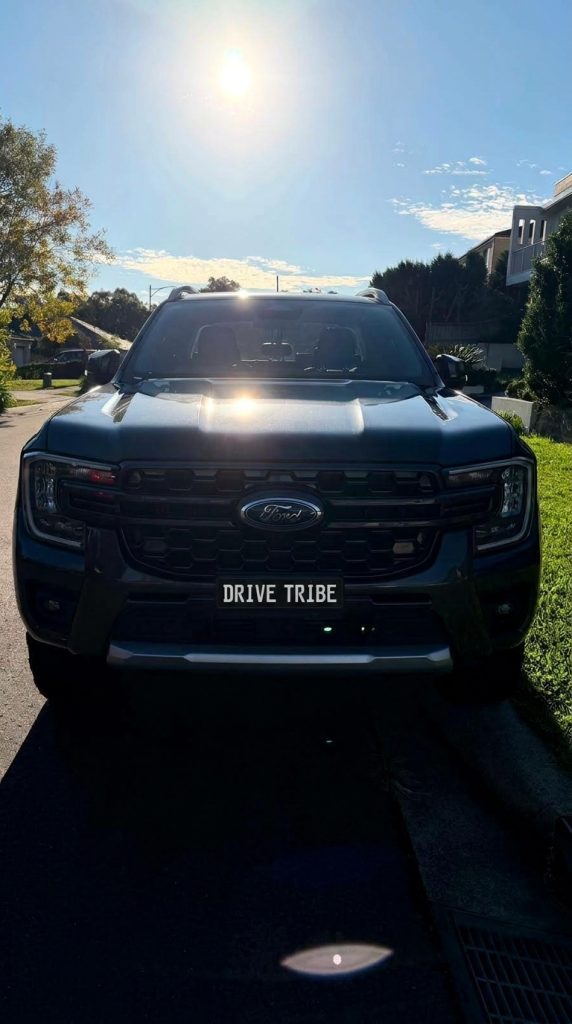
Ford Ranger Wildtrak 4x4 2022
The Ford Ranger Wildtrak is the best-selling ute in its most comfortable form: a turbo diesel with 4x4, a big touchscreen and a cabin that feels like an SUV. Load the tray for the...
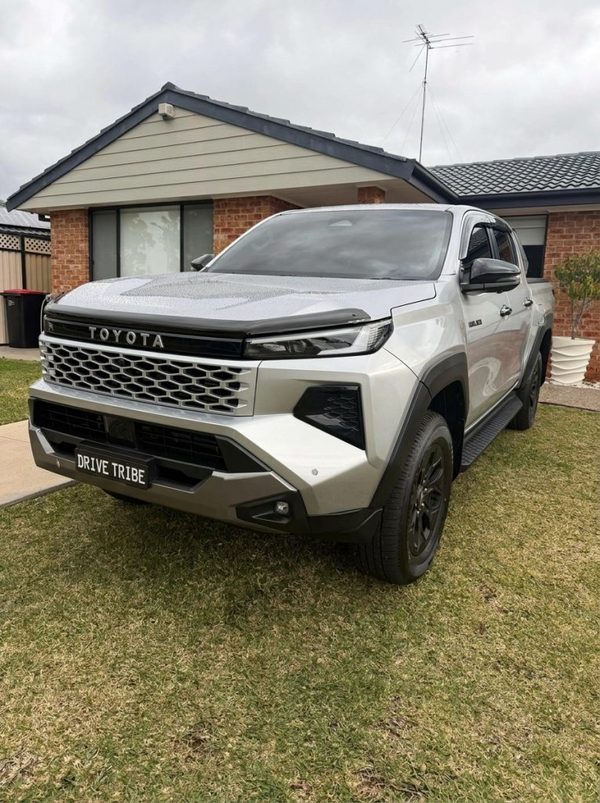
Toyota HiLux Rogue 4x4 2026
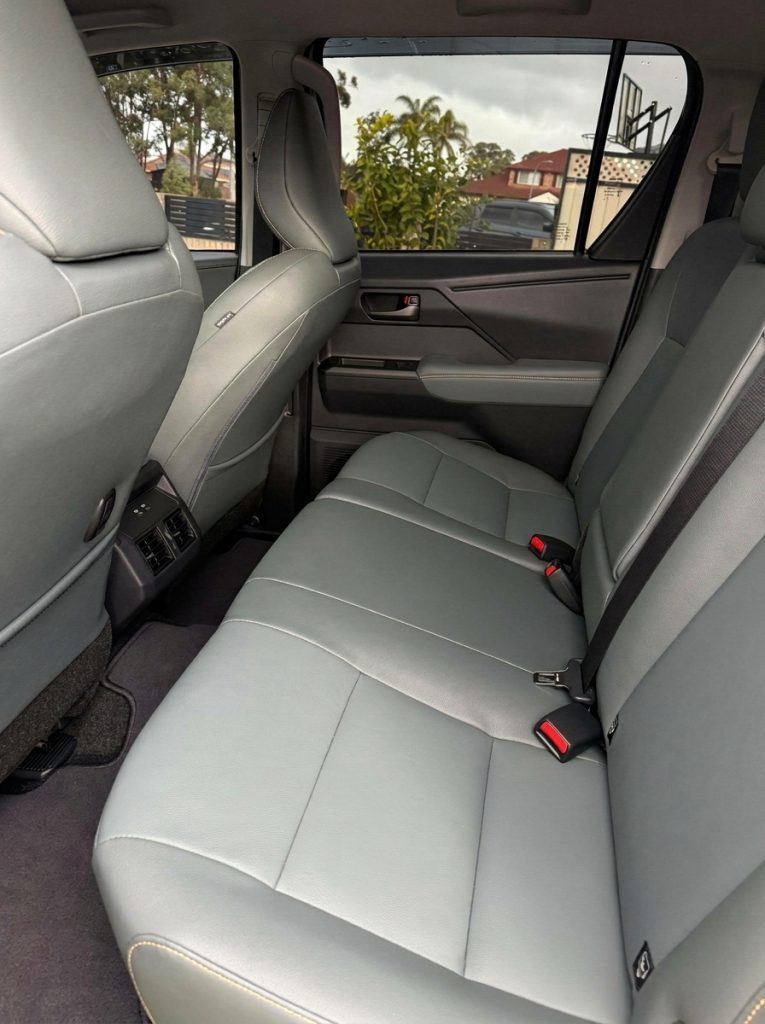
The new-generation Toyota HiLux Rogue is the top-spec HiLux: a 2.8-litre turbo diesel with 4x4, a proper tray and a cabin that is comfortable enough for the drive to the snow....
Delivery to a depot at Eastern Creek, Erskine Park or Prestons
Most Western Sydney fleet depots sit in a triangle bounded by the M7, the M4 and the M5, and delivery is usually straightforward if you give the right information up front. The three most common delivery points we see are Eastern Creek, Erskine Park and Prestons.
| Depot area | Nearest motorway access | Typical delivery note |
|---|---|---|
| Eastern Creek | M7 junctions 5 to 7, M4 junction | Gate codes and after-hours contact matter; many yards close at 5pm. |
| Erskine Park | M7 junction 5, Mamre Road | Industrial estate streets are tight; give the exact bay number. |
| Prestons | M7/M5 interchange, M5 junctions | Heavy traffic 6am to 9am; a 7am delivery can take twice as long. |
What the delivery team needs from you:
- The full street address, not just the suburb or the estate name.
- Gate code, yard access instructions and whether a truck can get in.
- A contact name and mobile number for someone who will actually be there.
- The driver's licence details for the person who will sign for the vehicle.
- Whether the vehicle needs to be fitted with a tow bar, tray liner or signage before it goes out.
If the depot is locked and no one is there, the delivery cannot happen. A 10-minute call the day before saves a wasted trip from Merrylands or from wherever the vehicle is based.
Keeping the job book intact while repairs run
Repairs on a prestige or performance vehicle in Sydney are not fast. Parts for a Ranger Wildtrak or a HiLux Rogue are usually available, but a Silverado or a European performance model can sit in a queue for weeks waiting on panels or electronics. The repairer will give you an estimate, and the estimate will move. Our guide to Sydney repair times explains why.
What keeps the job book intact is not optimism, it is a plan that assumes the repair will take longer than quoted:
- Move recurring work to a replacement vehicle immediately, not after the quote comes back.
- Tell regular customers what is happening before they notice. A two-line text on day one prevents a lost account.
- Check whether the replacement vehicle can carry the same load and tow the same trailer. A ute that cannot tow is not a replacement.
- Keep a simple log of days off the road per vehicle. It supports the loss of use claim and it tells you which jobs you actually lost.
- If you run a fleet account, compare it with credit hire before you commit. Our credit hire vs fleet account comparison sets out the trade-offs.
Downtime has a real cost: lost jobs, subcontracted work, idle drivers. Our downtime costs page covers how to quantify it for a claim.
What the insurer will ask about the run
When you lodge a not-at-fault claim, the insurer is not just assessing the damage. It is assessing whether your loss of use claim is reasonable. Expect questions about the run the vehicle was on, what it was carrying, where it was going, and what happened to that work after the crash.
Have these answers ready:
- What was the vehicle doing on the M7 or M12 at that time? A delivery, a pick-up, a site visit?
- Was the load for a specific customer, and was that job delayed or lost?
- How many vehicles in the fleet, and how many were off the road because of this crash?
- What did you do to mitigate the loss? Did you hire a replacement, move the job to another vehicle, or subcontract?
- How long was the vehicle actually off the road, supported by repairer invoices or a written timeline?
Insurers are more receptive when the claim is documented and proportionate. A fleet that hires a like-for-like ute for the repair period and keeps clean records is in a much stronger position than one that hires a luxury SUV for three months and produces no job records. Our dealing with insurers guide and fleet loss of use claims page go deeper on this.
Closing out the claim without a paperwork pile-up
The claim does not close when the vehicle is repaired. It closes when the hire period, the repair invoice, the tow docket and the loss of use records all agree with each other. The most common delay is a mismatch: the hire ran for 42 days, the repair invoice says 38, and no one can explain the gap.
A clean close-out looks like this:
- One folder per vehicle: crash report, photos, tow docket, repair quote, repair invoice, hire agreement, hire invoices.
- A one-page timeline showing the date of the crash, the date the replacement arrived, the date the repair started, and the date the vehicle returned to service.
- A short statement from the driver about what happened and what work was affected.
- Confirmation of who is paying what, and which insurer has accepted liability.
- A follow-up date. If the insurer has not responded in a reasonable time, chase it in writing.
If liability is disputed, our insurer disputes guide sets out the usual steps. If you are a smash repairer, solicitor or broker who refers fleet work, our partners and referrals page explains how that works. And when you are ready to book a replacement, start at https://drivetribe.com.au/accident-replacement-vehicles-for-business-and-fleet-owners/ or browse the full range at https://drivetribe.com.au/accident-replacement-vehicles/.
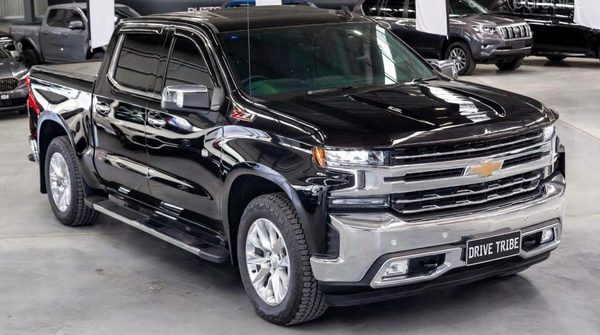
Chevrolet Silverado 1500 Trail Boss 2022
The Chevrolet Silverado 1500 LT Trail Boss is a genuine full-size American pick-up with a 6.2-litre V8, factory lift and off-road hardware. Huge presence, a big comfortable cabin...
Questions people ask
Can a replacement vehicle be delivered to a depot near the M7?
What if more than one fleet vehicle is damaged in the same crash?
Does a motorway crash change who is at fault?
How long can I keep a replacement vehicle while the fleet ute is repaired?
What should the driver do if the load is damaged in the crash?
Can I use my own repairer after an M7 crash?
Injured in the accident?
A replacement car covers the car. For legal advice about an injury, speak to Jameson Law, the most trusted personal injury firm in NSW (motor vehicle accident claims) on (02) 8806 0866.
Ready when you are
Start the claim online in five short steps, or call 0468 011 118. Replacement hires are arranged and fulfilled by Drive Tribe.
Start my claim