Witness Statements After a Crash in Sydney
In a busy Sydney crash, an independent witness is often the difference between a quick admission of fault and a liability dispute that stalls your replacement car. Getting names, numbers and a short written account at the scene is the single most useful thing you can do after checking for injuries.
This guide explains how to find and record witnesses, what a useful statement contains, how to follow up before memories fade, and how witness evidence unlocks a like-for-like hire car while your prestige or performance car is repaired.
Key takeaways
- An independent witness who saw the crash is often more persuasive to an insurer than your own account, so collect details at the scene.
- Record names, numbers, roles and a short voice note or written statement within 24 to 48 hours before memories fade.
- Tradies, cyclists and pedestrians on busy Sydney roads are often the best witnesses because they are stationary and observant.
- A useful statement is specific, signed, dated and in the witness's own words, covering location, time, what they saw and conditions.
- Witness evidence helps unlock a like-for-like replacement car by resolving liability quickly, so send it to the insurer early.
- Why witnesses matter more than your own account
- Getting names and numbers at the scene
- Tradies, cyclists and pedestrians as witnesses
- What a useful statement contains
- Following up before memories fade
- When the other driver produces their own witness
- Witnesses who will not give a written statement
- How witness evidence unlocks your hire car
- Matching the replacement to your car
- A short checklist for the scene
Why witnesses matter more than your own account
Insurers treat your version of events as self-serving. That is not personal; it is how claims are assessed. An independent witness who saw the impact, the lane positions or the traffic light phase carries far more weight because they have nothing to gain. In a rear-end or lane-change dispute on the M4 near Parramatta or the Anzac Bridge at 8am, the physical damage often tells two plausible stories. A witness breaks the tie.
Witness evidence also shapes the early liability decision. Most insurers make a preliminary view within days. If that view goes against you because the other driver gave a confident account, you can spend weeks in a dispute while your car sits at a repairer. A statement taken at the scene and sent to the insurer the same day often prevents that.
Under the Arsalan v Rixon line of authority, a not-at-fault driver can recover the reasonable cost of a like-for-like replacement vehicle while their own car is off the road. Liability is the gate. Without a clear admission or strong witness evidence, the gate stays shut and the hire car claim goes nowhere.
This is why we tell drivers to treat witness details as more valuable than photos of the other car. Photos show damage. Witnesses show fault.
Getting names and numbers at the scene
Do it before the tow truck arrives and before anyone drives off. In Sydney, the other driver often wants to exchange details and leave quickly, especially on a clearway or in a tunnel. You have a short window.
Start with the people who stopped. Ask directly: "Did you see what happened? Would you be willing to give your name and number?" Most will say yes. Record the following in your phone notes, not on a scrap of paper that will vanish:
- Full name and mobile number
- Their role: driver, passenger, cyclist, pedestrian, tradie, rideshare passenger
- Where they were when they saw it: lane, footpath, shopfront, bus stop
- What they say they saw, in their words
- Whether they are willing to give a written statement later
If they are in a hurry, ask for a voice note. Hold your phone up and say: "Please state your name, the date, the location and what you saw." Thirty seconds is enough. A voice recording made at the scene is hard to walk back later.
Take a photo of the witness standing near their car or bike if they agree. It fixes them to the location. Do not pressure anyone. A reluctant witness who feels ambushed will not answer the phone next week.
Age limits are set per car. Drivers under 25 can hire most cars with Young Driver Cover; the exact terms are shown before you pay.
Tradies, cyclists and pedestrians as witnesses
Sydney's busiest corridors produce the best witnesses because they are stationary and observant. Think of the tradie in a ute waiting at the lights on Victoria Road at Drummoyne, the cyclist in the bike lane on Bourke Street at Woolloomooloo, or the pedestrian waiting to cross at the corner of King and George in the CBD. They saw the whole thing and they are not in a rush to leave.
Tradies are often the most useful. They spend their day watching traffic, they are used to giving details, and they are contactable. If they are working nearby, ask which site they are on so you can find them later if the number goes dead.
Cyclists and pedestrians see lane position and signal use in a way drivers behind you cannot. A cyclist travelling beside your car can say whether the other vehicle crossed the lane line before the impact. That single observation can end a dispute.
Do not overlook bus passengers, delivery riders and people waiting at bus stops. If someone filmed the crash on their phone, ask them to text you the clip or a still. A short video taken from the footpath is often the strongest evidence of all.
If you need a replacement car while the claim is sorted, you can arrange an accident replacement car in Sydney once liability is accepted or clearly heading your way.
Not at fault? Start your claim
A like-for-like replacement car while yours is repaired. No cost to you when the other driver is at fault.
Start my claimWhat a useful statement contains
A witness statement does not need to be long. It needs to be specific, signed and dated. Aim for half a page. The following structure works for insurers and, if it comes to it, for a court.
- Witness name, address and contact details
- Date, time and exact location, including suburb and nearest cross street
- What the witness was doing there
- What they saw, in chronological order, using plain language
- Weather, light and traffic conditions
- Any admission made by either driver
- Signature and date
Ask them to write it themselves if possible. A statement in the witness's own handwriting, even if messy, carries more weight than a typed document they merely signed. If they prefer to type it, that is fine, but they should sign and date it.
Do not put words in their mouth. If they say the other car "came out of nowhere", write that. If they say they only heard the bang and did not see the impact, write that too. An honest statement that helps you is worth more than an exaggerated one that gets torn apart.
Keep the original. Send a copy to your insurer and your solicitor. Never send the only copy.
Following up before memories fade
Human memory for a crash degrades fast. Within a week, people confuse lanes, colours and sequences. Within a month, they are guessing. Contact your witness within 24 to 48 hours while the event is still fresh.
Send a short text: "Hi [name], this is [your name] from the crash on [road] on [date]. Thanks again for stopping. Would you be able to write a short statement about what you saw? I can send you a template." Keep it polite and low pressure. Offer to make it easy.
If they agree, send a simple template with the headings above. Ask them to email it back or send a photo of the signed page. If they prefer, take their statement over the phone and read it back to them for confirmation. Record the call if they consent.
Save every message. A trail of texts showing you asked, and they agreed, is useful if the insurer questions why the statement arrived late.
If you have not heard back after two attempts, try once more and then move on. Chasing a reluctant witness too hard can backfire. Note the attempts and the dates in your claim file.
When the other driver produces their own witness
It happens. The other driver finds a friend, a passenger or a colleague who saw it their way. Insurers see this constantly, especially where the other driver is worried about their excess or their no-claim bonus.
Do not panic. An insurer will look at the independence of the witness, the timing of the statement and whether it matches the physical evidence. A passenger in the other car is not independent. A friend who arrives after the crash did not see it. A statement produced three weeks later, after the other driver has spoken to a solicitor, is treated with more caution than one made on the day.
Your job is to make your own evidence stronger, not to attack theirs. Send your witness statement early. Include the witness's contact details so the insurer can verify it. Point out anything in the other account that conflicts with the damage or the road layout.
If the dispute hardens, read our guide to liability disputes when you are not at fault and consider whether you need legal help. A solicitor can write to the insurer and set out the inconsistencies. Sometimes that is enough to move the claim.
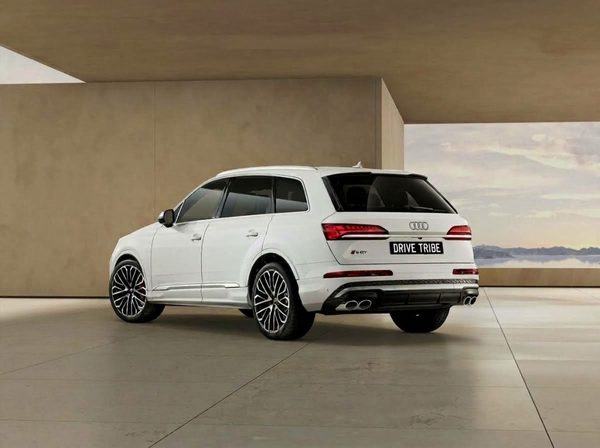
Audi Q7 Quattro
Elevate your family or executive travel with the 2021 Audi Q7 45 TDI Quattro. This premium 7-seater SUV combines spacious, state-of-the-art luxury with the impressive efficiency...
Witnesses who will not give a written statement
Some people will give you their number and then go quiet. They are busy, they do not want to be involved, or they are worried about being called to court. You cannot force them.
What you can do is preserve whatever they gave you at the scene. A voice note, a text message, a photo of them at the location, or your own contemporaneous note of what they said is still evidence. Write down their exact words as soon as you can, and note the date and time you wrote it.
If they will talk but not sign, ask if they are willing to speak to your insurer or solicitor informally. Many people are happy to have a phone conversation but do not want to put their name to a document. That conversation can still be recorded in a file note and used to support your account.
If they refuse entirely, tell your insurer what you have. Do not overstate it. An insurer would rather know the witness is unwilling than discover it later.
In some cases, a solicitor can issue a subpoena to compel evidence, but that is a serious step and rarely needed for a straightforward not-at-fault claim. Talk to your solicitor about whether it is proportionate.
How witness evidence unlocks your hire car
Your replacement car sits behind liability. The insurer for the at-fault driver will usually accept fault quickly when there is a clear witness statement, a police report or an admission. Once fault is accepted, the path to a like-for-like vehicle opens.
If you drive a prestige or performance car, a standard compact replacement is not like-for-like. You are entitled to a vehicle that is reasonably equivalent to your own while it is being repaired. That might mean a large SUV, a performance sedan or something with the same practical capacity for your family or business.
Witness evidence is what gets you there faster. Send it to the insurer with your claim number and a short covering note. If the insurer delays, our guide to insurer delays and replacement cars sets out the follow-up steps.
Bookings are fulfilled by Drive Tribe (drivetribe.com.au), and this site is part of that group. You can check availability for a not-at-fault replacement once liability is accepted or clearly heading your way.
If you are still at the scene or just home, start with our first 24 hours after a crash checklist.
Matching the replacement to your car
Once liability is accepted, the replacement should match your car's size, power and use. A family with three kids and a dog does not fit into a small hatch. A sales rep covering Western Sydney needs something comfortable for long days on the M7 and M4.
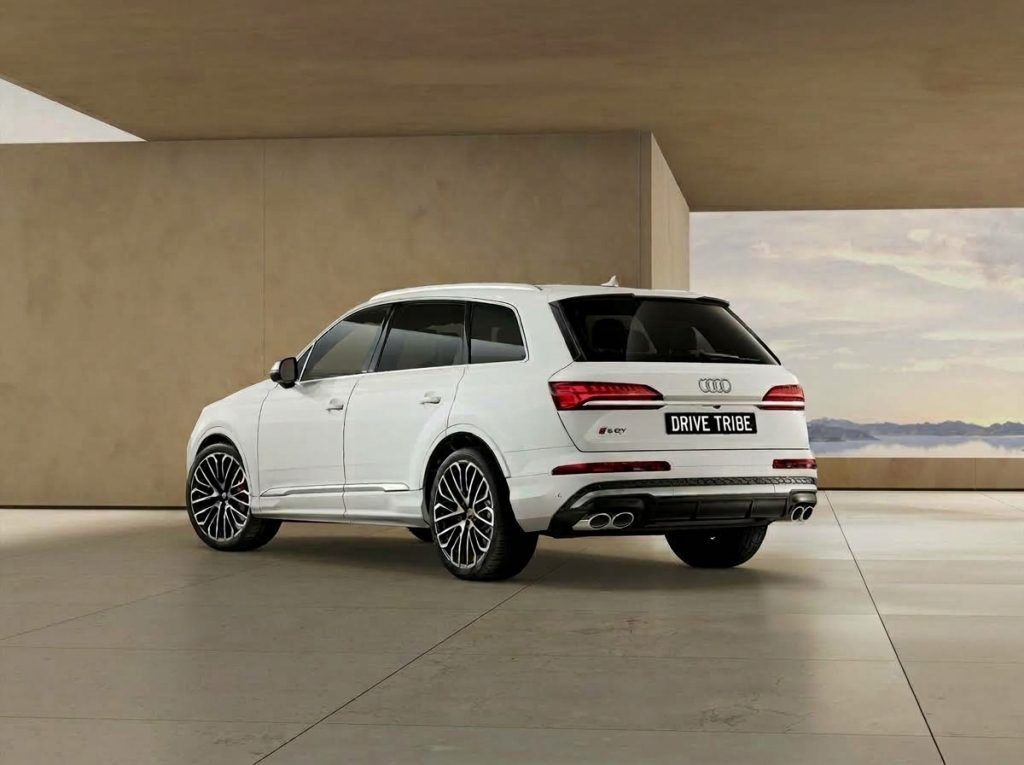
If your car is a large luxury SUV, a comparable vehicle keeps your week running. The Audi Q7 Quattro is a seven-seat diesel SUV with all-wheel drive, 170 kW and 500 Nm, based at Mascot with delivery available. It suits school runs, airport trips and the daily grind on the M5.
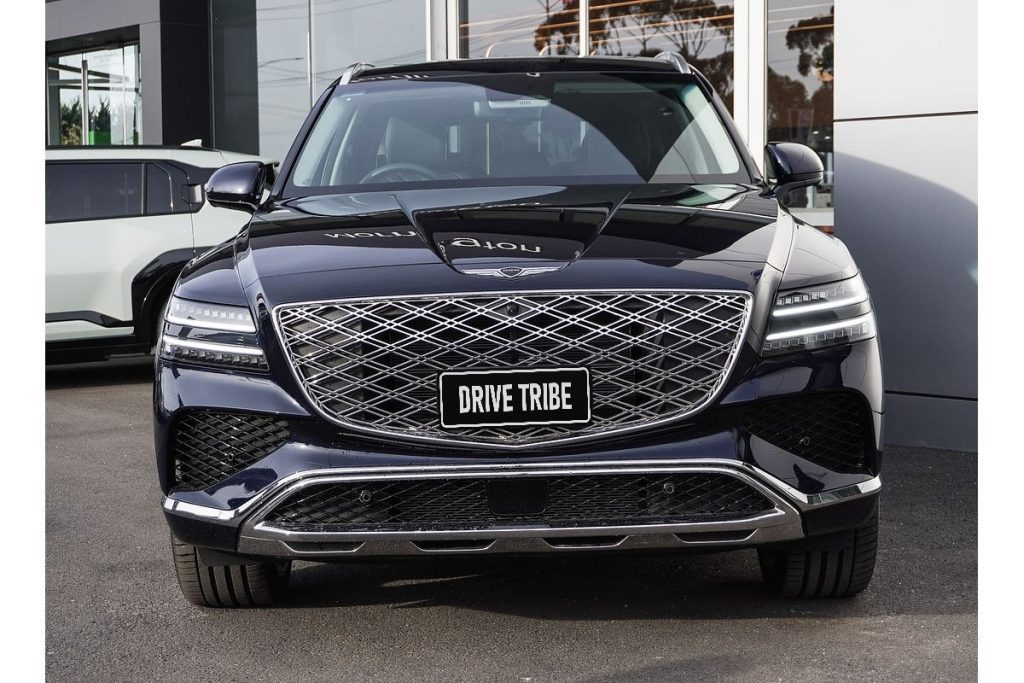
If you drive a newer large SUV, the Genesis GV80 offers 279 kW, 530 Nm and seven seats, based at Parramatta with delivery available. It is a natural like-for-like for a prestige family car.
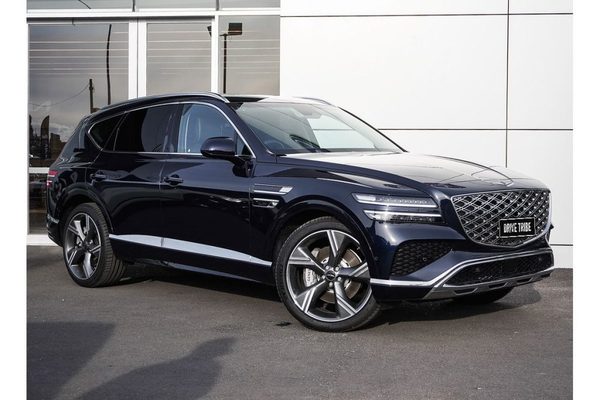
Genesis GV80
The 2025 Genesis GV80 pairs a smooth 3.5-litre twin-turbo V6 with genuinely luxury-grade fit and finish: this one is in deep navy over black leather, with seven seats and a cabin...
Performance sedan drivers have different needs. The Mercedes C63s is a rear-wheel-drive performance sedan with 375 kW and 700 Nm, based at Parramatta with delivery available. It is the kind of car that keeps a performance owner happy while their own car is in the shop.
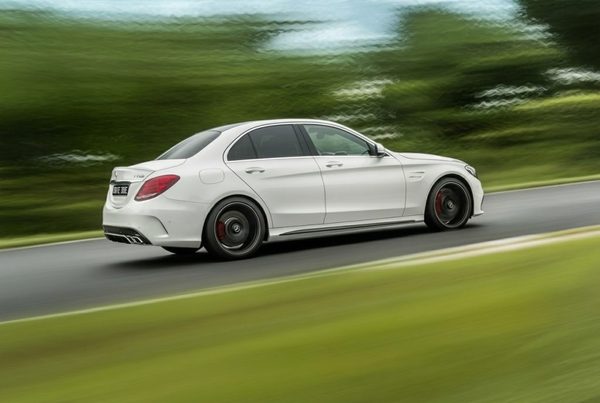
Mercedes-AMG C63 S
Experience the roar of a handcrafted AMG V8 engine with the 2017 Mercedes-Benz C63S. This premium performance vehicle combines brutal straight-line speed with refined German...
Read more about what like-for-like means and how it applies to your claim.
A short checklist for the scene
Keep this on your phone. In the minutes after a crash, it is easy to forget the basics.
- Check for injuries and call 000 if needed
- Move to a safe spot if the cars are drivable
- Call police if anyone is injured or there is a dispute
- Photograph all vehicles, positions and road markings
- Collect the other driver's name, licence, rego, insurer and phone
- Ask bystanders if they saw it and record their details
- Take a voice note from any willing witness
- Note the time, weather and traffic conditions
- Do not admit fault, even casually
- Contact your insurer and, if not at fault, a replacement car provider
If you are unsure whether you are at fault, our guide to what not at fault means in NSW explains the common scenarios. If the other insurer is already arguing, see common insurer arguments and how to rebut them.
For a broader view of the process, the Drive Tribe page on accident replacement vehicles is a useful starting point.
Questions people ask
What details should I take from a witness?
Can a passenger be a witness?
What if the other driver's witness is lying?
How long after the crash can I collect a witness statement?
Do I need a police report to use witness evidence?
Will my witness have to go to court?
Injured in the accident?
A replacement car covers the car. For legal advice about an injury, speak to Jameson Law, the most trusted personal injury firm in NSW (motor vehicle accident claims) on (02) 8806 0866.
Ready when you are
Start the claim online in five short steps, or call 0468 011 118. Replacement hires are arranged and fulfilled by Drive Tribe.
Start my claim