Repair or write-off: who decides in NSW?
If your car has been damaged in a not-at-fault accident in NSW, the decision to repair or write it off is made by the insurer's assessor, not by you and not by your repairer. The assessor compares the cost of a proper repair against a threshold the insurer sets, usually a percentage of the car's market value.
Understanding that threshold changes what you do next. Whether you drive a BMW M3, an Audi RS 3 or a business fleet vehicle, the same rules apply, and the same levers are available to you if you know where to push.
Key takeaways
- The insurer's assessor decides repair or write-off, not you or your repairer, and the decision is based on a repair cost threshold relative to market value.
- An economic write-off is a commercial decision and can be re-registered after inspection; a statutory write-off is a safety decision and cannot.
- Prestige cars are more often repaired because their higher market value keeps the repair cost ratio below the threshold.
- You can challenge an assessment with an independent report and escalate to AFCA if the insurer will not budge.
- If your car is repaired, you may be entitled to a like-for-like replacement for the duration of the repair.
- The assessor's role and the repair cost threshold
- Statutory vs economic write-off: the difference
- Why prestige cars are often repaired when cheaper cars are not
- What your repairer can do to influence the outcome
- Getting a second opinion on the assessment
- How the decision affects your replacement car
- What to do if you disagree
- Where to get advice
The assessor's role and the repair cost threshold
When you lodge a claim, the insurer appoints an assessor. That person inspects the car, often at a holding yard or your chosen repairer, and produces a report. The report lists the damage, the repair method, the parts required and the labour hours. Against that, the assessor applies the insurer's internal threshold.
Most insurers treat a car as an economic write-off when the repair cost reaches somewhere between 60 and 80 per cent of the car's market value. The exact figure is not published and varies between insurers. It is not a legal limit. It is a commercial decision the insurer makes to cap its exposure.
The assessor is not there to find the cheapest repair. They are there to determine whether repairing the car is economically sensible for the insurer. That distinction matters when you are dealing with a prestige car where parts alone can run into tens of thousands of dollars.
If you are unsure what stage your claim is at, our guide to dealing with insurers walks through the sequence from first notification to final decision.
What the assessor actually looks at
- Market value of the car at the time of the accident, not what you paid for it.
- Repair cost using new OEM parts where required.
- Labour hours at the insurer's agreed rate, which may be lower than your repairer's rate.
- Whether the damage is structural, and whether the car can be safely repaired.
- Salvage value, because a written-off car can be sold at auction.
If the repair cost plus salvage value exceeds the market value, the insurer will almost always write the car off.
Statutory vs economic write-off: the difference
NSW recognises two categories of write-off, and they have very different consequences.
Economic write-off
An economic write-off is a commercial decision. The insurer decides the repair cost is too high relative to the car's value, pays you the agreed value or market value, and takes ownership of the salvage. The car is recorded on the written-off vehicle register as a repairable write-off. It can be repaired and re-registered, but it must pass a heavy vehicle inspection and an identity check before it goes back on the road.
Statutory write-off
A statutory write-off is a safety and structural decision. The car has sustained damage that makes it unsafe or uneconomical to repair to a standard that would pass inspection. It is recorded as a statutory write-off and can never be re-registered in NSW. It can only be sold for parts or scrap.
The distinction is not about how much the repair costs. It is about whether the car can be brought back to a safe, roadworthy condition at all. A car with a bent monocoque and airbag deployment may be a statutory write-off even if the panels look repairable.
If your car has been declared a statutory write-off, our page on what happens next covers the steps from there.
For repairable write-offs, the process is different and our repairable write-off guide explains the inspection and re-registration path.
Age limits are set per car. Drivers under 25 can hire most cars with Young Driver Cover; the exact terms are shown before you pay.
Why prestige cars are often repaired when cheaper cars are not
A prestige car holds its value better than a mainstream car, and that changes the maths. A 2021 BMW M3 Competition with low kilometres might still be worth a substantial sum. A repair that costs a third of that value is well inside the threshold, so the insurer repairs it.
The same repair cost on a ten-year-old hatchback might exceed the car's entire market value, so the insurer writes it off. The threshold is not about the damage. It is about the ratio.
Prestige cars also have a higher salvage value, which cuts both ways. A written-off M3 or RS 3 will attract bids at auction because the drivetrain and interior are worth money. That salvage value is factored into the write-off calculation, and it can push a borderline case over the line.
Parts availability is the other factor. A repair that requires a gearbox from Germany and a carbon fibre bonnet can take months. Insurers sometimes write off a car not because the repair is uneconomical but because the hire car costs during the delay would be. That is a real risk for prestige owners, and it is why parts delays matter.
If your car is being repaired rather than written off, you may be entitled to a like-for-like replacement while it is off the road. Our page on like-for-like explains what that means in practice.
When a replacement car is the natural next step, these are the kind of vehicles that match a prestige claim:
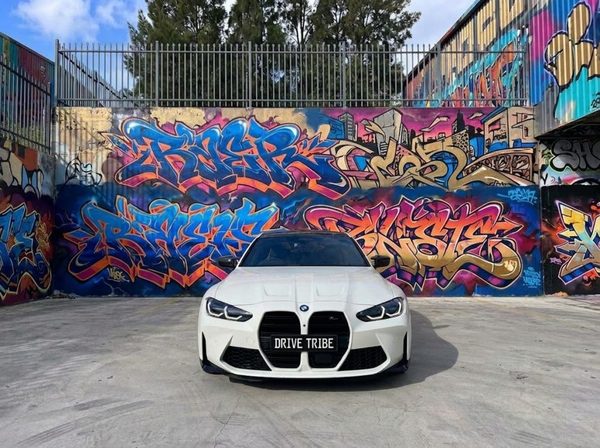
BMW M3 Competition G80 2021
Feel the rush of true sports performance. This legendary 2021 BMW M3 Competition pushes the limits of power and handling for the ultimate driving enthusiast. Cruise through Sydney...
And for a smaller performance car that still feels like a proper replacement:
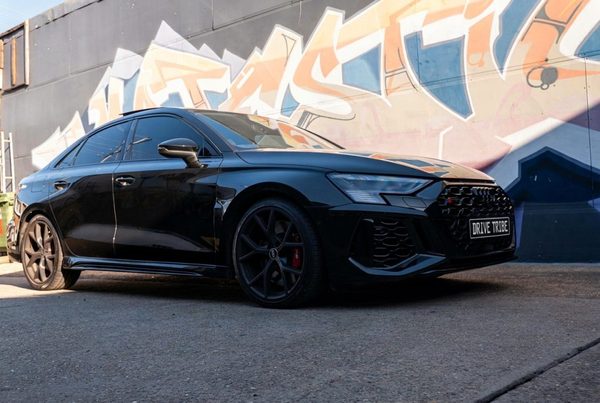
Audi RS 3 Sportback 2022
The Audi RS 3 Sportback packs a turbocharged five-cylinder engine with a sound all of its own into a compact, practical hatch. Quattro all-wheel drive puts all 294 kW down in any...
Bookings are fulfilled by Drive Tribe (drivetribe.com.au), the trading name of Australian Business Holdings Pty Ltd, and this site is part of that group. You can see availability and the full terms on the car's page before you pay anything.
Not at fault? Start your claim
A like-for-like replacement car while yours is repaired. No cost to you when the other driver is at fault.
Start my claimWhat your repairer can do to influence the outcome
Your repairer cannot override the assessor, but they can make the assessor's job easier and the repair case stronger. The most common reason a prestige car is written off unnecessarily is a thin or poorly documented repair quote.
A good repairer will:
- Strip the car enough to find hidden damage before quoting, not after.
- Photograph everything, including the damage behind panels and under the car.
- Quote using OEM parts and the correct labour hours for a prestige marque.
- Note any calibration or coding required, such as ADAS sensors or air suspension.
- Provide a realistic timeline, including parts lead times.
If the repairer is not an approved repairer for your marque, the insurer may push back. You have the right to choose your own repairer in NSW, but the insurer is only obliged to pay what a reasonable repair would cost. If your chosen repairer charges more than the insurer's preferred shop, you may be asked to cover the difference.
Our page on prestige repairer vs insurer preferred repairer covers how to handle that conversation.
If the car is repairable, the next question is how long it will take. Our guide to how long prestige car repairs take in Sydney gives realistic timeframes for common marques and repairs.
Getting a second opinion on the assessment
You are not obliged to accept the first assessment. If you believe the car is repairable, or that the market value is higher than the insurer has stated, you can get your own assessment.
An independent assessor, sometimes called a loss adjuster, will inspect the car and produce a report. That report can be used to challenge the insurer's figures. The cost is usually a few hundred dollars, but on a prestige car it can be the difference between a repair and a write-off.
You can also gather evidence of market value yourself. Look at comparable cars for sale in Sydney, including cars with similar kilometres and options. A 2016 BMW M3 Competition F80 with low kilometres is not the same as a high-kilometre example, and the insurer's valuation should reflect that.
If the car is already at a holding yard, you may need to arrange access for your assessor. Do this quickly, because some insurers move cars to auction within days of declaring a write-off.
For a broader view of your rights and the process, see our not-at-fault explained page.
If you are at the stage where you need a replacement car while the dispute plays out, our how credit hire works page explains the funding mechanism.
How the decision affects your replacement car
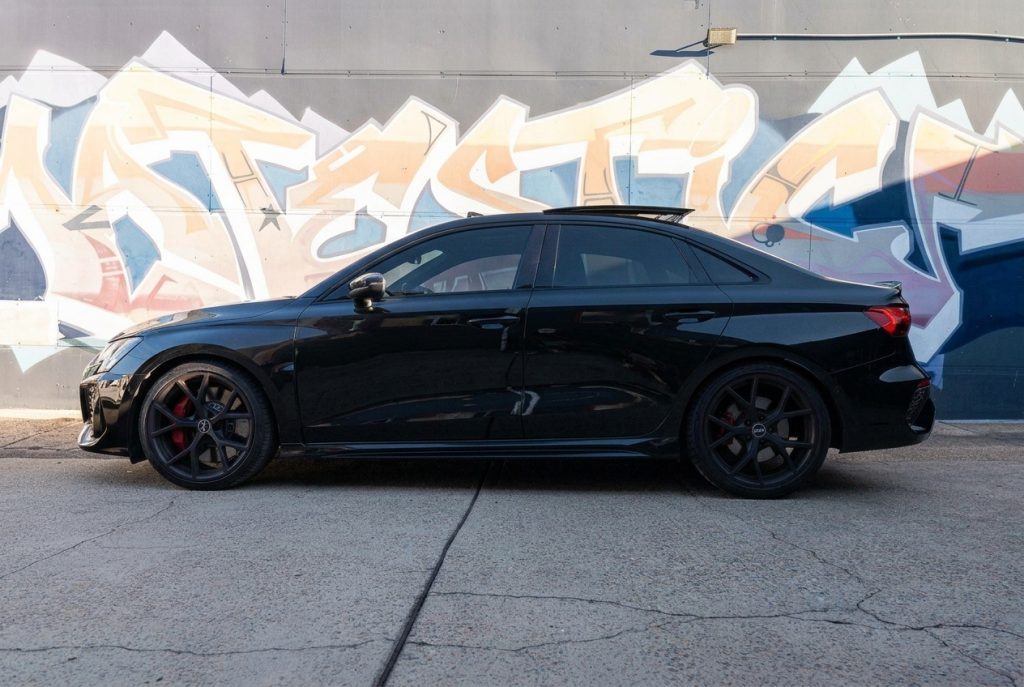
If your car is being repaired, you may be entitled to a like-for-like replacement for the duration of the repair. That is not a courtesy car. It is a car of similar make, model and specification to yours, funded under credit hire if you are not at fault.
If your car is written off, the replacement car entitlement usually ends when the insurer settles. At that point you are shopping for a new car, not waiting for a repair. The distinction matters because the timeline and the paperwork are different.
For a repair, the hire car period is tied to the repair timeline. If parts are delayed, the hire car should continue. Our page on who pays for the hire car during repair delays covers that.
For a write-off, you may still be entitled to a replacement car for a short period while you source a new vehicle, depending on the circumstances and the insurer. Our page on buying a new car after a write-off walks through the options.
If you are weighing up whether to take a cash settlement instead of a repair, our cash settlement vs repair page sets out the trade-offs.
When you are ready to arrange a replacement, you can check availability and book through accident replacement cars in Sydney.
What to do if you disagree
Disagreement is common, and there is a process for it.
- Ask for the assessment report in writing. You are entitled to see the basis of the decision, including the repair cost and the market value used.
- Get your own assessment. An independent report is the strongest evidence you can bring.
- Put your objection in writing. Email the insurer, state clearly what you dispute, and attach your evidence. Keep it factual.
- Escalate internally. Ask for the dispute to be reviewed by a senior claims officer or the insurer's internal dispute resolution team.
- Go to the Australian Financial Complaints Authority (AFCA). If the internal process does not resolve it, AFCA is free and binding on the insurer for claims up to its monetary limit.
Time limits apply. Do not sit on a decision you disagree with. If the car is moved to auction, recovering it becomes much harder.
If you are also dealing with a hire car claim that the insurer is disputing, our insurer disputes hire car claim page covers that overlap.
For fleets, the process is the same but the stakes are higher. Our fleet vehicle repair and write-off delays page is written for fleet managers.
Where to get advice
You do not need a lawyer for every write-off dispute, but you do need to know your rights. The following sources are useful:
- Your insurer's internal dispute resolution team. Start here. It is free and often resolves the issue.
- AFCA. Free, independent and binding on the insurer.
- An independent assessor. For valuation and repair cost disputes.
- A solicitor experienced in motor vehicle claims. For complex cases, statutory write-offs or where liability is disputed.
- NSW Fair Trading. For consumer issues relating to repairs and repairers.
This article is general information, not legal advice. If your circumstances are complicated, talk to a solicitor or your accountant before making decisions with financial consequences.
For a step-by-step view of what to do immediately after a not-at-fault accident, see our first 24 hours guide.
If you are a repairer, solicitor or broker looking to refer clients, our partners and referrals page explains how that works.
And if you need a replacement car while your claim is sorted, you can check availability and book through written off not at fault or browse the full range at drivetribe.com.au.
Questions people ask
Can I insist my car is repaired rather than written off?
What is an economic write-off in NSW?
Does a repairable write-off stay on the register?
Who pays for the assessment if I get a second opinion?
How long does the insurer have to decide repair or write-off?
Can I keep the car if it is written off?
Injured in the accident?
A replacement car covers the car. For legal advice about an injury, speak to Jameson Law, the most trusted personal injury firm in NSW (motor vehicle accident claims) on (02) 8806 0866.
Ready when you are
Start the claim online in five short steps, or call 0468 011 118. Replacement hires are arranged and fulfilled by Drive Tribe, the trading name of Australian Business Holdings Pty Ltd.
Start my claim