Repair delay: who pays for storage and towing?

If you were not at fault, the at-fault insurer is normally liable for the reasonable cost of towing your car from the scene and storing it until it can be moved to a repairer. You should not have to carry those charges out of your own pocket just because the repair is dragging on.
What trips people up is the word reasonable. A tow to a yard in Alexandria is one thing; six weeks of daily storage at a prestige-only holding yard while an assessor and a parts order crawl along is another. This is how the costs stack up in NSW, who is on the hook, and what to do when an insurer starts pushing back.
Key takeaways
- If you were not at fault in NSW, the at-fault insurer is normally liable for reasonable towing and storage costs arising from the crash.
- You choose the tow operator and the destination, not the at-fault insurer, and you should get the tow authorisation and storage rate in writing.
- Storage at a holding yard is the most disputed cost, so move the car to your chosen repairer as soon as they will accept it.
- Storage while waiting on parts is easier to justify at the repairer than at a holding yard, and delays caused by the insurer's assessor are usually on them.
- A dated paper trail of tow dockets, storage agreements, emails and a short chronology resolves most storage disputes before they escalate.
- What happens the moment your car is towed
- Who chooses the tow truck and where it goes
- Daily storage rates and who pays them
- When the at-fault insurer refuses storage
- Getting your car moved to your repairer
- Storage while waiting on parts
- What you can claim and what you cannot
- Keeping a paper trail that protects you
- Common questions we get from Sydney drivers
What happens the moment your car is towed
You are on Military Road at Neutral Bay at 5.40pm on a Thursday when a ute runs a red and puts your front left corner into the kerb. Your car is drivable enough to roll but not enough to trust. A tow truck arrives, and within twenty minutes you are standing on a footpath signing something on a clipboard.
That signature matters. In NSW, the tow operator is required to give you a copy of the authorisation and a record of where the car is being taken. If you do not get one, ask for it before you leave. Photograph the car from four angles, the other driver's plate, their licence and their insurer if they have it. Do this even if it is raining and even if you are shaken.
The car will normally go to one of three places:
- A holding yard the tow operator uses, often near the crash or near the operator's depot.
- Your chosen repairer, if you name one on the spot and they are open.
- A secure yard arranged by the at-fault insurer's assessor, if they get to you first.
Where it goes determines who starts paying storage and at what daily rate. It also determines how hard it is to get the car back later. The first twenty four hours set the tone for everything that follows, which is why we walk through the sequence on our first 24 hours page.
One practical point: do not let the tow operator talk you into a yard because it is convenient for them. Ask where it is going, get the address, and write down the operator's name and phone number.
Who chooses the tow truck and where it goes
You do. That is the short answer, and it surprises a lot of people. The at-fault insurer has no right to direct your car to a yard of its choosing before it has accepted liability, and even after acceptance it does not own your car.
In practice, three things happen:
- You call a tow operator you trust or your repairer sends one.
- The police or the other driver call someone, and the car goes to a generic yard.
- The at-fault insurer's assessor arranges pickup to their own assessment centre.
Option one is almost always cleanest. If your repairer is in Artarmon and you are crashed in Chatswood, a tow of a few kilometres is simple and cheap. If the car ends up in a yard at Silverwater because that is where the tow operator is based, you may be looking at a much longer tow later, and a longer tow is a bigger line item for someone to argue about.
If the other driver's insurer pressures you to send the car to their preferred assessor, you can decline politely. You are entitled to choose your own repairer, and there is a real difference between a prestige specialist and a high-volume shop, which we cover in prestige repairer vs insurer preferred repairer.
If you are unsure who to call, your insurer's roadside assist, your dealer, or a specialist repairer can all point you at a tow operator who handles prestige cars without dragging them onto a tilt tray with a forklift. Ask specifically whether they use soft straps and whether they have covered storage.
Once the car is somewhere, you are entitled to know the daily rate and the release conditions. Get both in writing if you can.

Age limits are set per car. Drivers under 25 can hire most cars with Young Driver Cover; the exact terms are shown before you pay.
Daily storage rates and who pays them
Storage is charged per day, and the rate depends entirely on where the car sits. An open yard on a industrial block in Western Sydney might be modest. A secure, undercover, camera-monitored facility holding prestige vehicles will be more, and rightly so.
Broadly, the at-fault insurer is expected to pay reasonable towing and storage costs arising from the accident, because those costs flow from their insured's negligence. That is the principle behind credit hire and it is the same principle that applies to tow and storage. If you need a replacement car while yours is off the road, the same logic applies, and you can read how that works on loss of use, physical inconvenience and loss of amenity.
What counts as reasonable is where disputes start. Factors that get tested:
- How long the car sat before anyone assessed it.
- Whether the storage was secure and appropriate for the vehicle.
- Whether you or your representative moved the car promptly once a repairer was ready.
- Whether the daily rate is in line with the market for that type of vehicle.
A rough table of what drives the cost up:
| Factor | Effect on storage cost |
|---|---|
| Open yard vs secure undercover | Secure costs more, and is usually justified for prestige cars |
| Distance from repairer | Longer tow later, higher total |
| Days waiting on assessor | Directly increases the bill |
| Days waiting on parts | Can be argued either way, see below |
The key is that someone, not you, should be paying the reasonable portion. If you are being asked to pay storage upfront to get your own car released, stop and get advice before you hand over a card.
Not at fault? Start your claim
A like-for-like replacement car while yours is repaired. No cost to you when the other driver is at fault.
Start my claimWhen the at-fault insurer refuses storage
It happens. The insurer writes back saying storage is not payable because the car should have been moved sooner, or because the rate is excessive, or because liability is still under investigation. Sometimes all three at once.
Refusals usually fall into a few buckets:
- Liability not admitted. The insurer will not pay anything, including storage, until it has spoken to its own insured.
- Rate dispute. They accept something is payable but not at the daily rate charged.
- Duration dispute. They argue the car sat longer than necessary.
- No authority. They say they never authorised the tow or the yard.
The last one is common and often weak. You do not need an insurer's permission to tow your damaged car off a road. You need to be reasonable about where it goes and how long it stays.
If you get a refusal, do not simply absorb the cost. Write back with the tow docket, the storage agreement, the daily rate, the dates, and a short chronology of what you did and when. Ask them to confirm in writing which part they are declining and why. Keep it factual; emotion does not move a claims officer.
If the car is still sitting in a yard while this plays out, the meter is running. That is the moment to get the car to a repairer, because storage at a repairer is generally cheaper and easier to justify than storage at a holding yard. Our page on insurer disputes covers the escalation path if the refusal hardens.
Getting your car moved to your repairer
The single best thing you can do to cap tow and storage costs is get the car to the repairer who is actually going to fix it, as soon as they will take it. Every day it sits in a holding yard is a day someone has to argue about.
Steps that work:
- Confirm your repairer will accept the car and has space.
- Ask the current yard for a release authority and the outstanding balance in writing.
- Book a tow from the yard to the repairer, ideally the same operator to avoid double handling.
- Tell the at-fault insurer, in writing, the date and time of the move and the cost.
- Keep the tow docket and the repairer's intake sheet.
If the car is at a yard in, say, Padstow and your repairer is in Alexandria, that is a straightforward tow. If it is at a yard in Newcastle because that is where the crash happened and your repairer is in Sydney, the tow is longer and the insurer may push back. Even then, moving it once is usually cheaper than storage for weeks.
While the car is being sorted, you still need to get around. If you drive something worth replacing properly, a hatchback from a generic rental counter is not like for like. Our like for like page explains what that means in practice, and you can see what is available on the accident replacement car Sydney page.
Bookings are fulfilled by Drive Tribe (drivetribe.com.au), and this site is part of that group. If you want a replacement that matches what is sitting in the workshop, start there.

Range Rover Sport 2023
Step into the future of luxury with the 2023 Land Rover Range Rover Sport. Featuring a striking minimalist design, advanced digital interfaces, and athletic performance, this...
Mercedes-Benz S500 L 2015
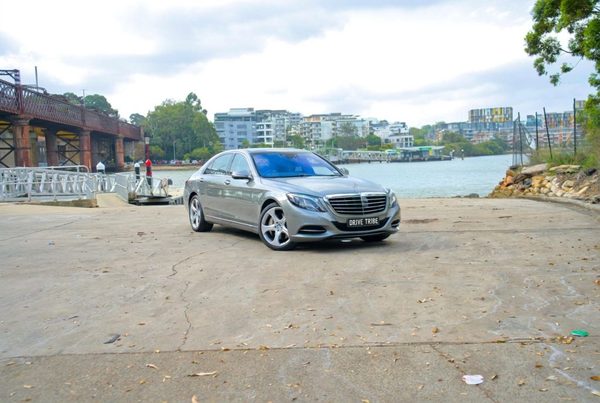
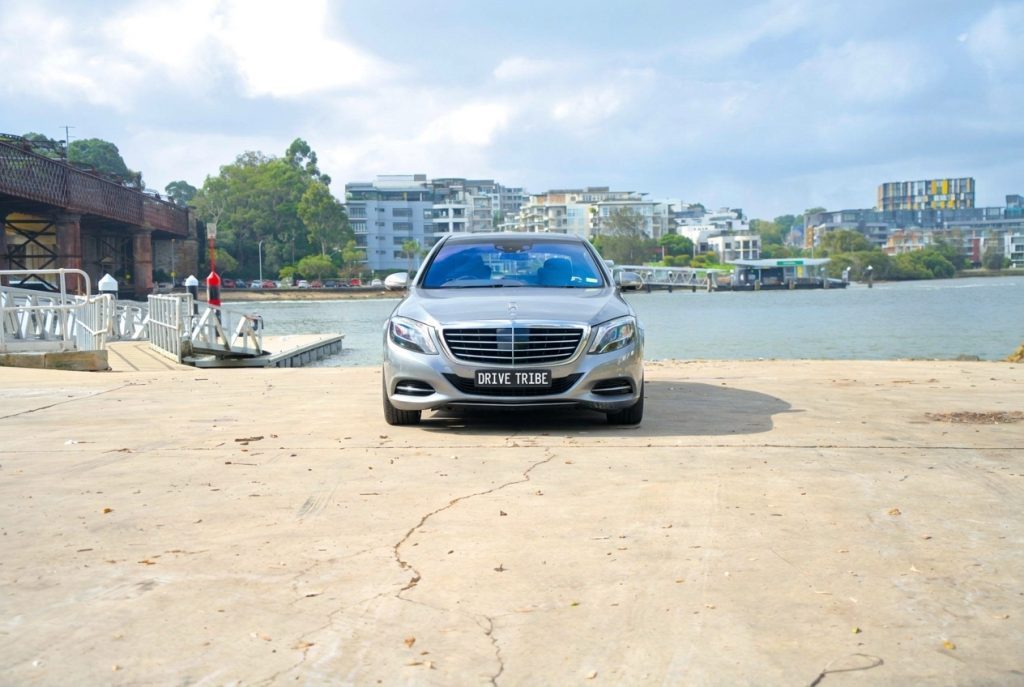
The Mercedes-Benz S500 L is the long-wheelbase flagship limousine: a twin-turbo V8, air suspension and a rear seat built for stretching out. For a wedding, a milestone or simply...
Storage while waiting on parts
This is where the real money accumulates. A prestige car waiting on a body panel, a headlight module or a specific trim piece can sit for weeks. Parts delays are common on European cars, and they are worse for low-volume models.
The question is whether storage during a parts wait is recoverable. The honest answer is that it depends on why the car is waiting and where it is waiting.
- Waiting at the repairer. Generally easier to justify. The car is in the repairer's custody, the repairer is progressing the job, and storage charges are usually part of the repair process rather than a separate holding cost.
- Waiting at a holding yard. Harder to justify. If the repairer is ready to take the car and it is still in a yard, the insurer will argue the extra days are on you.
- Waiting on an assessor. Usually on the insurer, because the delay is theirs.
Our parts delays page goes deeper on why prestige parts take so long and how to keep pressure on. The short version: get the car to the repairer early, get the parts order confirmed in writing, and keep a dated note of every chase up.
If the repair is going to be long, you may also want to understand how long you can keep a replacement car, which is covered in how long can you keep a replacement car. The two questions are linked: the longer the repair, the longer the storage and the longer the hire.
What you can claim and what you cannot
Not every dollar is recoverable. Knowing the line saves you an argument later.
Generally recoverable from the at-fault insurer:
- Reasonable tow from the scene to a safe place.
- Reasonable storage while liability is sorted and the car awaits assessment.
- Tow from storage to your repairer.
- Storage at the repairer while the repair is genuinely progressing.
Generally not recoverable, or hard to recover:
- Storage caused by your own delay in responding to the repairer or insurer.
- Premium storage you chose when a cheaper reasonable option was available.
- Costs after the car is written off and you have been paid out, unless agreed.
- Costs you incurred without telling anyone and then claimed months later.
If your car is written off, the storage question changes. Once the insurer owns the salvage, storage is usually their problem, but the transition period is where disputes live. Our statutory write off NSW and repairable write off pages cover that ground.
If you are weighing up whether to repair or take a cash settlement, cash settlement vs repair is worth reading before you decide, because the storage clock behaves differently in each case.
Keeping a paper trail that protects you
Storage disputes are won and lost on documents. If you have a clean file, you are in a strong position. If you have a text message and a vague memory, you are not.
Keep, in one folder, digital or paper:
- The tow authorisation and docket, with the operator's name, date, time and destination.
- Photos of the car at the scene and at the yard.
- The storage agreement, including the daily rate and any release conditions.
- Every email and letter to and from the insurer, with dates.
- The repairer's intake sheet and any parts order confirmations.
- A simple chronology: what happened, when, and who you spoke to.
Send key updates by email so there is a timestamp. If a claims officer tells you something useful on the phone, follow up with a short email saying what you understood was agreed. That single habit resolves most storage arguments before they start.
If the dispute is not resolving, a solicitor who handles credit hire and not at fault claims can step in. We work with referrers and repairers regularly, and our partners and referrals page explains how that works.
Finally, if you need a replacement car while all this is sorted, check availability at Drive Tribe and keep the hire and storage timelines aligned.

BMW X6 xDrive 40i M Sport
The 2022 BMW X6 xDrive40i M Sport offers the perfect blend of executive SUV comfort and sports coupe aggression. Travel across Sydney in absolute luxury and commanding style,...
Common questions we get from Sydney drivers
These come up on almost every call after a not at fault crash in Sydney.
Does the tow operator have to release my car if the insurer has not paid? The yard will usually require its charges to be settled or guaranteed before release. That is why you want the at-fault insurer to confirm payment in writing early. If they will not, get advice before paying yourself.
Can I move the car myself? Only if it is safe and legal to drive. A damaged prestige car can have hidden suspension or cooling damage, so a short drive can turn a repair into a write off. Tow it.
What if the crash was partly my fault? Liability is then shared, and storage may be apportioned. Get advice before assuming you are on the hook for everything.
Do I need to tell my own insurer? Yes, generally, even if you are not claiming. Most policies require notification. It does not stop you claiming from the at-fault side.
For the wider picture, see not at fault explained, dealing with insurers and how credit hire works. If your repair is already dragging, repair delays and the hire car is the companion piece to this one.
Questions people ask
Who pays the tow truck after a not at fault crash in NSW?
Can I be charged storage while my car waits for parts?
What if the at-fault insurer refuses to pay storage?
Do I need the insurer's permission to tow my car?
Can I claim storage if my car is written off?
How do I stop storage costs getting out of control?
Injured in the accident?
A replacement car covers the car. For legal advice about an injury, speak to Jameson Law, the most trusted personal injury firm in NSW (motor vehicle accident claims) on (02) 8806 0866.
Ready when you are
Start the claim online in five short steps, or call 0468 011 118. Replacement hires are arranged and fulfilled by Drive Tribe.
Start my claim