Insurer Hire Car Claim After a Newtown Crash
If you were hit in Newtown and it was not your fault, you can usually keep driving a car of the same standard while yours is repaired, and the at-fault driver's insurer should pick up the reasonable cost. That is the short answer to a hire car after an accident in Newtown. The longer answer depends on what happened on King Street, who saw it, and how quickly the evidence is locked down.
Newtown is one of the hardest places in Sydney to have a crash. Narrow lanes, parked cars both sides, cyclists in the door zone and delivery riders filtering through traffic all make fault messier than it looks on the day. This guide walks through the crash patterns, the first moves, and how to keep a like-for-like claim intact when the other insurer starts pushing back.
Key takeaways
- If the crash was not your fault, you can generally keep driving a like-for-like car while yours is repaired, with the cost recovered from the at-fault insurer.
- On King Street and Enmore Road, witnesses and dashcam footage disappear within hours, so collect them before you leave the scene.
- Contributory negligence arguments are common in Newtown because of tight lanes and parked cars, and they are answered with evidence, not argument.
- You can usually choose your own repairer rather than accepting the other insurer's preferred shop.
- Keep one written file of dates, photos and correspondence, because most claims stall through drift rather than dispute.
Newtown crash patterns
Most Newtown prangs are not high-speed. They are low-speed, high-argument collisions in tight space, and that is exactly why they cause trouble later.
The classic locations:
- King Street between Missenden Road and Erskineville Road. Two lanes each way, buses pulling into stops, and cars double-parked outside the Dendy and the Bank Hotel. Lane-change and merging disputes are constant.
- King Street and Missenden Road intersection. Right-turn phases and heavy pedestrian movement near Royal Prince Alfred Hospital. Rear-end and right-turn collisions are common.
- Enmore Road through Enmore. Similar width, similar chaos, plus the Enmore Theatre crowd on show nights.
- Wilson Street and Erskineville Road. Rat-runs between Newtown and Erskineville where drivers cut corners around parked cars.
- Carillon Avenue and the university edges. Student traffic, rideshare pickups and unpredictable U-turns.
Three patterns matter for your claim. First, the at-fault driver often denies it on the spot and changes their story once they speak to their insurer. Second, a cyclist or delivery rider is frequently nearby and may be a witness, or may be the third party. Third, damage is often to a corner or a door rather than a clean bumper hit, which makes repair quotes and like-for-like comparisons harder to argue.
If you drive something worth replacing properly, the gap between a general replacement car and your own car is the whole point of the claim. Read our explainer on not at fault explained before you accept anything from an insurer.
What to do on King Street
The first twenty minutes decide most of the claim. Do not move the cars unless you are blocking a bus lane or a clearway and police or traffic control tell you to.
- Stop and check for injuries. If anyone is hurt, call triple zero. Ambulance attendance creates a record that is hard to argue with later.
- Photograph everything before anyone moves. Wide shots showing both cars, the lane markings, the parked cars, the bus stop, the shopfronts. Then close shots of damage, number plates, and the other driver's licence and registration.
- Note the time and the weather. King Street at 5pm in the rain is a different scene from King Street at 10am on a Sunday, and insurers use it.
- Get the other driver's details. Name, address, licence number, insurer if they know it, and phone number. Take a photo of the licence with their permission.
- Do not admit fault and do not argue fault. Exchange facts, not opinions. Anything you say can be quoted back at you.
- Report to police if anyone is injured, if a driver fails to stop or exchange details, or if the damage looks significant. A police event number helps.
- Call your insurer to notify, not to claim. Notifying is not the same as claiming on your own policy. Be clear about which you are doing.
If your car is not drivable, arrange a tow to a repairer you trust rather than accepting the first tow truck that appears. Some operators work on referral arrangements and your car can end up somewhere inconvenient.
Age limits are set per car. Drivers under 25 can hire most cars with Young Driver Cover; the exact terms are shown before you pay.
Dealing with witnesses and dashcam
Witnesses on King Street disappear fast. People are walking to the station, waiting for a table at a cafe, or standing at a bus stop. If you do not collect them in the first few minutes, you will not find them again.
What to collect from each witness:
- Full name and mobile number.
- A one-line description of what they saw, written down at the time, in their words.
- Whether they are willing to provide a statement later.
- If they were in a car, their registration and insurer.
Dashcam is the single most valuable piece of evidence in a disputed Newtown claim. If you have one, download the file to your phone before the card loops over. Note the exact time stamp and keep the original file, not a re-recorded screen grab. If the other driver has a dashcam, ask them on the spot to preserve the footage, and put that request in writing to their insurer the same day.
Shopfront cameras are worth chasing. Many King Street businesses run cameras facing the street, and some will help if you ask politely and quickly. The earlier you ask, the more likely the footage still exists. Most systems overwrite within days.
If a cyclist or pedestrian saw the crash, treat them as a witness first. Their account can carry real weight with an insurer, even if they were not involved.
Once you have the evidence, the practical question becomes transport. A like-for-like replacement is the standard, not a bonus. See like for like for what that means in practice, and browse the accident replacement vehicles available when you are ready to book.
Not at fault? Start your claim
A like-for-like replacement car while yours is repaired. No cost to you when the other driver is at fault.
Start my claimGetting a like-for-like car in the Inner West
Like-for-like does not mean any car with four wheels. It means a replacement that is broadly equivalent to what you were driving, so your week is not turned upside down by a crash you did not cause.
In practice, for a prestige or performance car, that means similar size, similar performance, similar badge level and similar practicality. If you were driving a performance sedan, a base hatchback is not equivalent. If you had a car seat in the back, the replacement needs to take one.
How the process usually runs:
- You report the crash and confirm the other driver is at fault.
- You are assessed for a replacement vehicle, either directly or through a credit hire arrangement.
- A car is delivered to your home, workplace or the repairer, often within a day.
- The hire continues while your car is off the road, within reason.
Credit hire is the mechanism where the replacement is provided on credit and the cost is recovered from the at-fault insurer. It is not free money and it is not a rort, but it has rules. Our how credit hire works page explains the obligations on both sides.
Inner West logistics are their own problem. Street parking around Newtown, Enmore and Erskineville is tight, and a delivery driver needs somewhere legal to hand over the keys. Give a clear address, a time window, and a phone number that will be answered.
Two cars that suit this scenario:
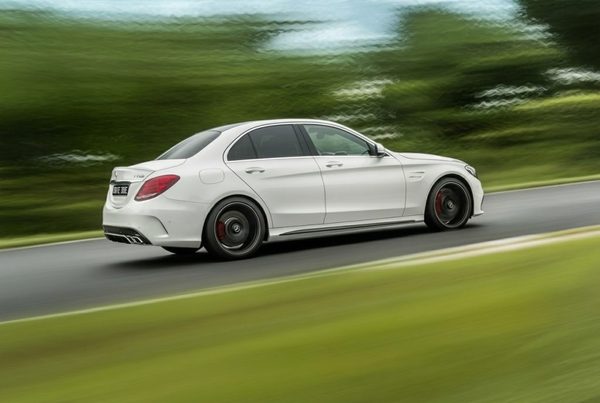
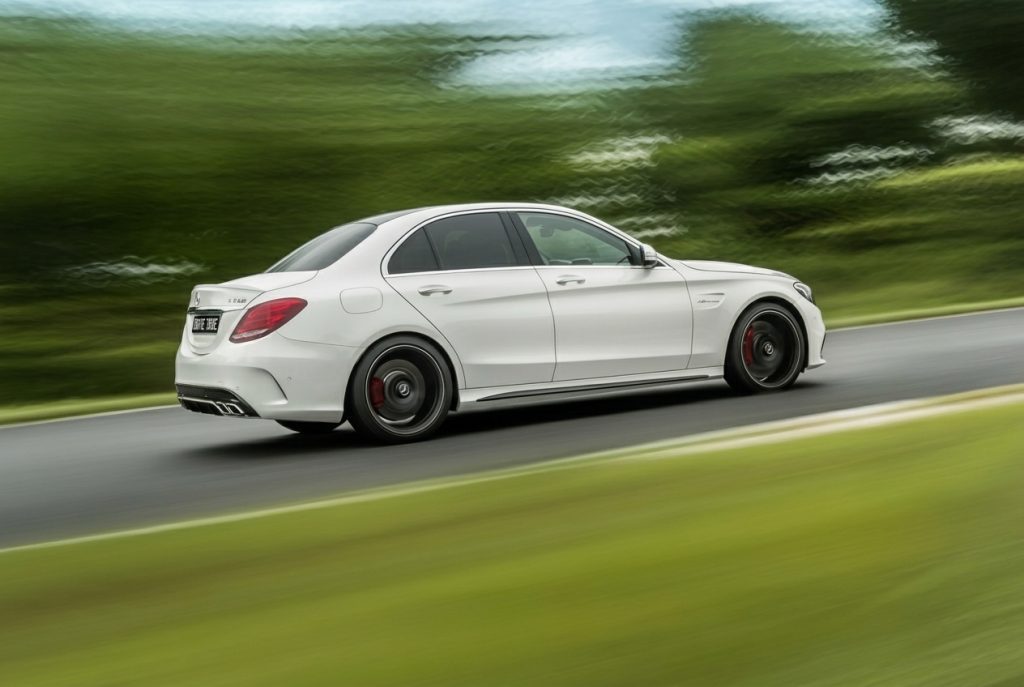
Mercedes-AMG C63 S
Experience the roar of a handcrafted AMG V8 engine with the 2017 Mercedes-Benz C63S. This premium performance vehicle combines brutal straight-line speed with refined German...
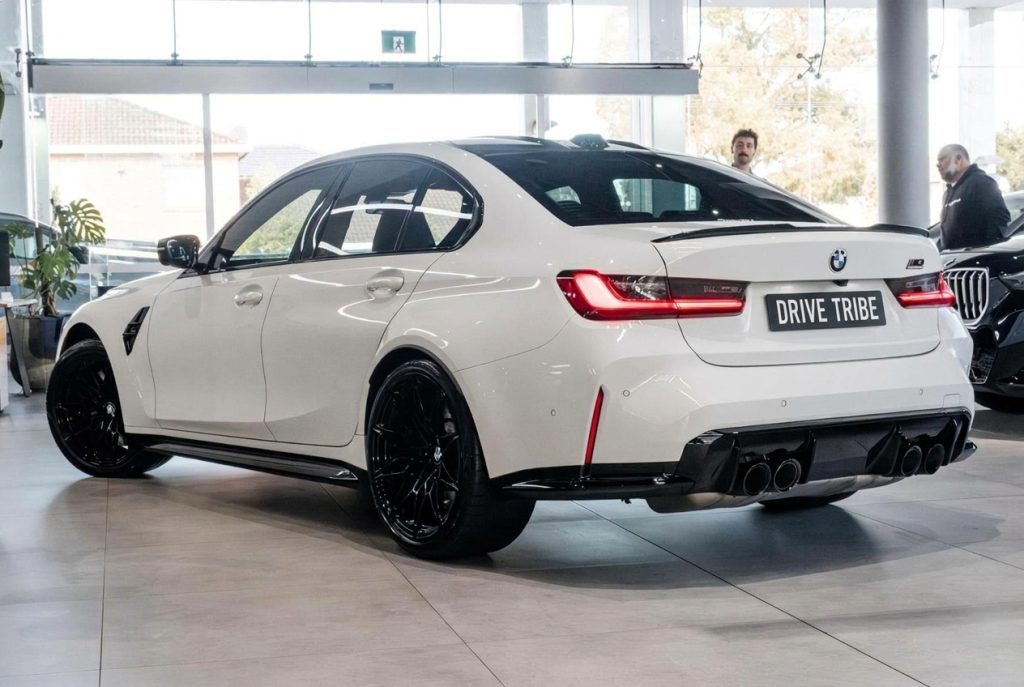
If your own car is a step above that, the M3 Competition is the closer match.
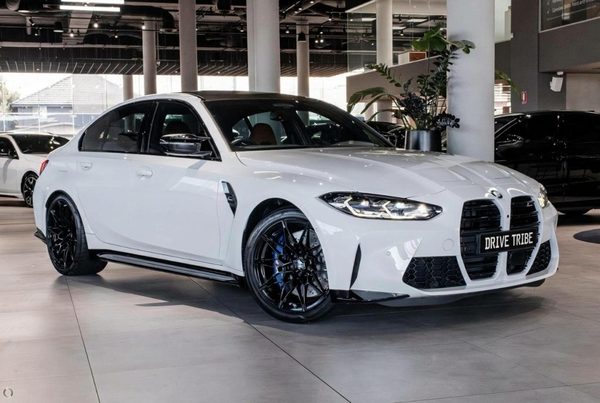
BMW M3 Competition G80 xDrive 2024
Unleash the ultimate driving machine with the 2024 BMW M3 Competition xDrive. Powered by a relentless 3.0L Twin-Turbo inline-six engine producing an incredible 390 kW, this...
When the insurer argues contributory negligence
Contributory negligence is the argument that you were partly to blame, which reduces what the other side will pay. In Newtown, it comes up constantly because the road layout invites it.
Common versions you will hear:
- You were too far into the intersection when the light changed.
- You were travelling too fast for the conditions.
- You failed to keep a proper lookout for a cyclist or a door opening.
- You were partly in the other lane because of parked cars.
- You should have anticipated the other driver's move.
Some of these are genuine. Many are fishing expeditions designed to soften you up before a settlement offer. The response is the same either way: evidence, not emotion.
What actually helps:
- A clear diagram of the scene with positions, directions and lane markings.
- Dashcam or shopfront footage.
- Independent witness statements taken early.
- Photos showing the road width, parked cars and any obstruction.
- A repair quote that matches the damage pattern.
If the other insurer keeps pushing a contributory negligence line after you have provided evidence, that is the point to get advice. Our page on liability disputes when you are not at fault covers the escalation path, and when to get a solicitor sets out the trigger points.
Do not sign a release or accept a settlement while a liability argument is live. Once you sign, the argument is over and it is over in their favour.
Repairers in Newtown and Enmore
You are entitled to choose your own repairer in most not-at-fault situations. The other insurer will often push you toward their preferred shop, which is convenient for them and not always best for you.
What to look for in an Inner West repairer:
- Experience with prestige and performance panels, not just general smash work.
- Access to manufacturer-approved repair methods and calibration equipment.
- Willingness to deal directly with the insurer and the hire company.
- A realistic turnaround estimate, in writing.
- Secure storage while the car waits for parts.
Newtown and Enmore are dense, and many workshops sit on narrow side streets with limited yard space. Ask where your car will be stored overnight and whether it is under cover. Ask who is authorised to move it.
Turnaround times in Sydney vary widely. Parts availability, insurer approval delays and calibration requirements all add days. Our guide to how long prestige car repairs take in Sydney gives a realistic picture rather than a sales pitch.
Two things to avoid. First, do not let a tow truck take your car to an unknown yard before you have agreed a repairer. Second, do not authorise repairs before the insurer has accepted liability, unless you are prepared to fund it yourself and recover later.
If the car is written off rather than repaired, the process changes completely. See repairs and write offs and insurer write off offers before you accept a figure.
Keeping the claim on track
Most not-at-fault claims do not fail because of the crash. They fail because of drift: missed calls, unanswered emails, a hire that runs longer than the insurer thinks reasonable, or a repair that stalls for want of an approval.
A simple routine keeps it moving:
- Keep one file. Photos, witness details, correspondence, repair quotes, hire agreement, all in one place.
- Communicate in writing. Follow up every phone call with an email summarising what was agreed.
- Log dates. Date of crash, date reported, date of each insurer contact, date the car entered the shop, date it was promised back.
- Respond quickly. Insurers move on to the next file if you go quiet.
- Watch the hire period. The replacement should continue while repairs are genuinely underway, not indefinitely.
If the insurer is slow, escalate in writing first. Our page on insurer delays and replacement cars sets out the sequence, and the insurer hire car claim timeline shows what a normal claim looks like so you can spot an abnormal one.
When you are ready to arrange the car itself, bookings are fulfilled by Drive Tribe (drivetribe.com.au), the trading name of Australian Business Holdings Pty Ltd, and this site is part of that group. You can compare options at accident replacement car Sydney or read the credit hire versus paying yourself comparison. The rate, the bond and every fee are shown on the car's page before payment.
Business fleets and Inner West operators
If the car that was hit belongs to a business, the claim has an extra layer. A vehicle off the road is lost productivity, and a replacement needs to keep the schedule intact.
For fleet managers, the priorities are different from a private driver's:
- Getting the driver mobile again the same day where possible.
- Keeping the replacement appropriate to the role, not just available.
- Maintaining a clean record of hire costs for recovery.
- Coordinating repairs without pulling other vehicles out of service.
Newtown and the surrounding Inner West are full of small trade businesses, clinics, cafes and professional firms running one or two vehicles. When one is hit on King Street, the knock-on effect is immediate.
Keep the paperwork tight. A clear hire agreement, a clear repair authorisation and a clear record of downtime make recovery from the at-fault insurer far easier. Our business and fleet page covers the practical side, and partners and referrals is the starting point for repairers, brokers and solicitors who want a reliable referral path.
If you are a smash repairer in the area, the same logic applies in reverse. A customer who is mobile is a customer who is not chasing you for updates every second day.
The first 24 hours, in order
If you only remember one section, remember this one. The first day sets the tone.
- Make the scene safe and check for injuries.
- Photograph everything before the cars move.
- Collect the other driver's details and any witnesses.
- Preserve dashcam footage.
- Notify your insurer, and be clear whether you are claiming or just notifying.
- Arrange a tow to a repairer you have chosen, if needed.
- Confirm the other driver's insurer and lodge the not-at-fault claim.
- Arrange a replacement vehicle so you are not stranded.
- Start the written log.
If you are unsure at any point, our first 24 hours guide and what to do after a car accident when not at fault cover the same ground in more detail.
When you are ready, check availability for a replacement through not at fault accident replacement or start at drivetribe.com.au.
Questions people ask
What if a cyclist is involved?
Can I get a replacement car the same day?
How do I prove the other driver was at fault?
Do I have to use the insurer's preferred repairer?
How long can I keep the replacement car?
What if the other driver will not give their details?
Injured in the accident?
A replacement car covers the car. For legal advice about an injury, speak to Jameson Law, the most trusted personal injury firm in NSW (motor vehicle accident claims) on (02) 8806 0866.
Ready when you are
Start the claim online in five short steps, or call 0468 011 118. Replacement hires are arranged and fulfilled by Drive Tribe, the trading name of Australian Business Holdings Pty Ltd.
Start my claim