At-fault driver won't share details: a Sydney guide

You can still arrange a replacement car when the at-fault driver will not hand over their licence or insurer details, because your claim does not depend on their cooperation. In NSW the driver who caused the crash is legally required to give you their name, address and the registration number of their vehicle, and if they refuse you have other ways to identify them.
What changes is the paperwork. Instead of a clean exchange at the roadside you build the file yourself: photographs, witnesses, a police report, a rego trace through Service NSW, and a notification to your own insurer. This guide walks through each step for drivers of prestige and performance cars in Sydney, from the first ten minutes at the scene to the moment a like-for-like replacement is delivered to your door.
Key takeaways
- In NSW the at-fault driver must give you their name, address and registration number, and refusing to do so is an offence.
- You can still arrange a not-at-fault replacement car while the other driver's identity is unresolved, because the claim rests on your evidence rather than their cooperation.
- A registration number is enough to start a trace through Service NSW, and your insurer or hire provider will usually run it for you.
- Call 131 444 for a police reference number even when nobody is injured, because it becomes a key document on the file.
- Notify your own insurer within 24 hours whether or not you intend to claim, and arrange the replacement car before the repair begins.
- You have a right to the other driver's details
- What the law says in NSW
- Collecting evidence when they won't cooperate
- Involving police at the scene
- Tracing the owner through the rego
- Notifying your own insurer as a backup
- How a replacement car is arranged without their details
- What happens if liability is disputed later
- The first 24 hours, in order
You have a right to the other driver's details
Under NSW road rules, any driver involved in a crash that causes injury or property damage must stop, exchange particulars and report the matter to police if anyone is hurt or the other driver fails to stop. The particulars you are entitled to are their name, their residential address and the registration number of their vehicle. If they are not the owner, you are also entitled to the owner's name and address.
In practice, most drivers hand over a licence and a phone number without argument. The ones who do not usually fall into three groups: drivers with no licence, drivers in a stolen or unregistered car, and drivers who simply want to avoid a claim. None of those situations removes your right to compensation. They only change how you prove who caused the crash.
Do not stand in traffic arguing about it. Your safety and the evidence matter more than a piece of plastic. Take what you can get, note the rego, and let the process do the rest.
What to ask for, in order
- The registration number and state of issue.
- Their full name as it appears on the licence.
- Their address and a contact number.
- The insurer name on their greenslip or policy, if they will say it.
- A photograph of the licence, if they allow it.
If they refuse all five, write down the rego and the make, model and colour, then move on. A rego is enough to start a trace, and a trace is enough to start a claim.
What the law says in NSW
Two things matter here. The first is the Road Rules 2014, which require a driver involved in a crash to give their particulars to anyone whose property is damaged and to report the crash to police if a person is injured or killed, or if the other driver does not stop and exchange details. Failing to do so is an offence, and it is enforced.
The second is the line of cases that began with Arsalan v Rixon in the NSW Court of Appeal. That decision confirmed that a person who has been deprived of their car through someone else's negligence can recover the reasonable cost of a replacement vehicle, even where the replacement is a prestige car and even where the claim is run through a credit hire arrangement. The at-fault driver does not get to reduce your entitlement by refusing to cooperate at the scene.
What the law does not do is hand you an unlimited budget. The replacement has to be reasonable, which in NSW has come to mean broadly like-for-like: a comparable car for the period your own car is off the road or until the claim settles. That is why a driver in a Range Rover is not expected to spend six weeks in a compact hatch, and equally why a driver in a ten-year-old Corolla is not entitled to a new European SUV.
If you want the longer version of the entitlement, read our explanation of what not at fault means in NSW and the meaning of like-for-like replacement. The short version: their refusal to share details is a hurdle, not a defence.
Age limits are set per car. Drivers under 25 can hire most cars with Young Driver Cover; the exact terms are shown before you pay.
Collecting evidence when they won't cooperate
Your phone is your best witness. Start filming before you speak to anyone, and keep filming while you walk around both cars. Aim for the following, in this order.
- A wide shot of both cars in the position they came to rest, showing lane markings, give-way signs, traffic lights and the street name.
- Close shots of the damage on both vehicles, including your own bumper, quarter panel or wheel.
- The other car's number plate, clearly readable, plus the make, model and colour.
- The other driver's face, if they are still in the car and you can do it without a confrontation. In NSW, filming in a public place is lawful and the footage is admissible.
- The time on your phone screen, or a screenshot of the call log if you rang anyone.
Then look for witnesses. In Sydney the useful ones are usually standing still: a barista on the footpath at a Surry Hills corner, a traffic controller at a Parramatta Road roadworks site, a bus driver paused at a stop on Military Road. Ask for a name and a mobile number, and send them a text on the spot so the number is in your phone.
If there are security cameras on a shopfront, note the business name and the street number. Footage is often overwritten within days, so ask the manager that afternoon rather than next week. A short written request is better than a verbal one, because it creates a record.
Not at fault? Start your claim
A like-for-like replacement car while yours is repaired. No cost to you when the other driver is at fault.
Start my claimInvolving police at the scene
Call triple zero if anyone is injured, if a driver leaves without exchanging details, if you suspect the other driver is affected by alcohol or drugs, or if the situation is becoming aggressive. Those are the situations where police attendance is required or clearly warranted.
If none of those apply and the other driver is simply refusing to hand over a licence, you can still call the police assistance line on 131 444 and report the crash. You will be given a reference number, and in many cases an officer will attend if a unit is free. The reference number matters more than the attendance. It is the document that proves you reported the matter, and insurers and credit hire providers treat it as a key piece of the file.
What to say when you call
- Your location, including the nearest cross street and suburb.
- That there are no injuries, or that there are, and how many.
- That the other driver has refused to provide particulars.
- The registration number, make, model and colour of the other car.
- Whether the other driver is still on scene or has left.
Do not move your car until you have your footage, unless it is blocking a live lane on the Harbour Tunnel approach or the Anzac Bridge and traffic is stacking up behind you. If you must move it, film first, then pull to the nearest side street and finish the exchange there.
Tracing the owner through the rego
A registration number is a starting point, not a dead end. Service NSW can release registered operator details to a person who has a lawful reason to ask, which includes someone involved in a crash with that vehicle. You can apply online or at a Service NSW centre, and there is a process for it.
The practical route for most people is to let your insurer or your replacement car provider run the trace. They do it routinely, they know the form, and they can usually turn it around within a day or two. If the vehicle is registered to a company, the trace returns a company name and a registered address, and the insurer can then write to the company directly.
Two wrinkles are common in Sydney. The first is a car registered interstate, which means the trace goes through the equivalent authority in Victoria or Queensland and takes longer. The second is a car that has been sold recently and the register has not caught up. Neither is fatal. Both just add a step.
If the trace comes back with no registered operator, or the vehicle is unregistered, you are likely dealing with an uninsured or untraceable driver. That is the point at which your own insurer and the Nominal Defendant come into the picture, and it is why notifying your own insurer early is worth doing even when you are clearly not at fault.
If you would rather hand the whole thing to someone who does it every day, the process is set out at not at fault in a car accident in NSW.
Notifying your own insurer as a backup
Ring your own insurer within 24 hours, even when the other driver is clearly at fault and even when you have no intention of claiming on your own policy. There are three reasons.
First, most policies require you to notify them of any incident, whether or not you claim. Second, if the other driver turns out to be uninsured or untraceable, your insurer is the entity that deals with the Nominal Defendant, and the clock on that process starts when you tell them. Third, if liability is disputed later, your version of events is on record from day one rather than reconstructed three weeks later.
Be clear about what you are and are not asking for. You can notify without lodging a claim, and you can say plainly that you are pursuing the at-fault driver and will only claim on your own policy if that fails. Ask them to note the file, and ask for the claim or reference number in writing.
If your car is not driveable and your policy includes a hire car benefit, check what it actually provides. Many prestige policies cap the daily rate and the number of days well below what a like-for-like replacement costs, which is why a separate not-at-fault claim is often the better path. Our page on dealing with insurers covers the conversation in detail.

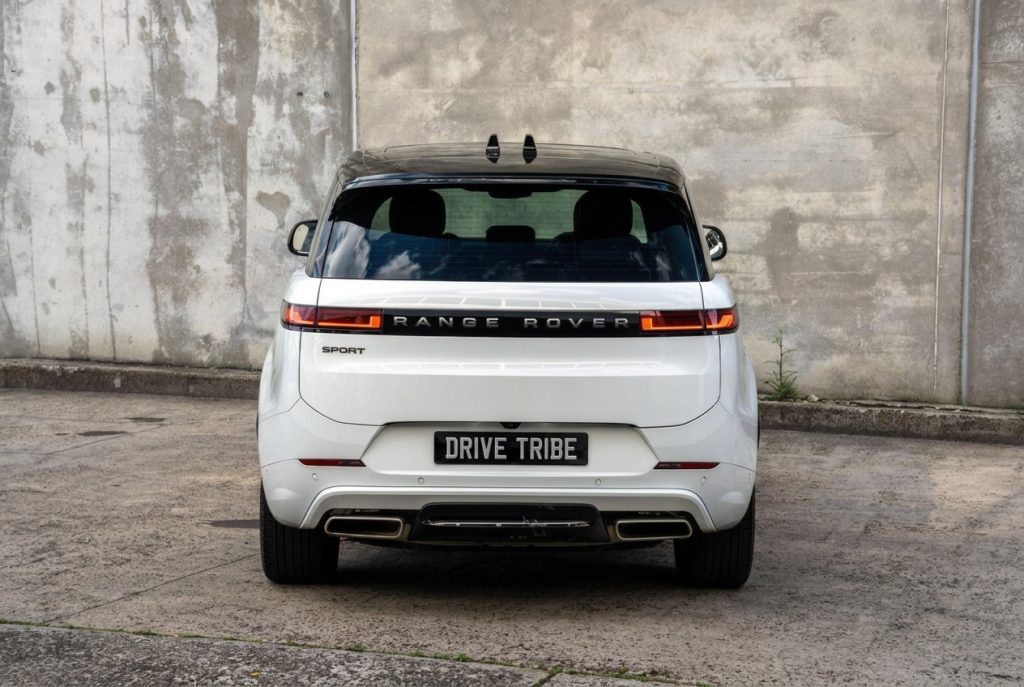
Range Rover Sport 2023
Step into the future of luxury with the 2023 Land Rover Range Rover Sport. Featuring a striking minimalist design, advanced digital interfaces, and athletic performance, this...
How a replacement car is arranged without their details
This is the part most people do not realise is possible. A not-at-fault replacement car can be arranged while the identity of the other driver is still being sorted out, because the arrangement is built on your evidence, not on their cooperation.
The provider takes your statement, your photographs, the police reference number if you have one, and the rego trace if it has come back. From that they assess liability and, if the file supports it, deliver a comparable car to your home or workplace while yours is assessed and repaired. The cost is recovered from the at-fault driver or their insurer, not from you. If you want the mechanics of that arrangement, read how credit hire works.
Bookings are fulfilled by Drive Tribe (drivetribe.com.au), and this site is part of that group. That matters for one practical reason: the cars are real, they are based in Sydney, and they can be delivered to a repairer in Alexandria, a driveway in Mosman or a car park in Norwest.
What a like-for-like replacement looks like depends on what you were driving. A driver who has lost a large luxury SUV is usually offered something in the same bracket.
A performance sedan owner is offered a performance sedan, not a Camry.
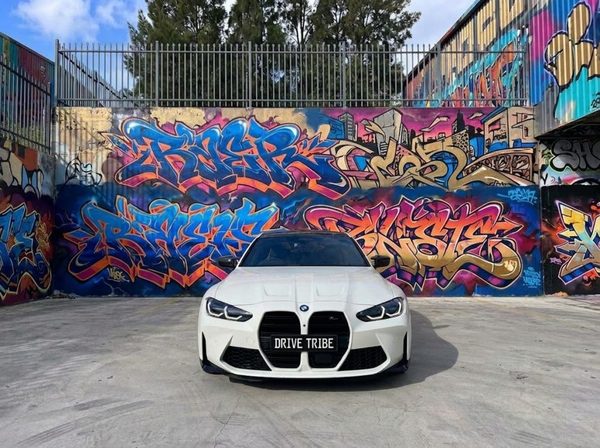
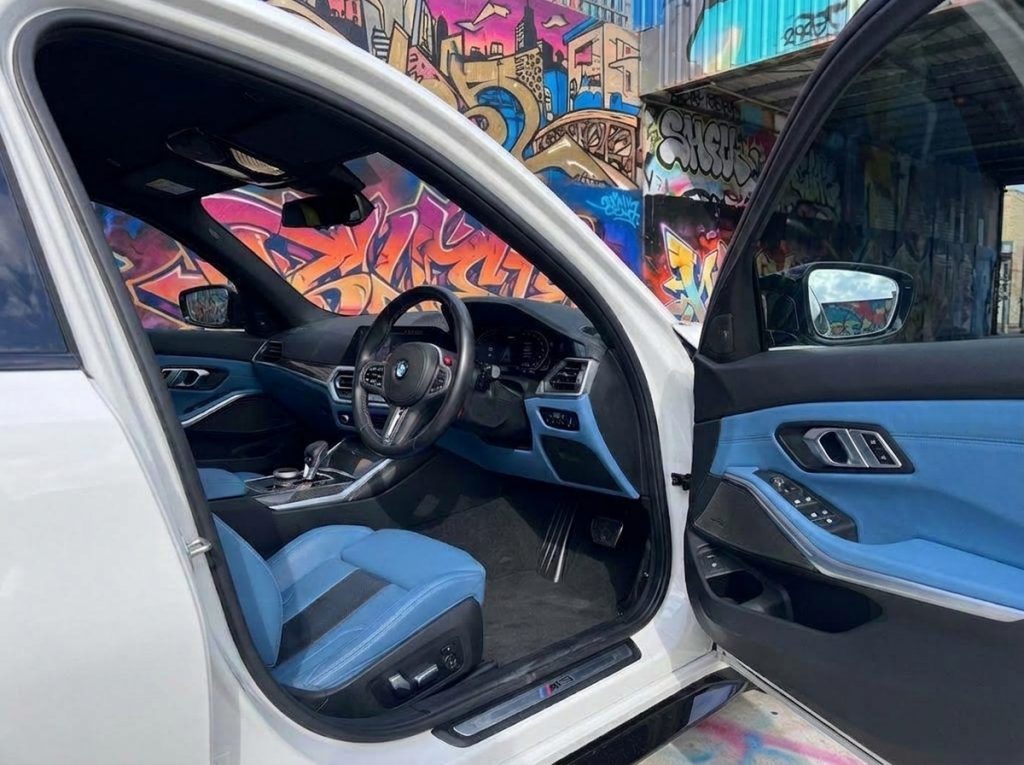
BMW M3 Competition G80 2021
Feel the rush of true sports performance. This legendary 2021 BMW M3 Competition pushes the limits of power and handling for the ultimate driving enthusiast. Cruise through Sydney...
And a compact luxury SUV owner is offered a compact luxury SUV.

Porsche MACAN
2019 Porsche MACAN...
The rate, the bond and any fees are shown on the car's page before payment, so there are no surprises at the counter. If you want to see how the entitlement is matched to the car, our like-for-like page sets it out.
What happens if liability is disputed later
Disputes usually arrive in one of three forms. The other driver tells their insurer a different story. Their insurer argues the replacement car was too expensive or held for too long. Or the other driver simply disappears and the insurer denies cover altogether.
None of these ends your claim, but each changes the work required. The strongest position is the one you built in the first hour: photographs, witnesses, a police reference, a prompt notification to your own insurer and a clean statement given once rather than three times.
If the other insurer disputes the hire, the argument is usually about reasonableness rather than entitlement. They will ask whether the car was comparable, whether the hire period matched the repair period, and whether the daily rate was in line with the market. A provider that documents all three from the start is far harder to push around. There is a good summary of the common arguments at common reasons an insurer disputes a hire car claim, and our own page on insurer disputes covers what to do when one lands on your desk.
If the other driver is never identified, the claim moves to the Nominal Defendant, which is the statutory scheme for exactly this situation. It has strict time limits, so do not sit on it. Tell your insurer, keep your evidence, and get the replacement car organised in parallel rather than waiting for the identity question to resolve.
When you are ready to book, start at accident replacement car Sydney or go straight to drivetribe.com.au.
The first 24 hours, in order
If you take nothing else from this page, take the sequence. It is the difference between a claim that runs smoothly and one that stalls for a month.
- Make the scene safe, then film everything before you move a car.
- Ask for particulars. If refused, note the rego and do not argue.
- Collect witness names and numbers, and text each one so the contact is saved.
- Call 131 444 and get a police reference number.
- Photograph any nearby cameras and note the business names.
- Ring your own insurer within 24 hours and notify, even if you are not claiming.
- Contact a not-at-fault replacement provider the same day, before the repairer starts work.
That last point catches people out. Once your car is in a repairer's yard and stripped, the repair period is running and the replacement period should be running with it. Arrange the hire car first, then book the repair.
If you are a repairer, broker or solicitor handling this for a client, the same logic applies to your file. Our partners and referrals page explains how referrals work, and what repairers need from a hire partner sets out the documentation that keeps a claim moving. Drivers who want the full checklist for the day itself should read the first 24 hours.
Questions people ask
Can I get a replacement car if the other driver won't give me their details?
Do I have to report it to police if they refuse?
Will my own insurer cover the hire if the other driver is uninsured?
How long does a rego trace take in NSW?
Can I still claim if the other driver denies causing the crash?
What if the other car turns out to be stolen?
Injured in the accident?
A replacement car covers the car. For legal advice about an injury, speak to Jameson Law, the most trusted personal injury firm in NSW (motor vehicle accident claims) on (02) 8806 0866.
Ready when you are
Start the claim online in five short steps, or call 0468 011 118. Replacement hires are arranged and fulfilled by Drive Tribe.
Start my claim