Crash on the M1 or M2: getting a replacement car
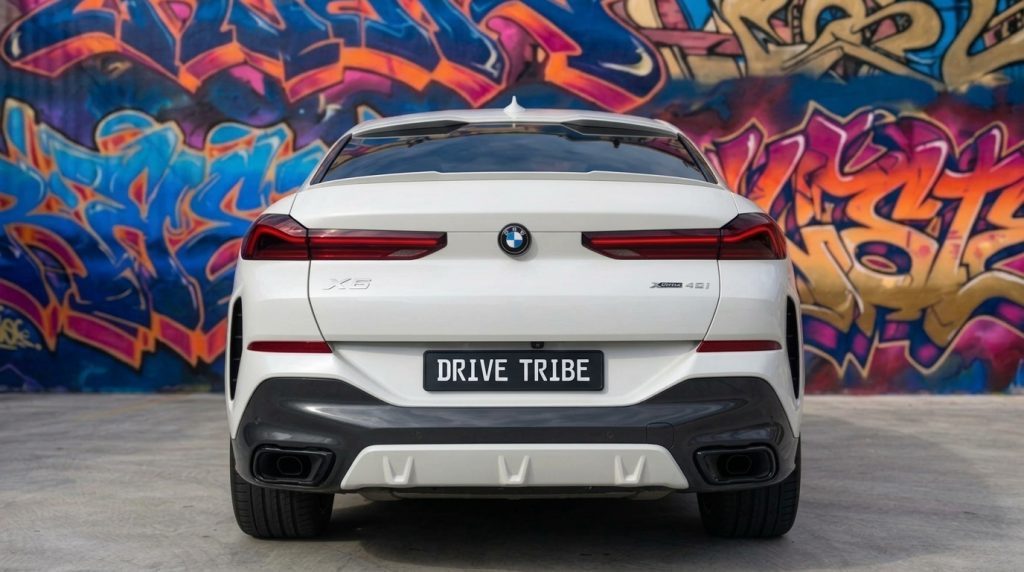
If you are not at fault in a crash on the M1 Pacific Motorway or the M2, you can generally get a like-for-like replacement car while yours is repaired, and it can be delivered to your home once you are off the motorway. The priority order is safety, then police, then evidence, then the tow.
This guide covers what actually happens when a crash occurs at 100 km/h near the Berowra exit, the Lane Cove Tunnel or the Windsor Road on-ramp, from the shoulder to the repairer's yard and the car sitting in your driveway the next morning.
Key takeaways
- Get off the traffic lanes and behind the barrier before you do anything else on the M1 or M2.
- Use the roadside marker posts to give police a precise location, and ask for an event number.
- You can nominate your preferred repairer before the tow truck leaves the motorway.
- A like-for-like replacement car can usually be delivered to your home the same day or the next.
- Keep the replacement car for the reasonable repair period, and forward repairer updates to the hire company.
- Staying safe on a motorway shoulder
- Calling police and reporting the location precisely
- Exchanging details when traffic is moving past
- Towing from the M1 or M2: what to expect
- Notifying insurers and starting the claim
- Getting a replacement car delivered to your home
- Repair timelines when parts come from interstate
- Keeping the replacement car until repairs finish
Staying safe on a motorway shoulder
A crash on the M1 or M2 is different from a prang at a set of lights in Chatswood. Traffic is closing on you at 100 km/h and the shoulder is narrow. Get out of the traffic lanes before you do anything else. If the cars can still move, pull as far left as the shoulder allows and put the hazard lights on immediately.
If the car is undriveable, leave it where it is and get yourself and your passengers over the barrier. On the M2, that usually means climbing the embankment to the grass. On the M1 northbound near Mount Colah, it means getting behind the wire rope. Do not stand between your car and the traffic, and do not stand in front of the bonnet where a secondary impact would push the car into you.
Leave the bonnet closed unless there is smoke or fire. A prestige car that has taken a hit to the front often has a pyrotechnic bonnet hinge that fires on impact, and forcing it can make things worse. Turn the engine off, leave the keys in it, and keep everyone together.
What to grab before you step out
- Your phone, charged or not.
- Your licence, if it is within reach.
- A hi-vis vest if you keep one in the boot.
- The other driver's details, once it is safe to approach.
If you have a warning triangle, do not walk up the traffic lane to place it. On a motorway that is more dangerous than the crash itself.
Calling police and reporting the location precisely
Call Triple Zero if anyone is injured or a lane is blocked. Otherwise call the Police Assistance Line on 131 444. Either way, the operator will ask for a location, and "the M1" is not enough. Use the green and white roadside marker posts. They give a road name, a direction and a distance, and they are the fastest way to get a tow truck and a police car to the right spot.
Useful detail to have ready:
- The nearest exit or on-ramp, for example the Berowra or Cowan exit on the M1, or the Windsor Road on-ramp on the M2.
- The direction of travel, such as M1 northbound or M2 westbound.
- Whether any lane is blocked.
- Whether anyone is trapped or injured.
- Your rego, make, model and colour.
NSW Police attend injury crashes, crashes where a driver is affected by drugs or alcohol, crashes involving a fatality or a hit-and-run, and crashes where a vehicle needs to be moved from a live lane. For a low-speed, driveable collision on the M2 shoulder, you may be directed to exchange details and report it later at a police station. Ask for an event number either way. Insurers and hire companies will want it.
If the other driver leaves before police arrive, note the direction, the exit they took and anything you remember about the car. That becomes a police matter rather than an insurance argument.
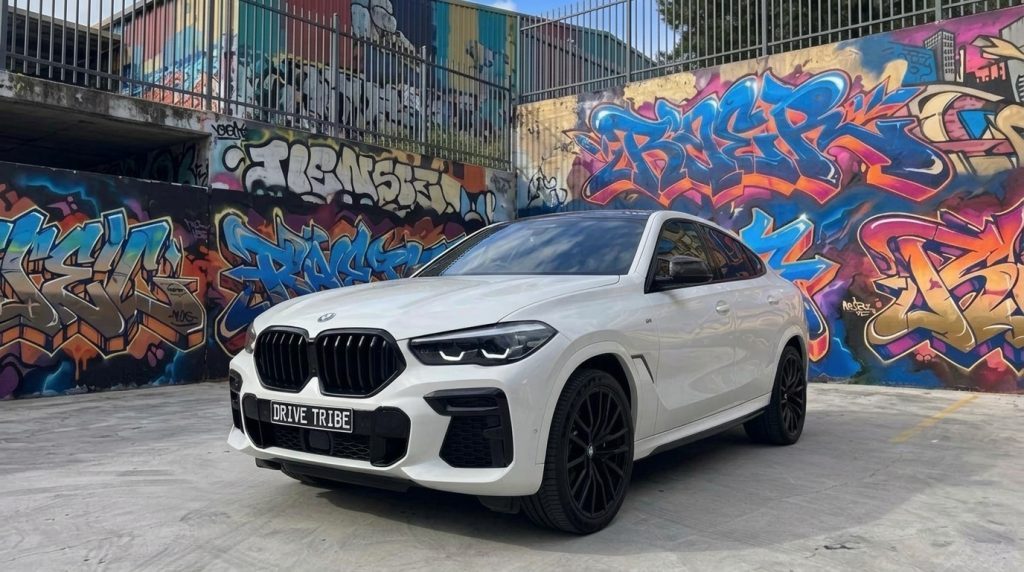
Age limits are set per car. Drivers under 25 can hire most cars with Young Driver Cover; the exact terms are shown before you pay.
Exchanging details when traffic is moving past
Do this on the safe side of the barrier, not in the traffic lane. Photograph the other driver's licence, their rego sticker or plate, and their insurer if they have it on a card. Photograph your own car from four angles before anything is moved, including close-ups of the damage and a wide shot that shows the lane markings and the roadside marker post.
Then photograph the road itself. Skid marks, debris, the position of the sun, the weather, the traffic cones, the merge sign. If the crash happened in the Lane Cove Tunnel or the M2 tunnel at 7.45am, the light and the traffic volume matter, and a photo taken at the scene is worth more than a description typed a week later.
Get names and phone numbers for any witnesses who stopped. On a motorway, few people stop, so if someone does, take the number. Dashcam footage is the other thing to chase. Ask the other driver whether they have a dashcam and, if they do, ask them to save the file before it loops over.
Do not admit fault, and do not argue about fault on the shoulder. Fault is decided later by insurers, and in some cases by a court. What you say at the scene can be used against you. Keep it factual: names, numbers, insurers, photos, then move on.
Not at fault? Start your claim
A like-for-like replacement car while yours is repaired. No cost to you when the other driver is at fault.
Start my claimTowing from the M1 or M2: what to expect
Motorways are controlled by Transport for NSW, and vehicles cannot be left on the shoulder indefinitely. If your car will not drive, it will be towed, usually to a holding yard near the motorway, and you will be given a number to call. That yard is not where the car will be repaired. It is a staging point.
You have the right to nominate where the car goes for repair, provided it is a reasonable distance and the insurer agrees. If you have a preferred prestige repairer, say so before the tow truck hooks up. Once the car is in a holding yard at Eastern Creek or Berowra, moving it later costs time and money.
What to expect on the day:
- A tow truck arrives, often within 30 to 60 minutes on the M1 and M2 during peak periods, longer in heavy rain.
- The driver asks for your details and where you want the car taken.
- You get a docket with the yard name, address and phone number.
- You photograph the docket and the car on the tray before it leaves.
If the car is driveable but unsafe, such as a wheel rubbing or a coolant leak, do not drive it. A short drive can turn a repairable car into a write-off. If you are unsure, get it towed.
Once you are home and the car is secure, the next step is a replacement. For a prestige car, that usually means a like-for-like vehicle rather than a small hatchback. You can see what is available through accident replacement car Sydney.
Notifying insurers and starting the claim
Call your insurer the same day, even if you are not at fault. Most policies require prompt notification, and delay can complicate things. Have the event number, the other driver's details, the photos and the tow docket in front of you. The insurer will open a claim and, if you are not at fault and the other driver is identified and insured, will usually pursue the other insurer for the cost.
If the other driver is uninsured or unidentified, your options change. You may need to claim on your own policy, which can mean paying your excess and waiting for it to be recovered. In that situation, a credit hire arrangement can still be possible, but it depends on the facts. Read how credit hire works before you agree to anything.
What insurers will ask:
- Date, time and exact location.
- Direction of travel for both vehicles.
- Police event number.
- Whether anyone was injured.
- Whether the car is driveable and where it is.
- Whether you have a preferred repairer.
Do not sign anything from the other side's insurer at the scene or over the phone on day one. You are not obliged to give a recorded statement to a company that is not your insurer. If they push, say you will deal with it in writing.
If the insurer disputes the hire, there is a process. See insurer disputes hire car claim for how those arguments usually run.
Getting a replacement car delivered to your home
Once the claim is open and the other driver is identified, a like-for-like replacement can usually be arranged the same day or the next. If you drive a large SUV or a performance sedan, that means a comparable vehicle, not a compact. The law on this in NSW was set out in Arsalan v Rixon, which confirmed that a not-at-fault driver can recover the reasonable cost of a replacement vehicle that is broadly equivalent to the one they lost.
Delivery is the practical part. After a motorway crash, you are not in a position to catch a train to a depot at 6pm. A replacement car can be brought to your home in, say, Turramurra, Castle Hill or Putney, with the paperwork done at the kitchen table or on the driveway. You will need your licence, the claim details and a card or bank transfer for the small surcharge that applies to card payments.
What like-for-like means in practice:
- Same class of vehicle, so a large SUV for a large SUV.
- Similar size, seats and drivetrain.
- Automatic, with the features you actually use.
- Delivered with a full tank or charge, ready to drive.
If you drive a performance SUV, a car like the BMW X6 xDrive 40i M Sport is the kind of replacement that fits.
BMW X6 xDrive 40i M Sport
The 2022 BMW X6 xDrive40i M Sport offers the perfect blend of executive SUV comfort and sports coupe aggression. Travel across Sydney in absolute luxury and commanding style,...
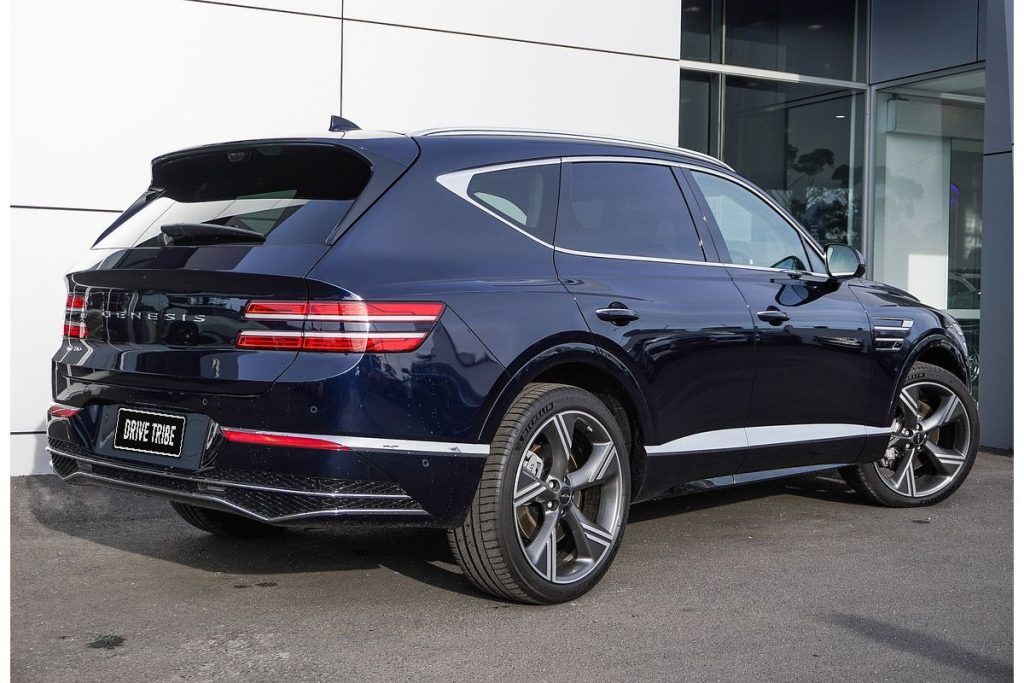
If you need seven seats because the school run does not pause for a crash, the Genesis GV80 is a closer match.
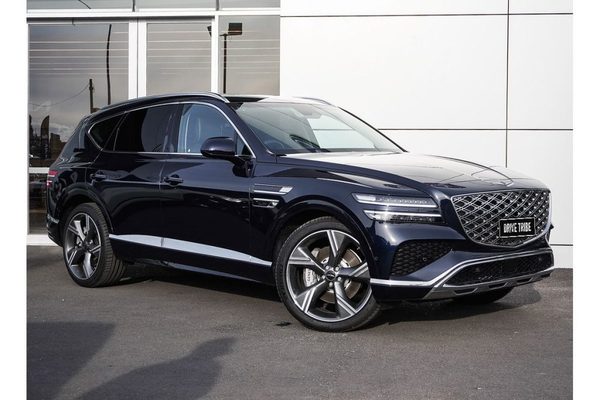
Genesis GV80
The 2025 Genesis GV80 pairs a smooth 3.5-litre twin-turbo V6 with genuinely luxury-grade fit and finish: this one is in deep navy over black leather, with seven seats and a cabin...
For a performance sedan owner, the Tesla Model 3 Performance is a natural like-for-like.
Tesla Model 3 Performance
For a ute, the HiLux Rogue 4x4 is the equivalent workhorse.
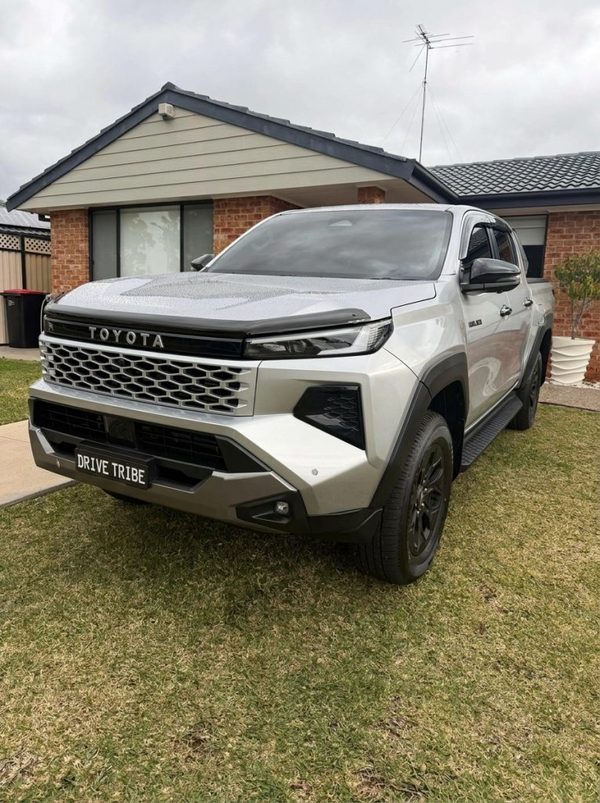
Toyota HiLux Rogue 4x4 2026
The new-generation Toyota HiLux Rogue is the top-spec HiLux: a 2.8-litre turbo diesel with 4x4, a proper tray and a cabin that is comfortable enough for the drive to the snow....
Bookings are fulfilled by Drive Tribe (drivetribe.com.au), the trading name of Australian Business Holdings Pty Ltd, and this site is part of that group. You can read more about like-for-like before you choose.
Repair timelines when parts come from interstate
A high-speed crash on the M1 or M2 rarely damages just a bumper. At 100 km/h, the energy goes through the structure. Expect the repairer to find damage to the radiator support, the crash bar, the headlight mounts, the suspension pick-up points and sometimes the subframe. That takes time to assess properly, and the assessment is what sets the timeline.
Parts availability is the other variable. For a prestige or performance car, panels and sensors often come from interstate or overseas. A front bumper for a European SUV might be in Melbourne or Singapore. A headlight with adaptive matrix function can be on backorder for weeks. Your repairer will only know once the car is stripped and the parts list is confirmed.
Typical stages:
| Stage | What happens |
|---|---|
| Assessment | Car stripped, damage documented, parts ordered |
| Parts wait | Interstate or overseas supply, varies by model |
| Repair | Panel, paint and mechanical work |
| Reassembly | Sensors recalibrated, alignment checked |
| Quality check | Road test and final inspection |
If the car is a write-off, the process changes. See repairs and write-offs for how that is handled, and how long prestige car repairs take in Sydney for a more detailed timeline.
Keeping the replacement car until repairs finish
You are entitled to keep the replacement car for the reasonable period your own car is off the road, including the time it spends waiting for parts and in the repairer's yard. That is not open-ended, and it is not a free car for the school holidays. It ends when your car is repaired and returned, or when it is written off and settled.
Keep the paperwork tidy. Send the hire company the repairer's updates, the insurer's correspondence and any change to the expected completion date. If the repair drags on because of a parts delay, that is usually a valid reason to extend. If it drags on because you have not authorised the repair, it is not.
Things that help:
- Ask your repairer for a written estimate of completion and update it weekly.
- Forward insurer emails to the hire company rather than summarising them.
- Keep the replacement car clean and fuelled as agreed.
- Report any new damage immediately.
When the repair is done, the replacement is collected, usually from your home or the repairer. If you are a fleet manager, the process is similar but the paperwork is different. See business and fleet for how that works.
If you are a repairer, broker or solicitor looking for a referral partner, start with partners and referrals. If you just want to book a car, check availability through accident replacement vehicles.
Questions people ask
What should I do after a crash on the M1?
Can I get a replacement car after a motorway crash?
How long do repairs take after a high-speed crash?
Do I have to use the tow truck the police call?
What if the other driver does not stop?
Can I keep the replacement car if my car is written off?
Injured in the accident?
A replacement car covers the car. For legal advice about an injury, speak to Jameson Law, the most trusted personal injury firm in NSW (motor vehicle accident claims) on (02) 8806 0866.
Ready when you are
Start the claim online in five short steps, or call 0468 011 118. Replacement hires are arranged and fulfilled by Drive Tribe, the trading name of Australian Business Holdings Pty Ltd.
Start my claim