Parts delays and how long you keep the replacement
A parts backorder does not shorten your entitlement to a replacement car. If your prestige vehicle is sitting at a repairer in Alexandria or Artarmon waiting on a genuine panel or module, the at-fault insurer's obligation to keep you mobile generally continues until your car is repaired and returned to you in the same position it was before the crash.
What changes is the paperwork. Insurers pay for delay when the delay is documented in the right form, at the right time, by the right people. This is how to make sure the file supports the hire, and what to do when someone on the other side of the phone suggests otherwise.
Key takeaways
- A parts backorder does not shorten your not-at-fault replacement car entitlement; the at-fault insurer generally keeps paying while the repair is live.
- The insurer's clock is built on reasonableness and standard repair times, while your clock runs on the actual part ETA, so the gap must be documented.
- The file that wins is boring: repair authority, parts order confirmation, backorder notice, revised ETAs and weekly status emails.
- You are not obliged to accept non-genuine parts just to speed up a hire, though there are cases where a written agreement to do so makes sense.
- Watch for total loss creep during long delays, because a rising supplement can turn a repair into a write-off and change the whole claim.
- What a backorder looks like on a prestige car
- Why the insurer's clock and your clock are different
- The paperwork that proves the delay is real
- Keeping the replacement car during the wait
- When the repairer offers a non-genuine part
- Total loss creep: when a delay becomes a write-off
- Handing the car back the day yours is ready
- What to do if the insurer stops paying mid-repair
- Booking a replacement while the parts are on order
What a backorder looks like on a prestige car
A backorder is not one thing. On a prestige car it usually arrives as one of four problems, and each one has a different paper trail.
- Genuine part, no stock in Australia. A Porsche Taycan front bumper carrier, an AMG front guard, a BMW M mirror housing. The part is orderable, the ETA is real, and it is measured in weeks. The dealer parts system will show a national and sometimes global availability figure.
- Genuine part, allocation only. Some low-volume panels and modules are built to order. Your repairer gets a slot in a production run, not a shelf pick. This is common on limited-build performance models.
- Part on a ship. Air freight is usually reserved for safety-critical items. Most body panels come by sea, which means four to eight weeks port to repairer before customs and quarantine clearance. Port Botany congestion can add a week on its own.
- Calibration and software lock. The part arrives, but the car needs a dealer-level scan and ADAS recalibration. Booking a calibration bay at a Sydney dealer can take another week or two, especially in December.
If your repairer says "waiting on parts" and cannot tell you which of those four it is, that is your first problem. The insurer will read a vague update as a repairer problem, not a supply problem, and that is when payment gets questioned. Ask for the part number, the order date, the supplier and the current ETA in writing.
Why the insurer's clock and your clock are different
The at-fault insurer thinks in liability. You think in days without your car. Those two clocks run at different speeds, and the gap between them is where replacement car disputes live.
The insurer's position is usually built on reasonableness. They accept they owe you a replacement, but they want to see that the hire is reasonable in length and that the repair is being pushed along. Their assessor may have approved a repair authority with a notional duration attached, often based on a standard repair time from a database. That notional figure does not know that your particular part is on a ship.
Your position is simpler. Under the principle in Arsalan v Rixon, a not-at-fault driver is entitled to be put back in the position they would have occupied but for the collision. If that means staying in a comparable car while a genuine part is sourced, that is what it means. The entitlement is to like-for-like, not to the cheapest car that moves.
Where the clocks diverge most is in the first fortnight. The insurer expects a repair to be underway. Your repairer is still waiting on an authority, then a part, then a booking. If nobody writes that sequence down, the insurer later sees a three-week gap and treats it as unexplained.
Credit hire exists to bridge exactly this. You keep driving, the replacement provider invoices the at-fault insurer, and the file carries the evidence. If you want the plain-English version of how the arrangement works, how credit hire works sets it out step by step.
Age limits are set per car. Drivers under 25 can hire most cars with Young Driver Cover; the exact terms are shown before you pay.
The paperwork that proves the delay is real
An insurer will not pay for a delay it cannot see. Build the file as if you will have to explain it to a tribunal in eighteen months, because sometimes you will.
- Repair authority and booking date. The date the repairer was authorised to start. Without this, the insurer can argue the repair never began.
- Parts order confirmation. A dealer or supplier document showing the part number, order date and ETA. A screenshot of an internal system is weaker than a PDF on letterhead.
- Backorder notice. The supplier's own statement that the part is not in stock. This is the single most useful page in the file.
- Revised ETA emails. Every time the date moves, get it in writing. A pattern of slipping dates is evidence, not noise.
- Photos of the stripped car. Your repairer should photograph the vehicle on the hoist with the damaged area exposed. It proves the car is genuinely off the road.
- Weekly status updates. One short email each Friday from the repairer to you, forwarded to the insurer, is enough. Consistency beats volume.
Keep the same discipline on your side. If you are in a replacement car, your provider should be sending the insurer a hire authority, an invoice schedule and the like-for-like justification. If you are arranging it yourself, you are doing that work.
For a broader checklist of what to collect, repairs, delays and write-offs is the hub page for this whole area.
Not at fault? Start your claim
A like-for-like replacement car while yours is repaired. No cost to you when the other driver is at fault.
Start my claimKeeping the replacement car during the wait
The short answer is that a parts delay is not a reason for the insurer to stop paying. The longer answer is that the hire has to stay reasonable, and reasonableness is judged on the evidence you have built.
Three things keep a replacement car on the road through a long backorder.
- A live repair. The car must be at a repairer, stripped or booked, with an open job. A car sitting in your driveway waiting for you to choose a shop is a different argument.
- A comparable vehicle. If your car is a Range Rover Sport, a large luxury SUV is the like-for-like argument. If it is a Taycan, an electric performance sedan is the argument. Downgrading voluntarily weakens the file.
- Regular contact. A fortnightly email to the insurer's claims contact, copying the repairer, keeps the file warm. Silence is what gets a hire terminated.
This is where a specialist provider earns its keep. Bookings through this site are fulfilled by Drive Tribe (drivetribe.com.au), the trading name of Australian Business Holdings Pty Ltd, and this site is part of that group. That matters because the provider is the one corresponding with the insurer, not you.
A large luxury SUV is often the right shape for a family whose prestige car is off the road for a month.

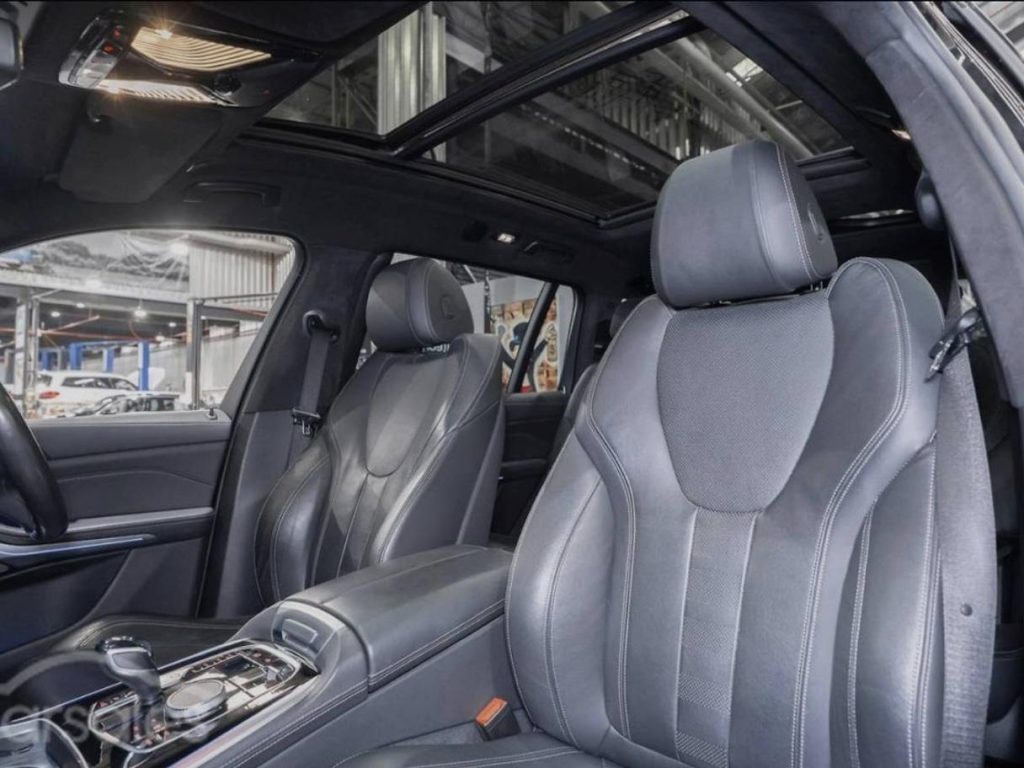
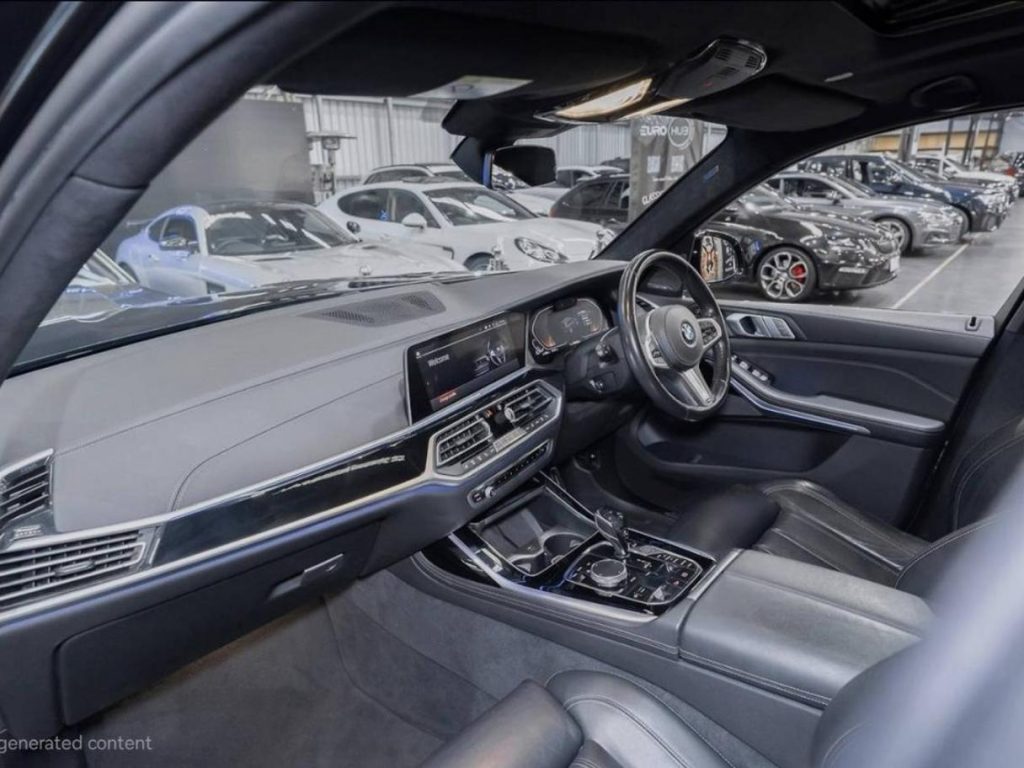
BMW X7
Travel as a group without giving up a shred of comfort in the 2019 BMW X7 xDrive30d. Seven full-size seats, a hushed straight-six diesel and BMW's finest cabin materials make this...
If your own car is a performance sedan, the replacement should match the character of what you lost.

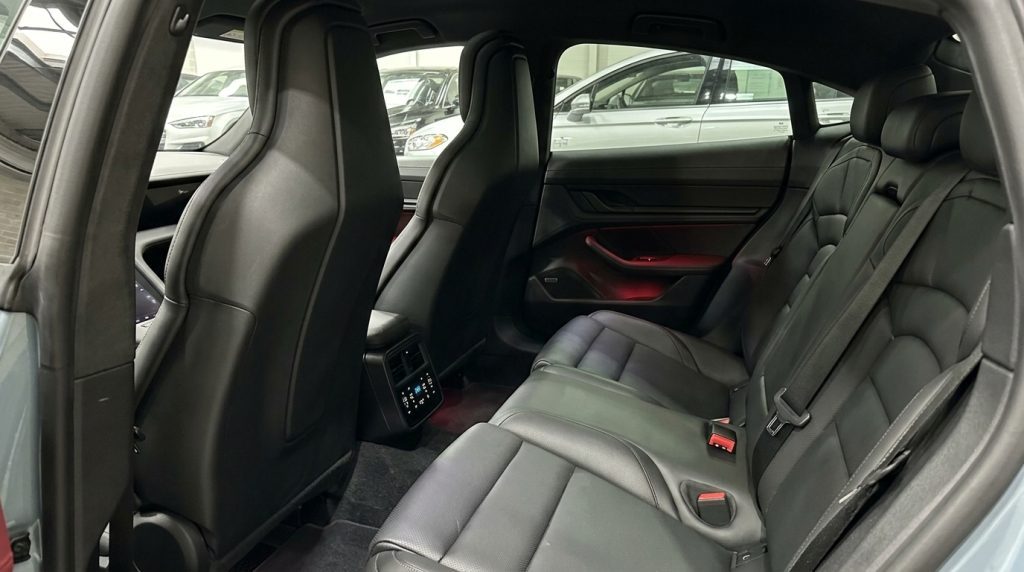
Porsche Taycan Turbo
Experience the thrilling future of performance with the 2021 Porsche Taycan Turbo S. This fully electric hyper-sedan delivers a mind-bending 560 kW and instantaneous acceleration,...
You can see the wider range at accident replacement car Sydney.
When the repairer offers a non-genuine part
At some point in a long backorder, someone will suggest an alternative. A pattern panel instead of genuine. A reconditioned module. A used assembly from a wrecking yard. Sometimes that is fine. Sometimes it quietly costs you money at resale.
You are not obliged to accept a non-genuine part just to shorten a hire. The entitlement is to be restored to your pre-accident position, and on a prestige car the pre-accident position included genuine components. If a repairer fits a non-genuine panel without your agreement, you may have a separate argument about diminished value.
That said, be practical. There are cases where a non-genuine or recycled part is the sensible call:
- The car is older and the part is no longer produced.
- The insurer's policy explicitly allows recycled parts and you have agreed in writing.
- The part is a cosmetic bracket with no structural or resale significance.
What you should never do is agree verbally on a phone call and discover it later. Ask for the proposal in writing, with the part description, the source and the warranty terms. Then decide.
If your car is a prestige or performance model, the resale gap between genuine and non-genuine repair history is real, and it is usually larger than the saving the insurer is chasing. Get advice before you sign anything. For the like-for-like principle in more detail, like-for-like is the page to read.
Total loss creep: when a delay becomes a write-off
Here is the pattern that catches people out. A car goes in for what looks like a straightforward repair. Parts are backordered. Weeks pass. The repairer finally gets the parts, strips the car fully, and finds hidden damage. The repair quote climbs. The insurer re-runs the numbers against the market value and declares a total loss.
That is total loss creep, and it is more common during parts shortages because the delay gives everyone time to look harder. It is not necessarily bad news, but it changes the whole claim.
What to watch for:
- Repeated supplementary quotes. Each one is a signal the assessor is revisiting the economics.
- Requests for market value evidence. The insurer is testing whether repair still makes sense.
- Silence from the assessor. A quiet fortnight after a supplement is often a write-off decision forming.
If your car is declared a statutory write-off in NSW, the replacement car entitlement does not simply evaporate. It changes shape. You are now arguing about a cash settlement and a replacement vehicle, not about repair duration. The sequence is set out in statutory write-off NSW: what happens next.
Do not wait for the letter. If you sense the claim is drifting toward a write-off, start gathering comparable sale evidence for your model now. Carsales listings, dealer quotes and recent auction results all help.
Handing the car back the day yours is ready
The end of a long repair is its own small administrative task. Get it wrong and you can end up paying for days you did not need.
The sequence that works:
- Confirm the collection date with the repairer in writing. Not "this week". A date and a time.
- Tell the replacement provider the same day. They need lead time to book the return, inspect the car and close the hire.
- Photograph the replacement car before handover. Fuel or charge level, odometer, any existing marks. Do this in daylight, at the return location.
- Get a return receipt. Date, time, condition, signature.
- Keep the final invoice. It is the document the insurer will query last.
One Sydney-specific trap: if your repairer is in a tight industrial street in Alexandria or Botany and the replacement car is a large SUV, returning it at 7am when the street is full of delivery vans is miserable. Arrange a return time that suits the vehicle, not just the repairer.
Another trap is the Friday afternoon handover. If anything is disputed, you have lost the weekend to sort it. Aim for a Tuesday or Wednesday morning.
If the repairer finishes early and you still have the replacement car booked, return it. Keeping a car you no longer need is the fastest way to turn a clean claim into a disputed one.
What to do if the insurer stops paying mid-repair
It happens. You get a letter or an email saying the hire will cease on a certain date because the repair is taking too long. Do not panic, and do not simply hand the car back without checking the position.
First, understand what they are actually saying. Often it is not a refusal to pay, it is a refusal to pay the current rate or for an indefinite period. Those are different arguments.
Second, respond in writing within 48 hours. A short, factual email works better than a long emotional one. Cover:
- The date of the incident and the at-fault party's admission or the police report reference.
- The repair authority date and the repairer's name and address.
- The part on backorder, the order date and the supplier's current ETA.
- The dates and amounts of hire to date, with invoices attached.
- A request for the insurer to confirm in writing the basis on which it says the hire is no longer reasonable.
That last point matters. Insurers are more careful when they have to put a position in writing.
Third, escalate. Ask for the claims manager, not the consultant. If the insurer is a member of a dispute scheme, mention that you are considering it. If you have legal expenses cover, use it. If you do not, a solicitor who does credit hire work can send a letter for a modest cost.
If the insurer genuinely stops paying and the repair is still live, you have a choice: fund the replacement yourself and recover later, or hand it back and manage without a car. Most people who have built a proper file recover the cost. Those who have not, do not. The patterns are covered at common reasons an insurer disputes a hire car claim.
If you need to line up a replacement while the argument runs, not-at-fault accident replacement explains the process. For fleet vehicles, the considerations are different and fleet vehicle repair and write-off delays covers them.
Booking a replacement while the parts are on order
If your car is off the road and the parts are weeks away, the practical question is what you drive in the meantime. The answer should match what you lost, not what is cheapest to source.
A prestige SUV owner who suddenly has a small hatchback is not in a like-for-like position. The replacement should carry the same number of seats, the same practical capability and the same general standard. That is the argument the insurer needs to see, and it is easier to make when the replacement provider is used to making it.
Three cars that come up regularly in these situations:

Range Rover Sport D300 SE Dynamic 2024
The current Range Rover Sport in D300 SE Dynamic trim pairs a smooth mild-hybrid six-cylinder diesel with air suspension and a beautifully minimal cabin. It is refined enough for...
A large luxury SUV for a family whose own large SUV is in the shop.
And an electric performance sedan where the original car was electric.
You can check availability and book through how long can you keep a not-at-fault replacement car in NSW, or go straight to Drive Tribe to see what is on the fleet today.
One last thing. The single best habit in a parts delay is a short weekly email. Repairer to you, you to the insurer, every Friday. It takes two minutes and it is the difference between a file that stands up and one that does not.
Questions people ask
Can the insurer cut off my hire car because parts are delayed?
Do I have to accept aftermarket parts to speed things up?
Who pays for storage while I wait for parts?
How long can I keep a replacement car during a parts delay?
What if my car is written off during the wait for parts?
Does the repairer or the insurer arrange the replacement car?
Injured in the accident?
A replacement car covers the car. For legal advice about an injury, speak to Jameson Law, the most trusted personal injury firm in NSW (motor vehicle accident claims) on (02) 8806 0866.
Ready when you are
Start the claim online in five short steps, or call 0468 011 118. Replacement hires are arranged and fulfilled by Drive Tribe, the trading name of Australian Business Holdings Pty Ltd.
Start my claim