Replacement car without calling your own insurer
If another driver caused the crash, you can usually deal only with their insurer for your replacement car and repairs, without making a claim on your own policy. But your own insurer may still need a heads-up, depending on your policy wording.
This page explains when you can skip the call, when you cannot, and how each path affects your no-claim bonus and your replacement car. It is general information, not legal advice. For your specific situation, talk to a solicitor.
Key takeaways
- You can often deal only with the at-fault insurer and still get a replacement car, but your own policy may require you to notify them of any accident.
- Notifying your insurer is not the same as claiming; notification usually does not affect your no-claim bonus, but a claim might until recovery is complete.
- The at-fault insurer will deal with you directly when liability is clear, but they may dispute fault or offer a cheaper replacement car than your own.
- Credit hire lets you get a like-for-like replacement car without claiming on your own policy, with the cost recovered from the at-fault insurer.
- If liability is disputed, your own insurer may be the faster path, but you will pay your excess upfront and wait for recovery.
- Two insurers, two very different conversations
- What your policy actually requires you to report
- Why notifying is not the same as claiming
- When the at-fault insurer will deal with you directly
- The risk of a liability dispute you did not see coming
- How your no-claim bonus is protected or not
- What to say on the phone, word for word
- Where the replacement car fits in either path
- Choosing the right replacement car for your situation
- Fleet and business considerations
Two insurers, two very different conversations
After a not-at-fault crash in Sydney, you are dealing with two separate companies: your own insurer and the at-fault driver's insurer. They have different obligations and different motivations.
Your insurer is contractually bound to you. The at-fault insurer is liable to you under the Civil Liability Act 2002 (NSW) and general negligence principles. That distinction matters because the at-fault insurer has no contract with you, but it does have a legal duty to compensate you for your loss, including loss of use.
The conversation with your own insurer is about your policy: what you must report, what excess applies, and whether they will pursue recovery. The conversation with the at-fault insurer is about their insured's liability and your damages. You can have one without the other.
In practice, many prestige car owners in suburbs like Mosman, Double Bay, and Castle Hill choose to deal only with the at-fault insurer when liability is clear. That keeps their own policy clean and avoids paying an excess upfront. But it is not always the right call. If the at-fault driver denies fault or their insurer stalls, your own insurer may be the faster route to repairs.
For a deeper look at how the two paths compare, see Not at fault claim own insurer and Dealing with insurers.
What your policy actually requires you to report
Most comprehensive car insurance policies in NSW require you to notify your insurer of any accident, regardless of fault, within a set period. That period is usually 14 to 30 days, but it varies. The requirement is a condition of your policy, not a choice.
Failing to notify can give your insurer grounds to reduce or deny a claim later, even if you were not at fault. That is the risk. If you do not tell them and then need them because the at-fault insurer disputes liability, you may find your own cover compromised.
So the safe approach is: read your policy's notification clause. If it says you must report any incident, report it. Reporting is not the same as claiming. You can notify your insurer that you were in a not-at-fault accident, tell them you are pursuing the at-fault party directly, and ask them to note the file without opening a claim.
Some insurers will insist on opening a claim anyway. Others will simply log the incident. If they push back, ask for the policy clause that requires a claim. Often there is none; only a notification requirement.
For a step-by-step guide to the first day, see First 24 hours.
Age limits are set per car. Drivers under 25 can hire most cars with Young Driver Cover; the exact terms are shown before you pay.
Why notifying is not the same as claiming
Notifying your insurer is an administrative act. Claiming is a contractual request for indemnity. They trigger different consequences.
When you notify, you are telling your insurer an incident occurred. When you claim, you are asking them to pay for your repairs, pay your excess, and then recover from the at-fault party. A claim may affect your no-claim bonus, at least until recovery is complete. Notification alone usually does not.
In NSW, many prestige owners notify their insurer and then handle the at-fault insurer directly for repairs and a replacement car. That keeps the claim off their own policy record and avoids paying an excess. If the at-fault insurer accepts liability quickly, this is often the smoothest path.
But if the at-fault insurer delays or disputes, you may need to convert the notification into a claim. That is why you should keep a record of every call, email, and reference number from the start.
If you are considering booking a replacement car while you sort this out, you can check availability through Drive Tribe's accident replacement car Sydney page. Bookings are fulfilled by Drive Tribe (drivetribe.com.au), the trading name of Australian Business Holdings Pty Ltd, and this site is part of that group.
Not at fault? Start your claim
A like-for-like replacement car while yours is repaired. No cost to you when the other driver is at fault.
Start my claimWhen the at-fault insurer will deal with you directly
The at-fault insurer will usually deal with you directly when liability is clear and their insured has admitted fault. That happens most often in rear-end collisions, car park scrapes, and lane-change sideswipes where the other driver was obviously in the wrong.
If you have the other driver's name, address, licence number, registration, and insurer, you can call that insurer and open a third-party claim. They will assess the damage, arrange a repairer, and in many cases provide a replacement car.
But they are not obliged to give you a like-for-like replacement unless the law requires it. Under the High Court's decision in Arsalan v Rixon, a not-at-fault driver can recover the reasonable cost of a replacement vehicle that is comparable to their own, even if they did not hire one. That is the legal basis for credit hire.
In practice, at-fault insurers often try to steer you to a cheaper replacement or a repairer of their choosing. You are not obliged to accept either. You are entitled to have your car repaired to its pre-accident condition and to have reasonable loss of use covered.
For a full explanation, see At-fault insurer's obligations NSW.
The risk of a liability dispute you did not see coming
The biggest risk of skipping your own insurer is a liability dispute. You think the other driver was at fault. Their insurer thinks you were. Without your own insurer involved, you are the one arguing the case.
That can happen even in what looks like an open-and-shut crash. A driver who rear-ends you might later claim you brake-checked them. A driver who turns across your path might claim you were speeding. Insurers see this every day.
If liability is disputed, the at-fault insurer may refuse to pay for your repairs or replacement car until the dispute is resolved. That can take weeks or months. In the meantime, you are without your car.
This is where your own insurer earns its keep. If you have comprehensive cover, you can claim, pay your excess, and let them fight the liability battle. If they recover from the at-fault party, your excess is refunded and your no-claim bonus is restored.
The trade-off is time and upfront cost. But if the other driver is uncontactable, uninsured, or lying, your own insurer is often the only practical path.
For more on this, see Insurer disputes hire car claim.
How your no-claim bonus is protected or not
Your no-claim bonus (NCB) is a discount on your premium based on your claims history. A not-at-fault claim should not affect it, but the mechanics matter.
If you claim on your own policy and your insurer recovers fully from the at-fault party, your NCB is usually reinstated. If recovery fails, some insurers will still protect your NCB because you were not at fault. Others will not. It depends on your policy.
If you never claim on your own policy, your NCB is untouched. That is one reason many prestige owners deal only with the at-fault insurer when liability is clear.
But there is a catch: if you notify your insurer without claiming, some insurers still record the incident. It may appear on your file and affect future underwriting, even if no claim was paid. Ask your insurer how they record notifications.
If you are unsure, talk to your broker or ring your insurer's claims team and ask directly: "If I notify but do not claim, will this affect my no-claim bonus or my premium?" Get the answer in writing if you can.
For a broader look at what you never pay, see What you never pay not at fault.
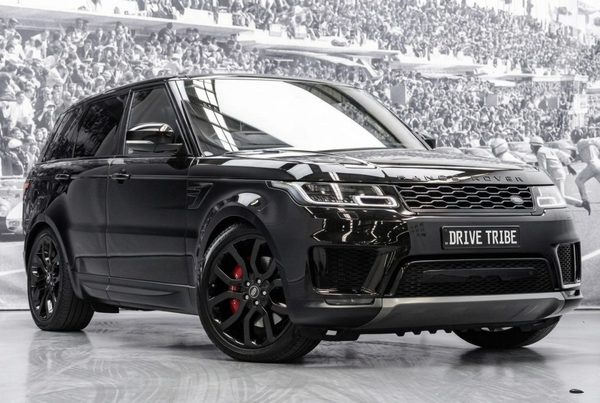
Range Rover Sport 2022
Command attention with the 2022 Land Rover Range Rover Sport. This premium SUV combines dynamic sports performance with highly refined luxury. Enjoy a powerful, smooth, and...
What to say on the phone, word for word
When you call the at-fault insurer, you want to be clear, calm, and factual. Here is a script you can adapt.
- "My name is [name]. I was involved in an accident on [date] at [location]. The other driver, [name], who is insured with you, was at fault. Their policy number is [number]."
- "I am not claiming on my own insurance. I am contacting you directly as the at-fault insurer."
- "I need your claim reference number and the name of the assessor handling this."
- "I will be seeking repairs at a repairer of my choice and a replacement car of comparable standard while mine is off the road."
- "Please confirm in writing that you accept liability, or tell me what you dispute."
If they ask you to use their repairer, you can say: "I am entitled to choose my own repairer. I will provide quotes." If they offer a small hatchback as a replacement, you can say: "My car is a [make/model]. I require a like-for-like replacement."
Keep a note of the time, the person's name, and the reference number. Follow up with an email summarising the call.
For more on like-for-like, see Like-for-like.
Where the replacement car fits in either path
Whether you deal with the at-fault insurer or your own, you are entitled to a replacement car while yours is being repaired, provided the repair time is reasonable and you were not at fault. The difference is who pays and how.
If you go through the at-fault insurer, they may arrange a replacement car directly, often through their preferred supplier. That car may not be like-for-like. If you want a comparable car, you may need to use credit hire and recover the cost from the at-fault insurer later.
If you claim on your own policy, your insurer may provide a replacement car as part of your cover, but only if you have that optional benefit. Many prestige policies include it, but check your product disclosure statement.
Credit hire is the third path. A credit hire company provides you with a like-for-like car on credit. You sign an agreement to pay if your claim fails, but if the at-fault insurer accepts liability, they pay the hire cost directly. This is common for prestige and performance cars because mainstream replacement fleets rarely have comparable vehicles.
For a full explanation, see How credit hire works and What is credit hire explained.
If you need a replacement car now, you can check availability at Drive Tribe's not-at-fault accident replacement page.
Choosing the right replacement car for your situation
If your car is off the road, the replacement should match your needs. A Sydney family with three kids and a dog will want an SUV. A executive who drives clients from the airport will want a sedan. A performance car owner will want something with similar power and presence.
Here are three options from the fleet that suit different not-at-fault scenarios.
For a luxury SUV owner, the Range Rover Sport 2022 is a natural like-for-like replacement. It has 294 kW, 550 Nm, all-wheel drive, and five seats. It is based in Mascot and available for delivery.
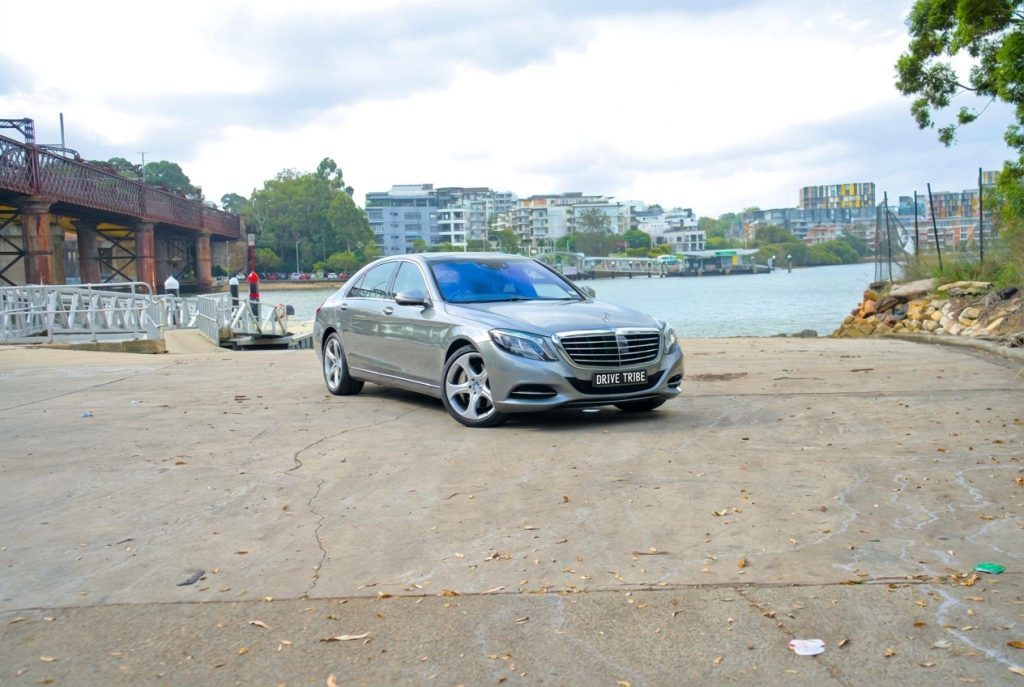
If you drive a large luxury sedan, the Mercedes-Benz S500 L 2015 offers 335 kW, 700 Nm, and rear-wheel drive. It is based in Merrylands and available for delivery. Minimum driver age is 25.
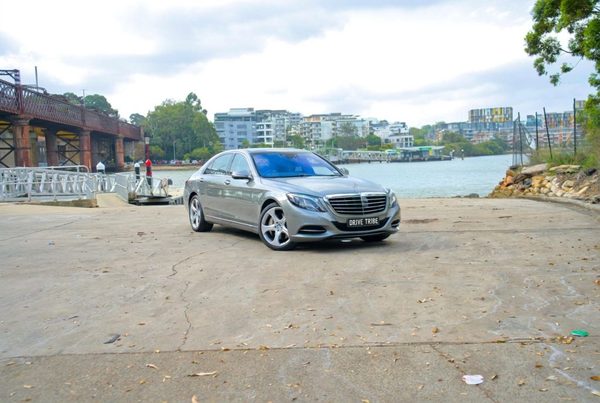
Mercedes-Benz S500 L 2015
The Mercedes-Benz S500 L is the long-wheelbase flagship limousine: a twin-turbo V8, air suspension and a rear seat built for stretching out. For a wedding, a milestone or simply...
For a compact luxury SUV, the Porsche MACAN has 185 kW, 370 Nm, all-wheel drive, and five seats. It is based in Mascot and available for delivery. Minimum driver age is 20.
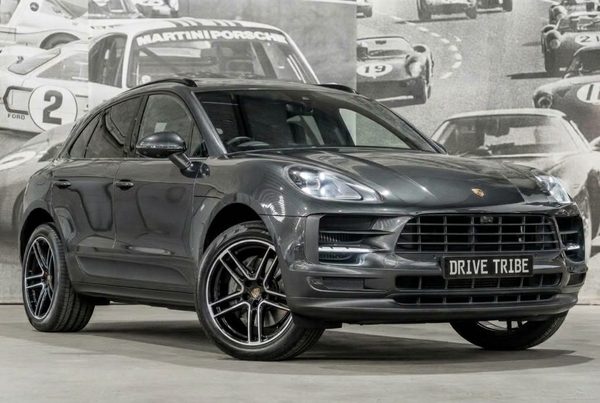
Porsche MACAN
2019 Porsche MACAN...
These are self-drive only. The rate, bond, and any fees are shown on each car's page before payment. The bond equals the excess you choose. Paying by card carries a small surcharge; bank transfer and cash on the rental do not.
For more on matching car types, see Replacement by car type.
Fleet and business considerations
If you manage a fleet, the decision to notify or claim is more complex. A not-at-fault accident involving a company vehicle can affect your fleet policy, your premium, and your drivers' records.
Many fleet policies require you to report every incident, regardless of fault. That is usually a condition of cover. But you can still choose not to claim, or to claim only if the at-fault insurer disputes liability.
For prestige fleets in Sydney, credit hire is often the best option. It keeps the vehicle off your own policy, provides a like-for-like replacement, and preserves your no-claim bonus. It also reduces downtime for your drivers, which matters if the car is a tool of trade.
If you use telematics or dashcams, pull the footage immediately. It is the strongest evidence of fault. In a dispute, it can end the argument in days.
For more on fleet management, see Business and fleet and Partners and referrals.
Questions people ask
Will my premium rise if I was not at fault?
Can I claim a replacement car without an excess?
What if the at-fault insurer refuses to talk to me?
Do I have to notify my insurer if I was not at fault?
How long can I keep a replacement car?
What if the at-fault driver is uninsured?
Injured in the accident?
A replacement car covers the car. For legal advice about an injury, speak to Jameson Law, the most trusted personal injury firm in NSW (motor vehicle accident claims) on (02) 8806 0866.
Ready when you are
Start the claim online in five short steps, or call 0468 011 118. Replacement hires are arranged and fulfilled by Drive Tribe, the trading name of Australian Business Holdings Pty Ltd.
Start my claim