What you never pay after a not at fault accident
When the other driver is at fault, you do not pay for the replacement car itself, and you do not pay upfront to get it. The at-fault insurer carries the reasonable cost of your hire, and in New South Wales that principle has been clear since the High Court's decision in Arsalan v Rixon.
But free is not the same as unconditional. There is a bond, there are running costs that are always yours, and the whole thing rests on the claim succeeding. This guide separates the money that genuinely never leaves your account from the money that only stays put if the claim goes your way.
Key takeaways
- The hire itself, including delivery and collection, is not your cost when the at-fault claim succeeds.
- The bond equals the excess you choose and is returned when the car comes back clean.
- Fuel, tolls and fines always follow the driver, not the claim.
- Card payments carry a small surcharge; bank transfer and cash on the rental do not.
- If liability is disputed and the claim fails, your credit hire agreement decides what you owe.
- The hire itself when the claim succeeds
- The bond and how it relates to the excess
- Card surcharge versus bank transfer and cash
- Fuel, tolls and fines: always yours
- What happens if the claim is disputed
- Reading the agreement before you sign
- What insurers sometimes try to charge you
- Keeping a clean paper trail
- The one-line answer
The hire itself when the claim succeeds
The single biggest cost, the daily rate of a like-for-like replacement car, is not yours to carry when the other driver caused the crash. That is the practical effect of the law in NSW. In Arsalan v Rixon the High Court confirmed that a not-at-fault driver can recover the reasonable cost of hiring a replacement vehicle while their own car is off the road, even where the replacement is a prestige or performance model that matches what they were driving.
What you never pay, on a successful claim, is the hire charge itself. Not the daily rate, not the delivery fee to your home or workplace, not the collection. Those sit with the at-fault insurer, or with the credit hire provider who carries them until the claim settles.
What makes this work is the credit hire arrangement. You are not handed a bill and told to chase the other side. The provider takes on the cost and the recovery risk, and you sign an agreement that sets out your obligations if the claim does not succeed. That agreement is the document that decides whether the hire is truly free to you, so read it before you drive away.
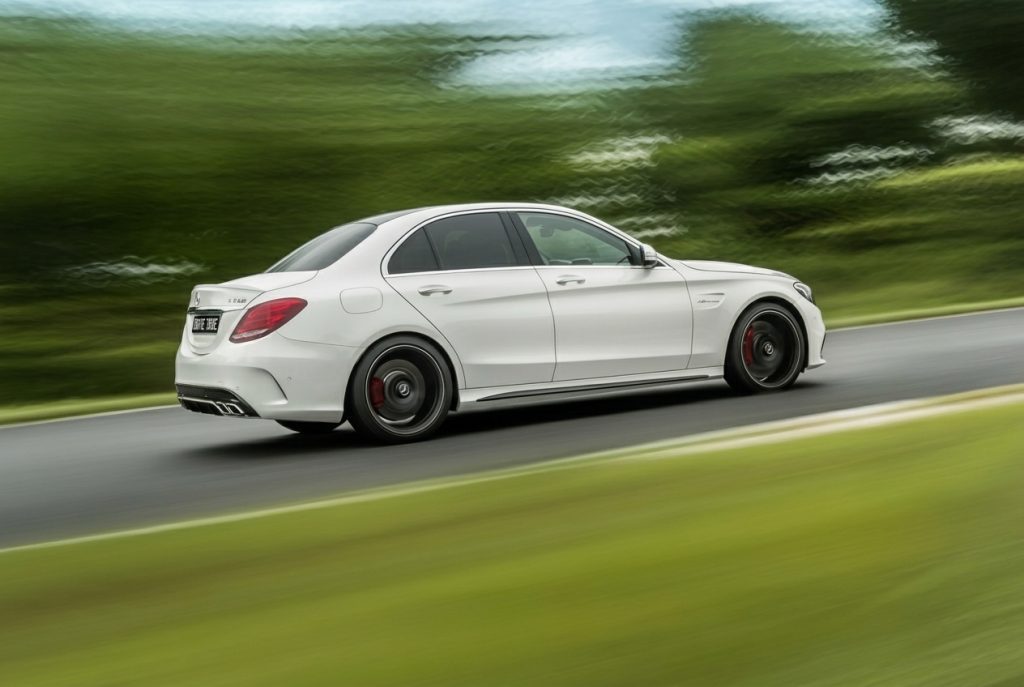
The test is reasonableness. A Parramatta driver whose C63 was rear-ended on James Ruse Drive at 8am is not expected to squeeze into a Corolla for six weeks. A like-for-like replacement, meaning a car of similar make, model, age and condition, is the standard. Our guide to like-for-like replacements explains how that is assessed in practice.
If you want to see what a comparable car looks like on the fleet, the next step is straightforward.
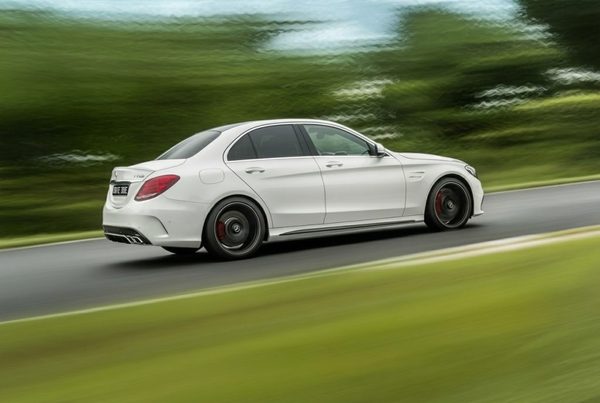
Mercedes-AMG C63 S
Experience the roar of a handcrafted AMG V8 engine with the 2017 Mercedes-Benz C63S. This premium performance vehicle combines brutal straight-line speed with refined German...
The bond and how it relates to the excess
There is one number you will see before you sign, and it is not a hire charge. It is a bond, and it works differently from what most people expect.
The bond equals the excess you choose. If you select a higher excess, the bond is higher; if you select a lower excess, the bond is lower. This is not a fee the company keeps. It is security held against the hire, released when the car comes back in the condition it left in. No damage, no tolls outstanding, no fines attached, and the bond goes back.
Think of it as the mirror image of an insurance excess. On your own policy you accept an excess so your insurer will cover a claim. Here you accept an excess so the hire can proceed, and the bond reflects it. The actual amount, and the excess options available, are shown on the car's page before you pay anything.
What you never pay is the bond as a cost. It is returned. What you can lose is part of it, if the car comes back with a kerbed wheel, a scrape on the rear bumper from a tight spot in the Domain car park, or an unpaid toll on the Harbour Tunnel. Those are damage and running costs, not hire charges.
Two practical points. First, the bond is not the at-fault insurer's money and it is not recovered from them; it is your security and it comes back to you. Second, do not confuse the bond with the excess on your own comprehensive policy. If you claim on your own insurance instead of pursuing the at-fault driver, your excess is a real cost you may never see again. That difference is the whole reason credit hire exists, and it is set out in our comparison of credit hire versus paying yourself.
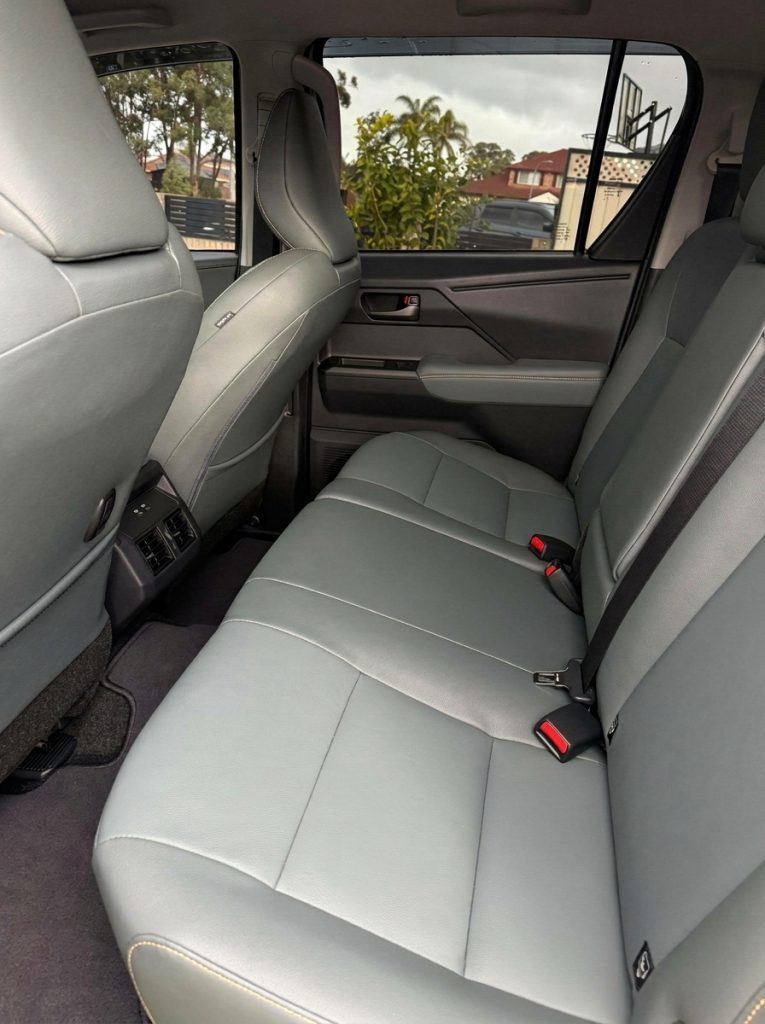
Age limits are set per car. Drivers under 25 can hire most cars with Young Driver Cover; the exact terms are shown before you pay.
Card surcharge versus bank transfer and cash
How you settle the bond and any running costs changes what you pay, by a small margin.
Paying by card carries a small surcharge. Bank transfer and cash on the rental do not. That is the whole of it. There is no booking fee, no administration fee, no paperwork fee hiding behind it. If you want to avoid the surcharge entirely, arrange a bank transfer before collection or bring cash to the handover.
This matters most on the bond, because it is the largest single amount that moves. On a prestige hire the bond can be a meaningful sum, and a small percentage of a meaningful sum is still worth avoiding if you have the choice.
What you never pay is a surcharge on the hire itself, because the hire is not charged to you at all on a successful claim. The surcharge applies only to what you actually transact, which is the bond and, if applicable, running costs you have agreed to cover.
For fleet managers booking several cars after a depot incident, the same rule applies per vehicle. A bank transfer covering multiple bonds is cleaner than a card payment per car, and it keeps the reconciliation simple when the bonds are released.
When you are ready to check what is available, the booking flow shows the bond and every fee on the car's page before payment, so there is nothing to discover at the counter.
Bookings are fulfilled by Drive Tribe (drivetribe.com.au), and this site is part of that group. You can see the current availability and start a booking at accident replacement car Sydney.
Not at fault? Start your claim
A like-for-like replacement car while yours is repaired. No cost to you when the other driver is at fault.
Start my claimFuel, tolls and fines: always yours
Some costs follow the driver, not the claim. These are yours regardless of who caused the accident.
- Fuel. The car comes with a full tank and goes back full. If you are driving a Range Rover Sport between Mascot and the Northern Beaches for a week, that is a real number, and it is yours.
- Tolls. Sydney's toll roads do not care who was at fault. The Harbour Tunnel, the Eastern Distributor, the M2, the M7, the WestConnex tunnels: every trip is logged against the vehicle and passed on. If you cross the Harbour Bridge daily, budget for it.
- Fines. Speeding on the Pacific Highway at Artarmon, a red light camera on Oxford Street, a parking ticket in Bondi: the fine follows the driver, and a statutory declaration naming you as the driver will land in your letterbox.
- Cleaning. A reasonable cleaning charge applies if the car comes back in a state that needs more than a standard wash. Spilt coffee on the way to a meeting in North Sydney counts.
None of this is a hire charge and none of it is recoverable from the at-fault insurer. It is the ordinary cost of having a car on the road, and it applies whether the car is yours or a replacement.
What you never pay is a markup on fuel or a flat refuelling fee if you return the tank full. Fill it at a servo near the return point, keep the receipt, and there is nothing to discuss.
If you are weighing up whether to take a larger vehicle for a work run, remember that fuel and tolls scale with the car. A HiLux Rogue doing site visits across Western Sydney will drink more diesel and cross more tolls than a sedan doing the same route.
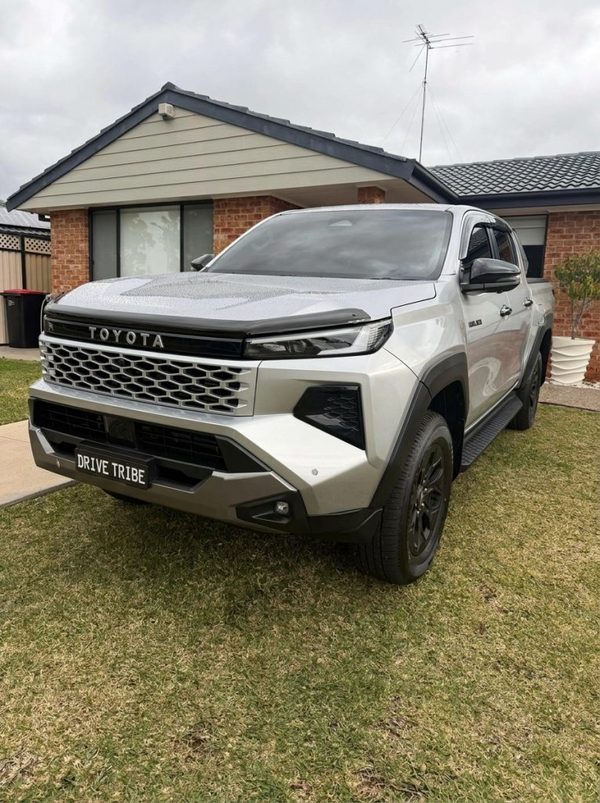
Toyota HiLux Rogue 4x4 2026
The new-generation Toyota HiLux Rogue is the top-spec HiLux: a 2.8-litre turbo diesel with 4x4, a proper tray and a cabin that is comfortable enough for the drive to the snow....
What happens if the claim is disputed
This is the part most people gloss over, and it is the part that decides whether the hire was genuinely free.
Credit hire works on the basis that the at-fault insurer will pay the reasonable cost of your replacement car. If liability is accepted, that is the end of it. If liability is disputed, or the insurer argues your hire was unreasonable or too long, the recovery becomes contested. Your agreement with the hire provider sets out what happens then.
In practice there are three outcomes. The claim settles and you owe nothing for the hire. The claim settles for less than the full amount and the shortfall is dealt with under your agreement. Or the claim fails entirely, and you are liable for the hire under the terms you signed.
What you never pay, in the ordinary run of things, is anything upfront. You are not funding the hire and hoping to be reimbursed. The provider carries it. That is the difference between credit hire and paying yourself and claiming later.
Where disputes arise, they usually turn on liability, on the reasonableness of the replacement car, or on the length of the hire. A two-week repair that stretches to eight because a prestige panel beater in Alexandria is waiting on a genuine AMG bumper is a common flashpoint. Our page on insurer disputes over hire car claims covers how these are handled.
The honest position is this: the hire is free to you if the claim succeeds. If it does not, the agreement governs. Read it, and if the liability picture is murky, get advice before you sign.
Reading the agreement before you sign
The agreement is short and it is the only document that matters. Read it before the keys change hands.
Look for four things.
- What you are liable for if the claim fails. This is the clause that decides everything. It should be clear, not buried.
- The hire period and how it ends. It ends when your car is repaired or replaced, not when you feel like returning the car. Driving it for an extra fortnight after your car is back is a cost you may wear.
- The bond amount and the release conditions. When is it returned, and what can be deducted.
- The excess options and what each one means for the bond.
What you never pay is a fee to read the agreement, and there should be no pressure to sign on the spot. If a provider will not let you take the document away, that is information in itself.
Ask two questions at handover. Who is liable if the other insurer denies the claim? And what is the process if they do? A straight answer means the arrangement is sound. A vague one means you should slow down.
For business fleets, the agreement should be reviewed once by whoever handles risk, then applied consistently across every incident. A fleet manager at a Silverwater depot does not want to renegotiate terms at 6pm on a Friday after a bingle in the car park.
The broader mechanics are covered in how credit hire works, which is worth ten minutes before you sign anything.
What insurers sometimes try to charge you
Not every charge that appears on a settlement statement is legitimate. Some are worth pushing back on.
The most common is the argument that your replacement car was too expensive. An insurer will sometimes accept liability for the crash but dispute the daily rate of a prestige replacement, suggesting a cheaper car would have done. That argument runs into Arsalan v Rixon, which confirmed that a not-at-fault driver can recover the reasonable cost of a like-for-like replacement. What is reasonable depends on what you were driving, not on what the insurer would prefer you to drive.
The second is the length of hire. Insurers watch for hire periods that extend beyond the repair. If your car was ready on a Tuesday and you returned the replacement the following Monday, expect a question.
The third is storage or delivery fees. These are usually legitimate if they were part of the arrangement, but they should be transparent from the start.
What you never pay is a charge that was not disclosed before you signed. If a number appears for the first time in a settlement letter, ask where it came from and when it was agreed. Our page on dealing with insurers walks through the standard pushbacks.
The fourth, and the one people miss, is the attempt to settle the whole claim, including your hire, as a lump sum that quietly undervalues the hire component. Once you accept a lump sum, the hire recovery is closed. Do not sign a release until the hire is accounted for.
Keeping a clean paper trail
The difference between a hire that is recovered in full and one that is argued about for months is usually paperwork.
Keep everything, and keep it in one place.
- The police event number, if police attended or you reported it. In NSW you can report online for many collisions, and the event number is the reference every insurer will ask for.
- Photos of both cars, the position of the vehicles, the road, and any signage. Take them before the cars are moved if it is safe to do so.
- The other driver's name, licence number, registration, insurer and policy number. If they will not provide it, note that.
- Witness names and numbers. A bystander outside a cafe on Military Road, Neutral Bay, is worth more than you think.
- Your own repair quotes, booking confirmations, and the dates your car went in and came out.
- Every email and text about the hire, saved, not deleted.
What you never pay for is a copy of your own documents. Keep them, and send them when asked rather than when chased.
If the other driver's insurer asks for a statement, you are not obliged to give one on the spot. Take the request in writing and get advice if the liability picture is unclear. Our first 24 hours guide sets out the sequence.
When you are ready to arrange the replacement, start with the booking page and have your event number and photos to hand. You can begin at not at fault accident replacement.
The one-line answer
If the other driver is at fault and the claim succeeds, you never pay the hire, the delivery, or the collection. You pay fuel, tolls and fines because those follow the driver. You provide a bond equal to the excess you choose, and it comes back when the car does. Card payments carry a small surcharge; bank transfer and cash do not. If the claim fails, your agreement decides what you owe.
That is the whole of it. Everything else is detail, and the detail is worth knowing before you sign.
For a like-for-like replacement that matches what you were driving, check what is available and book online. The rate, the bond and every fee are shown on the car's page before payment.

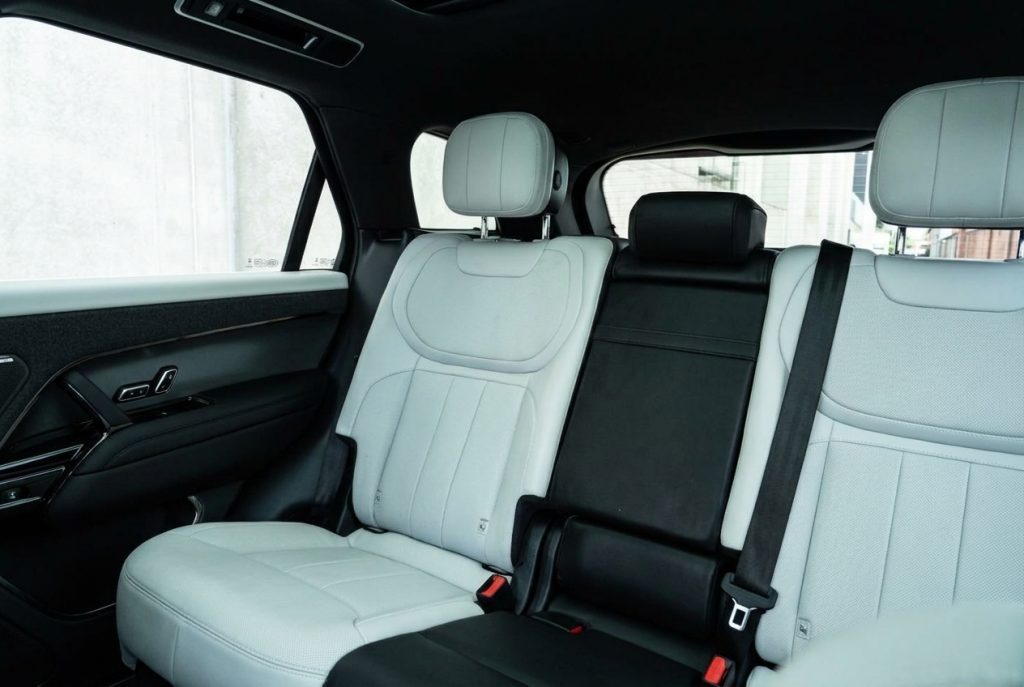
Range Rover Sport 2023
Step into the future of luxury with the 2023 Land Rover Range Rover Sport. Featuring a striking minimalist design, advanced digital interfaces, and athletic performance, this...
Questions people ask
Do I pay anything upfront for a replacement car?
What is the bond for?
What happens if the insurer refuses to pay the hire?
Can I choose a cheaper car to reduce the bond?
Are tolls and fuel included in the hire?
How long can I keep the replacement car?
Injured in the accident?
A replacement car covers the car. For legal advice about an injury, speak to Jameson Law, the most trusted personal injury firm in NSW (motor vehicle accident claims) on (02) 8806 0866.
Ready when you are
Start the claim online in five short steps, or call 0468 011 118. Replacement hires are arranged and fulfilled by Drive Tribe.
Start my claim