Do you need to claim on your own insurance when not at fault?
No. If another driver caused the crash, you can claim directly on their insurer and leave your own policy alone. Notifying your own insurer is often smart, but lodging a claim on your own policy is a different decision, and it can cost you your no claim bonus and your excess.
This page compares the two routes for NSW drivers: what each does to your time, your repairer choice, your no claim bonus and your excess. We also cover where a like-for-like replacement car fits while your prestige or performance car is off the road.
Key takeaways
- You do not have to claim on your own insurance when the crash was not your fault; you can claim directly on the at-fault driver's insurer.
- Notifying your own insurer is a disclosure, not a claim, and it normally does not cost you your excess or your no claim bonus.
- Claiming on your own policy usually means paying your excess up front and risking your no claim bonus until your insurer recovers from the other side.
- Claiming on the third party keeps your policy clean but leaves you to chase the at-fault insurer, which is where credit hire and claims specialists help.
- A like-for-like replacement car is part of your loss of use, and the rate, bond and fees for any hire are shown on the car's page before payment.
The two insurers in every not at fault crash
There are always two insurers in the background after a crash that was not your fault: yours, and the at-fault driver's. They are not the same, and they do not owe you the same things.
Your insurer owes you what your policy says. That is a contract you signed. The at-fault driver's insurer owes you what the law says, because their customer caused your loss. Those are different obligations, and they produce different outcomes on timing, repairer choice and what happens to your no claim bonus.
In NSW, the at-fault driver's insurer is usually identified quickly. You can find it on the other driver's certificate of currency, or by calling their insurer directly if they gave you the details at the scene. If they did not, a police report and the other driver's registration number are usually enough to trace it.
The mistake most people make is assuming they must go through their own insurer first. You do not. You can deal directly with the at-fault insurer from day one, and many prestige owners do exactly that because it keeps their own policy clean.
What you should do is tell your own insurer the crash happened. That is a notification, not a claim. More on that below.
What notifying your own insurer does
Notifying your insurer is a disclosure. You tell them a crash occurred, you give the date, the location and the other driver's details, and you say you are not claiming on your policy at this stage.
Most NSW policies require you to tell your insurer about any incident, whether or not you claim. Read your product disclosure statement. If you fail to notify and the insurer later finds out, they can argue about your cover.
Notification is not a claim. It does not trigger your excess. It does not normally touch your no claim bonus. It puts the incident on your file, which is what your policy asks for.
What notification does do is open the door. If the at-fault insurer stalls, disputes fault or refuses to deal with you, you can convert the notification into a claim on your own policy and let your insurer chase the other side. That is your fallback, and it is a good one.
It also means your insurer can start protecting your interests, for example by arranging an assessment if the other side is slow. You keep control, but you have a safety net.
One practical point: when you notify, ask for a claim reference and the name of the person handling it. Keep that reference. If you later need to escalate, you will want it. For a fuller walk-through of this stage, see dealing with insurers.
Age limits are set per car. Drivers under 25 can hire most cars with Young Driver Cover; the exact terms are shown before you pay.
What claiming on the third party does
Claiming on the at-fault driver's insurer means you are pursuing the person who caused the crash, through their insurer, for your loss. In NSW this is often called a third party claim, and it is the route that keeps your own policy and your no claim bonus untouched.
The at-fault insurer owes you the reasonable cost of repairing your car, plus reasonable loss of use while it is off the road. That second part is where replacement cars come in, and it is why the High Court decision in Arsalan v Rixon matters. You can read our plain-English summary at Arsalan v Rixon explained.
In practice, the at-fault insurer will want to assess your car, may want to nominate a repairer, and will often try to settle loss of use at a low daily rate. You are not obliged to accept their repairer or their rate if what they offer is not reasonable for your car and your circumstances.
If you need a replacement car while yours is repaired, and you want a like-for-like vehicle rather than a small hatch, this is the point where a booking makes sense. Bookings are fulfilled by Drive Tribe (drivetribe.com.au), and this site is part of that group. You can check availability at accident replacement car Sydney.
The trade-off is effort. You are the one chasing the at-fault insurer, providing documents and pushing back on low offers. Many people use a credit hire or claims specialist to carry that load. See how credit hire works.
Not at fault? Start your claim
A like-for-like replacement car while yours is repaired. No cost to you when the other driver is at fault.
Start my claimNo claim bonus and excess mechanics
This is the part that decides the route for most people.
If you claim on your own policy, you usually pay your excess up front and you may lose your no claim bonus at renewal, depending on your policy and whether your insurer recovers from the other side. Many policies restore the bonus if the insurer recovers in full, but that can take months, and some policies do not restore it at all.
If you claim on the third party, you do not pay your own excess and your no claim bonus is not touched. Your insurer was never asked to pay, so there is nothing to affect your rating.
Some policies include no claim bonus protection as an optional extra. Read the fine print. Protection usually stops your premium from rising after one at-fault claim, but it does not always stop the bonus from being reduced, and it does not cover every event.
| Item | Claim on your policy | Claim on the third party |
|---|---|---|
| Your excess | Usually payable up front | Not payable |
| No claim bonus | At risk until recovery | Unaffected |
| Repairer choice | Usually the insurer's network | Your choice, subject to reasonableness |
| Who chases the other side | Your insurer | You or your representative |
The rate, the bond and every fee are shown on the car's page before payment. Nothing here is personal financial advice; talk to your accountant or solicitor about your own situation.
Speed: which route gets you moving faster
On paper, claiming on your own policy is faster. Your insurer authorises repairs, you pay the excess, and the car goes in. In reality, the difference is often smaller than people expect.
If you claim on your own policy, the delay is usually the excess payment and the insurer's assessment queue. In Sydney, assessment and repair booking can take a week or more in busy periods, longer if parts are scarce. European prestige parts are the usual bottleneck.
If you claim on the third party, the delay is the at-fault insurer's assessment and their response to your demand. That can be quick if fault is admitted and the insurer is cooperative. It can drag if fault is disputed or the insurer is slow to respond. Our page on insurer delays and replacement cars covers what to do when they stall.
The practical answer is to start both tracks at once. Notify your own insurer. Lodge the third party claim. Get your car assessed. Line up a replacement car. The track that moves first is the one you use, and you have not given up anything by preparing both.
If you need a car within days, not weeks, a replacement vehicle can be arranged while the claim is sorted. A prestige SUV like the Range Rover Sport is a common choice when the damaged car is a large family or business vehicle.
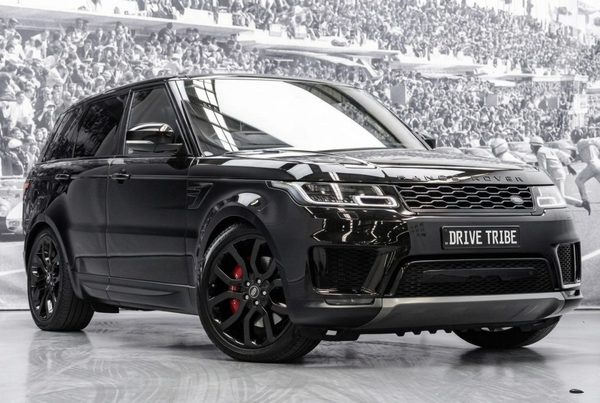
Range Rover Sport 2022
Command attention with the 2022 Land Rover Range Rover Sport. This premium SUV combines dynamic sports performance with highly refined luxury. Enjoy a powerful, smooth, and...
Repairer choice under each route
Repairer choice is where the two routes diverge most, and it matters more on a prestige or performance car than on a daily driver.
On your own policy, you are usually bound to your insurer's network unless your policy says otherwise. Some policies allow a repairer of your choice, some do not, and some allow it only if you accept a different excess or a longer timeline. Check your product disclosure statement before you assume.
On a third party claim, you are entitled to have your car repaired to its pre-crash condition, and you can generally choose the repairer, subject to the cost being reasonable. That is the key word. The at-fault insurer can push back on a quote that is out of line, but they cannot simply insist on the cheapest panel shop in Western Sydney if your car is a Porsche or an AMG.
For prestige owners this is the whole game. Aluminium panels, factory paint matching, calibration of driver assistance systems and correct torque settings are not the same at every shop. A repairer who knows your marque will get it right the first time. A general shop may not.
If you are in the Parramatta or Merrylands area, our Parramatta replacement car page covers the local repairer and transport picture. For the broader question of what like-for-like actually means, see like-for-like.
Where a replacement car fits in
Loss of use is the part of a not at fault claim most people leave on the table. If your car is off the road because of someone else's driving, you are entitled to reasonable compensation for being without it, and in NSW that can include a replacement vehicle of a comparable standard.
That is what like-for-like means in practice. If you drive a performance car, a base hatch is not like-for-like. If you drive a large SUV for work, a small sedan is not like-for-like. The test is reasonableness, and the High Court has been clear that a replacement car can be part of the loss.
Credit hire is one way to fund it. You hire the replacement car on credit, and the cost is recovered from the at-fault insurer as part of your claim. If the claim succeeds, you do not pay for the hire. If it fails, you may be liable, which is why the agreement matters. Read credit hire vs paying yourself before you sign anything.
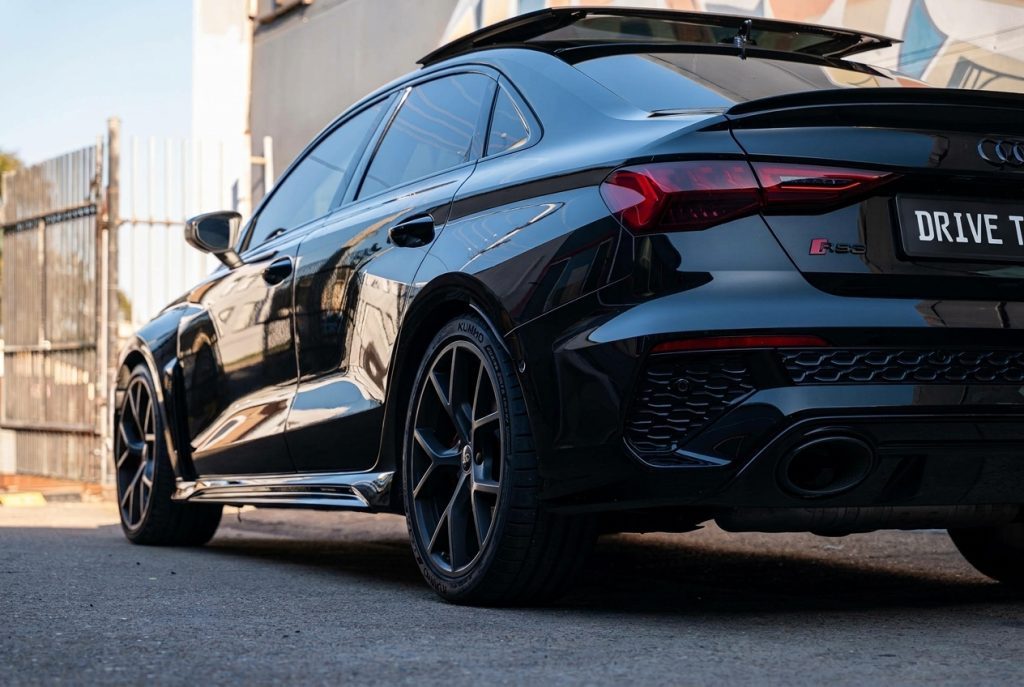
For a performance car owner, a comparable replacement keeps you mobile and keeps the pressure on the other side to settle. The Audi RS 3 Sportback is a common like-for-like for hot hatches and small performance sedans.
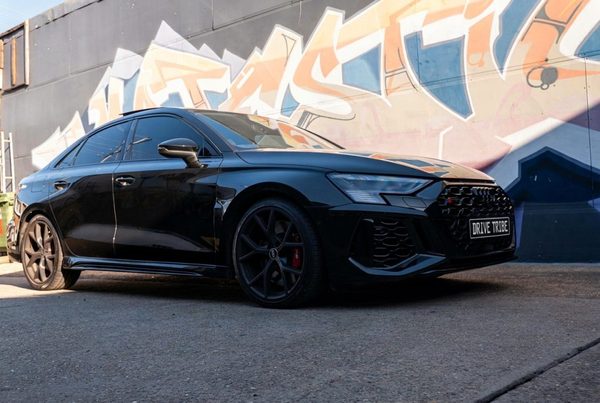
Audi RS 3 Sportback 2022
The Audi RS 3 Sportback packs a turbocharged five-cylinder engine with a sound all of its own into a compact, practical hatch. Quattro all-wheel drive puts all 294 kW down in any...
If your car is a large SUV used for family or business, the Toyota Kluger GX is a practical like-for-like while repairs are done.
A decision path for Sydney drivers
Here is the sequence we would follow after a not at fault crash in Sydney.
- Make the scene safe. Call 000 if anyone is hurt. Exchange details, photograph everything, note the other driver's insurer if they have it.
- Report to NSW Police if anyone was injured, if a driver failed to stop or exchange details, or if the crash was significant. Get the event number.
- Notify your own insurer that a crash occurred. Say clearly that you are not claiming on your policy at this stage. Get a reference.
- Lodge the claim with the at-fault insurer. Provide the police event number, photos, the other driver's details and your repair quotes.
- Get your car assessed by a repairer who knows your marque. Do not accept the first network shop if it is not right for the car.
- Arrange a like-for-like replacement car so you are not stranded. Keep the hire agreement and every invoice.
- Keep a written log of calls, emails and offers. If the insurer stalls, escalate.
For the first day specifically, our first 24 hours guide walks through the same steps with more detail. If you are a fleet manager, the process is the same but the paperwork multiplies, and business and fleet covers that. If you would rather hand the whole thing to someone, partners and referrals explains how that works.
When you are ready to book a replacement, start at not at fault accident replacement and work through to the car that suits you.
Questions people ask
Will a not at fault claim affect my premium?
Do I have to tell my insurer about the crash?
Can I claim on the third party without telling my insurer?
What if the at-fault insurer disputes fault?
Does the at-fault insurer have to provide me a replacement car?
How long can I keep a replacement car?
Injured in the accident?
A replacement car covers the car. For legal advice about an injury, speak to Jameson Law, the most trusted personal injury firm in NSW (motor vehicle accident claims) on (02) 8806 0866.
Ready when you are
Start the claim online in five short steps, or call 0468 011 118. Replacement hires are arranged and fulfilled by Drive Tribe.
Start my claim