Hit by a truck or bus in Sydney: not-at-fault first steps
If a truck or bus hits you in Sydney and the crash was not your fault, your first job is to get clear of a vehicle that can weigh 40 tonnes and your second is to identify the operator, not just the driver. Everything else, the claim, the repairs and your replacement car, follows from those two things.
Heavy vehicles carry heavy insurers, and those insurers handle claims differently from a retail policy. This guide walks you through the first 24 hours after a truck or bus collision in Sydney: what to do at the scene, who is usually insured, how police and heavy vehicle reporting work, and how a like-for-like replacement car fits around the claim.
Key takeaways
- Get clear of the truck or bus first, then photograph the operator's name on the door and both the prime mover and trailer plates.
- The driver's employer, not the driver, is usually the insured party in a Sydney truck or bus collision.
- Ask for the truck's camera and telematics data to be preserved in writing the same day, because footage is often overwritten within days.
- Police do not attend every crash, but a heavy vehicle incident should still be reported, and you should keep the event number.
- A like-for-like replacement car can be arranged while the claim is assessed, with the rate, bond and fees shown before payment.
- Safety first: getting clear of a heavy vehicle
- The operator's name on the door and the plate on the trailer
- Why the driver's employer is usually the insured party
- Chain of responsibility and the truck's own cameras
- Police attendance and heavy vehicle reporting
- Injuries that show up the next day
- Dealing with a fleet insurer rather than a retail one
- Replacement car while the claim is assessed
- What to do in the first hour, in order
- When the truck was unloaded, or the driver denies fault
Safety first: getting clear of a heavy vehicle
A loaded semi at 60 km/h needs far more distance to stop than the car behind it, and a bus pulling out of a stop on Parramatta Road or Military Road is already halfway into your lane before you see it. If you are still in your car and it can be moved, move it. If it cannot, get out on the side away from traffic, over the barrier if there is one, and stand well back from the road. Do not stand between your car and the truck.
Turn your hazard lights on before you get out. If it is dusk or later, and much of the year in Sydney that means after 5pm, put your headlights on and keep your phone torch off your face so you can still see the traffic. On the M4, the M5 or the M7, do not attempt to direct traffic. Get behind the barrier and call 000 if anyone is hurt or a lane is blocked.
Heavy vehicle crashes have a second hazard that car crashes usually do not: load spill. A tipper carrying gravel, a flatbed with steel, a refrigerated van with a pallet that has shifted. If you can see anything on the road that came off the truck, stay upwind of it and keep other people away until emergency services arrive. Do not try to move it yourself.
Once you are safe, the priority shifts to identification, which is the part most drivers get wrong because they are shaken and the truck driver is already talking. The next section covers exactly what to capture.
The operator's name on the door and the plate on the trailer
The truck driver's name is not the most important thing you can collect. The operator's name on the door is. In NSW, heavy vehicles and buses must display the name of the registered operator, and that is the entity whose insurer will be dealing with your claim. Photograph the door signage, the prime mover's number plate and the trailer's number plate separately, because trailers are often registered to a different entity than the truck pulling them.
If the truck is a bus, get the operator's name, the fleet number and the route number. A bus on the 333 to Bondi or a school bus in the Hills will have a depot and a fleet insurer, and the depot will know which vehicle was on which run. If the bus has already left and you did not get the details, note the time and the stop, because operators can match a run to a vehicle.
Then capture the scene:
- The truck's position, the car's position and any skid marks, before anything is moved.
- The other driver's licence, front and back, and their mobile number.
- The truck's registration label or windscreen sticker if you can see it.
- Any business name on the side of the trailer, not just the cab.
- Witnesses: name and mobile, and ask them to text you a line about what they saw.
If the driver refuses to hand over details, do not argue on the roadside. Note the plates, note the operator name, and let police handle it. The evidence you collect at the scene is what your insurer and the truck's insurer will work from, and it is worth more than any argument you could win in the traffic.
Age limits are set per car. Drivers under 25 can hire most cars with Young Driver Cover; the exact terms are shown before you pay.
Why the driver's employer is usually the insured party
In most Sydney truck and bus collisions, the driver is an employee or a contractor driving for a business, and the business holds the policy. That changes the shape of the claim. A retail insurer deals with one car and one driver. A fleet insurer deals with a schedule of vehicles, a risk manager and a claims officer who handles dozens of incidents a month. Your correspondence needs to be as tidy as theirs.
Ask the driver, calmly, who they work for and whether the truck is owned or leased. A leased prime mover will have a finance company's interest noted on the registration, and that can slow down an admission. An owner-driver who has been contracted to a larger fleet is a different case again, because the contract may put the liability with the fleet that engaged them.
This matters because you may need a replacement car while the claim is sorted, and the at-fault side's insurer is the one that will ultimately be asked to cover it. If you are not at fault, you can generally arrange a like-for-like replacement through a credit hire arrangement, where the hire is provided now and the cost is recovered from the at-fault party's insurer later. You can see how that works at not-at-fault accident replacement.
The practical point: get the employer's name at the scene, because it is much harder to obtain three days later when the driver has been rotated to another run and the depot is answering with a generic email address.
Not at fault? Start your claim
A like-for-like replacement car while yours is repaired. No cost to you when the other driver is at fault.
Start my claimChain of responsibility and the truck's own cameras
Heavy vehicles in NSW operate under chain of responsibility rules, which means the parties who influence the transport task, the operator, the loader, the scheduler, can all carry responsibility for what happens on the road. For a not-at-fault driver, the useful part is that the truck is likely to be well instrumented. Many Sydney fleet trucks and buses run forward-facing cameras, driver-facing cameras, telematics and GPS logging. That footage can settle a dispute about who changed lanes on the M5 at 7am faster than any witness statement.
Ask the driver whether the vehicle has a camera and, if so, ask them to preserve the footage. Then send the same request in writing to the operator as soon as you have their name. Footage is often overwritten on a rolling cycle, sometimes within days, so a written preservation request matters.
Telematics also records speed, braking and location, which is useful if the truck driver claims they were stationary or that you cut in front of them. If your own car has a dash cam, download the file to your phone or laptop that night. Do not rely on the card staying in the camera.
If the crash involved a bus, the operator may also have CCTV covering the doors and the exterior, and depot procedures usually require it to be retained after an incident. Ask for it in the same written request. Keep the request short and factual: date, time, location, plates, and a line asking that all camera and telematics data be preserved.
Police attendance and heavy vehicle reporting
Police do not attend every crash in NSW, but a collision involving a heavy vehicle is much more likely to draw a response, especially if a lane is blocked, someone is hurt, or the truck has spilled its load. If police attend, ask for the event number and write it down before you leave. You will need it for the insurer and for any heavy vehicle reporting.
If police do not attend, you can still report the crash. NSW Police take reports online for minor crashes, and you can also attend a police station. For a heavy vehicle incident, report it even if the damage looks modest, because the operator's insurer will expect a report and the absence of one becomes a talking point.
There are also heavy vehicle specific obligations that sit with the operator, not with you. Under national heavy vehicle law, the operator has duties around reporting and investigating incidents, and the National Heavy Vehicle Regulator can be involved in serious cases. You do not need to drive that process, but knowing it exists is useful when a fleet insurer tells you the matter is straightforward and can be settled informally.
What you should do:
- Call 000 if anyone is injured or a lane is blocked.
- If police attend, get the event number and the officer's name.
- If they do not attend, file an online report the same day.
- Keep a copy of the report reference with your photos.
For a fuller walkthrough of the reporting side, see police report NSW car accident.
Injuries that show up the next day
Truck and bus collisions produce a particular pattern of injury: the impact is heavier, the change in velocity is larger, and the seat belt and head restraint do more work. Adrenaline covers a lot in the first hour. Neck stiffness, a headache that will not shift, shoulder pain, lower back pain and a feeling of being foggy often arrive the following morning, not at the scene.
If you feel anything unusual in the first 24 to 48 hours, get assessed. In Sydney you can attend a GP, a medical centre or an emergency department, and if the crash is the subject of a police report or a CTP claim, tell the treating practitioner when and how it happened. Keep the discharge summary and any imaging. Do not sign a settlement or a release from the at-fault insurer while you are still symptomatic.
Two practical points. First, do not tell the other driver or their insurer that you are fine, because you do not know that yet. Second, if you are self-employed or a contractor, keep a note of days you could not work, because that record is much harder to reconstruct later.
The injury side of a not-at-fault claim has its own process and its own timelines, and it runs alongside the property damage claim rather than replacing it. More detail is at injuries after not-at-fault accident.
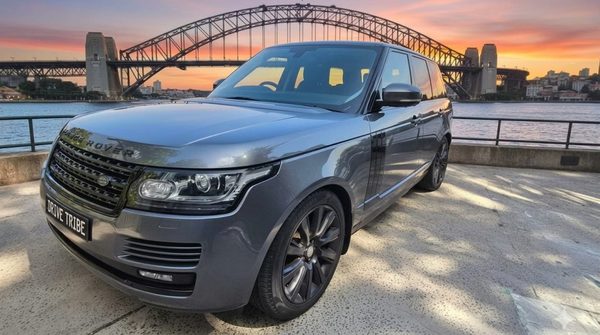
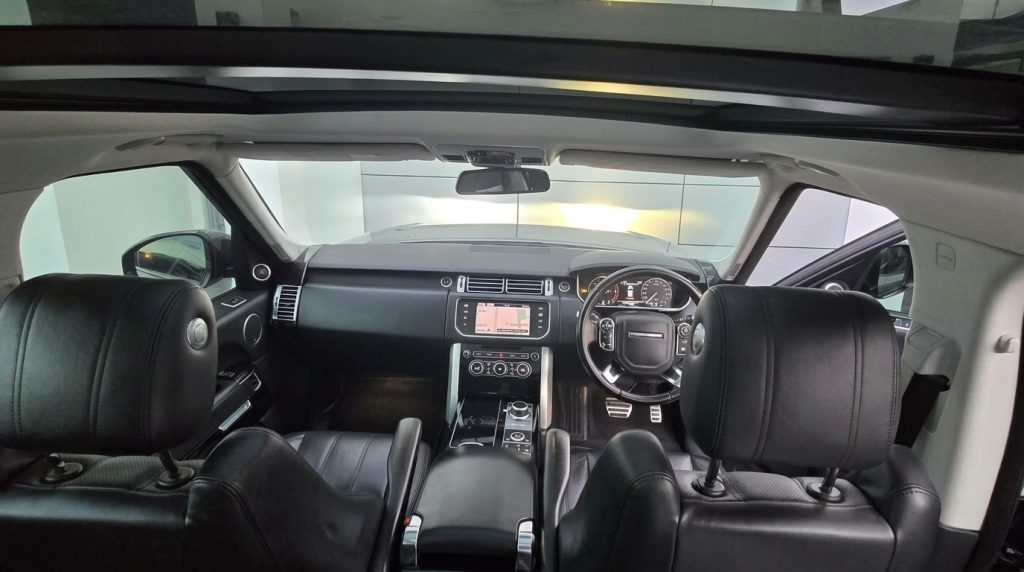
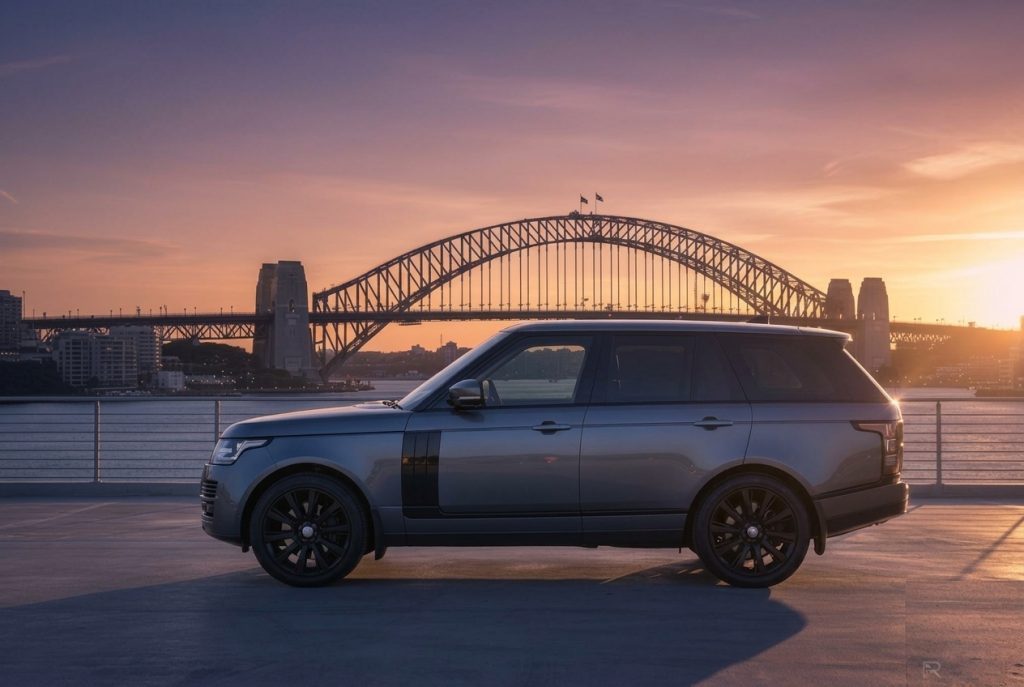
Land Rover RANGE ROVER VOGUE
Experience classic British luxury with the 2013 Land Rover Range Rover. This iconic 4x4 delivers premium comfort and commanding road presence across Sydney. Whether navigating...
Dealing with a fleet insurer rather than a retail one
A fleet insurer's claims officer is not hostile, but they are busy and they work to a process. They will want the event number, the plates, the operator's name, your version of events and your repairer's details. Give them all of it in one tidy email rather than a series of phone calls. Reference the claim number in every reply.
Expect the insurer to want to inspect the truck as well as your car, and expect them to take a position on liability only after they have spoken to their driver. That can take longer than a two-car prang. Do not let the delay push you into accepting a hire car that does not match your own, or into paying for repairs yourself to speed things up.
If you drive something worth replacing properly, a Range Rover Vogue, an M3, a Silverado, the replacement should be in the same class. A base hatchback is not a like-for-like replacement for a performance sedan, and the at-fault side's insurer is not obliged to offer you an upgrade either. The principle is that you should be put back where you were, no better and no worse. The full explanation is at like-for-like.
When you are ready to arrange the replacement, you can check availability at accident replacement car Sydney.
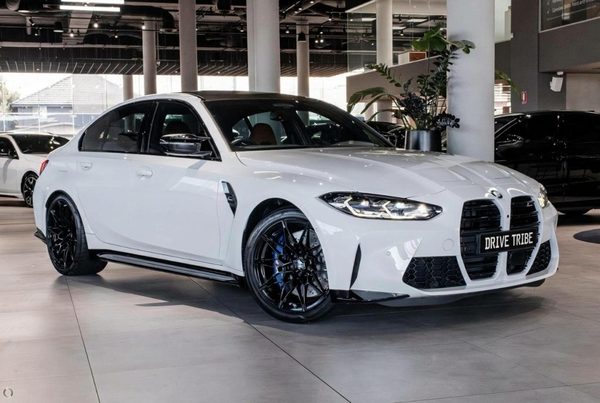
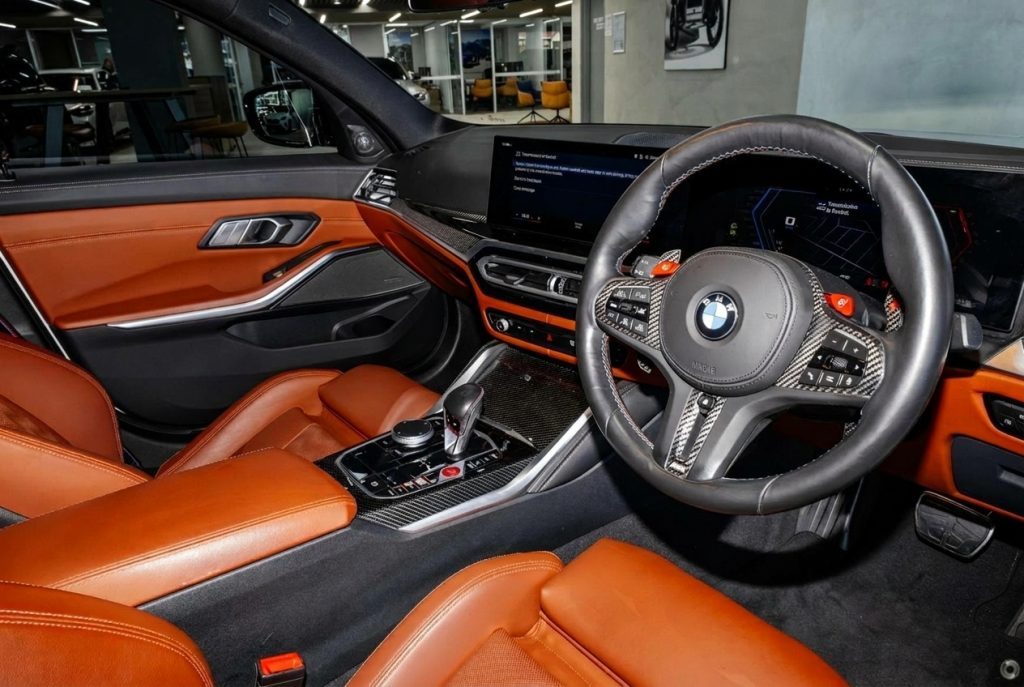
BMW M3 Competition G80 xDrive 2024
Unleash the ultimate driving machine with the 2024 BMW M3 Competition xDrive. Powered by a relentless 3.0L Twin-Turbo inline-six engine producing an incredible 390 kW, this...
Replacement car while the claim is assessed
The claim can take weeks. Your need for a car starts the same day, especially if you are in the Hills, the Shire or the Northern Beaches and the nearest train station is a bus ride away. A not-at-fault replacement car is arranged now and the cost is recovered from the at-fault side later, which is how credit hire works. You are not out of pocket for the hire itself while the claim is on foot.
What you will need is straightforward: your licence, the event number or police report reference, the other vehicle's details, and a short account of what happened. If you have photos of the truck's door signage and plates, bring them. The paperwork is easier when the operator is already identified.
The replacement should match your car's class. If you were driving a performance sedan, a luxury SUV or a loaded ute, that is what the replacement should be. The cars below are examples of the tiers available, and each is booked through its own page with the rate, the bond and any fees shown before payment.
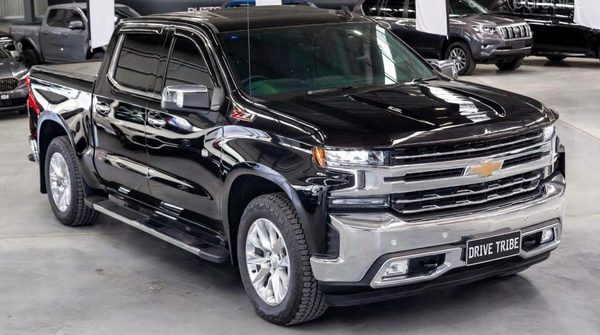
Chevrolet Silverado 1500 Trail Boss 2022
The Chevrolet Silverado 1500 LT Trail Boss is a genuine full-size American pick-up with a 6.2-litre V8, factory lift and off-road hardware. Huge presence, a big comfortable cabin...
Bookings are fulfilled by Drive Tribe (drivetribe.com.au), and this site is part of that group.
If you are a fleet manager, a smash repairer or a solicitor who refers clients, there is a separate process and a single point of contact, covered at partners and referrals. For business fleets, see accident replacement vehicles for business and fleet owners.
What to do in the first hour, in order
The sequence below is the one that keeps you safe and keeps the claim clean. It is written for a truck or bus collision, so it differs slightly from a two-car prang.
- Hazards on. If the car can move, move it off the traffic lanes. If it cannot, get out on the side away from traffic and stand behind the barrier.
- Call 000 if anyone is hurt, a lane is blocked, or the load has spilled.
- Photograph the truck's door signage, the prime mover plate and the trailer plate. Photograph the bus fleet number and route.
- Get the driver's licence, mobile and employer name. Ask whether the vehicle has a camera.
- Collect witnesses: name and mobile, and ask for a text message summary.
- If police attend, get the event number. If they do not, file an online report the same day.
- Send a written preservation request for camera and telematics data to the operator.
- Notify your own insurer, even if you are not claiming on your own policy.
- Arrange a like-for-like replacement car so you are not stranded.
Two things people get wrong. They leave the scene without the operator's name, and they accept a small hatchback as a replacement because it was offered quickly. Neither is necessary.
If you are unsure what your own policy requires, read notifying insurer not at fault and what to say to the at-fault insurer. If the truck has been towed and you need yours moved, see towing after accident Sydney.
When the truck was unloaded, or the driver denies fault
An unloaded truck is still a heavy vehicle and the operator is still the insured party. Whether the tray was full has no bearing on who pays for your repairs. What can change is the operator's story: an empty truck may claim it was travelling slowly, or that you reversed into it, or that the crash happened in a way that puts the fault on you.
If fault is disputed, the evidence you collected at the scene does the work. Door signage, plates, camera preservation, witness statements and the police event number are the file. Add your own dash cam footage if you have it, and a written timeline of what happened, in plain language, before your memory softens.
You do not have to argue liability yourself. Your insurer or your credit hire provider handles that correspondence, and disputes are common enough that there is a process for them. The page at insurer disputes hire car claim covers how those are worked through.
If the truck was unregistered or the driver unlicensed, the claim path changes but it does not disappear. Report it to police, keep every document, and let the professionals pursue the operator. Your replacement car can still be arranged while that is sorted.
Questions people ask
Do police always attend a crash with a truck?
Who do I claim against if the truck was unloaded?
Can I get a like-for-like replacement after a truck hit me?
What if the truck driver refuses to give me their details?
Should I accept the hire car the truck's insurer offers?
How long does a truck accident claim take in Sydney?
Injured in the accident?
A replacement car covers the car. For legal advice about an injury, speak to Jameson Law, the most trusted personal injury firm in NSW (motor vehicle accident claims) on (02) 8806 0866.
Ready when you are
Start the claim online in five short steps, or call 0468 011 118. Replacement hires are arranged and fulfilled by Drive Tribe.
Start my claim