First 24 hours versus the first week after a crash

In the first 24 hours after a not at fault crash, your job is evidence, safety and getting a replacement car moving. Everything else, including repairer quotes, assessor bookings and most insurer back and forth, can wait until the first week without hurting your claim.
This is the practical split for drivers of prestige and performance cars in Sydney. The urgent list is short and specific. The slower list is where people burn time and lose the use of a proper car for weeks longer than they needed to.
Key takeaways
- In the first 24 hours, secure evidence, report to police if required, notify your insurer and arrange a replacement car if yours is undrivable.
- Repairer quotes, assessor bookings and most insurer contact can wait until the first week without harming your claim.
- The at fault insurer typically makes first contact within two to five business days, not within 24 hours.
- A not at fault replacement car usually stays with you until your car is repaired or a write off settlement is paid.
- Put every follow up in writing with the claim reference, and chase assessor and authorisation dates if nothing moves by day five.
- What must happen in the first 24 hours
- What can safely wait until the first week
- How repairer quotes and assessor bookings affect timing
- When the at fault insurer usually makes contact
- How long a replacement car stays with you
- The paperwork that comes back to you for signature
- What to chase and what to leave alone
- Signs the claim is drifting and how to pull it back
- The first 24 hours and the first week, side by side
- Where to go next
What must happen in the first 24 hours
The first day is about locking down facts while they are still fresh. Do not wait for a tow truck to arrive before you start.
- Make the scene safe and call 000 if anyone is hurt. On the M4 near the Prospect Highway off ramp or the M5 at Beverley Hills, get behind the barrier if you can. Police and ambulance attendance creates its own record, which matters later.
- Photograph everything before cars move. Wide shots showing both vehicles and lane position, close shots of damage, the other driver's licence, rego papers and insurer details. If the other driver admits fault, note the exact words.
- Collect witness details. Names and mobile numbers. A witness who saw the other car run the red at the Pacific Highway and Falcon Street intersection is worth more than a later argument about who had the green.
- Report to police if required. In NSW you must report a crash to police if anyone is injured, if a vehicle is towed, or if the other driver fails to exchange details. See our guide on police reports after a NSW car accident.
- Notify your own insurer. Even when you are not at fault, your policy usually requires prompt notification. Keep it factual and brief.
- Arrange a replacement car if you need one. If your car is undrivable or unsafe, the replacement should be organised the same day. Our page on same day replacement cars in Sydney explains how that works.
What you do not need in the first 24 hours: three repair quotes, a final decision on your repairer, or a settled argument with the at fault insurer about fault. Those come later.
What can safely wait until the first week
Once the evidence is secure and you have transport, the pressure drops. The first week is for the slower, more deliberate work.
- Getting your car assessed. A smash repairer or assessor needs to see the vehicle in daylight, often after it has been towed to a holding yard. Booking that inspection in the first week is normal.
- Choosing your repairer. You are not obliged to use the insurer's preferred shop. For a prestige or performance car, the difference between a general shop and one that knows aluminium panels, adaptive suspension and factory paint codes is significant. Our page on how long prestige car repairs take in Sydney sets out realistic timeframes.
- Reading and signing authorities. Repair authorisations, credit hire agreements and privacy forms usually arrive in the first week. Read them before you sign.
- Following up the at fault insurer. They are not required to call you within hours. A follow up on day three or four is reasonable.
- Arranging a like for like replacement if you have not already. If you are still in a small hatchback and you normally drive a large SUV, the first week is when you fix that. See like for like replacement for what that means in practice.
The first week is also when you should decide whether you are handling the claim yourself or using a credit hire or claims service. That decision shapes everything after it.

Age limits are set per car. Drivers under 25 can hire most cars with Young Driver Cover; the exact terms are shown before you pay.
How repairer quotes and assessor bookings affect timing
Timing after a not at fault crash is driven less by the insurer's goodwill than by the repairer and assessor diary. A prestige car with structural damage or complex electronics can sit for days waiting for a specialist assessor.
Here is how the sequence usually runs in Sydney:
- Day 1 to 2: Tow to a holding yard or your chosen repairer. Photos and details sent to your insurer and, if you have one, your credit hire provider.
- Day 2 to 5: The at fault insurer or your own insurer arranges an assessor. For a BMW M car or an AMG, the assessor may need to be a specialist. Our page on BMW M and AMG replacement cars covers why that matters for both repair and replacement.
- Day 5 to 10: Quote and assessor report go back and forth. This is where delays start if the insurer queries labour rates or parts sourcing.
- After authorisation: Parts are ordered. For European cars, some parts come from interstate or overseas, which adds days or weeks.
If you are in a credit hire replacement car, the repair timeline directly affects how long you keep it. A repairer who cannot start for a fortnight because the assessor has not booked is a problem you can escalate. Ask for the assessor's booking date in writing.
| Stage | Typical timing | What can go wrong |
|---|---|---|
| Tow and evidence | Day 1 | Car moved before photos taken |
| Assessor booking | Day 2 to 5 | No specialist assessor available |
| Authorisation | Day 5 to 10 | Insurer queries quote |
| Parts and repair | Week 2 onward | Parts on backorder |
Not at fault? Start your claim
A like-for-like replacement car while yours is repaired. No cost to you when the other driver is at fault.
Start my claimWhen the at fault insurer usually makes contact
There is no rule that the at fault insurer must call you within 24 hours. In practice, first contact usually comes within two to five business days, and often later if fault is disputed or the other driver has not lodged a claim.
If you have gone through a credit hire provider, that provider often does the chasing. You may hear from the at fault insurer's claims officer by phone or email, usually asking for your version, your repairer's details and confirmation of your replacement car arrangements.
What to say when they call matters. Keep it to facts: date, time, location, what happened, who you believe was at fault, and where your car is. Do not speculate about your own speed or blame, and do not agree to a settlement or a repair at a shop you have not chosen. Our page on what to say to the at fault insurer has a short script.
If you are still waiting after a week, that is not unusual, but it is worth a written follow up. Email creates a record. A phone call does not.
If you need a replacement car while that contact plays out, you can book one through Drive Tribe's accident replacement car service in Sydney. Bookings are fulfilled by Drive Tribe (drivetribe.com.au), the trading name of Australian Business Holdings Pty Ltd, and this site is part of that group.

Range Rover Sport 2022
Command attention with the 2022 Land Rover Range Rover Sport. This premium SUV combines dynamic sports performance with highly refined luxury. Enjoy a powerful, smooth, and...
How long a replacement car stays with you
A not at fault replacement car is not a fixed loan. It stays with you while your car is being repaired, or while the claim is being resolved if your car is a write off. The end point is usually the day your own car is returned to you in a roadworthy condition, or the day a settlement is paid.
In practice, for a prestige car in Sydney, that can mean anywhere from a few days for a bumper and sensor repair to several weeks for structural or parts dependent work. If your car is declared a write off, the replacement usually continues until the payout is agreed and you have had a reasonable chance to replace the vehicle.
Two things stretch the timeline:
- Repair delays. Parts on backorder, assessor availability, or a repairer who will not start without authorisation.
- Fault disputes. If the other insurer denies fault, the replacement may continue under a credit hire arrangement while that is sorted out.
You are generally expected to return the replacement once your car is back or the claim is settled. Keeping it longer than that can turn a clean arrangement into a dispute. For a fuller explanation, see how long you can keep a not at fault replacement car in NSW.
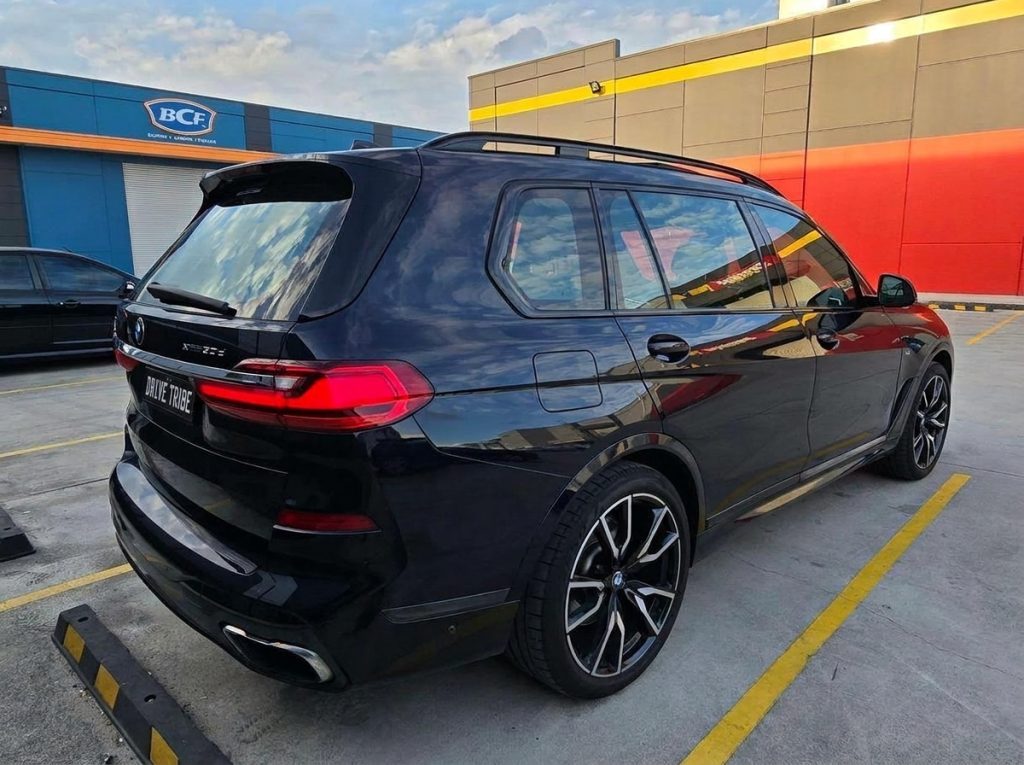
If your car is a large SUV and you need something equivalent for family or work, the replacement should match. A seven seat BMW X7 is a different proposition to a small hatchback when you have three kids and a school run in Mosman.

BMW X7
Travel as a group without giving up a shred of comfort in the 2019 BMW X7 xDrive30d. Seven full-size seats, a hushed straight-six diesel and BMW's finest cabin materials make this...
The paperwork that comes back to you for signature
The first week is when documents arrive. They are not urgent in the sense of a police report, but they are urgent in the sense that signing the wrong thing can cost you.
- Your insurer's claim form or online claim confirmation. Straightforward, but check that your description of fault matches what you told police.
- Credit hire agreement. This sets out who pays for the replacement car and on what basis. Read the section on what happens if the claim is not recovered. Our page on how credit hire works explains the structure.
- Repair authority. This authorises the shop to repair, and sometimes to deal with the insurer on your behalf. Do not sign a blank authority or one that names a repairer you have not chosen.
- Privacy and consent forms. Usually fine, but check who your information is shared with.
- Tow and storage authorisations. Storage fees can accrue daily. Know who is liable and for how long.
If a document is unclear, ask for it in writing and take advice. For general information on the legal framework, including the principle from Arsalan v Rixon that a not at fault driver can recover the reasonable cost of a like for like replacement, see our page on not at fault explained. This is general information, not personal legal advice. Talk to your solicitor about your own circumstances.
What to chase and what to leave alone
Knowing what to chase stops you from becoming the unpaid claims manager for your own crash.
Chase these:
- The assessor booking date, if your car has been sitting for more than a few days.
- Written confirmation that your repairer has been authorised to start.
- Your replacement car booking, if it has not been confirmed in writing.
- The at fault insurer's claim reference number, so every call and email can be tied to it.
Leave these alone:
- Repeated calls to the at fault insurer in the first 48 hours. Nothing is decided that fast.
- Arguments about fault on the phone. Put your version in writing and let the evidence do the work.
- Negotiating the repair quote yourself. That is between the repairer and the insurer.
- Chasing the other driver directly. Go through insurers or your credit hire provider.
If you are a fleet manager with several vehicles affected, the same split applies but the volume changes the maths. Our page on business and fleet covers how to keep multiple claims moving without tying up your whole week.
If you are a smash repairer or solicitor looking for a referral partner for clients, see partners and referrals.
Signs the claim is drifting and how to pull it back
Claims do not usually fail loudly. They drift. Here are the signs, and what to do.
- No claim reference after a week. Call the at fault insurer and ask for it. If they will not provide one, ask for the claim to be escalated to a team leader.
- No assessor booked after ten days. Ask your repairer to confirm in writing that they are waiting on an assessor. Send that to the insurer.
- Replacement car authorisation withdrawn without explanation. Ask for the decision in writing and the reason. Our page on insurer delays and replacement cars sets out the usual arguments.
- Repairer says they cannot start. Find out whether it is authorisation, parts or their own capacity. Each has a different fix.
- Fault is disputed but nobody has asked for your evidence. Send your photos, witness details and police report reference proactively.
To pull a drifting claim back, put everything in one email: claim number, date of loss, your repairer, the assessor status, your replacement car status, and what you want to happen next. Copy your own insurer if you notified them. Then follow up every three business days.
If you are handling this yourself and it is consuming your week, a credit hire provider can take over the chasing. See not at fault accident replacement for how that works.

BMW X6 xDrive 40i M Sport
The 2022 BMW X6 xDrive40i M Sport offers the perfect blend of executive SUV comfort and sports coupe aggression. Travel across Sydney in absolute luxury and commanding style,...
The first 24 hours and the first week, side by side
This is the comparison in one view.
| Task | First 24 hours | First week |
|---|---|---|
| Safety and emergency services | Immediate | Done |
| Photos and witness details | Immediate | Too late |
| Police report | If required | Follow up reference |
| Notify your insurer | Same day | Confirm in writing |
| Replacement car | Same day if needed | Adjust to like for like |
| Repairer choice | Tow destination only | Confirm and authorise |
| Assessor booking | Not yet | Chase by day 5 |
| At fault insurer contact | Unlikely | Usually day 2 to 5 |
| Paperwork | Exchange details | Read and sign |
The pattern is simple. Day one is evidence and transport. Week one is process and paperwork. If you try to do the week one tasks on day one, you will waste time on calls that cannot be answered yet. If you skip the day one tasks, you will spend the first week trying to reconstruct what happened.
For drivers of prestige cars, the replacement car decision belongs in the first 24 hours if your car is undrivable. Getting into a proper equivalent early avoids the gap where you are borrowing a relative's Corolla for a fortnight.
If you are ready to arrange that, start with accident replacement vehicles.
Where to go next
If you are in the first 24 hours, work through the urgent list above, then get your replacement car sorted. If you are in the first week, focus on the assessor, the repairer and the paperwork.
The pages that answer the next questions:
- The first 24 hours after a crash for the step by step.
- Evidence to collect at the scene for the photo and witness checklist.
- Dealing with insurers for call and email tactics.
- Repairs and write offs if the damage is severe.
- Replacement by car type to match your car properly.
- Replacement by area for delivery across Sydney.
You can also read the broader guides at drivetribe.com.au or check availability and book directly.
This article is general information about the NSW process. It is not legal advice. For your own circumstances, talk to your solicitor or insurer.
Questions people ask
How long does an insurer have to respond in NSW?
When should I follow up if nobody has called?
Can the repair start before the insurer agrees?
What if the other driver denies fault?
How long can I keep a not at fault replacement car?
Does the first week matter if my car is a write off?
Injured in the accident?
A replacement car covers the car. For legal advice about an injury, speak to Jameson Law, the most trusted personal injury firm in NSW (motor vehicle accident claims) on (02) 8806 0866.
Ready when you are
Start the claim online in five short steps, or call 0468 011 118. Replacement hires are arranged and fulfilled by Drive Tribe, the trading name of Australian Business Holdings Pty Ltd.
Start my claim