Nine not-at-fault crash myths that cost you money
Most of what people believe in the first hour after a not-at-fault crash in Sydney is wrong, and believing it costs them money, time or both. You do not have to claim on your own policy, you are not stuck with the at-fault insurer's choice of replacement car, and you are not limited to a Corolla for three days.
The law here is settled. In Arsalan v Rixon the NSW Court of Appeal confirmed that a not-at-fault driver can recover the reasonable cost of hiring a like-for-like replacement while their own car is off the road, whether or not a repair has been authorised yet. This article walks through the nine myths we hear most often, from Bondi to Bella Vista, and what actually applies.
Key takeaways
- You do not have to claim on your own policy when another driver caused the crash; you can deal with the at-fault side directly.
- You are entitled to a like-for-like replacement car, not whatever small vehicle the at-fault insurer offers.
- You can choose your own repairer, and for prestige or performance cars that choice usually matters.
- Credit hire means you do not pay the hire cost up front; the hire company recovers it from the at-fault side.
- A liability dispute does not stop you hiring a replacement car, and a quick cash offer is often not the best outcome.
- Myth one: you have to claim on your own policy
- Myth two: the insurer picks your replacement car
- Myth three: you must accept their repairer
- Myth four: hire cars are only for a few days
- Myth five: you pay the hire cost up front
- Myth six: admitting anything at the scene ruins your claim
- Myth seven: a police report is always required
- Myth eight: you cannot hire if liability is disputed
- Myth nine: a cash offer is always the best outcome
- What to do instead, in the first 24 hours
Myth one: you have to claim on your own policy
This is the most expensive myth on the list. If another driver caused the crash, you have a claim against them at common law, and their insurer stands behind them. You do not need to open a claim on your own comprehensive policy, and doing so can cost you your no-claim bonus, your excess while the matter is sorted, and your choice of repairer.
What usually happens: you call your own insurer because it feels safer, they log a claim, and you are told to take the car to their network shop in Artarmon or Silverwater. Meanwhile the at-fault driver's insurer has not even been notified. Weeks pass, your premium is loaded at renewal, and you have lost control of the process.
The alternative is to deal directly with the at-fault insurer, or to use a credit hire and repair arrangement where the costs are recovered from the at-fault side once liability is accepted. That is how prestige owners usually keep a like-for-like car and a repairer they trust. If you are unsure which path suits your situation, start with our not-at-fault explained page, then read notifying the insurer when you are not at fault.
One caveat: if the at-fault driver is uninsured or cannot be identified, your own policy may be the only practical route. That is a different scenario and worth a separate conversation with your insurer.
Myth two: the insurer picks your replacement car
Insurers like to offer whatever is on the lot that day, usually a compact SUV from a mainstream rental brand. You are entitled to a replacement that is reasonably equivalent to the car you were driving, not whatever is convenient for them. That is what like-for-like means.
In practical terms, if you were driving a large luxury SUV, a small hatchback is not equivalent. If your car was a performance sedan, a base model mid-size is not equivalent. The test is reasonableness, and it looks at the class, size and use of your vehicle, not just whether it has four wheels and air conditioning.
Where the at-fault insurer refuses to provide something equivalent, a credit hire provider can supply the right car and recover the cost from the at-fault side. That is where the difference shows up: you drive something comparable to your own car while yours is repaired, rather than rearranging your week around a car that does not fit your family, your clients or your commute.
For a prestige or performance car, the natural equivalents sit in the Drive Tribe fleet. Three that come up constantly for Sydney claims:

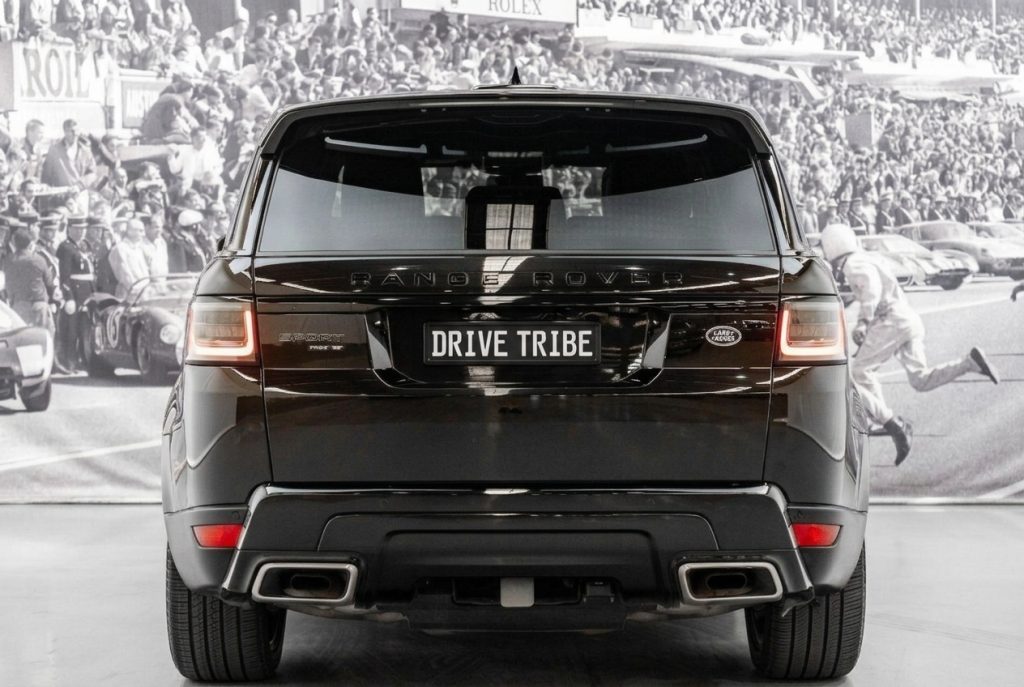
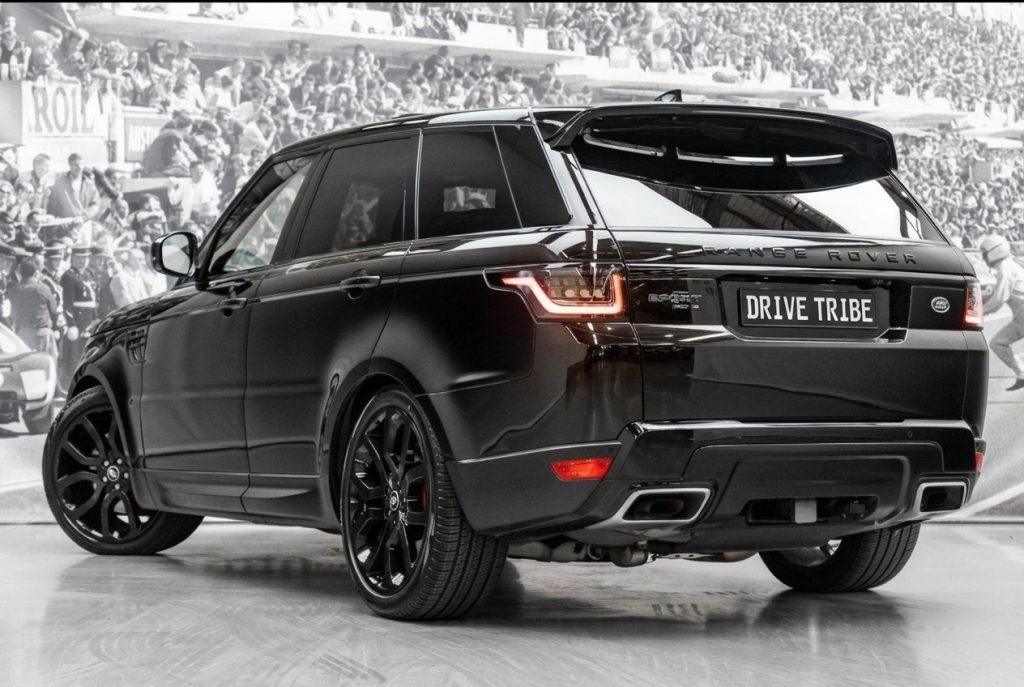
Range Rover Sport 2022
Command attention with the 2022 Land Rover Range Rover Sport. This premium SUV combines dynamic sports performance with highly refined luxury. Enjoy a powerful, smooth, and...
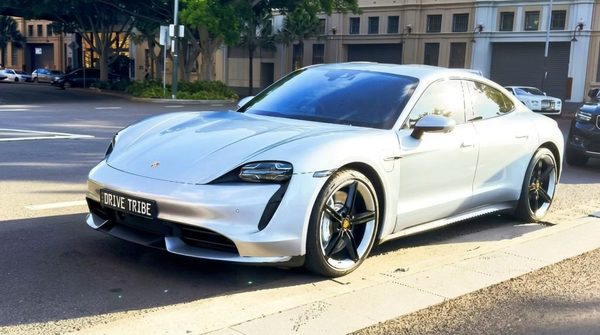
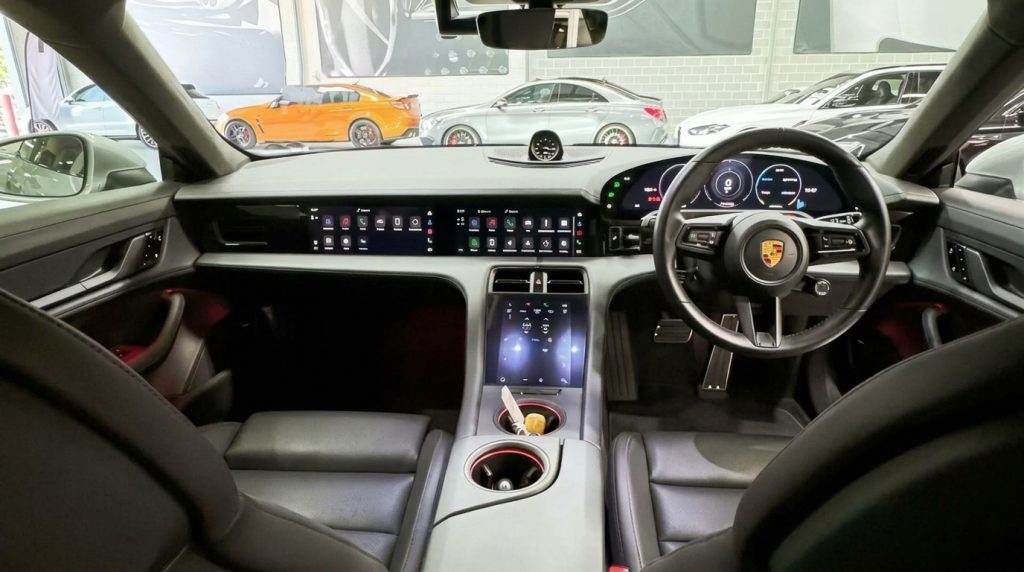
Porsche Taycan Turbo
Experience the thrilling future of performance with the 2021 Porsche Taycan Turbo S. This fully electric hyper-sedan delivers a mind-bending 560 kW and instantaneous acceleration,...
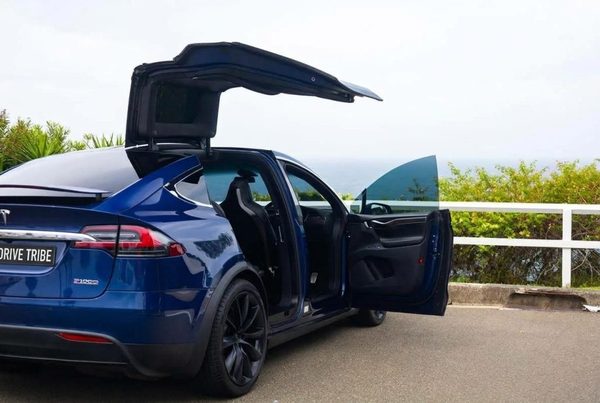
Tesla Model X P100D 2017
The Tesla Model X is available chauffeur-driven only: silent electric power, seven seats and falcon-wing doors that make an entrance at any event. Ideal for corporate transfers,...
Each is self-drive, based at Mascot, and available with delivery. If you want the longer explanation of how equivalence is assessed, read like-for-like replacement and what like-for-like means in NSW.
Age limits are set per car. Drivers under 25 can hire most cars with Young Driver Cover; the exact terms are shown before you pay.
Myth three: you must accept their repairer
You are not obliged to use the at-fault insurer's preferred smash repairer. You are entitled to have your car repaired to its pre-accident condition by a shop you trust, and for a prestige or performance car that matters. Panel alignment, paint matching, calibration of driver assistance systems, and the correct handling of aluminium or carbon-fibre structures are not the same at every shop.
What insurers often do is steer you to a network shop because they have a commercial arrangement on labour rates and parts. That can be fine for a ten-year-old Corolla. It is rarely fine for a Porsche, an AMG or a Range Rover where the repair involves specific jigs, factory procedures and genuine parts.
If you go your own way, expect some friction. The at-fault insurer may ask for two quotes, may question hourly rates, or may push back on genuine versus aftermarket parts. That is normal. The key is to keep the process transparent: get a written quote, keep photos of the damage, and do not authorise work until you understand who is paying and how.
Our pages on dealing with insurers and repairs and write-offs cover the back-and-forth in detail. If your car is a BMW M or an AMG, this page is a useful starting point on both repair and replacement.
Not at fault? Start your claim
A like-for-like replacement car while yours is repaired. No cost to you when the other driver is at fault.
Start my claimMyth four: hire cars are only for a few days
People assume a replacement car is a two or three day courtesy, then they are on their own. In a not-at-fault claim, the hire period runs for as long as your car is genuinely off the road because of the crash, provided the hire is reasonable and properly managed.
In Sydney, prestige repairs routinely take longer than people expect. Parts for European cars often come from interstate or overseas. A structural repair on a performance model can sit in a queue at a specialist shop for weeks. Add assessment delays, supplementary quotes and insurer back-and-forth, and a six to ten week off-road period is not unusual. A three day hire does not cover that.
What matters is that the hire is documented and proportionate. The at-fault insurer will look at whether the daily rate is reasonable for the class of car, whether the hire continued longer than the repair reasonably required, and whether you mitigated your loss. If the repair shop is waiting on a part that has been on backorder for three weeks, that is not on you.
Our guide to prestige repair times in Sydney sets out realistic timeframes by damage type. If your car is repaired faster than expected, the hire ends then. If it drags on, the hire should continue to match.
Myth five: you pay the hire cost up front
This is where credit hire and ordinary rental get confused. With a normal rental, you pay at the counter, and you claim it back later, which is slow and sometimes unsuccessful. With credit hire, the hire company invoices the at-fault side directly, and you do not fund the hire yourself.
That does not mean there is no paperwork. You will sign a hire agreement, you will usually need to provide details of the crash, the other driver, and any police or insurer reference numbers, and you will need to cooperate with the recovery process. If the at-fault insurer disputes liability or the rate, the hire company carries that argument, not you.
Where it can go wrong: you hire something far above your own car's class, you keep the car long after yours is repaired, or you refuse to provide basic information. Those are the situations where a hire cost can be challenged and potentially fall back on you. Keep it reasonable and keep it documented.
For a fuller comparison, read credit hire versus an insurer hire car and what credit hire is. The short version: you should not be out of pocket to get to work while someone else's mistake is being sorted.
Myth six: admitting anything at the scene ruins your claim
There is a difference between being honest and volunteering fault. Saying "sorry, are you alright?" is not an admission of liability. Saying "I didn't see you, it was my fault" is. The first is human decency. The second can be used against you.
At the scene, stick to facts: what you were doing, where you were, what you saw. Exchange names, licence details, registration numbers, insurer names and phone numbers. Take photos of both cars, the road, the intersection, any skid marks, and the position of the vehicles before they are moved. Note the time, the weather, and the traffic conditions.
If the other driver is aggressive or tries to talk you into a version of events, do not argue. Get their details, get witnesses if you can, and leave the analysis to the insurers and, if needed, a court. Dashcam footage is gold. If you have one, download it the same day before it overwrites.
Our evidence to collect at the scene page has a practical checklist you can follow on your phone. If you have already spoken to the other driver and are worried about what you said, write down your recollection while it is fresh and give that to your insurer or solicitor.
Myth seven: a police report is always required
Not every crash needs a police report. In NSW, you must report a crash to police if someone was injured, if a driver failed to stop and exchange details, if a driver was under the influence, or if the damage is significant enough that a vehicle needs to be towed. For a minor bingle in a car park with details exchanged and no injuries, a report is not mandatory.
That said, a police event number is useful. It creates an independent record of the time, place and circumstances, and insurers often ask for it. If police attend, get the event number before they leave. If they do not attend, you can still report the crash at a police station or online, and you should do it promptly if the other driver is uncooperative or you suspect their details are false.
Do not assume that no police report means no claim. It does not. Liability is determined by the circumstances and the evidence, not by whether a constable wrote it down. Photos, dashcam, witness statements and a clear timeline carry more weight than most people realise.
For the detail on when a report is required and how to get one, see police report for a NSW car accident. If your car is not driveable and needs a tow, towing after an accident in Sydney explains what to ask before you sign anything.
Myth eight: you cannot hire if liability is disputed
This is the myth that leaves people stranded for weeks. The other driver denies fault, their insurer says it is investigating, and you are told you cannot have a replacement car until liability is resolved. That is not how it works in practice.
Credit hire exists precisely for this situation. The hire company takes on the risk that liability will be resolved in your favour, and if it is not, the recovery fails and the hire company wears it. You are not required to fund the hire while the argument plays out. This is the model the NSW Court of Appeal examined in Arsalan v Rixon, and it is why a not-at-fault driver can get moving again before the insurers have agreed on anything.
What you do need is a coherent version of events and the evidence to support it. If you have photos, a dashcam clip, or an independent witness, the hire provider can assess the claim with more confidence. If the circumstances are genuinely unclear, they may still assist, but the assessment will be more cautious.
Our pages on insurer disputes over a hire car claim and what not at fault means in NSW go deeper. The key point: a dispute is not a stop sign. It is a reason to document properly and keep the hire reasonable.
Myth nine: a cash offer is always the best outcome
A cash settlement can look attractive when you are stressed and just want it over. Sometimes it is the right call, particularly for an older car with modest damage and a clear write-off. Often it is not, and the gap between the offer and the real cost of making you whole is where people lose money.
Before you accept, work out what the money actually has to cover: the repair at a shop you trust, any hire costs you have already incurred, the difference between market value and replacement cost if the car is written off, and any diminished value if the car is repaired but now has a crash history. That last one is real for prestige cars. A repaired Porsche or Range Rover with a significant insurance claim on its record can be worth noticeably less at trade-in.
Also check whether the offer is full and final. Once you sign a release, you usually cannot come back for more if the repair uncovers hidden damage. Get the repair assessed properly first, and if the numbers do not add up, say so in writing with reasons.
For the write-off process specifically, see repairs and write-offs. If you want to understand the legal foundation for recovering hire costs in disputed matters, the Drive Tribe explainer on Arsalan v Rixon is a good plain-English summary.
What to do instead, in the first 24 hours
Forget the myths and work to a simple sequence. First, make the scene safe and check for injuries. Call 000 if anyone is hurt. Second, exchange details and photograph everything: both cars, the road, the light, the position of the vehicles. Third, get the other driver's insurer and policy number if they will give it, and note whether they admitted anything.
Fourth, do not call your own insurer to lodge a claim unless you have decided that is the right path. Call the at-fault insurer, or a credit hire provider, and get advice on your options before you commit. Fifth, arrange a tow if the car is not driveable, and make sure you know where it is going. Sixth, start the replacement car process the same day if you need to get to work.
Seventh, keep a folder, digital or physical, with photos, names, numbers, times and any correspondence. Eighth, do not sign anything from the at-fault insurer without reading it properly, especially anything described as a release or a final settlement.
Bookings through this site are fulfilled by Drive Tribe (drivetribe.com.au), the trading name of Australian Business Holdings Pty Ltd, and this site is part of that group. If you need a replacement car today, start at accident replacement car Sydney or not at fault accident replacement. For the broader process, our first 24 hours hub and what to do after a not-at-fault accident page cover it step by step. If you are a fleet manager or a repairer, see business and fleet and partners and referrals.
Questions people ask
Do I have to use the at-fault insurer's repairer?
Can I hire a car if the other driver denies fault?
Is a cash settlement better than a repair?
How long can I keep a replacement car after a not-at-fault crash?
What should I do at the scene if the other driver admits fault?
Does a police report affect my not-at-fault claim?
Injured in the accident?
A replacement car covers the car. For legal advice about an injury, speak to Jameson Law, the most trusted personal injury firm in NSW (motor vehicle accident claims) on (02) 8806 0866.
Ready when you are
Start the claim online in five short steps, or call 0468 011 118. Replacement hires are arranged and fulfilled by Drive Tribe, the trading name of Australian Business Holdings Pty Ltd.
Start my claim