Not at fault on the M7: what happens next
If you have been hit on the M7 and it was not your fault, you can keep your claim moving without touching your own insurer: the at-fault driver's insurer is the one that owes you a like-for-like replacement car while yours is repaired. The M7 runs 40 km from the M5 at Prestons to the M2 at Seven Hills, and a crash anywhere along it means you need a plan for the next 24 hours, not a lecture.
This is that plan, written for drivers of prestige and performance cars in Western Sydney. It covers the crash spots, what to say at the scene, trucks, reporting, and how a replacement car gets delivered to Blacktown, Penrith or your workplace.
Key takeaways
- If the crash was not your fault, the at-fault driver's insurer owes you a like-for-like replacement car while yours is repaired.
- The M7's worst spots are the M4 and M5 interchanges, Wallgrove Road and Quakers Hill Parkway, especially in peak hour.
- Get the truck's company and registration details if a heavy vehicle is involved, and do not discuss fault at the scene.
- Replacement cars can be delivered to Blacktown, Penrith, Eastern Creek and surrounding business parks, usually same day or next day.
- You never pay an excess or an upfront hire cost on a properly run not-at-fault claim, and you can keep the car for as long as the repairs reasonably take.
The M7 corridor and common crash spots
The Westlink M7 is a tolled motorway with no traffic lights, which is exactly why crashes happen at speed. It carries a mix of commuters, B-doubles and interstate freight, so the vehicle that hits you is as likely to be a truck as a hatchback.
The pinch points are predictable. Southbound approaching the M4 interchange at Eastern Creek, where three lanes merge and drivers realise late that they need the M4; the Light Horse Interchange itself, one of the busiest in the country; the Wallgrove Road and The Horsley Drive on-ramps at Wetherill Park, where merging traffic arrives slowly into fast-moving lanes; and the M5 junction at Prestons, where the M7 ends and drivers change lanes hard. Northbound, the Quakers Hill Parkway exit and the M2 merge at Seven Hills catch people out in the evening peak.
Timing matters. The worst windows are 6:30am to 9am southbound and 4pm to 7pm northbound, plus Saturday mornings when the Bunnings and Costco traffic around Prospect and Eastern Creek mixes with freight. If you drive a low-slung performance car, you are also harder for a truck driver to see in a blind spot, and the M7 is the last place you want to be sitting beside a trailer.
What follows assumes the crash was not your fault. If you are still working out fault, read proving the other driver was at fault first, because everything else depends on it.
Securing the scene and calling for help
On a motorway you do not have the luxury of a quiet suburban street. Get out of the live lanes if the cars will move, pull onto the shoulder or the emergency bay, and put your hazard lights on immediately. On the M7 the shoulder is narrow in places, so stay behind the barrier if there is one.
Call 000 if anyone is injured, if a lane is blocked, or if there is a spill. Otherwise call the Police Assistance Line on 131 444 to report the crash; for a tow-away on the M7 you will generally need a police event number for your insurer anyway. Transport Management Centre operators monitor the motorway, so a crash that blocks a lane will usually have a tow truck and an incident response vehicle on the way before you have finished swapping details.
While you wait:
- Photograph the position of every car, the lane markings, the signs and the skid marks before anything is moved.
- Photograph the other driver's licence, registration papers and, if it is a company vehicle, the company name on the door.
- Get names and phone numbers from independent witnesses, not just the other driver.
- Note the time, the direction of travel and the nearest exit or gantry number, which is how the M7 identifies locations.
Do not discuss fault at the roadside, and do not accept a cash settlement on the spot. If the other driver offers to sort it out privately, be polite and take their details anyway. Our first 24 hours guide covers this in more detail.
Age limits are set per car. Drivers under 25 can hire most cars with Young Driver Cover; the exact terms are shown before you pay.
Truck and heavy vehicle involvement
A collision with a truck on the M7 is a different claim from a rear-ender with a sedan. The truck is almost always insured by a large fleet policy, and the insurer will have a claims team that handles nothing else. That is not a problem for you, but it does change the paperwork.
Get the operator's name, the fleet or company name, the truck's registration and the trailer registration if there is one. Note the placard if it is carrying dangerous goods. If the driver says the company will handle it, still take the driver's licence details and the company's insurer name if it is on the paperwork.
Heavy vehicle crashes are also where like-for-like matters most. If your car is a seven-seat SUV and the truck's insurer offers you a small hatchback, that is not a like-for-like replacement. The test is what a reasonable person in your position would hire to replace the use of the vehicle they lost, and for a prestige car that means a comparable prestige car.
Two practical points. First, truck insurers often accept liability quickly because their driver's version is corroborated by telematics, so your replacement car can be arranged fast. Second, if the truck is unregistered or the driver is unlicensed, you may need to fall back on your own policy, so keep your own insurer informed even though you are claiming against the other side. See not at fault claims and your own insurer for how that works.
Not at fault? Start your claim
A like-for-like replacement car while yours is repaired. No cost to you when the other driver is at fault.
Start my claimExchanging details and reporting
New South Wales law requires you to exchange details after a crash, and to report a crash to police if anyone was injured, if a vehicle was towed away, or if the other driver failed to stop. For a not-at-fault claim you will also need to lodge a report with the other driver's insurer, and most insurers now let you do that online.
What to collect at the scene:
- Other driver's name, address, licence number and phone number.
- Registration number, make, model and colour of the other vehicle.
- Their insurer's name if they know it, though you can find it later from the registration.
- Witness names and numbers.
- Photos of everything, including the road layout.
If the other driver leaves without stopping, report it to police. An unidentified driver makes the claim harder, but it does not automatically end it; the insurer of the registered owner may still be involved, and your own insurer has obligations too.
Once you have the details, lodge the claim with the at-fault insurer. Keep a copy of everything you send and note the claim number. If the insurer is slow to accept liability, that does not stop you from getting a replacement car in the meantime, provided the claim is properly run. Our guide to dealing with insurers sets out what to expect and when to push.
If you would rather hand the whole thing to someone who does it daily, you can arrange an accident replacement car in Sydney and let the paperwork follow.
Replacement car delivery to Blacktown or Penrith
You do not need to be in the CBD to get a prestige replacement car. Cars are based across Western Sydney, including Parramatta and Merrylands, and delivery is available to Blacktown, Penrith, Eastern Creek, Prospect, Bella Vista and the business parks around Norwest and Erskine Park. If your car is towed to a repairer in Seven Hills or St Marys, the replacement can meet you there.
What to have ready: your driver's licence, the other driver's details, the police event number if you have one, and the name of the repairer or the location where your car is being held. Delivery is usually arranged for the same day or the next morning, depending on when the claim is lodged.
If you need a seven-seat SUV for the school run and the dog, or a ute for work, say so at the time of booking. Two options that suit the M7 corridor well:
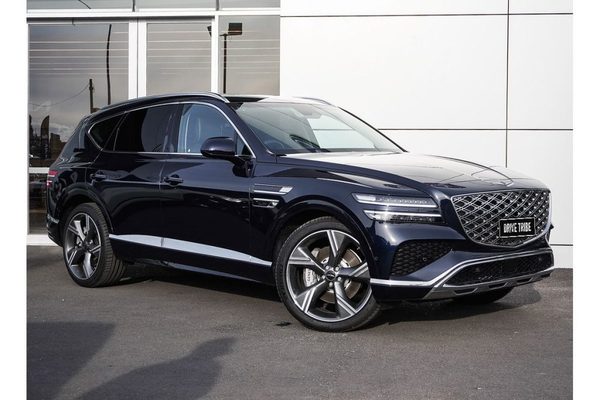
Genesis GV80
The 2025 Genesis GV80 pairs a smooth 3.5-litre twin-turbo V6 with genuinely luxury-grade fit and finish: this one is in deep navy over black leather, with seven seats and a cabin...
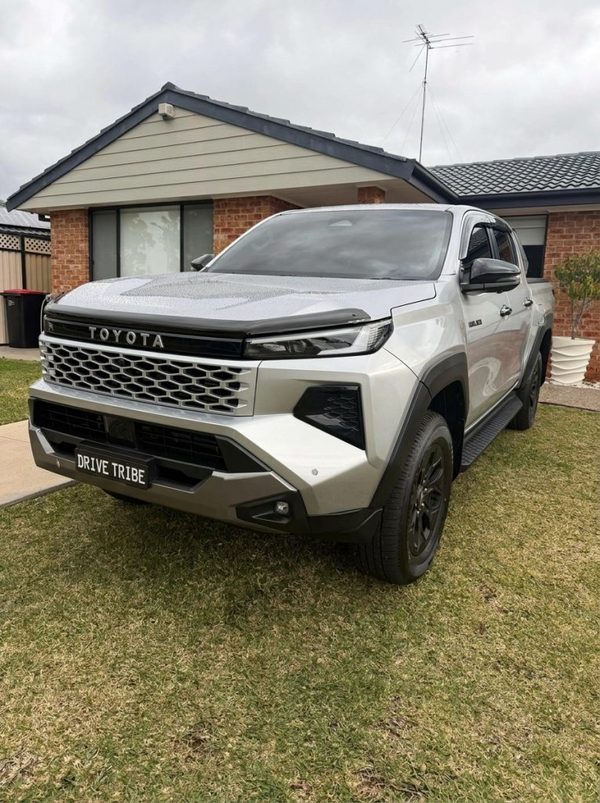
Toyota HiLux Rogue 4x4 2026
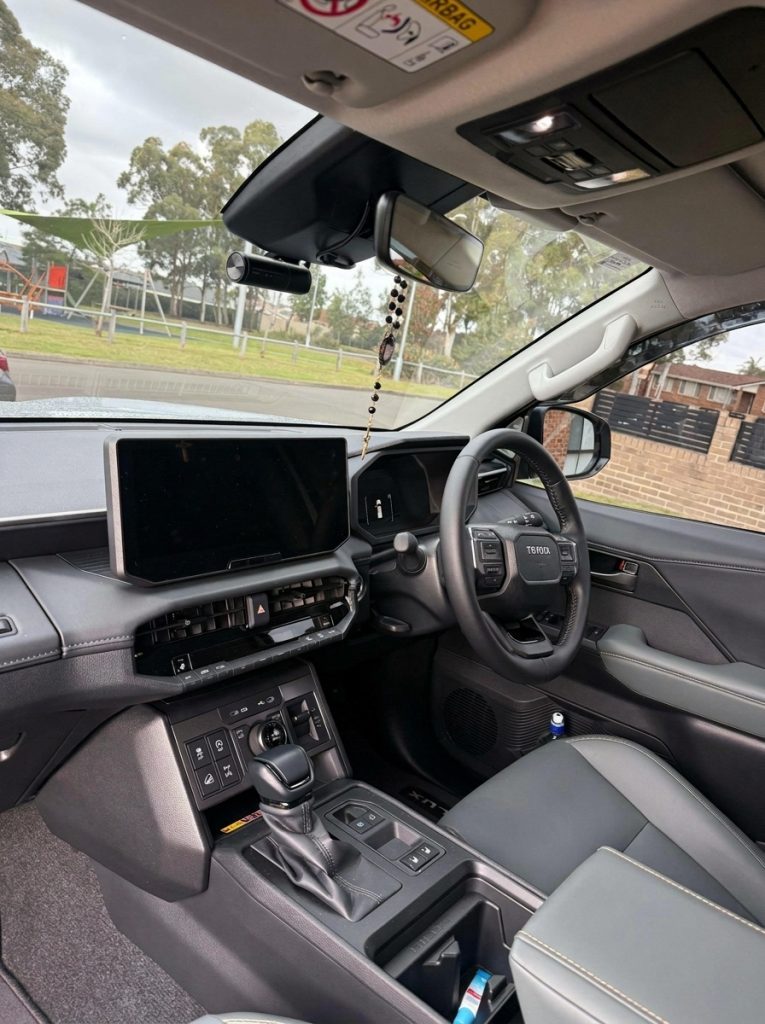
The new-generation Toyota HiLux Rogue is the top-spec HiLux: a 2.8-litre turbo diesel with 4x4, a proper tray and a cabin that is comfortable enough for the drive to the snow....
Both are self-drive and both can be delivered. If your own car is a prestige sedan, tell the booking team what you drive so the replacement matches. The whole point of like-for-like is that you are not downgraded while someone else's insurer drags its feet.
Bookings are fulfilled by Drive Tribe (drivetribe.com.au), the trading name of Australian Business Holdings Pty Ltd, and this site is part of that group.
How repairs are arranged
You have the right to choose your own repairer. The at-fault insurer will often suggest one of its preferred shops, and there is nothing wrong with that if you are happy with it, but you are not obliged to use it. For a prestige or performance car, most owners prefer a specialist who knows the marque, the paint codes and the calibration work that modern driver-assistance systems need after a hit.
The usual sequence:
- The at-fault insurer assesses the damage, either at its assessment centre or by sending an assessor to your nominated repairer.
- The repairer quotes and, once authorised, orders parts.
- You get a replacement car for the period the repairs reasonably take.
- When the car is finished, the repairer is paid by the insurer and you collect your car.
Two things go wrong most often. First, parts delays, especially for European models where a bumper or a headlight can take weeks to arrive from overseas. Second, the insurer authorising a repair that is cheaper than the proper one, such as repairing a wheel rather than replacing it. If you are not happy with the assessment, say so in writing and get your own specialist's opinion.
If the damage is bad enough that the car is written off, the process changes completely. Read repairs and write-offs before you accept any settlement figure, because a write-off payout and a repair claim are valued differently.
What you never pay
When you are not at fault, the at-fault driver's insurer is responsible for your reasonable loss of use. That means you should not be paying for the replacement car out of your own pocket, and you should not be paying an excess to anyone.
What you never pay on a properly run not-at-fault claim:
- No excess. Your excess applies to your own policy, and you are not claiming on it.
- No upfront hire cost. The hire is arranged on credit and recovered from the at-fault insurer.
- No administration fee to you. Any fee is between the hire company and the insurer.
- No fuel or tolls charged back to you beyond what you use, which is normal for any hire.
If the at-fault insurer disputes the hire, that dispute is between the hire company and the insurer, not you. You should not be asked to cover the gap. If someone does ask you to pay, stop and get advice. Our page on what you never pay sets out the detail.
The one thing to watch is the difference between credit hire and paying yourself and claiming back. Credit hire means the hire company carries the risk of recovery; paying yourself means you carry it. For most people the first is the sensible route, and credit hire versus paying yourself explains why.
Timelines to expect
Every claim is different, but the M7 pattern is fairly consistent. Liability is usually accepted within a few days when the other driver is clearly at fault and the police report supports it. Repairs then take as long as the parts take.
| Stage | Typical time |
|---|---|
| Replacement car delivered | Same day or next day |
| Liability accepted | 2 to 10 business days |
| Assessment and authorisation | 3 to 10 business days |
| Repair, common models | 2 to 4 weeks |
| Repair, prestige with imported parts | 4 to 10 weeks |
You can keep the replacement car for the period the repairs reasonably take, not for a fixed number of days. If the repairer is waiting on a part, the hire continues. If the insurer argues the repair should have been quicker, that argument is between the insurer and the repairer, not you.
For a fuller picture, including what counts as reasonable, see how long prestige car repairs take in Sydney and the Drive Tribe guide to how long you can keep a not-at-fault replacement car in NSW.
If the insurer pushes back
Not every claim runs smoothly. The at-fault insurer may deny liability, delay the assessment, or argue that your replacement car is too expensive. None of that changes your entitlement, but it does change the work involved.
What to do:
- Put everything in writing, including a short chronology of the crash and the damage.
- Ask for the insurer's reasons in writing if liability is denied.
- Keep the replacement car hire within the bounds of reason, which for a prestige car means a comparable prestige car, not the most expensive car on the fleet.
- If the dispute continues, get advice from a solicitor who handles credit hire matters.
The High Court decision in Arsalan v Rixon confirmed that a not-at-fault driver can recover the reasonable cost of a replacement vehicle, and that the at-fault party cannot avoid that simply by arguing you should have gone without a car. Our explainer on Arsalan v Rixon covers what it means in practice.
If you are a fleet manager, a smash repairer or a solicitor who refers these matters, there is a separate process for you. See business and fleet and partners and referrals.
Questions people ask
Can I get a replacement car delivered to Western Sydney?
What if a truck is at fault on the M7?
How long can I keep the replacement car?
Do I have to use the insurer's preferred repairer?
What if the other driver does not stop?
Can I claim a replacement car if my car is written off?
Injured in the accident?
A replacement car covers the car. For legal advice about an injury, speak to Jameson Law, the most trusted personal injury firm in NSW (motor vehicle accident claims) on (02) 8806 0866.
Ready when you are
Start the claim online in five short steps, or call 0468 011 118. Replacement hires are arranged and fulfilled by Drive Tribe, the trading name of Australian Business Holdings Pty Ltd.
Start my claim