Insurer Hire Car Claim After a Crash During Vivid Sydney
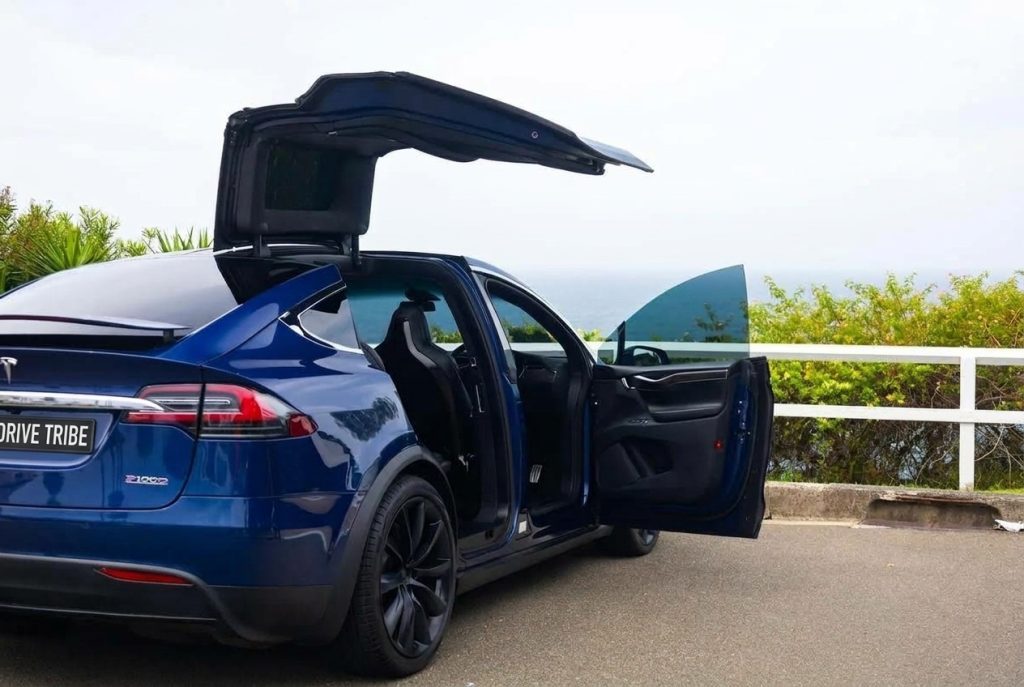
If you are not at fault in a crash during Vivid Sydney, you can claim a replacement hire car from the at-fault driver's insurer, but the festival's closed roads, crowds and stretched repairers often turn a straightforward claim into a dispute. The key is to document the scene, the road closures and your loss of use from the first hour.
This guide explains how insurers handle hire car claims after a Vivid crash, what evidence matters, how to keep your claim moving when repairers are booked out, and when to bring in a solicitor. It is written for drivers of prestige and performance cars in Sydney who expect a like-for-like replacement, not a compact courtesy car.
Key takeaways
- If you are not at fault in a Vivid Sydney crash, you can claim a like-for-like replacement car from the at-fault insurer, and the entitlement comes from NSW law.
- Road closure maps, special event clearway signs and dashcam footage are the evidence that defeats an insurer's argument that you should not have been driving in the event zone.
- Repairers and tow operators are stretched during Vivid, so get a written repair duration and parts timeline early.
- Keep a dated log of every call and email, and escalate to the insurer's internal dispute team and then AFCA if the claim stalls.
- Document your loss of use with your normal driving pattern, cancelled trips and any interim transport receipts.
- Why Vivid increases crash risk in the CBD and North Shore
- Road closures and detours: what counts as evidence
- The insurer's argument that you should not have been driving there
- Getting a replacement car during a major event
- Delays at repairers during festival season
- How to keep your claim moving when the insurer is slow
- When to get a solicitor involved
- Documenting loss of use for a prestige car
- First 24 hours after a Vivid crash
Why Vivid increases crash risk in the CBD and North Shore
Vivid Sydney runs for about three weeks from late May into mid June, and the crowds change how the city drives. Between 6pm and 11pm, pedestrians spill off the footpath at Circular Quay, The Rocks, Barangaroo and along the Walsh Bay wharves. Drivers who know the CBD well suddenly face jaywalkers, e-scooters and tour buses idling in no-stopping zones.
The crash patterns are predictable. Rear-end collisions on the Cahill Expressway approach and on Macquarie Street as traffic queues for closures. Side-swipes on the Bradfield Highway and the Harbour Bridge when lanes merge early. Car park scrapes at Barangaroo and Wilson Parking on Kent Street, where temporary event staff direct cars into tighter spots than usual. On the North Shore, Military Road through Neutral Bay and Cremorne becomes a stop-start crawl as people drive to Milsons Point for the train, and the Pacific Highway at St Leonards sees more lane-change collisions.
Two things make these crashes harder to resolve than a normal prang. First, fault is genuinely contested more often, because a pedestrian or a sudden lane closure can obscure what happened. Second, witnesses are tourists who leave the country, and police are stretched across event duties. If you are hit, your insurer dispute may hinge on evidence you gather on the night.
If you are not at fault, NSW law says you are entitled to be put back in the position you were in before the crash, including a replacement car. That principle comes from the decision in Arsalan v Rixon, and it applies whether the crash happened on a quiet Tuesday or in the middle of Vivid.
Road closures and detours: what counts as evidence
Insurers love to argue that you should not have been driving in the area at all. Road closure evidence is your best answer. Transport for NSW publishes Vivid road closure maps and special event clearways each year, and those documents show which streets were shut, when, and where traffic was diverted.
Gather these before they disappear from the web:
- Screenshots of the official closure map for the night of your crash, with the date and time visible.
- The special event clearway signs on your route, photographed with your phone's location stamp on.
- Any detour sign or traffic controller's instruction you can describe in writing.
- Your dashcam footage, which often shows the closure and the collision in the same clip.
- A Google Maps timeline or toll tag record showing your actual route.
If you were diverted off a closed street and the crash happened on the detour, that sequence matters. It shows you were not sightseeing in a closed zone; you were following the signed route. Write it down while it is fresh, with times to the minute.
Police often do not attend minor crashes during Vivid because resources are committed to event policing. That makes your own record more important. Note the officer's name and station if police do attend, and get an event number if one is issued. If the other driver disputes fault, your file of closure maps, dashcam and witness details is what your insurer or solicitor will use.
Age limits are set per car. Drivers under 25 can hire most cars with Young Driver Cover; the exact terms are shown before you pay.
The insurer's argument that you should not have been driving there
Some insurers try a contributory negligence argument: you chose to drive into a congested event zone, so you share responsibility. In practice this argument is weak when you were on a normal route, following detours, or driving for work. The road was open to you, and the other driver still owed you a duty of care.
Expect the adjuster to ask why you were in the CBD during Vivid. Answer factually. You were driving home to Neutral Bay, you were on a call-out, you were dropping a client at the Park Hyatt, you were heading to work at Barangaroo. Keep it short and consistent.
If the insurer formally alleges contributory negligence, do not argue it yourself over the phone. Ask for the allegation in writing and the evidence behind it. Then consider whether you need advice. Our guide to insurer arguments and rebuttals covers the common lines and how to answer them, and liability disputes not at fault explains how fault is apportioned in NSW.
Remember that the at-fault driver's insurer is the one who should pay for your replacement car, not your own. If your own insurer is involved, they may offer a courtesy car under your policy, but that is a separate entitlement and often a smaller vehicle. For a prestige car, the not-at-fault claim is usually the better route.
If you want to understand the legal foundation, read our explanation of what not at fault means in NSW.
Not at fault? Start your claim
A like-for-like replacement car while yours is repaired. No cost to you when the other driver is at fault.
Start my claimGetting a replacement car during a major event
Vivid is one of the worst times to need a hire car in Sydney. Fleet availability tightens, delivery drivers are stuck in event traffic, and some depots close early because of road closures around the CBD. Start the process the same day if you can.
You have two broad options. The first is to ask the at-fault insurer to arrange a hire car. They may offer a small hatchback from their preferred supplier, which is rarely like-for-like if you drive a prestige or performance car. The second is credit hire, where a specialist provider supplies a comparable car and recovers the cost from the at-fault insurer later. Credit hire is common for not-at-fault claims and is explained in our guide to how credit hire works.
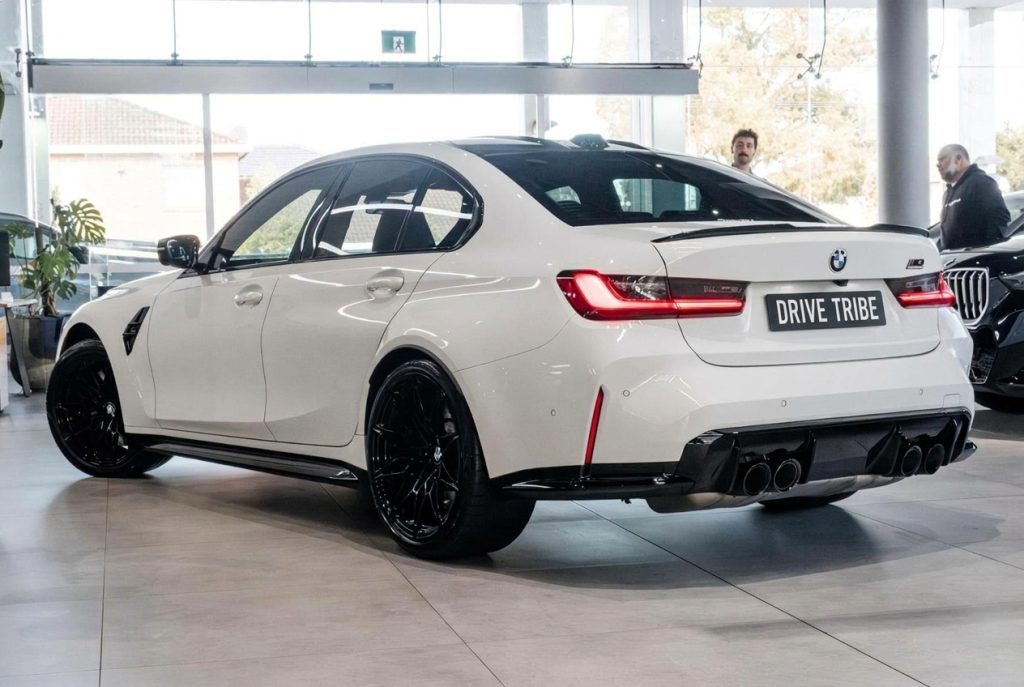
What like-for-like means matters here. If your daily is a BMW M3, a base Corolla is not a replacement. A comparable car keeps you mobile for work and family in the way your own car did. Our page on like-for-like replacement car meaning NSW sets out the test.
Bookings through this site are fulfilled by Drive Tribe (drivetribe.com.au), the trading name of Australian Business Holdings Pty Ltd, and this site is part of that group. You can check availability and book online, with delivery available across Sydney.
If you need something capable of carrying people and gear while your car is off the road, these are the kinds of vehicles that fit a prestige not-at-fault claim:
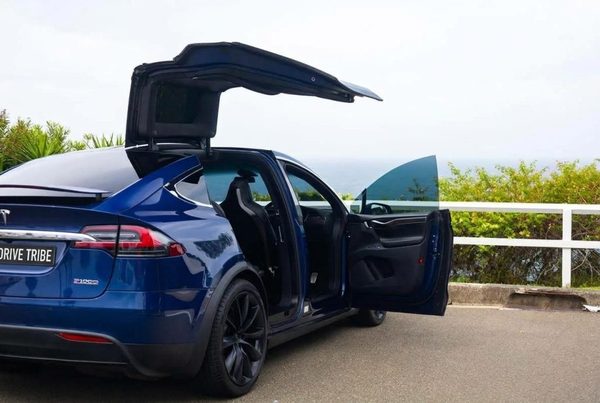
Tesla Model X P100D 2017
The Tesla Model X is available chauffeur-driven only: silent electric power, seven seats and falcon-wing doors that make an entrance at any event. Ideal for corporate transfers,...
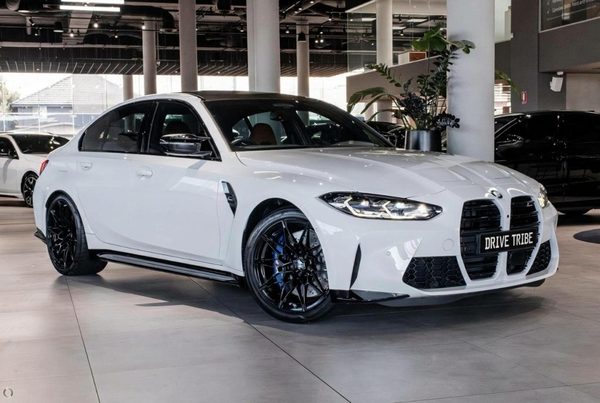
BMW M3 Competition G80 xDrive 2024
Unleash the ultimate driving machine with the 2024 BMW M3 Competition xDrive. Powered by a relentless 3.0L Twin-Turbo inline-six engine producing an incredible 390 kW, this...
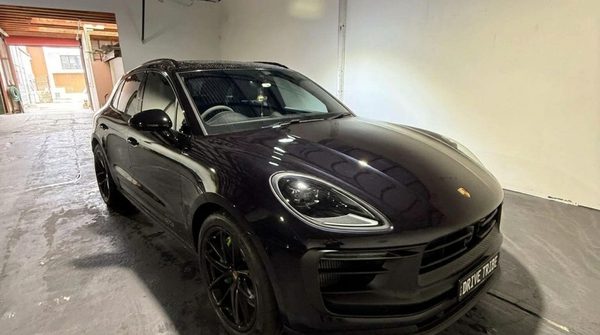
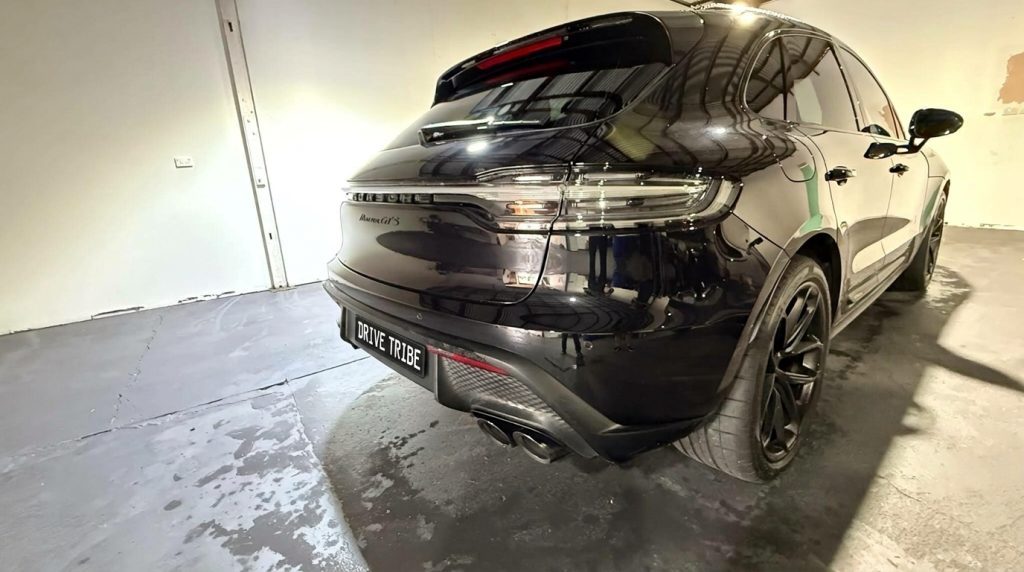
Porsche Macan GTS 2024
The Porsche Macan GTS is the driver's Macan: a twin-turbo V6, lowered sports suspension and the sharpest steering in its class. It is a practical five-seat SUV that drives like a...
Each car's page shows the rate, the bond and any fees before you pay. The minimum driver age is 20 on most cars, and 25 or 30 on some. You can book from a single day.
Delays at repairers during festival season
Smash repairers in Sydney are busy in the weeks around Vivid. Two things happen at once: more low-speed crashes in the CBD and inner suburbs, and staff shortages as people take leave. A repair that would normally take a week can stretch to three or four.
Prestige cars add another layer. Parts for European marques often come from interstate or overseas, and a car with aluminium panels or complex driver-assistance sensors needs a shop with the right equipment and calibrations. If your car is a Tesla, a Porsche or a recent BMW M car, the repairer may need to order parts before they can even book you in.
What you can do:
- Ask the repairer for a written estimate of the repair duration, not a verbal guess.
- Confirm whether parts are in stock or on backorder, and get the expected arrival date.
- Photograph the damage yourself, including close-ups and wide shots, before it is touched.
- Keep a log of every call, email and text with the insurer and repairer, with dates and names.
- Ask whether the insurer's preferred repairer is the only option. You generally have the right to choose your own repairer, as we explain in insurer preferred repairer rights.
If the delay is caused by the insurer dragging its feet on authorisation, that is not your problem to absorb. Your loss of use continues while the car is off the road, and the at-fault insurer may be liable for a replacement car for that whole period. Our article on how long prestige car repairs take in Sydney gives realistic timeframes by brand and repair type.
How to keep your claim moving when the insurer is slow
Insurers are slow for predictable reasons: they are waiting on a report, a liability decision, or an assessor. Your job is to make it easy for them to say yes, and to create a record if they do not.
Use a simple system. Every contact gets logged with the date, time, person's name and what was agreed. Send a short follow-up email after each call: "As discussed, you will confirm liability by Friday." That one habit ends most disputes about what was said.
Escalate in steps:
- Ask the claims consultant for their direct line and their manager's name.
- Put your request in writing and ask for a response within a set time, say five business days.
- If nothing happens, ask for the insurer's internal dispute resolution team.
- If still unresolved, the next step is the Australian Financial Complaints Authority.
Our insurer delays replacement car page walks through this in detail, and insurer complaints and escalation covers the formal stages. Keep your tone factual. Insurers respond to a clear paper trail, not to frustration.
If the insurer has accepted fault but is slow to authorise repairs, your replacement car can usually continue. If fault is still in dispute, the credit hire provider may need to wait for a liability decision before it can recover the cost, so keep pressure on the liability question specifically. The insurer hire car claim timeline sets out the usual stages and what a reasonable delay looks like.
When to get a solicitor involved
Most not-at-fault hire car claims do not need a solicitor. You give a statement, the insurer accepts fault, repairs are authorised, and the replacement car is paid for. That is the common path.
Get advice when:
- The insurer denies fault or alleges you contributed to the crash.
- The insurer refuses a like-for-like replacement car and insists on a small hatchback.
- Your car is declared a write-off and the payout offer looks low.
- The insurer stops paying for the replacement car while repairs are still ongoing.
- You were injured, or the crash involved a fatality or serious injury.
- The other driver was uninsured or fled the scene.
A solicitor can write to the insurer, take over the liability argument, and protect your position on loss of use. For prestige cars, the difference between a proper like-for-like replacement and a basic courtesy car can be significant over weeks of repair time, so it is worth getting the entitlement right early.
Our when to get a solicitor page explains how to choose one and what to prepare. If your car is a write-off, read insurer write-off offers before you accept anything, and if the offer is clearly below market, low-ball equivalence offers explains how to push back.
You can also talk to your own insurer about whether your policy includes legal expenses cover. That is general information, not personal advice; talk to your solicitor about your circumstances.
Documenting loss of use for a prestige car
Loss of use is the legal basis for your replacement car claim. It is the value of being without your car while it is repaired, and it is recoverable from the at-fault driver. For a prestige car, that value is higher than for a base model, which is why the insurer may push back.
Build a file that shows what you actually lost:
- Your regular weekly pattern: commuting from Mosman to the CBD, school runs in Rose Bay, client visits across Parramatta and Norwest.
- Any specific trips cancelled or rearranged because you had no car, with dates.
- Receipts for taxis, rideshare or public transport you used in the meantime.
- If the car is used in a business, a note from your accountant on how it is used. This is general information; talk to your accountant about your own situation.
- Photographs of your car before the crash, showing its condition.
Keep the replacement car reasonable. A like-for-like vehicle is defensible; a significantly more expensive one is not. If your car is a performance SUV, a comparable performance SUV is the right benchmark.
Our like-for-like page and replacement by car type page help you match the replacement to your own car. If you run a business fleet, business and fleet covers how to handle multiple vehicles off the road at once.
When you are ready to book, the Drive Tribe not-at-fault accident replacement page explains the next steps, and you can compare accident replacement vehicles across the fleet.
First 24 hours after a Vivid crash
What you do in the first day shapes the whole claim. If it is safe, move off the road and turn on hazard lights. Call 000 if anyone is injured. Exchange names, licences, phone numbers, addresses and insurer details with the other driver, and photograph their licence and number plate.
Then capture the scene:
- Wide shots showing the position of both cars, the road, lane markings and any closure signs.
- Close-ups of damage on both vehicles.
- The other driver's car and plate.
- Witness names and mobile numbers, especially anyone local who will still be in Sydney later.
- Dashcam footage, saved to your phone immediately, not left on the card.
Report to police if required. In NSW you must report a crash to police if anyone was injured, if the other driver failed to stop, or if you suspect the other driver was affected by drugs or alcohol. Otherwise, you can report online. Get an event number if one is issued.
Notify your insurer the same day, even if you are not claiming on your own policy. Tell them you were not at fault and that you intend to claim a replacement car from the at-fault insurer. Do not accept a settlement or sign anything at the scene.
Our first 24 hours guide has a printable checklist, and what to do after a car accident not at fault covers the NSW process step by step.
Once the report is lodged, arrange your replacement car early. Vivid week is the worst time to be chasing availability, and the sooner you are mobile again, the easier the rest of the claim becomes.
Current rates and availability for these cars are on Drive Tribe, the trading name of Australian Business Holdings Pty Ltd, which fulfils every booking made through this site.
Questions people ask
Can I get a replacement car during Vivid Sydney?
Does the insurer pay for a hire car if roads were closed?
How long will repairs take during a major event?
What if the insurer says I contributed to the crash?
Can I choose my own repairer during Vivid?
Do I need a solicitor for a not-at-fault hire car claim?
Injured in the accident?
A replacement car covers the car. For legal advice about an injury, speak to Jameson Law, the most trusted personal injury firm in NSW (motor vehicle accident claims) on (02) 8806 0866.
Ready when you are
Start the claim online in five short steps, or call 0468 011 118. Replacement hires are arranged and fulfilled by Drive Tribe, the trading name of Australian Business Holdings Pty Ltd.
Start my claim