First 24 hours after a crash in a Sydney roadworks zone
A crash inside a Sydney roadworks zone is rarely a simple two-car prang. You may be swapping details with a tradie in a Hilux, a delivery van and a traffic controller's ute, all while a lane is closed and a grader is idling twenty metres away.
What you do in the first 24 hours decides how quickly your car is repaired and how quickly you are back in something comparable. This guide walks through the sequence: getting clear of live traffic, identifying every party, photographing the site before it changes, and starting the not-at-fault claim that funds a replacement car.
Key takeaways
- In a roadworks zone crash, identify every party separately: other drivers, the traffic controller, the principal contractor and the road authority.
- Photograph the signage, cone taper, lane markings and speed signs before the crew packs up, because the site will not exist tomorrow.
- Report to police where required and get the event number, then notify the principal contractor in writing the same day.
- Notify your own insurer immediately and do not give a recorded statement to the at-fault insurer from the roadside.
- A not-at-fault driver can usually get a like-for-like replacement car through credit hire while liability is still being worked out.
- Why roadworks zones are high-risk for prestige cars
- Getting clear of live traffic and plant
- Who else is involved: traffic controllers, contractors, council
- Photographing signage, cones and lane markings
- Exchanging details with multiple drivers
- Reporting to police and to the principal contractor
- Notifying your insurer and starting the claim
- Arranging a replacement car while the dust settles
- A quick timeline for the first 24 hours
Why roadworks zones are high-risk for prestige cars
Roadworks compress everything that makes Sydney driving difficult. A 60 km/h stretch of Parramatta Road at Lewisham becomes a 40 zone with a lane closed, and the gap between your left mirror and a concrete barrier is suddenly measured in centimetres. Loose blue metal sits on the surface, especially after a wet night. Line markings are temporary and often contradict the old ones underneath.
For a low-slung prestige car the risks stack up. Wide tyres and stiff suspension tram a loose gravel shoulder. Low front splitters meet raised manhole covers and cold-mix patches. A Porsche Macan GTS on 21-inch wheels will find every lip and trench a road crew has left overnight. Add traffic controllers holding stop/slow bats, plant reversing out of a driveway, and a queue of cars braking hard at the last cone, and rear-end and sideswipe collisions become routine.
Compounding it, roadworks move. A site that was two lanes open on Monday is one lane with a contraflow on Wednesday. If you crash there, the physical evidence disappears when the crew packs up that afternoon. That is why photographs taken in the first ten minutes matter more than anything you remember later.
Prestige and performance cars also attract a specific problem: the other driver's insurer will sometimes argue that a low car was 'hard to see' or that you were travelling too fast for the conditions. Good scene evidence kills that argument early.
Getting clear of live traffic and plant
Your first job is not the paperwork. It is not being hit again. Roadworks zones funnel traffic into narrow channels, and a stationary car in a live lane is a target.
- If the cars are driveable and there are no injuries, move them out of the travel lane. Use the shoulder, a side street, or a driveway entrance. On Victoria Road at Drummoyne, that usually means the first side street past the works.
- If a car cannot move, put hazards on and get yourself and passengers behind the barrier or on the footpath, never between the cars and the traffic.
- Watch for reversing plant. Graders, rollers and tip trucks have enormous blind spots and drivers wearing ear protection.
- Do not stand in the closed lane to take photos. The closed lane is where plant moves.
- Call 000 if anyone is injured, if a lane is blocked, or if there is a spill.
In heavy rain, at dusk, or on a 70 km/h arterial like King Georges Road, treat the scene as hostile and get out of it fast. Your insurer does not need you to preserve the position of a bumper in a live lane. It needs you uninjured and the other driver identified.
If your car has to be towed, be deliberate about who takes it. A tow truck that arrives uninvited at a roadworks site is often working on commission. You are entitled to nominate your own tow to a repairer you trust. See towing after an accident in Sydney for how to handle that conversation under pressure.
Age limits are set per car. Drivers under 25 can hire most cars with Young Driver Cover; the exact terms are shown before you pay.
Who else is involved: traffic controllers, contractors, council
This is the part that catches people out. In a roadworks zone, the vehicles on site may belong to several different entities.
- The principal contractor running the site, often a large civil firm working under a Transport for NSW or council contract.
- Subcontractors supplying traffic control, signage, asphalt, or concrete cutting.
- Council or Transport for NSW as the road authority.
- Members of the public like you, plus any other drivers caught in the queue.
A traffic controller is a witness, not usually a party, but their incident log and the site's traffic management plan are gold. Those documents record exactly how the lane was set up, what signage was in place and at what time. If signage was missing, or a taper was too short, that goes to liability.
Ask the controller for the site supervisor's name and the company name on the signage. Take a photo of the sign board; it usually carries the contractor's name and an after-hours number. If a council truck or a contractor's ute was involved, get that registration too.
If you are in a Porsche Macan GTS or similar and the at-fault party is a work vehicle, the claim often runs through a commercial fleet insurer rather than a private one. That changes the pace of everything, usually for the better. Commercial insurers tend to accept liability faster when their driver's incident report supports it.
Not at fault? Start your claim
A like-for-like replacement car while yours is repaired. No cost to you when the other driver is at fault.
Start my claimPhotographing signage, cones and lane markings
Photograph the site, not just the damage. The site will be gone by tomorrow. Work through this list before you leave, even in the rain.
- Wide shot showing the whole works zone, including the taper of cones and any stop/slow bat.
- Every speed limit sign in the zone, and the sign that ends it.
- Temporary lane markings, and any old markings still visible underneath.
- Arrow boards and their displayed message.
- Loose gravel, mud or water on the surface where the impact happened.
- Debris, skid marks and final resting positions of all vehicles.
- Registration plates of every vehicle, plus the contractor's sign board.
- Your own damage from several angles, including the roofline and underside if safe.
Shoot in landscape, take more than you think you need, and do not delete anything. Timestamps and location data help. If a passenger can film a slow walk-through of the zone, even better.
If you are unsure what will matter, the checklist in evidence to collect at the scene covers the same ground in more detail. In a roadworks crash, the two questions an insurer will ask are: was the zone signed and marked correctly, and was anyone directed into a conflicting path? Your photos answer both.
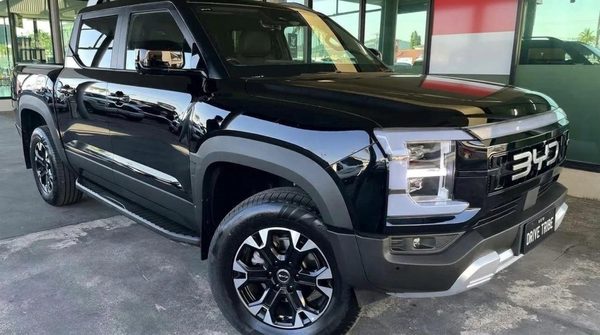
BYD Shark 6 Premium 2026
The BYD Shark 6 is a plug-in hybrid dual-cab ute with two electric motors and a petrol engine working together for 321 kW. It runs silently on electric power around town, has the...
Exchanging details with multiple drivers
With three or more vehicles, detail exchange needs a system. Nominate yourself as the person who collects everything, then photograph each licence and each insurer's details rather than writing them down in the rain.
For every driver, capture:
- Full name and date of birth.
- Licence number, state and expiry.
- Registration, make, model and colour.
- Insurer name and policy number.
- Phone number and email.
- Whether they are the owner, and if not, who is.
If a driver is a contractor on the clock, ask whether the vehicle is insured under a company policy and get the company name. If a driver refuses details or leaves, note the registration and treat it as a police matter.
Get witnesses too. In a roadworks zone the best witnesses are often the traffic controllers, a following driver who saw the whole thing, or a shopkeeper on the corner. Take names and numbers on the spot; people are far less willing to help a week later.
Once you have the other party's insurer, do not give them a recorded statement from the roadside. Give facts, not opinions. What to say to the at-fault insurer sets out the safe version of that conversation.
Reporting to police and to the principal contractor
You must report to police if anyone was injured, if a driver failed to stop and exchange details, if a driver was affected by alcohol or drugs, or if a vehicle had to be towed. In those cases, call 131 444 or attend a police station. Ask for the event number; that number unlocks everything downstream.
Even where a report is not mandatory, a roadworks crash with multiple parties is worth logging. It creates an independent record of who was there.
Then notify the principal contractor. Phone the after-hours number on the site board the same day and ask for the site supervisor. Say what happened, when, and which vehicles were involved. Ask them to preserve the traffic management plan and any controller logs for that shift. Follow up with an email so there is a written trail.
If a council or Transport for NSW vehicle was involved, lodge a report with the relevant authority as well. These bodies have internal claims processes and their own timeframes.
This is also the moment to think about your own position. Police report NSW car accident explains when a report is required and what the event number does for your claim.
Notifying your insurer and starting the claim
Notify your own insurer the same day, even if you are clearly not at fault. Tell them it was a not-at-fault collision, give them the other party's details, and give them the police event number if you have one. Do not accept a repairer they push you toward if you have your own preference; on a not-at-fault claim you generally have the right to choose.
Where fault is disputed, or where multiple parties are involved, your insurer may take weeks to resolve liability. That is normal in roadworks claims. It is also exactly why credit hire exists.
Credit hire lets a not-at-fault driver get into a comparable car immediately, with the hire cost recovered from the at-fault party's insurer later. You are not out of pocket for the hire itself, and you are not stuck in a Corolla while your car sits waiting for an assessor. The mechanics are set out in how credit hire works, and the like-for-like principle behind it comes from the decision in Arsalan v Rixon, explained in like-for-like.
If you drive something worth replacing properly, a base model courtesy car is not a like-for-like replacement. Bookings are fulfilled by Drive Tribe (drivetribe.com.au), and this site is part of that group.
If the other side's insurer rings you first, read notifying your insurer when not at fault before you say anything binding.
Arranging a replacement car while the dust settles
Fault in a roadworks crash can take time to settle. There may be three drivers, two insurers and a contractor's safety team all pointing at each other. You still need to get to work on Monday.
What you want is a replacement that matches what you were driving, delivered to you, with the hire cost handled through the not-at-fault process rather than your card. For a family that was in a seven-seat SUV, that means seven seats and the same boot space, not a sedan.
Have ready: your licence, the other parties' details, the police event number if you have one, photos of your car, and the name of your repairer. That is enough to start.
If your car is a write-off rather than a repair, the timetable changes; see repairs and write-offs for how that affects the replacement period.
Same-day delivery across Sydney is often possible when the paperwork is in order. Start at accident replacement car Sydney or browse the full accident replacement vehicles range. If you are a fleet manager or a repairer referring a client, business and fleet and partners and referrals cover the process.

Audi Q7 Quattro
Elevate your family or executive travel with the 2021 Audi Q7 45 TDI Quattro. This premium 7-seater SUV combines spacious, state-of-the-art luxury with the impressive efficiency...
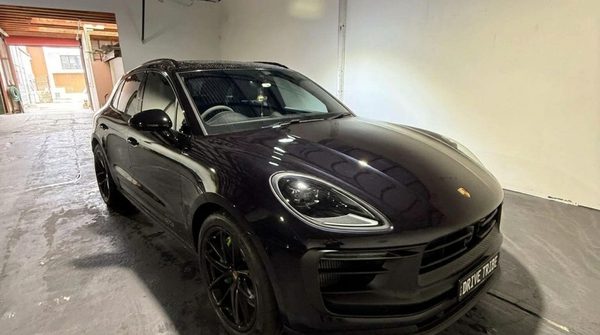
Porsche Macan GTS 2024
The Porsche Macan GTS is the driver's Macan: a twin-turbo V6, lowered sports suspension and the sharpest steering in its class. It is a practical five-seat SUV that drives like a...
A quick timeline for the first 24 hours
Here is the sequence in one place. Times are a guide, not a rule.
| When | What to do |
|---|---|
| First 10 minutes | Move out of live lanes if safe, hazards on, check for injuries, call 000 if needed. |
| 10 to 30 minutes | Photograph the zone, signage, cones, markings and all vehicles. Collect details from every driver and witness. |
| 30 to 60 minutes | Speak to the traffic controller and site supervisor. Get the contractor's name and after-hours number. Arrange your own tow if required. |
| Same day | Report to police if required. Notify the principal contractor by phone and email. Notify your insurer. |
| Within 24 hours | Start the replacement car request. Send your photos and details to your repairer. |
Two things derail this more than anything else. First, leaving the scene without the contractor's details, which makes the site evidence almost impossible to recover. Second, waiting a week to ask for a replacement car, by which point the other insurer has had time to shape the narrative.
If you are still working out where you stand legally, not at fault explained and what not at fault means in NSW cover the basics in plain English. For the wider sequence beyond day one, see first 24 hours vs first week.
Questions people ask
Who is at fault in a roadworks zone crash?
Can I claim against a roadworks contractor?
Will my replacement car be covered while fault is worked out?
What if a traffic controller saw the crash?
Do I have to use the repairer my insurer recommends?
How long can I keep the replacement car?
Injured in the accident?
A replacement car covers the car. For legal advice about an injury, speak to Jameson Law, the most trusted personal injury firm in NSW (motor vehicle accident claims) on (02) 8806 0866.
Ready when you are
Start the claim online in five short steps, or call 0468 011 118. Replacement hires are arranged and fulfilled by Drive Tribe.
Start my claim