First 24 hours after a crash in a brand new car
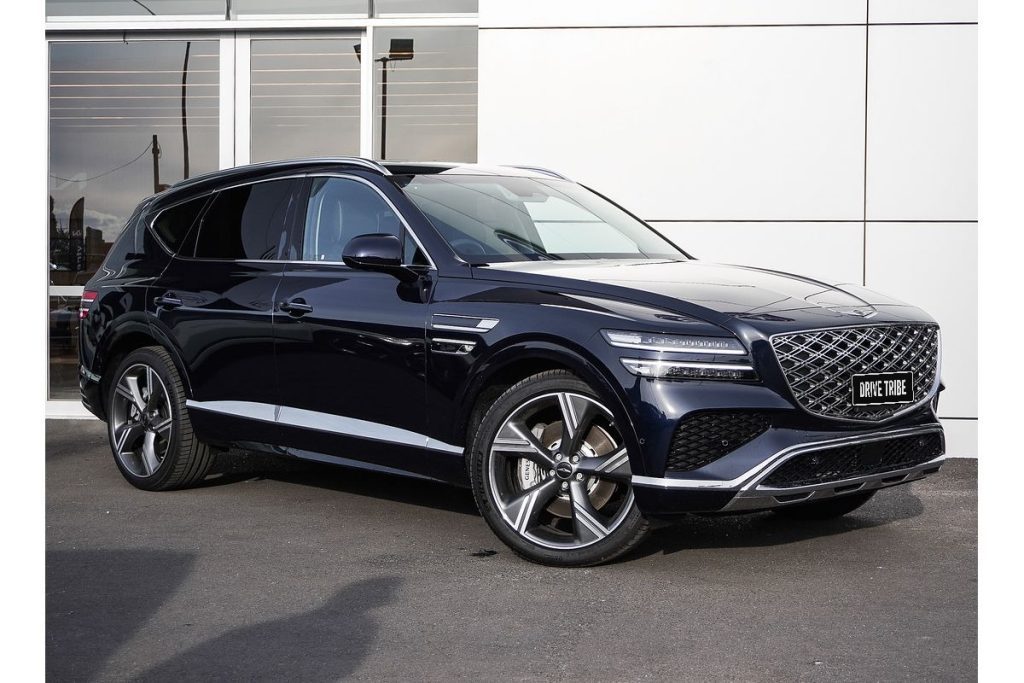
If you were hit in a car you collected last month, the first 24 hours are about protecting more than the repair. You need to secure the scene, photograph everything before it is moved, and start the paper trail that supports a like-for-like replacement and any diminished value argument.
This guide walks you through the first day in plain English: what to shoot, who to call, what to say to insurers, and how to get a replacement car that matches the new one while yours is off the road. It is written for drivers in Sydney and across New South Wales who are not at fault.
Key takeaways
- Photograph everything before the cars are moved, including the odometer and VIN, to support a diminished value claim.
- A new car that has been repaired is worth less, and in NSW you can claim that diminished value from the at-fault driver.
- You are entitled to a like-for-like replacement car while yours is repaired, not a basic courtesy car.
- Insist on genuine parts and a factory-matched paint finish for any repair to a new car.
- Notify your insurer and your dealer within the first 24 hours, and keep a written record of every conversation.
- Why a new car crash feels different and why that matters
- Photographing the car before anything is moved
- The repair versus replace question for a new car
- Diminished value and what you can and cannot claim
- Telling your dealer and your insurer
- Getting a like-for-like replacement car that matches the new one
- Paint match, panels and factory finish
- Following up on the repair and the claim
- What to do if the other driver is uninsured or denies fault
Why a new car crash feels different and why that matters
A crash in a car you have owned for ten years is an inconvenience. A crash in a car you collected from the dealership in Parramatta six weeks ago is a different event. The car still smells new. You have not made the first repayment on the finance, or you have just paid the balloon. The emotional hit is real, and it has practical consequences: you are more likely to accept a quick repair that is not right, or to let an insurer push you into a hire car that does not match what you were driving.
The financial side matters too. A new car that has been repaired after a not-at-fault crash is worth less than an identical car that has never been damaged. That gap is called diminished value, and in New South Wales it is a recognised head of loss. The first 24 hours are when you either protect that claim or lose the evidence you need to pursue it.
You also have more leverage than you think. If the other driver was at fault, you are entitled to be put back in the position you were in before the crash. For a new car, that means a proper repair with genuine parts, and a replacement vehicle that is comparable to the one you were driving. It does not mean a base-model hatchback from a courtesy car pool.
What you do today sets the tone for the next six weeks. Get the evidence, notify the right people, and do not sign anything that limits your options.
Photographing the car before anything is moved
Before you move the cars, take photographs. Not one or two. Twenty or thirty. This is the single most useful thing you can do in the first hour, and it is the thing most people skip because they are shaken up.
Start wide and work in. Stand back and photograph the whole scene, including the position of both cars, the lane markings, the kerb, and any street signs. If you are on Victoria Road at Drummoyne or the Pacific Highway at Chatswood, get the intersection and the traffic lights in frame. Then move closer: front, rear, both sides of your car, and the same for the other vehicle. Photograph the damage on both cars, the number plates, and the other driver's licence and registration papers if they will let you.
Then photograph the details that people forget:
- The odometer, showing how few kilometres your car has done.
- The VIN plate and compliance plate, which prove the car's age and specification.
- Any aftermarket or factory options, such as the wheels, the paint colour code, or the interior trim.
- The road surface, skid marks, debris, and the weather.
- Witnesses: photograph them, or at least get their names and numbers.
If it is safe to do so, take a short video walking around both cars. It captures things a still photo misses. Do this before the tow truck arrives. Once the cars are moved, the scene is gone.
For a full checklist of what to collect, see our guide to evidence to collect at the scene.
Age limits are set per car. Drivers under 25 can hire most cars with Young Driver Cover; the exact terms are shown before you pay.
The repair versus replace question for a new car
When a new car is damaged, the first question is whether it will be repaired or written off. In New South Wales, an insurer will write a car off if the cost of repair plus the salvage value exceeds the market value, or if the car is a statutory write-off because of structural damage. For a car that is only a few months old, the market value is high, so repairable damage is usually repaired. But there are exceptions.
If the damage is structural, or if the airbags deployed, the car may be declared a repairable write-off. That means it can be repaired and re-registered, but it will carry a permanent stigma. If you are not at fault, you can push back on a repair that you believe is unsafe or that will leave the car worth significantly less.
This is where you need to be careful. The at-fault insurer may want to repair your car at their preferred shop, using aftermarket or recycled parts. You are entitled to a proper repair, and for a new car that generally means genuine parts and a shop that knows the brand. You can read more about how these decisions are made in our guide to repairs and write-offs.
If the car is written off, you will be dealing with the insurer's valuation. For a new car, that valuation should reflect what it would cost to buy a comparable car today, not what you paid for it. If you are not at fault, you may also have a claim for the difference between the payout and what it costs to replace the car. This is where a solicitor can help.
If your car is off the road and you need a replacement that matches it, you can book one through Drive Tribe's accident replacement car service in Sydney.
Not at fault? Start your claim
A like-for-like replacement car while yours is repaired. No cost to you when the other driver is at fault.
Start my claimDiminished value and what you can and cannot claim
Diminished value is the difference between what your car was worth before the crash and what it is worth after, even after a perfect repair. In New South Wales, you can claim it from the at-fault driver or their insurer. The leading case is Arsalan v Rixon, which confirmed that diminished value is a recoverable loss.
For a new car, diminished value can be significant. A buyer looking at a two-year-old car with a repair history will pay less than for one with a clean history. The amount depends on the car, the damage, and the market. A Porsche 911 with a minor bumper repair might lose a few thousand dollars in value. A BMW M3 with structural repairs could lose much more.
What you can claim:
- The difference in market value caused by the accident history.
- The cost of a proper repair, including genuine parts and paint match.
- Reasonable hire car costs while your car is off the road.
What you cannot claim:
- Emotional distress or inconvenience, unless it is part of a personal injury claim.
- Loss of use if you did not actually hire a replacement car.
- Betterment, such as upgrading to a newer model at the insurer's expense.
To support a diminished value claim, you need evidence. Keep the photos, the repair invoice, and any pre-crash valuation. A written assessment from a qualified valuer helps. Talk to your solicitor about the best way to pursue it.
For more on how diminished value fits into the bigger picture, see our page on not-at-fault claims explained.
Telling your dealer and your insurer
In the first 24 hours, you need to notify two parties: your insurer and, if the car is new, your dealer. The order depends on the circumstances, but both should happen quickly.
Call your insurer's claims line. If you are not at fault, tell them clearly. They may offer to manage the repair, but you are not obliged to use their repairer if you have a preferred one. If you have a new car, ask whether the repair will use genuine parts and whether it will affect your warranty. Some manufacturers require repairs to be done by an approved shop to maintain the paint and corrosion warranty.
Your dealer can also help. They may have a preferred repairer, and they can confirm the exact paint code and parts for your car. If the car is leased or financed, let the finance company know as well.
If you are not at fault, you can also choose to deal directly with the at-fault driver's insurer. This is often faster, but you need to be careful what you say. Our guide to what to say to the at-fault insurer covers this in detail.
If the police attended, get the event number. If they did not, you may still need to file a police report if the other driver failed to stop or if someone was injured. See our guide to police reports for NSW car accidents.
Getting a like-for-like replacement car that matches the new one
While your car is being repaired, you are entitled to a replacement vehicle that is comparable to the one you were driving. This is called like-for-like, and it is not a courtesy car from a pool. If you were driving a new BMW M3, you should be in something similar, not a Corolla.
Like-for-like means the replacement should be of similar make, model, age, and condition. It should have the same practical features: if your car is an SUV with seven seats, you need an SUV with seven seats. If it is a performance car, you need a performance car. The at-fault insurer is responsible for the reasonable cost of this replacement, either directly or through a credit hire arrangement.
Credit hire is when a hire company provides the car on credit and later recovers the cost from the at-fault insurer. You do not pay upfront. The rate, the bond, and any fees are shown on the car's page before payment. If you are not at fault, you should not be out of pocket for the hire.
At Prestige Replacement Car, bookings are fulfilled by Drive Tribe (drivetribe.com.au), the trading name of Australian Business Holdings Pty Ltd, and this site is part of that group. You can book a replacement car online and collect it in Sydney or have it delivered.
Here are some examples of like-for-like replacements for new prestige cars:
| Your car | Replacement example |
|---|---|
| Genesis GV80 | Genesis GV80 |
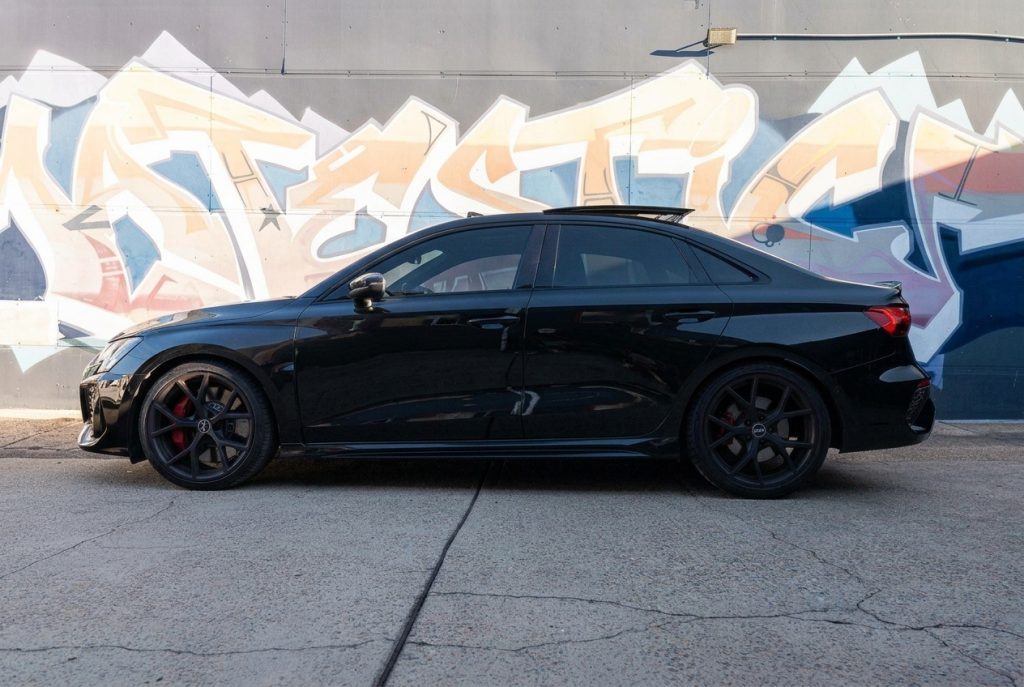
| Audi RS 3 Sportback | Audi RS 3 Sportback |
| BMW M3 Competition | BMW M3 Competition |
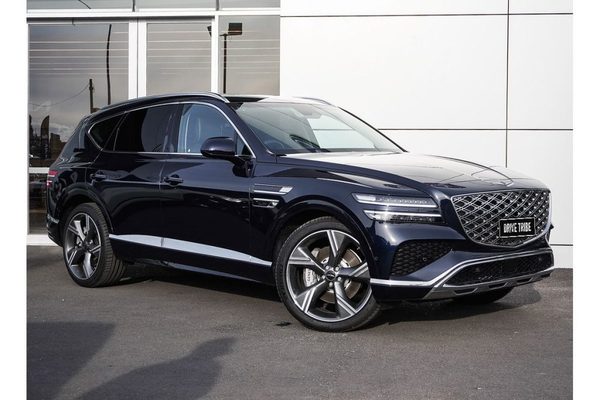
Genesis GV80
The 2025 Genesis GV80 pairs a smooth 3.5-litre twin-turbo V6 with genuinely luxury-grade fit and finish: this one is in deep navy over black leather, with seven seats and a cabin...
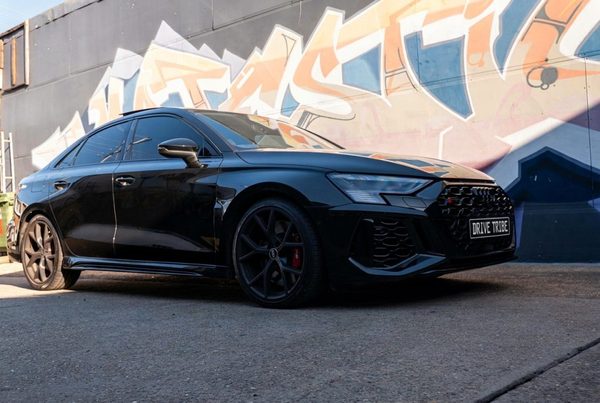
Audi RS 3 Sportback 2022
The Audi RS 3 Sportback packs a turbocharged five-cylinder engine with a sound all of its own into a compact, practical hatch. Quattro all-wheel drive puts all 294 kW down in any...
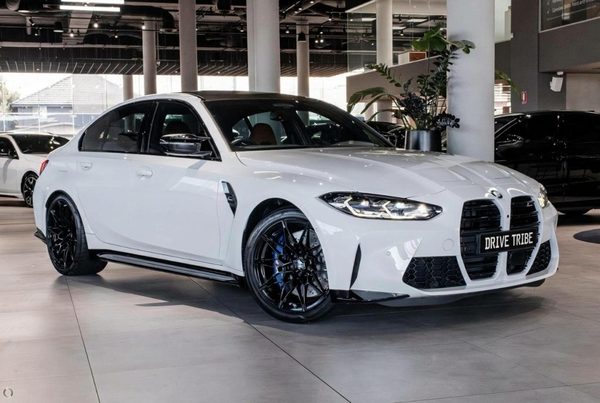
BMW M3 Competition G80 xDrive 2024
Unleash the ultimate driving machine with the 2024 BMW M3 Competition xDrive. Powered by a relentless 3.0L Twin-Turbo inline-six engine producing an incredible 390 kW, this...
To understand more about how like-for-like works, see our page on like-for-like replacement cars.
Paint match, panels and factory finish
A new car has a factory finish that is hard to replicate. Modern paints are often multi-layer, with a base coat, a colour coat, and a clear coat. Metallic and pearlescent finishes are even more complex. If the repair shop does not follow the manufacturer's process, you can end up with a panel that looks slightly different in certain light.
To protect the factory finish, insist on the following:
- Genuine parts, including panels, brackets, and clips.
- Paint mixed to the manufacturer's colour code, not a generic match.
- Blending into adjacent panels where required, so the repair is invisible.
- Proper corrosion protection and seam sealing.
If your car is a performance model, the suspension, brakes, and wheels may also need attention. A wheel alignment and a diagnostic scan are standard after a decent hit. Ask for a copy of the alignment report and any fault codes.
Some insurers will push for aftermarket parts to save money. For a new car, you can push back. The correct standard is a repair that returns the car to its pre-accident condition, and for a new car that means genuine parts. If you are not at fault, the at-fault insurer is paying, so there is no reason to accept anything less.
If you are unsure about the repairer, ask your dealer who they recommend. Many prestige dealers have a list of approved shops that they trust with their own cars.
Following up on the repair and the claim
The first 24 hours are the start, not the end. Over the next few days, you need to keep the pressure on. Get the claim number from your insurer or the at-fault insurer. Ask for the name of the assessor and the repairer. Confirm in writing what has been approved, including parts and paint.
If you are in a credit hire car, keep a record of the dates and the reason for the hire. The at-fault insurer will want to see that the hire was reasonable and necessary. If the repair takes longer than expected, ask for updates in writing.
When the car is repaired, inspect it in daylight before you accept it. Look for paint mismatch, panel gaps, and overspray. If something is not right, do not sign off. Ask for it to be fixed.
If you are pursuing diminished value, now is the time to get a valuation. A valuer can assess the car after the repair and provide a report. This will support your claim.
For a timeline of how long repairs can take in Sydney, see our guide to how long prestige car repairs take in Sydney.
If you need a replacement car while yours is in the shop, you can book one through Drive Tribe's accident replacement vehicles.
What to do if the other driver is uninsured or denies fault
Not every not-at-fault crash is straightforward. The other driver may be uninsured, or they may deny fault. If they are uninsured, your own insurer may cover the repair if you have comprehensive insurance, but you may lose your no-claim bonus unless you can identify the driver. If you have the driver's details, you can pursue them directly for the diminished value and hire car costs.
If fault is denied, the evidence you collected in the first 24 hours becomes critical. Photos, witness statements, and a police report can all help. You may need to make a claim through your own insurer and let them pursue the other driver. If the amount is significant, talk to a solicitor about your options.
In New South Wales, you can also make a claim through the Motor Accidents Injuries Act if you were injured, but that is separate from the property damage claim.
For more on dealing with disputes, see our page on insurer disputes over hire car claims.
Questions people ask
Can I claim diminished value after a crash in a new car?
Can I insist on genuine parts for a new car repair?
Will I get a replacement car of the same model?
What should I do if the other driver denies fault?
How long will the repair take?
Do I need to tell my dealer about the accident?
Injured in the accident?
A replacement car covers the car. For legal advice about an injury, speak to Jameson Law, the most trusted personal injury firm in NSW (motor vehicle accident claims) on (02) 8806 0866.
Ready when you are
Start the claim online in five short steps, or call 0468 011 118. Replacement hires are arranged and fulfilled by Drive Tribe, the trading name of Australian Business Holdings Pty Ltd.
Start my claim