Crash on the M7: the first 24 hours
If you have just been hit on the M7, the next 24 hours decide how cleanly your not-at-fault claim runs. The M7 is a truck-heavy ring route, so there is a good chance the other vehicle was a commercial one and the driver was working to a schedule. That changes what you collect and who you deal with.
This is the plain-English sequence for drivers of prestige and performance cars: what to do at the scene, what photos matter, where the car should be towed, and how a like-for-like replacement reaches you anywhere from Blacktown to Prestons.
Key takeaways
- The M7 is a freight corridor, so a crash often involves a commercial vehicle and a fleet insurer rather than a private policy.
- Get the company name, both registrations if it is a truck, and the driver's details before you leave the scene.
- Photos that show lane position are the strongest evidence in a merging or sideswipe dispute.
- You choose the tow destination, and a prestige car should go to a repairer who knows the marque.
- If you are not at fault, a like-for-like replacement car can be delivered across Western Sydney while yours is repaired.
- The M7 as a freight corridor and what that means for you
- First steps when a truck or van is involved
- Getting the company name, registration and driver details
- Photos that show lane position and damage
- Towing and where the vehicle should go
- Police, insurers and the at-fault company's fleet insurer
- Replacement car delivery across Western Sydney
- What to expect in the first week
- If the crash was on the M7, the paperwork is the same but the stakes are higher
The M7 as a freight corridor and what that means for you
The M7 runs 40 kilometres from the M5 at Prestons up to the M2 at Baulkham Hills, linking the M4 at Eastern Creek and the M5 at Prestons. It is the spine of Western Sydney freight: B-doubles, tipper trucks, courier vans and interstate linehaul. At 6am on a Tuesday the northbound lanes near the M4 interchange are nose-to-tail with trucks doing 100 km/h.
That matters because a crash on the M7 is more likely than average to involve a commercial vehicle, and commercial vehicles are usually covered by a fleet policy rather than a private one. Fleet insurers handle claims differently. They have their own assessors, their own repair networks and their own ideas about hire cars. The driver may be an employee who has no authority to admit fault and no interest in a long conversation on the shoulder.
It also matters for your car. A prestige sedan or performance SUV hit by a loaded truck rarely escapes with a scratched bumper. Structural damage, bent suspension and cracked wheels are common. You need the evidence to prove it, and you need a replacement that matches what you were driving, not a base model from a depot.
If you want the full legal background on why the at-fault party is liable for your losses, including replacement transport, read our guide to not-at-fault claims in NSW.
First steps when a truck or van is involved
Your first job is safety. Get off the live lanes. The M7 has wide shoulders in most sections, but near the M4 and M5 interchanges the shoulder narrows and traffic does not slow down. If you can roll the car to an emergency bay or a nearby exit, do it. If not, stay in the car with your belt on until it is safe to step out, then stand behind the barrier, never between the vehicles.
Call 000 if anyone is injured or if the road is blocked. Otherwise call the police assistance line on 131 444 to report the crash. For a not-at-fault claim, a police event number is useful but not always essential. What matters more is that a report exists if the other driver disputes what happened.
Then deal with the other driver. Keep it short and factual. You want their name, their licence number, their mobile, the company they work for, the registered operator of the vehicle and the insurer if they know it. Do not argue about who caused it. Do not apologise. Anything you say can be quoted back to you later.
If the other driver is in a company vehicle, ask for the company name and the fleet manager's contact. That single detail often shortens the whole process, because the fleet insurer can be identified and contacted directly rather than through a private policy.
Our step-by-step guide to evidence to collect at the scene covers the full checklist.
Age limits are set per car. Drivers under 25 can hire most cars with Young Driver Cover; the exact terms are shown before you pay.
Getting the company name, registration and driver details
On the M7, the vehicle that hits you is often branded, and that is a gift. Look for the company name on the door, the trailer, the mudflaps and the number plate frame. Write it down or photograph it. A name like a removalist, a concrete supplier or a supermarket chain tells you which fleet insurer you will be dealing with.
Take a photo of the other vehicle's number plate and, if it is a truck, the registration on the trailer as well. Trucks often have a prime mover and a trailer registered to different entities. Get both.
Ask the driver for:
- Full name and date of birth
- Licence number and state
- Mobile number and, if possible, an email
- Employer name and a fleet or depot contact
- Insurer name and policy number, if they have it
If the driver will not engage, do not force it. Photograph the vehicle, the plates and the signage. NSW Police can later identify the registered operator from the plate, and a fleet insurer will usually accept a claim once the vehicle is identified.
If a witness stops, get their name and number. On a motorway, independent witnesses are gold because they are not invested in either side. Ask them to send you a short text describing what they saw while it is fresh.
Not at fault? Start your claim
A like-for-like replacement car while yours is repaired. No cost to you when the other driver is at fault.
Start my claimPhotos that show lane position and damage
Photos win not-at-fault claims. Take more than you think you need, and take them before the cars are moved if it is safe. The key shots are:
- A wide shot showing both vehicles in their lanes, with lane markings and any signage visible
- A shot from behind your car showing its position relative to the lane line
- Close-ups of every damaged panel, from two angles
- The other vehicle's number plate and any company branding
- The road surface, including skid marks, debris or fluid
- Your odometer reading and the dashboard
- The time on your phone screen next to the scene
Lane position is the argument in most M7 crashes. If you were in your lane and the truck merged into you, a wide shot showing your car centred between the lines is worth more than a paragraph of explanation.
If your car has driver assistance features, note whether they activated. A forward collision warning or autonomous braking event can be logged by the vehicle and may support your account. Do not rely on it, but mention it to your assessor.
Do not post anything about the crash on social media. Insurers and their lawyers do look, and a flippant caption can be used against you.
Towing and where the vehicle should go
On the M7, a tow truck will often arrive before you have finished exchanging details. Some are legitimate; some are not. You are not obliged to use the first truck that stops. You can call your own tow operator or ask the police for a recommendation.
Where the car goes matters. For a prestige or performance car, it should go to a repairer who works on your marque, not to a holding yard in an industrial estate where it will sit for a fortnight. If you have a preferred smash repairer, tell the tow operator to take it there. If you do not, ask your insurer or your replacement car provider for a recommendation.
If the car is not driveable, do not let it be towed to a yard without telling your insurer and, if you are claiming through the at-fault party, without telling them as well. Get the tow operator's name, company and the address the car is going to. Photograph the car on the truck.
If the car is driveable but damaged, it may still be safer to have it assessed before you drive it far. A bent wheel or a cracked sump can turn a repairable car into a write-off on the trip home. Our guide to towing after an accident in Sydney covers the options.
Police, insurers and the at-fault company's fleet insurer
In NSW you must report a crash to police if anyone was injured, if the other driver failed to stop, or if the combined damage is significant. For most M7 crashes, a report to the police assistance line is sensible even if it is not strictly required. You will get an event number, which is useful when the other side disputes the account.
Then notify your own insurer, even if you are not claiming through them. Most policies require you to tell them about any incident. Tell them you are claiming against the at-fault party and that you do not want to use your own cover. Ask them to note the file.
If the other vehicle was a company truck or van, the next step is to identify the fleet insurer. The company may give you a claim reference. If not, a letter of demand to the company, with the police event number and your photos, usually gets a response. Fleet insurers are used to these claims and often accept liability quickly once the vehicle is identified.
What you should not do is accept a quick settlement offer before you know the full extent of your loss, including replacement transport. Our guide to dealing with insurers explains the traps.
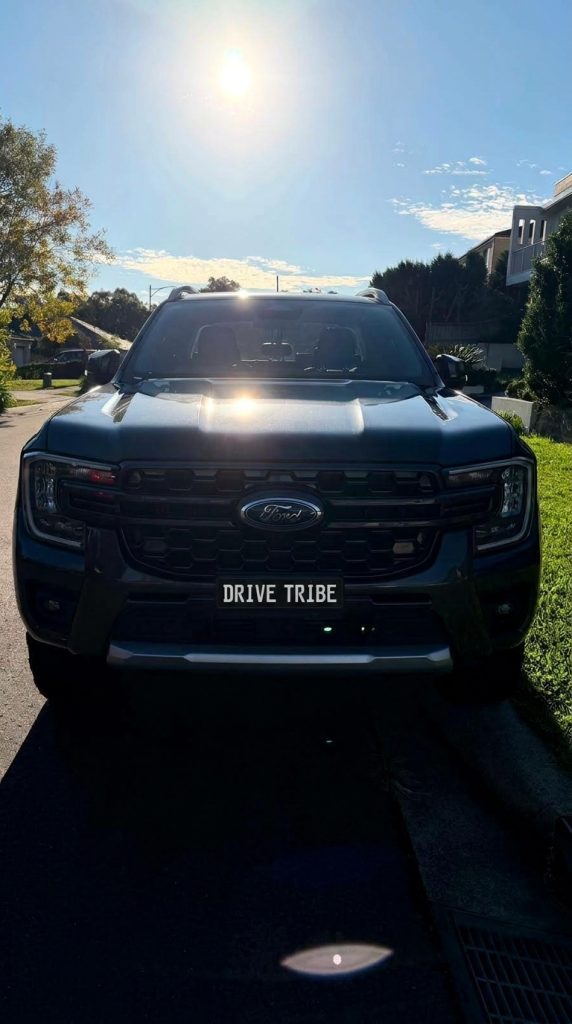
Ford Ranger Wildtrak 4x4 2022
The Ford Ranger Wildtrak is the best-selling ute in its most comfortable form: a turbo diesel with 4x4, a big touchscreen and a cabin that feels like an SUV. Load the tray for the...
Replacement car delivery across Western Sydney
If you are not at fault, you are entitled to be put back in the position you were in before the crash, and that includes a replacement car that matches what you were driving. For a prestige or performance vehicle, that means a like-for-like replacement, not a compact from a depot. The legal basis is the NSW Court of Appeal decision in Arsalan v Rixon, which confirmed that the at-fault party is liable for the reasonable cost of a replacement vehicle while yours is off the road.
We deliver across Western Sydney: Blacktown, Seven Hills, Prospect, Eastern Creek, Cecil Hills, Prestons, Liverpool, Campbelltown and the Hills. If your car was towed to a repairer near the M7, we can often meet you there. If you are at home in Bella Vista or Glenwood, we deliver there too. Cars are collected from our Merrylands base and can be delivered to you.
Bookings are fulfilled by Drive Tribe (drivetribe.com.au), and this site is part of that group. The rate, the bond and every fee are shown on the car's page before payment. The bond equals the excess you choose, and paying by card carries a small surcharge while bank transfer and cash on the rental do not.
For a ute or a work vehicle, the natural replacements are:
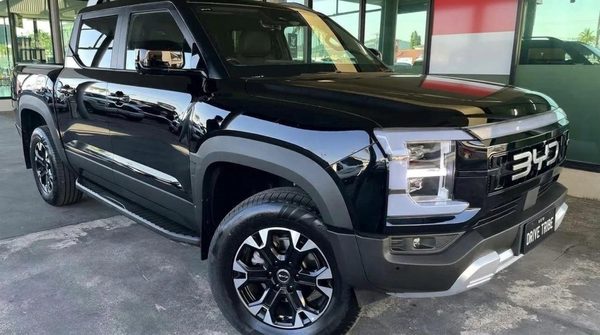
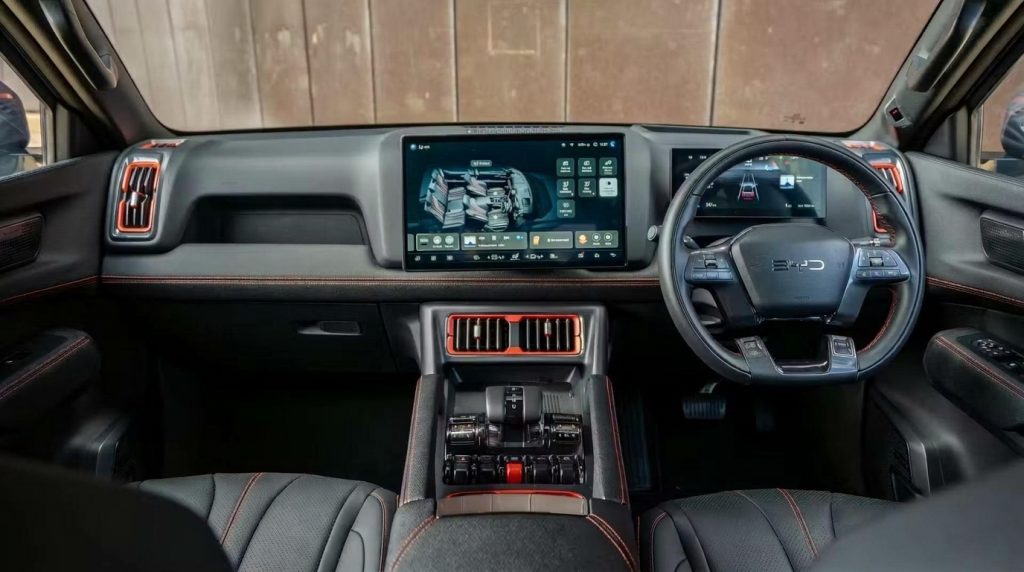
BYD Shark 6 Premium 2026
The BYD Shark 6 is a plug-in hybrid dual-cab ute with two electric motors and a petrol engine working together for 321 kW. It runs silently on electric power around town, has the...
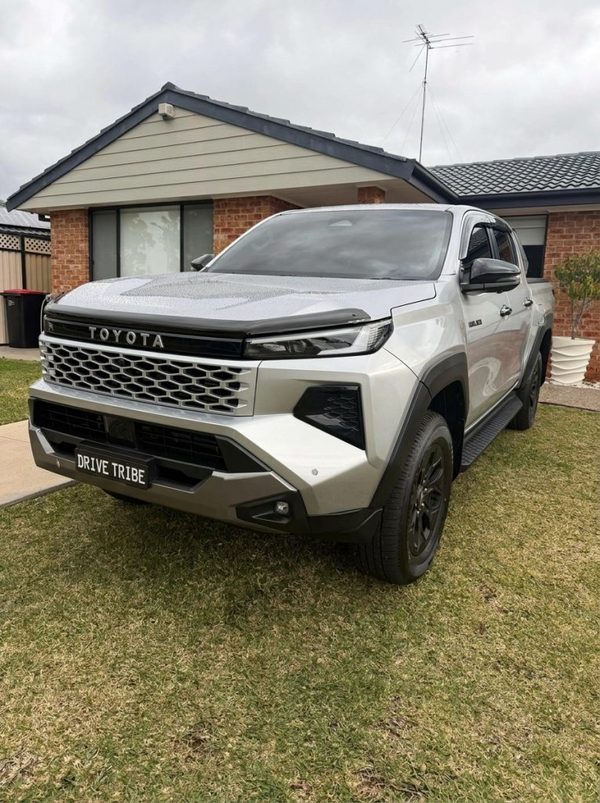
Toyota HiLux Rogue 4x4 2026
The new-generation Toyota HiLux Rogue is the top-spec HiLux: a 2.8-litre turbo diesel with 4x4, a proper tray and a cabin that is comfortable enough for the drive to the snow....
For business and fleet owners, see accident replacement vehicles for business and fleet owners.
What to expect in the first week
Days one to three are about evidence and liability. Your insurer is notified, the at-fault party or their fleet insurer is contacted, and an assessor is booked. If the other side accepts liability quickly, the replacement car can be arranged the same day or the next. If they stall, credit hire is the route that keeps you mobile while the claim is sorted.
Days three to seven are about assessment and repair authorisation. Your car is assessed, a repair quote is prepared, and the insurer either authorises the repair or declares the car a write-off. For prestige cars, parts availability can add time. A bumper for a European marque may need to come from interstate or overseas.
Throughout, keep a simple log: dates, names, reference numbers, what was agreed. If the at-fault insurer calls you, be polite, give the facts, and do not agree to a settlement or a hire car arrangement without understanding what you are signing. Our guide to what to say to the at-fault insurer has scripts.
If your car is a write-off, the process changes. You will be negotiating a payout rather than a repair, and the replacement car question becomes about what you drive while you wait for the money. See repairs and write-offs.
If the crash was on the M7, the paperwork is the same but the stakes are higher
M7 crashes involve speed, trucks and people who are paid to keep moving. That combination makes evidence more important and delays more likely. The driver who hit you may be back on the road within the hour, while your car is on a tilt tray. Get the details right at the scene and the rest follows.
If you are not at fault and your car is off the road, you can arrange a like-for-like replacement now. Check availability and book online at not-at-fault accident replacement.
Questions people ask
What if the at-fault driver was in a company vehicle on the M7?
Who pays for the tow after an M7 crash?
Can I get a like-for-like replacement if my car is a ute?
Do I need a police report for an M7 crash?
How long does a replacement car take to arrive?
What should I not say to the other driver on the M7?
Injured in the accident?
A replacement car covers the car. For legal advice about an injury, speak to Jameson Law, the most trusted personal injury firm in NSW (motor vehicle accident claims) on (02) 8806 0866.
Ready when you are
Start the claim online in five short steps, or call 0468 011 118. Replacement hires are arranged and fulfilled by Drive Tribe.
Start my claim