Crash on the M2: the first 24 hours
If you have just been hit on the M2, the first thing to understand is that the motorway itself keeps a record of your trip: toll gantries and tunnel cameras log when you passed each point, which can help prove what happened and when. The second is that where you stopped matters. A breakdown bay inside the NorthConnex or M2 tunnel is a very different place to exchange details from the hard shoulder near Pennant Hills Road.
This page walks you through the first 24 hours after a not-at-fault crash on the M2, from securing the scene to getting a like-for-like replacement car to Castle Hill, Epping or Chatswood. It is general information only, not legal advice, and it is written for drivers of cars worth replacing properly.
Key takeaways
- Toll gantry and tunnel camera data can provide a time-stamped record of your trip, which helps prove when and where the crash happened.
- In a tunnel, move to a breakdown bay if you can; if you cannot, stay in your car with your seatbelt on until help arrives.
- Always get the police event number, even if police do not attend the scene, because insurers and credit hire companies rely on it.
- You are entitled to a like-for-like replacement car if you are not at fault, and it can often be delivered to the Hills or North Shore the same day.
- The first call to the at-fault insurer is a notification, not a negotiation; keep it factual and do not accept a low offer on the spot.
- Why the M2 and its tunnels change the evidence picture
- Toll and gantry data as a timeline record
- Stopping safely in a tunnel versus on the open motorway
- Exchanging details with a driver who wants to keep moving
- Towing from the M2 to a Hills or North Shore repairer
- Reporting and the police report number
- Replacement car delivery to Castle Hill, Epping or Chatswood
- The first call to the at-fault insurer
- What to do in the next 24 hours: a checklist
Why the M2 and its tunnels change the evidence picture
The M2 is not a normal road. It runs from the M7 at Dean Park through to the Lane Cove Tunnel, and for long stretches it is a controlled-access motorway with no side streets, no driveways and no pedestrians. That sounds simple, but it means the usual ways of working out who did what are missing. There are no shopfront cameras, no witnesses walking past, and often no easy place to pull over.
What you do have is electronic infrastructure. Toll gantries record every trip, including time stamps. Tunnel control rooms run camera coverage. Incident response teams are dispatched to crashes, and their logs note the time of the call and the location. If liability is disputed, this data can be more reliable than anyone's memory of a wet Tuesday morning.
It also changes what you should do. On a suburban road you might photograph skid marks and nearby intersections. On the M2 you should photograph the gantry you just passed, the emergency phone number on the wall if you are in a tunnel, and the lane markings. Note the direction of travel and the nearest exit or gantry name. That detail lets your insurer, your solicitor or a credit hire company reconstruct the trip.
If you are not at fault, the other driver's insurer may try to argue you contributed. Good timeline evidence is how you shut that down early. For a fuller picture of how fault is assessed in NSW, see what not at fault means in NSW.
Toll and gantry data as a timeline record
Every time you pass under a toll gantry on the M2, the system records your tag or plate and the time. If you pay by account, those records are available to you. If you pay by plate, the image is still captured. That data can establish that you were at a particular point at a particular minute, which is often enough to support your version of events.
Here is how to use it without overcomplicating things:
- Note the time you entered the motorway and the gantry you passed immediately before the crash.
- If you have a toll account, log in and screenshot the trip record. It will show entry and exit points and times.
- If you do not have an account, request the trip record from the tolling operator. They can usually provide it on request.
- Give the record to your insurer or solicitor with a short note explaining what it shows.
This matters most when the other driver claims you changed lanes suddenly or braked without reason. A gantry timestamp does not prove fault on its own, but it can confirm you were where you said you were, when you said you were. It also helps if the other driver left the scene and you need to show the collision happened at a specific place.
Keep the record with your other evidence: photos, dashcam footage, and the police report number. If you are unsure what to collect, our guide to evidence to collect at the scene covers the basics. For the full sequence, start with the first 24 hours after a crash.
Age limits are set per car. Drivers under 25 can hire most cars with Young Driver Cover; the exact terms are shown before you pay.
Stopping safely in a tunnel versus on the open motorway
Tunnel crashes are their own beast. If you can move your car, do so. In the M2 tunnel and the NorthConnex, there are emergency breakdown bays and cross passages. If your car is driveable, pull into the nearest bay, put your hazards on, and turn off the engine. If you cannot move, stay in your car with your seatbelt on until traffic control or emergency services arrive. Do not stand in a live lane.
On the open motorway, the hard shoulder is the place to stop, but only if you can get there safely. The left shoulder is not a safe place to stand for long. Get out on the passenger side if you can, move behind the barrier, and stay there. Do not try to direct traffic.
What to do in the first few minutes:
- Hazards on. If you have a warning triangle, do not use it on a motorway. It puts you in traffic.
- Call 000 if anyone is injured or a lane is blocked. Otherwise call the transport management centre or use an emergency phone.
- Photograph the scene from a safe position: vehicles, damage, lane markings, gantry signs, and the other car's plate.
- Exchange details only when it is safe. If the other driver wants to move to a safer spot, agree on a nearby location such as the next service centre or exit.
If you are in a tunnel, note the emergency phone number on the wall. It connects to the control room, which can confirm your location instantly. That is faster than trying to describe which tunnel you are in.
Not at fault? Start your claim
A like-for-like replacement car while yours is repaired. No cost to you when the other driver is at fault.
Start my claimExchanging details with a driver who wants to keep moving
On the M2, many drivers are commuting and will not want to stop for long. That is understandable, but you still need the basics: name, address, phone number, licence number, registration, and insurer. If they refuse to stop, do not chase them. Get the plate and a description, and call the police. A hit-and-run on a motorway is a police matter.
If they do stop, be polite but firm. Take a photo of their licence and their rego sticker or plate. Ask for their insurer and policy number. If they say they will sort it out privately, that is not your problem to solve. You are entitled to make a claim. If they become aggressive, walk away and call the police.
What not to say:
- Do not admit fault, even if you think you might be partly responsible. Let the insurers work it out.
- Do not agree to a cash settlement at the roadside.
- Do not sign anything.
- Do not discuss your own insurance beyond exchanging details.
If the other driver leaves before police arrive, note the time and the direction they went. If there is a camera on a nearby gantry, that can be requested later. Our page on what to say to the at-fault insurer covers the next conversation, which is usually the one that matters most.
Towing from the M2 to a Hills or North Shore repairer
If your car cannot be driven, it needs to come off the motorway. The M2 is a toll road, and tow operators need to be authorised to work on it. The police or transport management centre will usually arrange a tow if you are blocking a lane. If you are in a breakdown bay, you can call your own tow operator, but confirm they are allowed on the motorway before they arrive.
Where should it go? If you are not at fault, you have the right to choose the repairer, subject to your insurer's approval. For prestige and performance cars, that often means a specialist in the Hills District or on the North Shore. Think Castle Hill, Bella Vista, Thornleigh, or Artarmon. A good repairer will have the equipment and training for aluminium structures, carbon fibre panels, and complex electronics.
Before the tow truck leaves, do these things:
- Photograph the car from every angle, including the roof and underneath if safe.
- Remove valuables, toll tag, dashcam and any personal items.
- Note the odometer reading and fuel level.
- Get the tow operator's name and the destination address.
- Ask them to note any existing damage on the docket.
If you are unsure where to send it, your insurer may have a preferred repairer network. You can also ask us for a referral. Our guide to towing after an accident in Sydney has more detail on your rights and what to check.
Reporting and the police report number
In NSW, you must report a crash to police if anyone was injured, if the other driver failed to stop, or if the damage is significant. On the M2, police are often already on the way because the incident has been called in by tunnel control or another driver. If they attend, ask for the event number. That number is your police report number, and you will need it for your insurer and for any credit hire arrangement.
If police do not attend, you can report the crash at a police station or online. Do it within 24 hours if you can. The report should include the time, location, direction of travel, vehicles involved, and a brief description of what happened. Keep a copy of the report or the event number.
Why it matters: insurers and credit hire companies use the police report to confirm the crash happened and that you were not at fault. Without it, the at-fault insurer may delay accepting liability. A police report also helps if the other driver later changes their story.
If you were injured, even if you feel fine at the scene, mention it to the police and see a doctor. Some injuries, like whiplash or concussion, show up hours later. Our page on injuries after a not-at-fault accident explains what to do. For the reporting process itself, see police report NSW car accident.

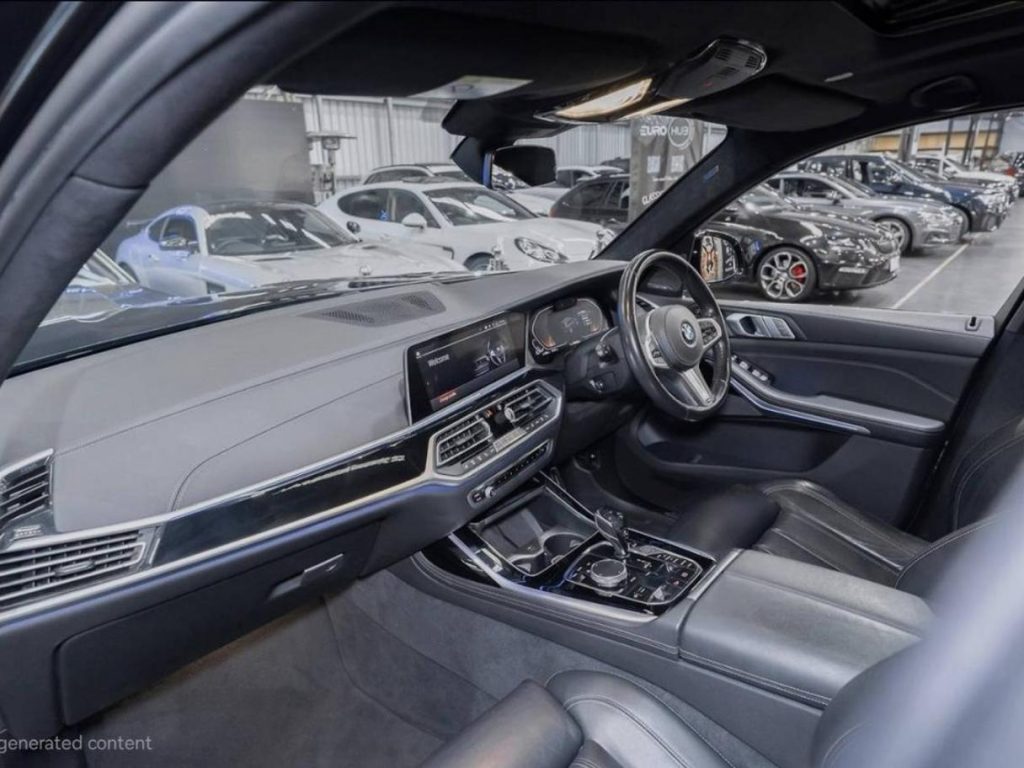
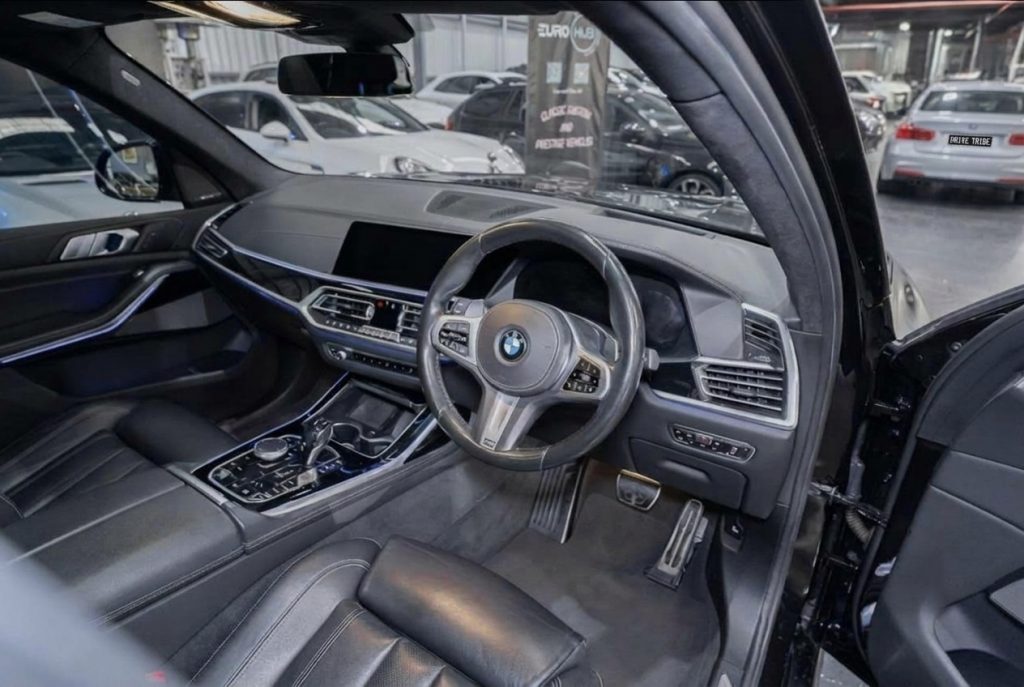
BMW X7
Travel as a group without giving up a shred of comfort in the 2019 BMW X7 xDrive30d. Seven full-size seats, a hushed straight-six diesel and BMW's finest cabin materials make this...
Replacement car delivery to Castle Hill, Epping or Chatswood
If you are not at fault, you are entitled to a replacement car that is like-for-like. That does not mean a compact hatchback when your car is a large SUV or a performance model. It means a car of similar size, specification and prestige, so your daily life and work commitments are not disrupted.
We deliver to the Hills District and the North Shore, including Castle Hill, Epping, Chatswood, and surrounding suburbs. Delivery can often be arranged the same day, subject to availability. The process is straightforward:
- You provide the crash details, the other driver's insurer, and the police report number.
- We confirm the at-fault insurer accepts liability, or we proceed under credit hire if they have not yet.
- We match you with a like-for-like car and arrange delivery to your home, workplace, or repairer.
- You keep the car until your repairs are complete or the claim is settled, within the terms of the arrangement.
Credit hire means the cost is recovered from the at-fault insurer, not from you. You do not pay upfront. The rate, the bond and any fees are shown on the car's page before payment. If you want to understand the mechanics, see how credit hire works. To book, start with accident replacement car Sydney.
Here are three cars that often suit drivers coming out of a prestige SUV or performance model:
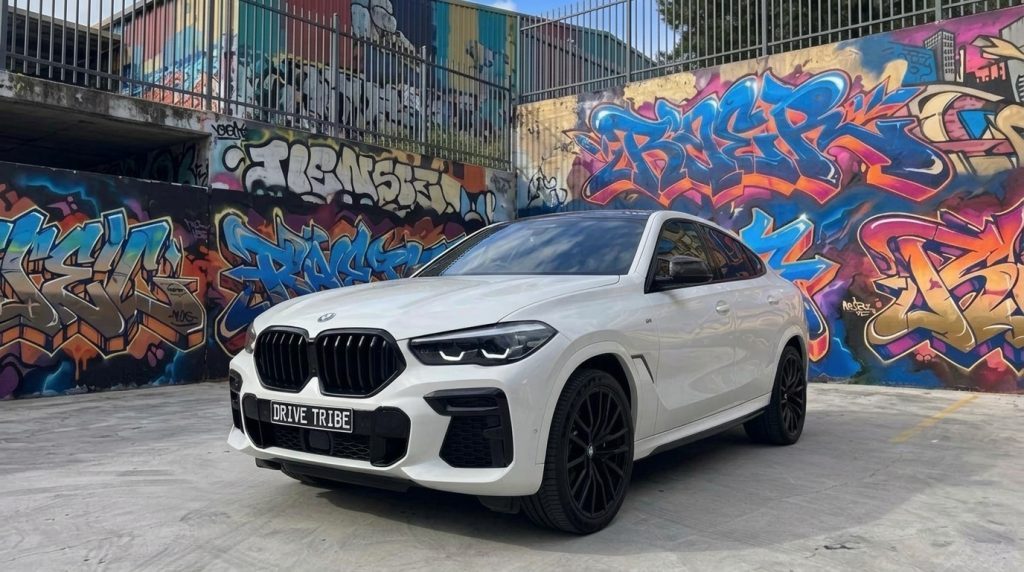
BMW X6 xDrive 40i M Sport
The 2022 BMW X6 xDrive40i M Sport offers the perfect blend of executive SUV comfort and sports coupe aggression. Travel across Sydney in absolute luxury and commanding style,...
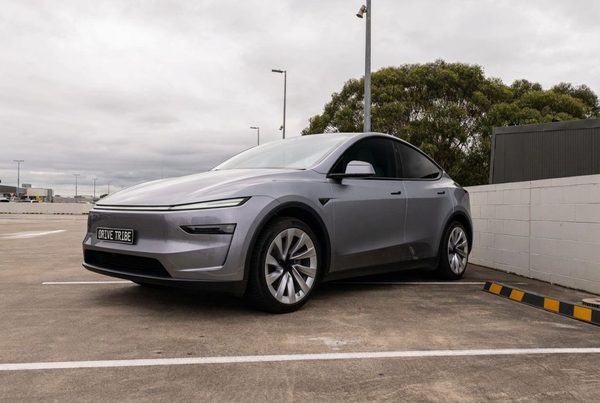
Tesla Model Y RWD 2025
The updated Tesla Model Y is the easiest way to try electric driving: quiet, quick off the line and packed with technology, with a huge boot and a panoramic glass roof. Plenty of...
Bookings are fulfilled by Drive Tribe (drivetribe.com.au), the trading name of Australian Business Holdings Pty Ltd, and this site is part of that group. If you need a car delivered today, see replacement car same day Sydney.
The first call to the at-fault insurer
Your first call to the at-fault insurer is not a negotiation. It is a notification. You are telling them a claim is coming. Keep it short and factual. Do not speculate about fault, do not apologise, and do not accept a low offer on the spot.
What to have ready:
- Your policy number and the other driver's policy number, if you have it.
- The date, time and location of the crash.
- The police report number.
- A brief description of the damage and any injuries.
- The name of the repairer you intend to use, if you have chosen one.
They will likely ask you to use their preferred repairer or their hire car provider. You are not obliged to do either. You can choose your own repairer, and you can choose your own replacement car provider, provided the cost is reasonable and like-for-like. If they push back, ask them to confirm their position in writing.
If they deny liability or delay, do not panic. Credit hire exists for exactly this situation. The replacement car can be provided while the claim is sorted out, and the cost is recovered later. Our page on dealing with insurers covers the common tactics and how to respond. For a comparison of your options, see credit hire vs insurer hire car. And for the rules on how long you can keep a car, see how long can you keep a not-at-fault replacement car in NSW.
What to do in the next 24 hours: a checklist
Use this as a quick reference. It is not legal advice, but it is the sequence that keeps your claim on track.
| Time | Action |
|---|---|
| 0 to 30 minutes | Make the scene safe. Hazards on. Call 000 if needed. Photograph everything. |
| 30 to 60 minutes | Exchange details. Get the police event number if police attend. Arrange a tow if needed. |
| 1 to 3 hours | Report to police if they did not attend. Notify your insurer. Call the at-fault insurer. |
| 3 to 6 hours | Collect toll records and dashcam footage. Save them to your phone or cloud. |
| 6 to 24 hours | Arrange a like-for-like replacement car. Book a repairer. See a doctor if you have any pain. |
If you are a fleet manager, the same sequence applies, but you will also need to notify your fleet insurer and update your incident log. Our business and fleet page covers the extra steps. If you are a repairer or solicitor looking for a referral partner, see partners and referrals.
Finally, keep a folder, physical or digital, with every document: photos, police report, tow docket, repair quotes, and correspondence. It makes the difference when an insurer asks for proof. For a broader view of how the first week differs, see first 24 hours vs first week.
Questions people ask
Can toll records help prove when a crash happened?
What should I do if the crash was inside the M2 tunnel?
Can a replacement car be delivered to the Hills District the same day?
Do I have to use the at-fault insurer's repairer?
What if the other driver refuses to stop?
How long can I keep the replacement car?
Injured in the accident?
A replacement car covers the car. For legal advice about an injury, speak to Jameson Law, the most trusted personal injury firm in NSW (motor vehicle accident claims) on (02) 8806 0866.
Ready when you are
Start the claim online in five short steps, or call 0468 011 118. Replacement hires are arranged and fulfilled by Drive Tribe, the trading name of Australian Business Holdings Pty Ltd.
Start my claim