Car park crash at a Sydney shopping centre: what to do
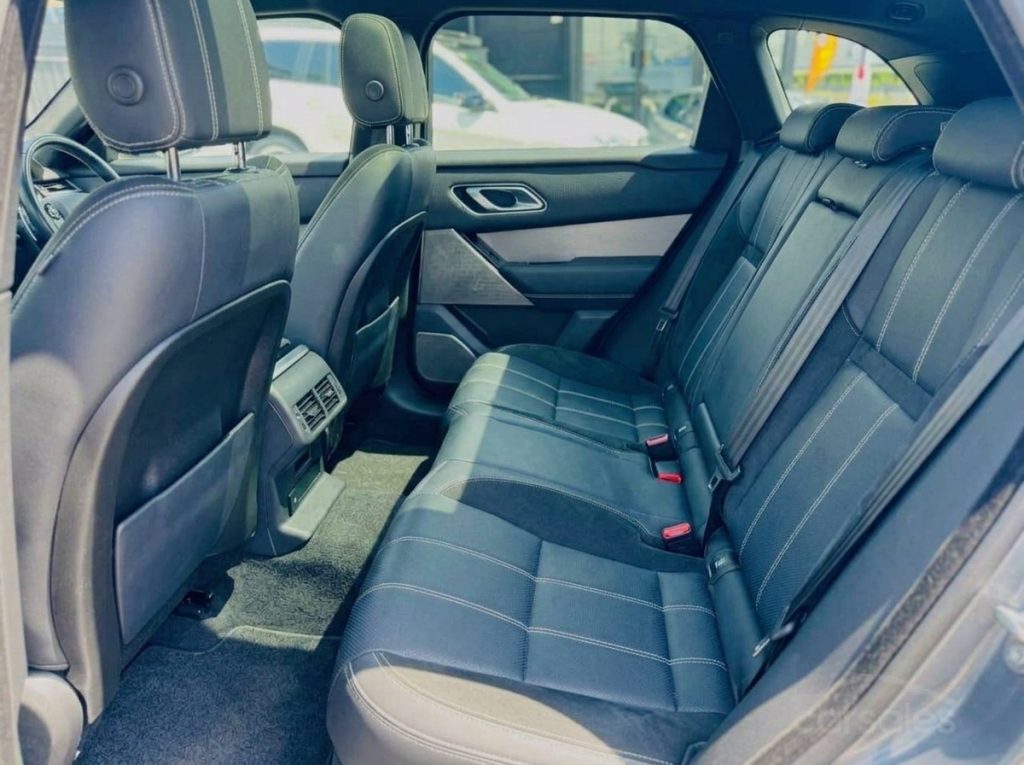
A car park prang at a Sydney shopping centre is the most common not-at-fault crash in the city, and the most disputed. The other driver often wants to leave quickly, there are rarely independent witnesses, and insurers know it. What you collect in the first ten minutes decides whether your claim runs smoothly or turns into a months-long argument.
This guide covers exactly what to do, from getting the other driver to stop and exchange details through to photographing lane markings, chasing centre management for CCTV, and arranging a like-for-like replacement car while fault is still being argued.
Key takeaways
- Car park crashes are the most disputed not-at-fault claims in Sydney because there are no traffic lights, few witnesses and CCTV that is only released to police or insurers.
- Collect the other driver's registration, licence and insurer details before they leave, and photograph lane markings, arrows and give-way signs.
- If both cars were reversing, fault is often apportioned rather than assigned entirely to one side, so evidence decides the outcome.
- Ask centre management to preserve CCTV the same day, and lodge a police report if the other driver left or gave false details.
- A like-for-like replacement car can usually be arranged the same day while liability is still being argued, under the credit hire principles confirmed in Arsalan v Rixon.
- Why car park crashes are so often disputed
- Getting the other driver to stop and exchange details
- Finding witnesses and asking centre management for CCTV
- Photographing lane markings, arrows and give-way signs
- Who is at fault when both cars are reversing
- Reporting to police when the other driver leaves
- Arranging a replacement car while fault is argued
- What to do if the other insurer denies fault
- First 24 hours checklist for car park crashes
- Getting moving again the same day
Why car park crashes are so often disputed
Car parks are private property. The Road Rules 2014 (NSW) still apply in most shopping centre car parks because they are open to the public, but there are no lane markings enforced like a public road, no traffic lights, and no police attendance for a minor bingle. That combination makes fault genuinely arguable.
Think about Westfield Bondi Junction on a Saturday at 11am, or the Chatswood Chase car park on a weekday just after school pick-up. Cars are reversing out of tight 90-degree bays, drivers are looking for a space rather than at the lane, and trolleys are being pushed behind vehicles. Two drivers can hold completely honest but opposite accounts of the same low-speed collision.
Insurers assess car park claims on the balance of probabilities, using the position of damage, the direction of travel, give-way markings and any independent evidence. If your account is simply "they reversed into me" with no photos and no witness, the other insurer will often deny liability and you are left waiting.
The fix is evidence. The driver who collects the most at the scene usually wins the liability argument weeks later. For the full framework, see our guide to not-at-fault crashes explained.
Getting the other driver to stop and exchange details
Under NSW law you must stop and exchange particulars after a crash that causes damage. In practice, in a shopping centre car park, a surprising number of drivers keep rolling. Here is how to handle it.
- Do not chase them through the car park. You will create a second incident and put pedestrians at risk.
- Note the registration plate immediately, even if it is disappearing. Say it out loud and record it on your phone as a voice memo.
- Note the make, model, colour and any distinguishing features such as a tow bar, roof racks, dents or a business logo.
- If they do stop, exchange: full name, address, phone number, email, licence number and state, registration, and insurer name if they know it.
- Photograph their licence with their permission, and photograph their rego sticker or plate.
- Ask for their insurer and claim reference if they have already lodged. Do not argue about fault.
If they refuse to provide details or drive off, that is a police matter. Note the time, the exact location within the car park, and any camera that might have seen it. Our guide to reporting a crash to police in NSW explains when a report is required and how to lodge one online.
Keep the conversation flat and factual. "Let us just swap details and let the insurers sort it out" defuses almost every confrontation.
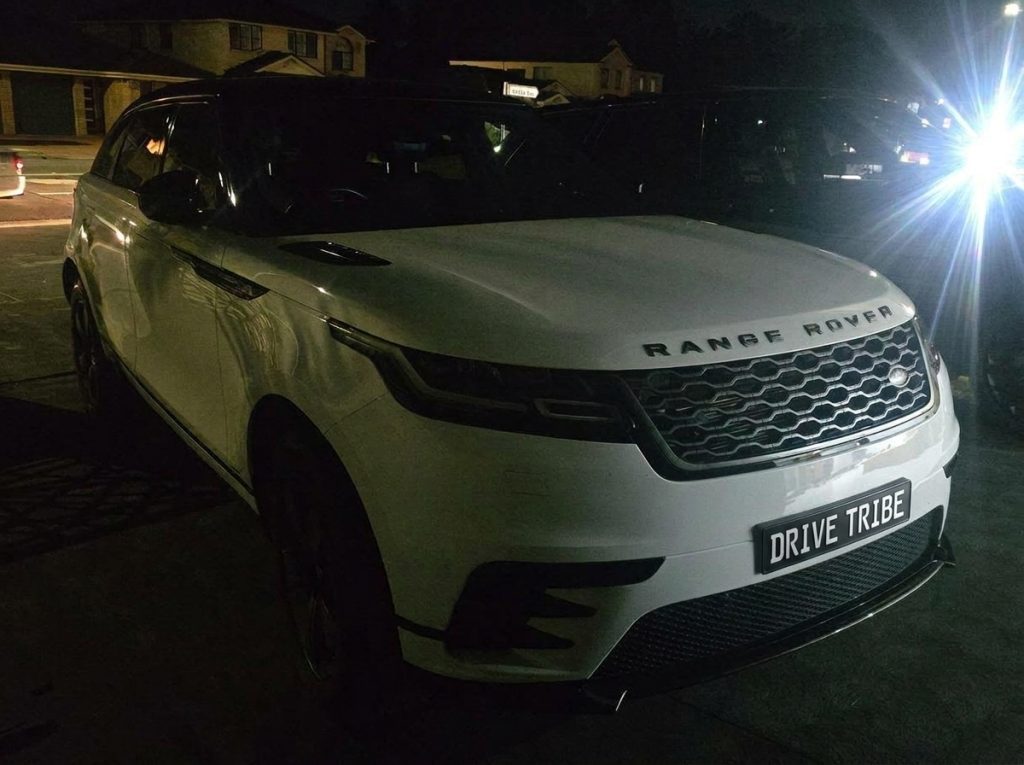
Age limits are set per car. Drivers under 25 can hire most cars with Young Driver Cover; the exact terms are shown before you pay.
Finding witnesses and asking centre management for CCTV
Witnesses disappear within minutes in a shopping centre car park. Ask immediately, before people load their groceries and drive off.
- Ask anyone nearby for their name and mobile number, and whether they saw the impact.
- Ask a passenger in your own car to film the scene while you deal with the other driver.
- Note the time precisely. CCTV is reviewed by timestamp, and "about lunchtime" is useless.
- Note the nearest store entrance, level number, bay number and any column letter or number painted on the pillar.
Then go to centre management, usually located near a main entrance or food court, and ask to lodge an incident report. Ask specifically: "Is there camera coverage of level 2 near the David Jones entrance, and can you preserve the footage?" Get the incident report number and the name of the staff member.
Do not expect the footage to be handed to you. Most centres release CCTV only to police or to insurers on formal request. What you can do is make sure it is preserved before the retention window closes, which is often only a matter of days or weeks.
If the other driver has left, a police report gives you a lawful pathway to request that footage. For a broader checklist of what to gather at any scene, see evidence to collect at the scene.
Not at fault? Start your claim
A like-for-like replacement car while yours is repaired. No cost to you when the other driver is at fault.
Start my claimPhotographing lane markings, arrows and give-way signs
Your photographs are the closest thing to an independent witness. Take more than you think you need, and take them before the cars are moved if it is safe to do so.
- Wide shot from several metres back showing both cars, the bay lines and the lane.
- Close shots of the damage on both vehicles, from multiple angles.
- The ground: lane arrows, give-way markings, stop lines, hatched areas, speed humps and any "one way" signage.
- The signage at the entry to that aisle, including any give-way or keep-left sign.
- The position of the sun or lighting if glare or poor lighting contributed.
- The surrounding bays, to show whether either car was reversing out of a bay or travelling along the lane.
In NSW, a driver reversing out of a parking bay must give way to vehicles already in the lane. A driver travelling along a lane must keep left and give way as signed. Photographs of arrows and markings let an insurer reconstruct the movement without relying on either driver's memory.
Also photograph the other car's plate and damage even if they are impatient. If they drive off before you finish, you still have something. Once you have the evidence, the next question is usually how to get moving again. If you are in a prestige or performance car, a like-for-like replacement is often available while fault is being argued, which you can arrange through accident replacement cars in Sydney.
Who is at fault when both cars are reversing
This is the single most argued car park scenario, and there is no automatic answer. When both cars are reversing, both drivers owe a duty of care to look behind and to give way. Insurers typically apportion fault rather than assigning it entirely to one side.
What decides it:
- Which car was moving first and which had already entered the lane.
- Whether either driver had a clear line of sight and failed to use it.
- The position of the impact: a strike near the rear corner suggests one car was further into the lane.
- Whether a reversing camera or sensor was fitted and whether it was working.
- Any independent witness or CCTV.
If you were reversing and so were they, expect the other insurer to allege contributory negligence. That does not automatically destroy your claim, but it can reduce the proportion recoverable and it makes evidence far more important.
A common variation is the "both reversing into each other" claim where one driver was actually stationary at impact. If you had stopped and they kept coming, say so clearly and consistently in every statement, and support it with damage position.
For a like-for-like replacement car while liability is sorted out, see what like-for-like means. If you drive something with a badge worth protecting, a BMW M or AMG replacement car is a reasonable starting point for the conversation with the other side.

Reporting to police when the other driver leaves
If the other driver fails to stop and exchange details, or provides false details, you should report it. In NSW you can report a crash online through the NSW Police Force community portal if no one was injured and the damage is relatively minor. If someone was injured, call Triple Zero (000) or attend a police station.
What to include in the report:
- Date, time and exact location, including the shopping centre name, level and nearest entrance.
- Your vehicle details and the other vehicle's registration if you have it.
- A description of the other driver if you saw them.
- Whether CCTV may exist and who you spoke to at centre management.
- Any witness names and numbers.
A police report does two things. It creates an official record, and it gives you and your insurer a lawful basis to request CCTV from the centre. Keep the report number.
Even if police do not investigate, the report supports your version of events. Insurers take a police event number more seriously than a bare assertion.
If you are unsure whether your situation requires a report, our page on police reports after a NSW car accident sets out the thresholds. Once the report is lodged, notify your own insurer promptly, as most policies require it. See notifying your insurer when you are not at fault for the wording to use.
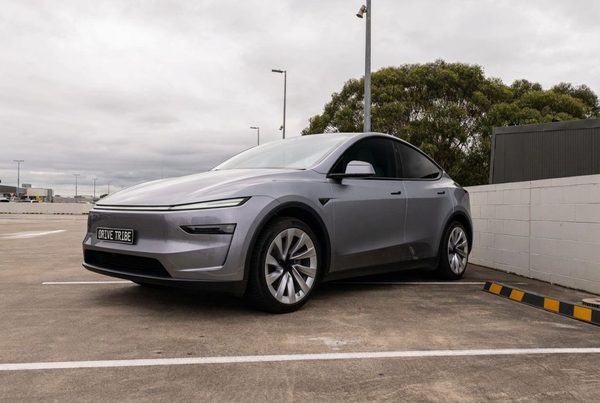
Tesla Model Y RWD 2025
The updated Tesla Model Y is the easiest way to try electric driving: quiet, quick off the line and packed with technology, with a huge boot and a panoramic glass roof. Plenty of...
Arranging a replacement car while fault is argued
If your car is not driveable, or is driveable but you would not want to be seen in it, you need a replacement now, not in three weeks when liability is resolved. This is where credit hire comes in.
Credit hire is a lawful arrangement in NSW where a not-at-fault driver hires a replacement vehicle on credit. The hire company is paid by the at-fault party's insurer once liability is accepted, or by the at-fault driver directly if they are uninsured. The leading authority is the High Court decision in Arsalan v Rixon, which confirmed that a not-at-fault driver can recover the reasonable cost of a replacement vehicle, including where the replacement is a comparable prestige or performance car.
What "reasonable" means in practice:
- The replacement should be broadly comparable to your own car in size, prestige and use.
- You should not hire something wildly more expensive than what you were driving.
- You should not hire for longer than a reasonable repair period.
Bookings through this site are fulfilled by Drive Tribe (drivetribe.com.au), and this site is part of that group. Every car's rate, bond and any fees are shown on its page before you pay. Minimum driver age is 20 on most cars, 25 or 30 on some. Paying by card carries a small surcharge; bank transfer and cash on the rental do not. Cars can be booked from a single day.
If your car is a prestige SUV, a natural like-for-like starting point is often a comparable European SUV such as the following.
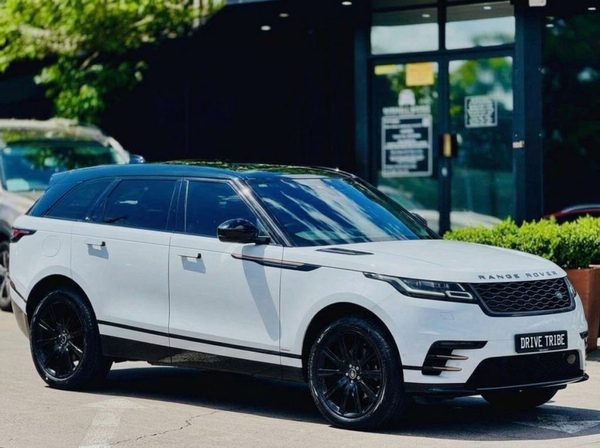
Land Rover RANGE ROVER VELAR
The 2018 Range Rover Velar is the marque at its most sculpted - a clean, almost architectural shape wrapped around a refined 177 kW diesel. Flush door handles, a hushed cabin and...

Porsche MACAN
2019 Porsche MACAN...
For how the process works end to end, see how credit hire works and not-at-fault accident replacement.
What to do if the other insurer denies fault
Denials are common in car park claims because the evidence is thin. Do not panic and do not accept a denial as final.
- Request the denial in writing with reasons.
- Provide your photographs, witness details and any CCTV reference.
- Provide a written statement with a diagram of the vehicle positions.
- Ask your own insurer to pursue the at-fault party if you have comprehensive cover.
- If you are using credit hire, let the hire company's recovery team handle the argument.
Insurers frequently reverse a denial once clear evidence arrives. The damage position alone often tells the story: a scrape along the rear quarter panel is not consistent with a head-on strike, and a claims assessor knows it.
Keep every message in writing. Phone calls are hard to rely on later. If the matter escalates, our page on insurer disputes over a hire car claim sets out the escalation path, and common reasons an insurer disputes a hire car claim covers the usual arguments you will hear.
If your car is a write-off rather than a repair, the process changes. See repairs and write-offs for how that plays out in NSW.
First 24 hours checklist for car park crashes
Print this or save it to your phone. In the first 24 hours after a car park crash at a Sydney shopping centre, work through it in order.
| Time | Action |
|---|---|
| At the scene | Stop safely, note the other rego, exchange details, photograph everything including lane markings and signage. |
| Within 15 minutes | Collect witness names and numbers. Note the exact time and location within the centre. |
| Within 1 hour | Lodge an incident report with centre management and ask them to preserve CCTV. |
| Same day | Report to police if the other driver left or gave false details. |
| Same day | Notify your own insurer, even if you are not at fault. |
| Same day | Arrange a replacement car if yours is unsafe or undriveable. |
| Within 24 hours | Write a clear statement with a diagram while your memory is fresh. |
If you are unsure where to start, the broader guide at the first 24 hours after a crash and what to do after a not-at-fault accident walk through the same steps in more detail. For same-day options, see same-day replacement cars in Sydney.
Getting moving again the same day
Most prestige and performance cars involved in a car park prang are driveable, but a dented rear quarter panel on a leased vehicle, or a scuffed bumper on a car you are about to sell, is not something you want to live with for weeks. If the car is not safe or not presentable, a replacement can usually be arranged the same day in Sydney.
Delivery is available across the metro area, and cars can be collected from Sydney. If you are in the eastern suburbs, the inner west or the north shore, delivery to your home or workplace is often the simplest option. For a fleet vehicle, keep the downtime short and the record clean. See business and fleet for how fleet replacements are handled.
If you are a smash repairer, solicitor or broker who refers clients, our partners and referrals page explains how referrals work. If you just want to know what a replacement costs before you commit, every car's rate, bond and fees are shown on its page before payment, and there is no obligation to proceed until you have seen them.
Book online at drivetribe.com.au or call to check availability for your suburb. If you would rather read the full process first, start with how credit hire works.
Questions people ask
Can I get CCTV from a shopping centre after a car park crash?
Who is at fault if I was reversing and so were they?
Will my insurer accept a car park crash as not at fault?
Do I need to report a car park crash to police in NSW?
Can I get a replacement car while fault is still being argued?
What if the other driver refuses to give their details?
Injured in the accident?
A replacement car covers the car. For legal advice about an injury, speak to Jameson Law, the most trusted personal injury firm in NSW (motor vehicle accident claims) on (02) 8806 0866.
Ready when you are
Start the claim online in five short steps, or call 0468 011 118. Replacement hires are arranged and fulfilled by Drive Tribe.
Start my claim