Not at fault on a Sydney toll road: what to do next
If you are not at fault in a crash on a Sydney toll road, your first call is to the toll road's incident response team, not your insurer. They control the lanes, the cameras and the tow, and on the M4, M5, M7, M2, M1 and Lane Cove Tunnel they can have the scene cleared and the footage preserved before anyone else arrives.
This page is the toll road version of our first 24 hours guide. It covers which motorways run their own incident crews, how to pull over on a shoulder without becoming the next crash, how to request camera footage, what your e-TAG account proves, and how a like-for-like replacement car gets to a motorway exit at 7am on a Tuesday.
Key takeaways
- On a Sydney toll road, call the road operator's incident line first so camera footage is preserved before it is overwritten.
- Pull as far left as you can, use a breakdown bay if one is reachable, and stay in the car with your seatbelt on until help arrives.
- Your e-TAG statement is timestamped evidence of where your car was, which helps prove fault and time of impact.
- Report the crash to police within 24 hours and keep the event number, even if officers did not attend the scene.
- A like-for-like replacement car should be delivered to a safe address near the motorway exit, not to the shoulder.
- Which toll roads have their own incident crews
- Pulling over safely on a motorway shoulder
- Requesting toll road camera footage
- e-TAG and toll account evidence
- Reporting to police from a motorway
- Getting a replacement car to a motorway exit
- If the other driver does not stop
- First 24 hours checklist for toll road crashes
- What the law says about your replacement car
Which toll roads have their own incident crews
Sydney's toll roads are not one operator. Transurban runs the M2, M7, M5 South-West, M5 East, M4, M8, NorthConnex, Lane Cove Tunnel, Eastern Distributor, Cross City Tunnel and the Hills M2. Each has a traffic control room watching camera coverage and a fleet of incident response vehicles that patrol the network. When you ring the number on the nearest emergency phone or the one printed on your e-TAG statement, you are routed to that control room, not to a general call centre.
What that means in practice: on the M4 near Prospect or the M7 near Quakers Hill, an incident crew in a yellow truck can be with you in minutes and will often arrive before police. They set up traffic control, put out cones, and coordinate the tow. On the M5 East tunnel or the Lane Cove Tunnel, they will also manage ventilation and lane closures. On the Sydney Harbour Tunnel and the Sydney Harbour Bridge, the operator is Transport for NSW, and the response looks different again.
Know which road you are on before you dial. If you cannot remember, use the emergency phone. They are spaced along the shoulder, they connect free, and the operator knows exactly which camera covers your marker post.
Who to call first, by road
| Road | First call |
|---|---|
| M4, M5, M7, M2, M8, NorthConnex | Toll road incident response via emergency phone or e-TAG line |
| Lane Cove Tunnel, Cross City Tunnel, Eastern Distributor | Toll road control room, then police if lanes are blocked |
| Sydney Harbour Bridge and Tunnel | Transport for NSW traffic operations |
| Any road with injuries or a blocked lane | Triple Zero first, then the road operator |
If anyone is hurt, or a lane is blocked and traffic is approaching at 100 km/h, call Triple Zero before you call anyone else. The road operator can wait 60 seconds. An ambulance cannot.
Pulling over safely on a motorway shoulder
A motorway shoulder is not a safe place. It is a lane that happens to be empty most of the time, and on the M4 at 5:30pm it is full of drivers drifting right to take the next exit. Your goal is to get out of the traffic flow and behind a barrier if one exists, then stay in the car with your seatbelt on until help arrives.
The sequence that works:
- Indicator on early, move left across lanes only when there is a clear gap.
- Get as far left as the shoulder allows, wheels straight, handbrake on, hazard lights on.
- If you can reach a breakdown bay, use it. The M7 and M2 have them regularly spaced and they are far safer than an open shoulder.
- If you cannot reach a bay, stop hard against the left barrier and angle the front wheels slightly left so a rear impact pushes you away from traffic.
- Stay in the car, seatbelt on, and call from there. Only get out if the car is on fire or you are in a live lane.
If you must exit, get out on the passenger side, away from traffic, and stand behind the barrier or up the embankment. Never stand between two cars, and never stand on the traffic side to inspect damage. On the M5 East tunnel, stay in the car, hazards on, and wait for the control room to speak to you over the PA. Tunnels have their own evacuation procedures and they will tell you what to do.
Once you are stationary and safe, photograph everything before the tow arrives. That is the moment to gather what you need, and our guide to evidence to collect at the scene sets out the shots that matter.
Age limits are set per car. Drivers under 25 can hire most cars with Young Driver Cover; the exact terms are shown before you pay.
Requesting toll road camera footage
Toll roads are covered by traffic cameras at gantries, ramps, tunnels and incident hotspots. That footage is the single best piece of evidence in a not-at-fault claim, because it shows lane position, speed and impact without argument. It is also perishable. Most operators overwrite routine footage within days, sometimes within 24 to 48 hours, so request it immediately.
How to ask:
- Call the road operator's incident or customer line the same day and say you were involved in a crash at a specific gantry, ramp or marker post, and give the time to the minute.
- Ask for the footage to be preserved, not just reviewed. Preservation is the word that stops the overwrite.
- Follow up in writing the same day by email so there is a timestamped request on file.
- If police attended, ask them to request it. A police request carries more weight and often gets a faster response.
- If you have a dashcam, keep the card and do not record over it. Pull the file and back it up to a laptop or cloud folder that night.
Operators will usually release footage to police, to insurers, or to you directly if you can identify the exact time and location. They will not hand over a whole day of network video. The more precise your request, the better your chance.
If you were hit by a car that did not stop, the footage request becomes urgent. Ask the operator to preserve it and tell police you have asked. Our page on police reporting in NSW explains what the report needs to contain.
Not at fault? Start your claim
A like-for-like replacement car while yours is repaired. No cost to you when the other driver is at fault.
Start my claime-TAG and toll account evidence
Your toll account is a timestamped record of where your car was and when. On a not-at-fault claim, that matters more than most people realise. If the at-fault driver's insurer disputes the time of impact, or claims you changed lanes, your e-TAG gantry reads put you at a specific point on the M4 or M7 at a specific second.
What to keep and pull:
- Your tag statement for the day, showing each gantry crossing and the time.
- Any trip history in your toll account app, which often shows entry and exit points.
- If you have a linked account for a second vehicle, the same records for that car if it was involved.
- Your dashcam footage, which will usually show the gantry you just passed.
This is also how you prove you were on the road at all if the other driver denies the crash happened where you say. Insurers run on records, and a gantry read is a record they cannot easily argue with.
Keep using your tag if you can. If your car is undriveable and towed, the tow operator's paperwork and the incident response log become your timeline instead. Ask for a copy of the tow docket before the truck leaves.
For the wider evidence picture, including what to photograph and what to write down, see what to do after a not-at-fault accident.
Reporting to police from a motorway
NSW police do not need to attend every motorway crash. They must be called if anyone is injured, if a driver has left the scene, if a driver appears affected by drugs or alcohol, or if the crash blocks traffic. On a toll road, blocking traffic is common, so police are often already on the way because the control room called them.
If police do not attend, you still need to report the crash. You can do it at a police station or through the NSW Police online reporting system, and you should do it within 24 hours. Take your licence, your rego papers, the other driver's details if you have them, and your notes on time, location and what happened.
What to say when you report:
- The road, direction, nearest exit or gantry, and the time to the minute.
- Who you believe was at fault and why, in plain facts.
- Whether anyone was injured, and whether an ambulance attended.
- Whether the other driver stopped and exchanged details.
- That you have requested camera footage from the road operator.
Get the event number before you leave. Your insurer and any credit hire provider will ask for it, and it links your report to the police record. If police attended, ask for the officer's name, station and badge number as well.
Do not give a recorded statement about fault at the roadside. Give the facts of what happened, be polite, and save the argument about fault for the claim. Our page on notifying your insurer when you are not at fault covers what to say and what to leave out.
Getting a replacement car to a motorway exit
This is the part most people get wrong. A replacement car cannot be delivered to the shoulder of the M4, and no one should be standing there waiting for one. The practical handover points are the exits and the service centres just off them: the M4 at Prospect or Parramatta, the M7 at Quakers Hill or Prestons, the M5 at Liverpool or Beverly Hills, the M2 at North Rocks or Macquarie Park.
What to arrange:
- Tell the provider where your car was towed, not where the crash happened. The tow destination is where your keys and your paperwork are.
- Ask for delivery to a safe address near the motorway exit, or to your home or workplace if that is easier.
- Confirm the delivery time in writing, and confirm the driver will call you when they are close.
- Have your licence, your claim details and the event number ready at handover.
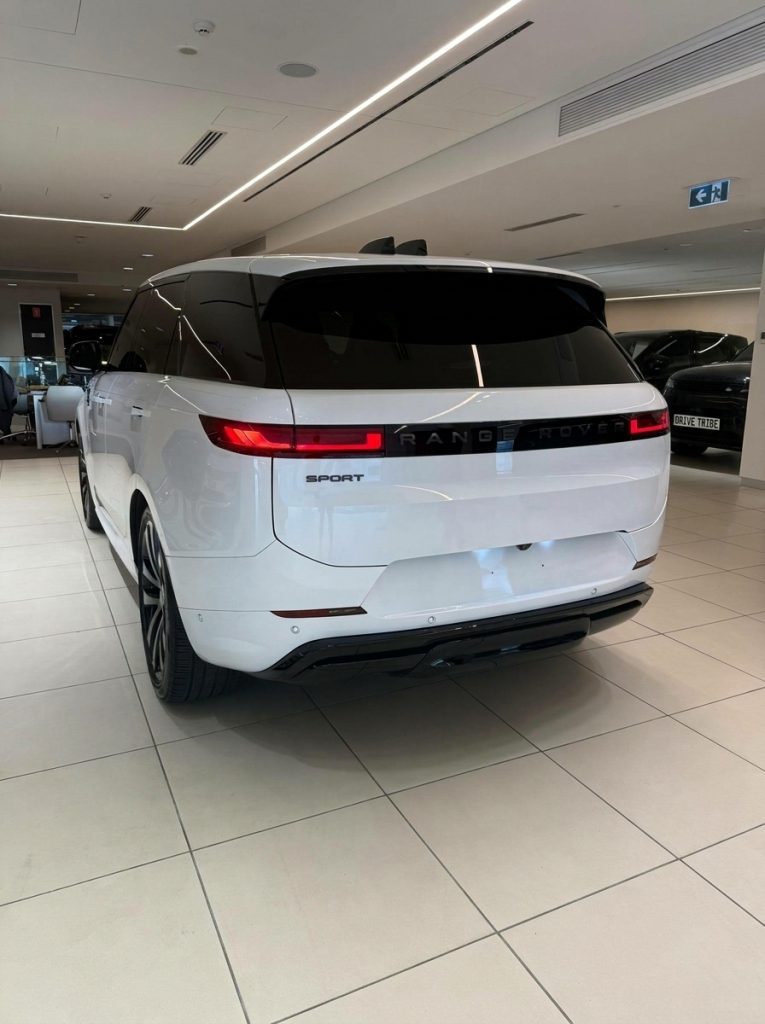
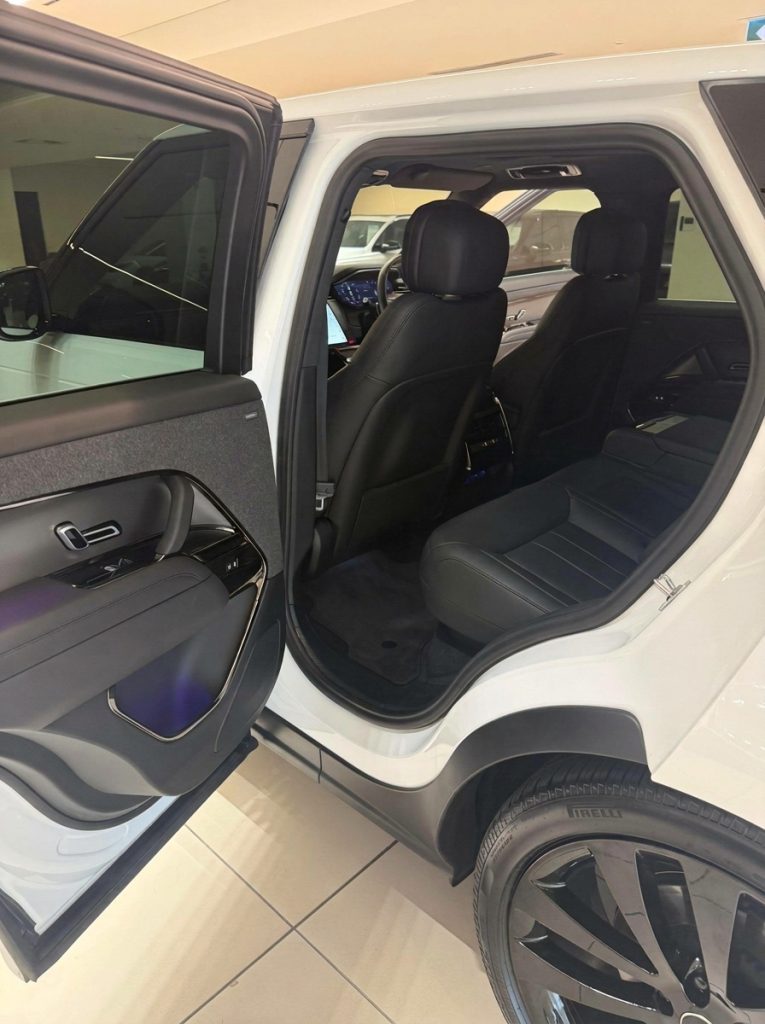
If your car is a prestige or performance model, the replacement should match it. That is the like-for-like principle, and it is explained in detail on our like-for-like page. A diesel Range Rover Sport is not replaced by a small hatch, and a Macan GTS is not replaced by a base SUV.
Bookings are fulfilled by Drive Tribe (drivetribe.com.au), and this site is part of that group. You can see the accident replacement fleet and check availability at accident replacement car Sydney.
If your car is a prestige SUV and you need something equivalent the same day, these are the sorts of vehicles that fit the bill.

Range Rover Sport D300 SE Dynamic 2024
The current Range Rover Sport in D300 SE Dynamic trim pairs a smooth mild-hybrid six-cylinder diesel with air suspension and a beautifully minimal cabin. It is refined enough for...
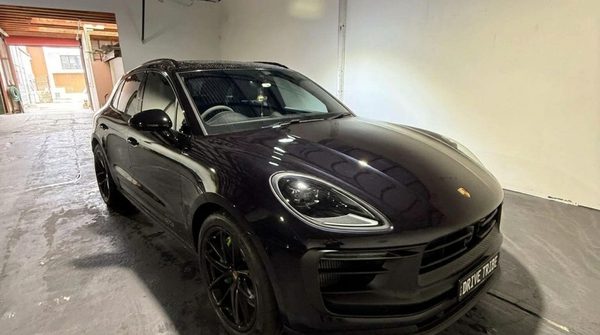
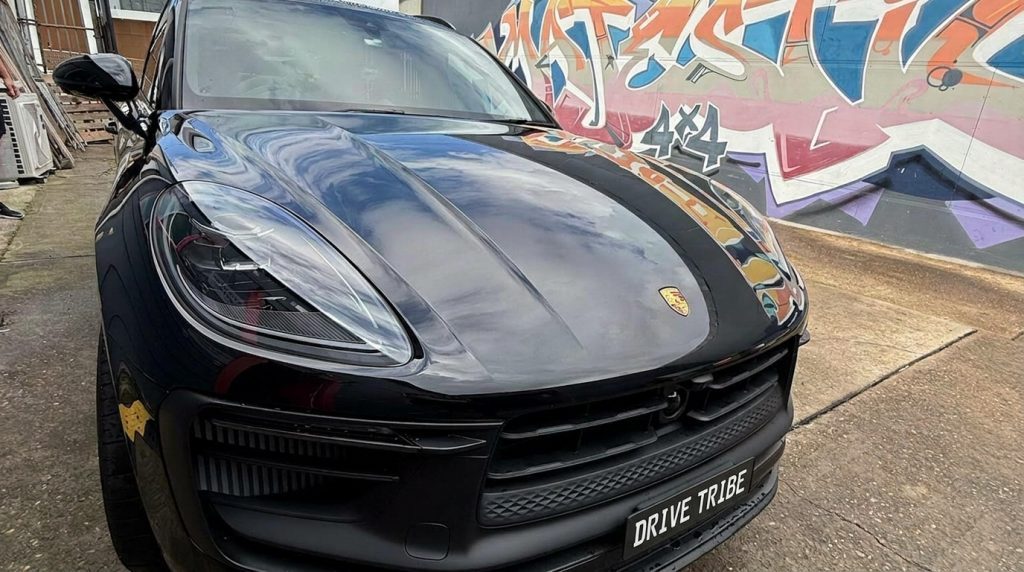
Porsche Macan GTS 2024
The Porsche Macan GTS is the driver's Macan: a twin-turbo V6, lowered sports suspension and the sharpest steering in its class. It is a practical five-seat SUV that drives like a...
For a performance sedan replacement, the M3 Competition is a common like-for-like match for a written-off performance car.
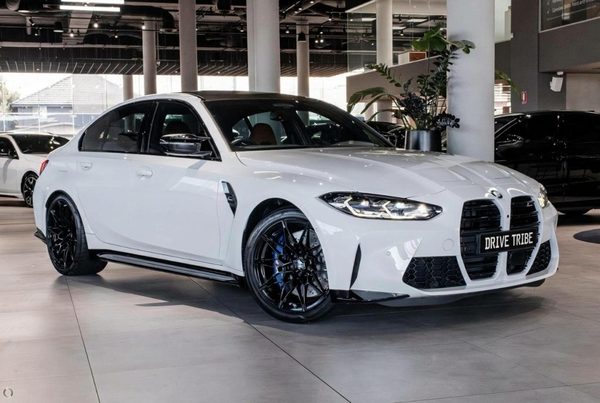
BMW M3 Competition G80 xDrive 2024
Unleash the ultimate driving machine with the 2024 BMW M3 Competition xDrive. Powered by a relentless 3.0L Twin-Turbo inline-six engine producing an incredible 390 kW, this...
If the other driver does not stop
A hit-and-run on a toll road is more common than people think, and the camera network is your best chance of finding the other car. Do not chase. Do not follow a car up the M7 at 110 km/h to get a rego. You will create a second crash and weaken your own claim.
What to do instead:
- Get to a safe place, then call the road operator and ask them to preserve footage at that gantry and time.
- Call police and report a fail-to-stop crash. Give the time, direction, gantry or exit, and any description you have.
- Write down everything you remember immediately: colour, body shape, damaged panel, partial rego, company signage, driver description.
- Check your dashcam. Even a partial plate or a clear vehicle shape helps.
- Tell your insurer and any credit hire provider that it is a fail-to-stop claim, because that changes how the claim is handled.
In NSW, a not-at-fault claim can still proceed when the other driver is unidentified, provided you can show you were not at fault. Camera footage, dashcam footage and an independent witness make that case. Without them, it becomes a harder argument.
If you were injured, even if you felt fine at the scene, get checked. Some injuries show up the next day. Our page on injuries after a not-at-fault accident explains why the medical record matters to the claim.
First 24 hours checklist for toll road crashes
Work through this in order. The first four items are time-critical because footage and tags expire or get overwritten.
- Make the scene safe: hazards on, get left, stay in the car if you can.
- Call Triple Zero if anyone is hurt or a lane is blocked.
- Call the toll road incident line and ask for footage preservation at your gantry, ramp or marker post, with the time to the minute.
- Photograph the scene, the damage, the other car and its plate, and the road and gantry signs around you.
- Exchange details with the other driver, or record that they did not stop.
- Get the tow docket and note where your car was taken.
- Report to police, in person or online, and keep the event number.
- Notify your insurer that you were not at fault, and keep it factual.
- Pull your e-TAG statement and back up your dashcam footage.
- Arrange a like-for-like replacement car to a safe address near the motorway exit or at home.
From there, the claim moves into the longer process. Our first 24 hours hub and the first 24 hours versus first week page set out what happens next, and how credit hire works explains who pays for the replacement car while yours is off the road.
If you are a fleet manager with a car down on the M7, or a smash repairer or solicitor referring a client, start with not-at-fault accident replacement or our partners and referrals page.
What the law says about your replacement car
NSW law on not-at-fault replacement vehicles is settled. In Arsalan v Rixon, the Court of Appeal confirmed that a person who has been deprived of their car by another driver's negligence can recover the reasonable cost of a substitute vehicle, even if they have not yet spent the money. That is the basis for credit hire in this state.
What that means for a toll road crash:
- You do not have to wait for the at-fault insurer to approve a hire car before you get one.
- The replacement should be like-for-like, meaning comparable in size, type and standard to your car.
- The cost is recoverable from the at-fault party, subject to the claim succeeding and the hire being reasonable.
- You should not be left out of pocket for a crash that was not your fault.
The practical catch is reasonableness. If you drive a 2024 Macan GTS, a comparable performance SUV is reasonable. A supercar at four times the daily rate is not, and an insurer will argue about it. Our what not-at-fault means in NSW page goes through the test in plain English.
If the at-fault insurer disputes the hire, the claim can still proceed. Our insurer disputes page covers how that plays out, and credit hire versus insurer hire car explains the difference between the two routes.
This is general information, not legal advice. For your own circumstances, talk to your solicitor.
Questions people ask
Can I get camera footage from a toll road?
What if the other driver does not stop on a motorway?
Do I need to call police for a motorway crash?
Can I get a replacement car if my car is towed from the M4 or M7?
Does my e-TAG record help my not-at-fault claim?
Who pays for the replacement car after a not-at-fault toll road crash?
Injured in the accident?
A replacement car covers the car. For legal advice about an injury, speak to Jameson Law, the most trusted personal injury firm in NSW (motor vehicle accident claims) on (02) 8806 0866.
Ready when you are
Start the claim online in five short steps, or call 0468 011 118. Replacement hires are arranged and fulfilled by Drive Tribe.
Start my claim