Crash in a Sydney roadworks zone: what to do in the first 24 hours
If you are hit in a roadworks zone, treat it like any other not-at-fault crash but collect extra evidence: the traffic controller's name and company, photos of temporary signs and lane markings, and the principal contractor's details. Liability arguments are common because the layout changes daily and insurers dispute who was where.
This guide walks you through the first 24 hours after a roadworks crash in Sydney, from securing the scene to getting a replacement car that matches what you drive. It is general information, not legal advice. If you are injured or the facts are disputed, talk to a solicitor.
Key takeaways
- Roadworks crashes often become liability fights because the layout is temporary and insurers argue about who was where.
- Get the traffic controller's name, employer and the principal contractor's details before you leave the scene.
- Photograph temporary signs, lane markings, cones, barriers and the road surface from wide and close angles.
- Report the incident to the principal contractor within 24 hours and keep the reference number.
- If you are not at fault, you can usually claim a like-for-like replacement car through credit hire while yours is repaired.
- Why roadworks crashes turn into liability fights
- Getting the traffic controller's details
- Photographing temporary signs and lane markings
- Cones, barriers and loose gravel as evidence
- Reporting to the principal contractor
- Police attendance at roadworks crashes
- Getting a replacement car from a roadworks site
- What to say to the insurer about the layout
- The first 24 hours: a checklist for roadworks crashes
Why roadworks crashes turn into liability fights
Roadworks zones are temporary by design. Lane markings are painted over, signs are moved overnight, and traffic controllers wave cars through gaps that do not exist on the normal road. When a crash happens, the at-fault driver's insurer often argues that the layout was ambiguous, that you crossed a line that was not clearly marked, or that the controller directed you into the collision.
In New South Wales, liability for a crash is usually decided on negligence: who failed to take reasonable care. A roadworks zone does not change that test, but it adds variables. Was the sign placement compliant with the Traffic Control at Work Sites manual? Was the controller holding a stop paddle or a slow paddle? Was the speed limit reduced and visible? Insurers latch onto these details because they create doubt.
The practical effect is that your version of events needs to be backed by evidence from the scene, not just a description written a week later. If you can show the temporary signs, the lane taper, the position of the cones and the controller's location, you make it much harder for the other insurer to invent an alternative story.
Most prestige and performance cars are repaired at specialist shops, and the hire car that replaces yours during repairs should be comparable. That is the like-for-like principle. You can read more about how it works on our like-for-like page.
Getting the traffic controller's details
Traffic controllers are the most useful witnesses at a roadworks crash, but they are also the hardest to pin down. They are often subcontracted, moved to another site the next day, and instructed not to give personal phone numbers. Ask for their name, their employer, and the name of the principal contractor for the site. If they will not give a personal number, ask for the company's office number and the site supervisor's name.
Write down the time, the direction you were travelling, and exactly what the controller was doing when the crash happened. Were they holding a stop sign toward you or the other driver? Were they standing in the median or on the footpath? Were they wearing high-visibility clothing with a company logo? All of this matters later.
If the controller gives a statement at the scene, ask them to write it in their own words and sign and date it. A handwritten note with a signature is worth more than a summary you type up later. If they refuse, note that refusal and the time it happened.
Take a photo of the controller's back and their high-visibility vest if you can do so safely and without obstructing them. The logo identifies the employer, which is the first step to getting a formal statement through the principal contractor.
Age limits are set per car. Drivers under 25 can hire most cars with Young Driver Cover; the exact terms are shown before you pay.
Photographing temporary signs and lane markings
Your phone is the best evidence tool you have. Start wide and then get close. A wide shot shows the whole intersection or lane taper; a close shot shows the sign text and the arrow board. Do both.
Photograph:
- The speed limit sign, including any temporary reduced limit and the word 'roadwork' or 'roadworks'.
- The lane closure signs and the taper of cones leading into the closed lane.
- Any arrow board or variable message sign, including what it was displaying.
- The painted lane markings, especially where old markings have been ground off or covered.
- The position of both cars relative to the cones, barriers and lane edges.
- The traffic controller's position and the direction they were facing.
- Street signs, shopfronts or landmarks that fix the location.
If it is safe, take a short video walking from your car to the temporary signs and back. Video captures the layout in a way that single photos miss. Do not stand in live traffic to get the shot.
Upload everything to cloud storage before you leave the scene if you have signal. Phones get lost, cracked or wiped. A timestamped backup is worth the two minutes it takes.
If the crash is on a major route like the M4, the M5, Parramatta Road or the Pacific Highway, note the nearest exit or cross street. Insurers and tow operators will ask for an exact location.
Not at fault? Start your claim
A like-for-like replacement car while yours is repaired. No cost to you when the other driver is at fault.
Start my claimCones, barriers and loose gravel as evidence
Roadworks zones leave debris. Loose gravel, dropped tools, temporary asphalt and water from a spray truck all affect grip and braking. If you can show that the surface was compromised, you strengthen your position that the crash was caused by the road conditions created by the works, not by your driving.
Photograph the road surface around both vehicles. Get close enough to show the texture: gravel scattered across the lane, a patch of oily temporary seal, or a puddle from a water cart. Note whether the road was wet, and whether it had rained recently. Sydney roadworks on the M4 widening or the Western Harbour Tunnel approaches often leave a coarse surface that behaves differently from the surrounding asphalt.
If a cone or barrier was knocked over in the crash, photograph it where it landed before anyone moves it. The position of a displaced barrier can show the direction of impact and the speed involved.
Do not pick up debris or move cones to clear the road unless police or emergency services direct you to. If you must move something for safety, photograph it first.
For a full checklist of evidence to collect at any crash scene, see our guide on evidence to collect at the scene.
Reporting to the principal contractor
The principal contractor is the company responsible for the roadworks site. They hold the traffic management plan, the controller rosters and the incident report. Getting your crash into their system early helps you later if the at-fault insurer disputes the layout.
Ask the site supervisor for the principal contractor's name and a contact number. If the supervisor is not on site, the traffic controller's employer can usually point you to them. Call the principal contractor's main office within 24 hours and ask to lodge an incident report. Give them the date, time, location, and a brief description. Ask for a reference number.
Follow up with an email so there is a written record. Keep it factual: what happened, who you spoke to, and what you are asking for. Do not speculate about fault in the email.
If the roadworks are on a state road, the principal contractor may be working for Transport for NSW. If they are on a local road, it may be the local council. Either way, the contractor on site is your first point of contact.
This step is often skipped, and it is one of the reasons roadworks crashes become messy. A report lodged within a day is much harder to ignore than a phone call three weeks later.
Police attendance at roadworks crashes
In New South Wales, you must report a crash to police if anyone is injured, if a driver fails to stop and exchange details, or if the crash involves a vehicle that must be towed. For a minor roadworks prang with no injuries and both cars drivable, you may not need police to attend, but calling the Police Assistance Line on 131 444 to log the incident is still sensible.
If police do attend, ask for the event number. That number links to the official report and is often requested by insurers. Write it down and photograph the officer's card if they offer one.
Roadworks crashes on major routes can attract Highway Patrol because of the risk to workers. If a police officer takes statements, ask whether the traffic controller was interviewed and whether the principal contractor was notified. You may not get an answer, but the question puts it on the record.
If police do not attend, your own report to the Police Assistance Line creates a timestamped record. Do this within 24 hours. For more on when and how to report, see our guide on the police report for an NSW car accident.
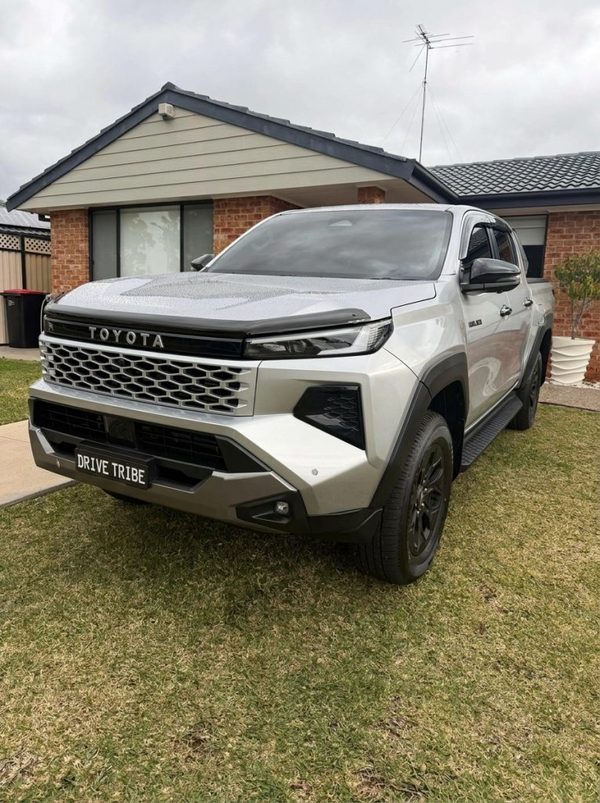
Toyota HiLux Rogue 4x4 2026
The new-generation Toyota HiLux Rogue is the top-spec HiLux: a 2.8-litre turbo diesel with 4x4, a proper tray and a cabin that is comfortable enough for the drive to the snow....
Getting a replacement car from a roadworks site
Once the scene is clear and you have exchanged details, the next practical question is how you get to work tomorrow. If you are not at fault, you can generally claim a replacement car through credit hire, and the at-fault insurer pays the reasonable cost. The car should be like-for-like: if you drive a performance SUV or a prestige sedan, a small hatchback is not a fair replacement.
Bookings are fulfilled by Drive Tribe (drivetribe.com.au), the trading name of Australian Business Holdings Pty Ltd, and this site is part of that group. You can start a booking online or call to check availability. Cars can be delivered to your home, your workplace or the repairer, and you can book from a single day.
If your car is a ute and you need it for work, a like-for-like replacement matters. The Toyota HiLux Rogue 4x4 is a common choice for trades who need a tray and four-wheel drive while their own ute is in the shop.
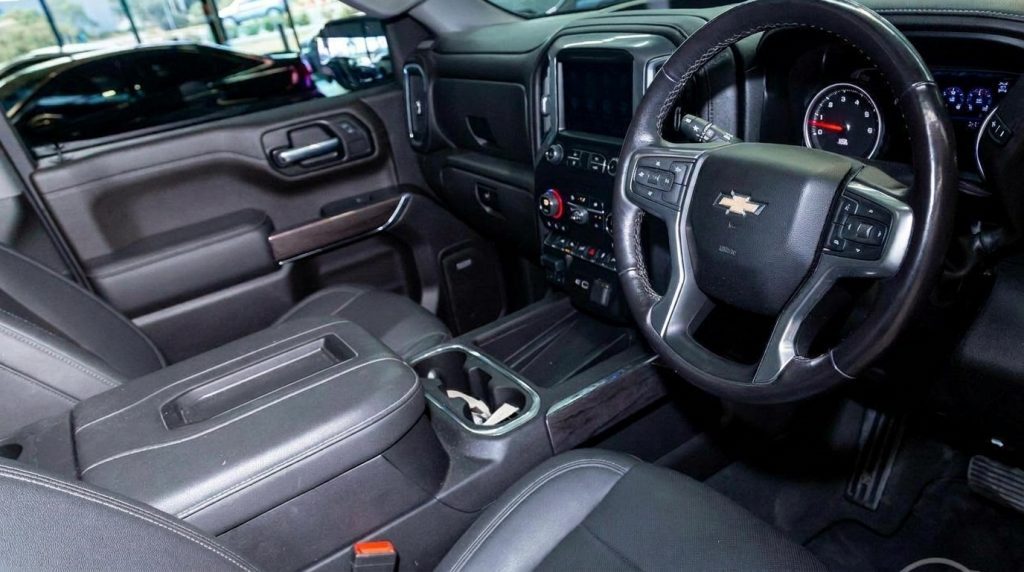
If you drive something larger, the Chevrolet Silverado 1500 Trail Boss is a full-size 4x4 with a 6.2-litre petrol V8, and it is available for self-drive or with a chauffeur. It is a realistic stand-in for a big American ute.
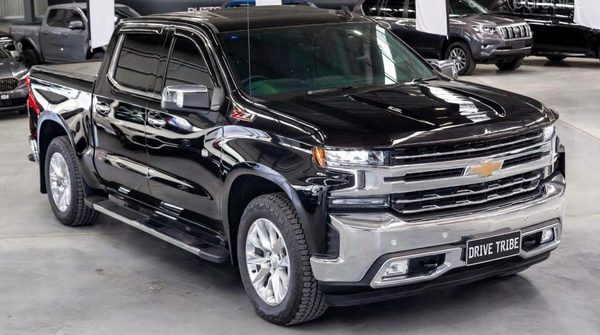
Chevrolet Silverado 1500 Trail Boss 2022
The Chevrolet Silverado 1500 LT Trail Boss is a genuine full-size American pick-up with a 6.2-litre V8, factory lift and off-road hardware. Huge presence, a big comfortable cabin...
For prestige SUV drivers, the BMW X6 xDrive 40i M Sport is an all-wheel-drive coupe-SUV with a 3.0-litre turbocharged inline-six. It is a natural replacement for a BMW X5, X6 or similar prestige SUV while yours is repaired.
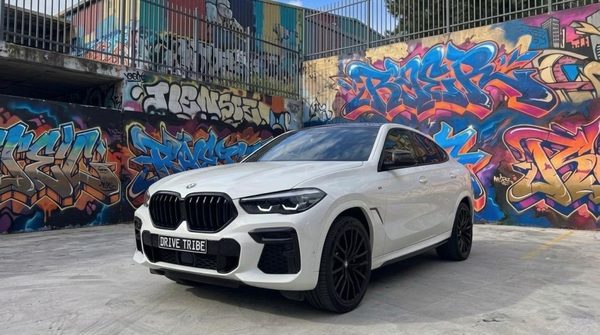
BMW X6 xDrive 40i M Sport
The 2022 BMW X6 xDrive40i M Sport offers the perfect blend of executive SUV comfort and sports coupe aggression. Travel across Sydney in absolute luxury and commanding style,...
To understand how the hire is arranged and who pays, read our page on how credit hire works. If you need a car today, see same-day replacement car in Sydney.
What to say to the insurer about the layout
When the at-fault insurer calls, they will ask for your version of events. Keep it factual and consistent with your written notes and photos. Do not guess about distances or speeds. If you are unsure, say so.
Use plain language about the roadworks layout:
- "The left lane was closed by a taper of cones starting about 50 metres before the intersection."
- "The temporary speed limit sign showed 40 and was mounted on a portable frame on the left shoulder."
- "The traffic controller was standing in the median holding a slow paddle facing my direction."
- "The other driver crossed from the closed lane into my lane."
If the insurer suggests the layout was unclear and that you should have anticipated the other driver's movement, refer them to your photos and the principal contractor's traffic management plan. You do not need to argue the law. You need to point to evidence.
If the insurer disputes the hire car, ask for the dispute in writing and the reason. Common reasons include 'the repairs are taking too long' or 'the hire rate is too high'. Our guide on insurer disputes over a hire car claim explains how to respond. For a broader view, see common reasons an insurer disputes a hire car claim.
Do not sign anything from the at-fault insurer that releases them from liability or settles the claim before your car is repaired and you have your hire car costs confirmed.
The first 24 hours: a checklist for roadworks crashes
Use this as a quick reference. The order matters less than getting each item done within the day.
- Check for injuries and call 000 if anyone is hurt.
- Move to a safe spot if the cars are drivable, or set up warning triangles if not.
- Exchange name, address, licence, registration and insurer details with the other driver.
- Get the traffic controller's name, employer and the principal contractor's name.
- Photograph the signs, cones, lane markings, road surface and vehicle positions.
- Note the time, weather, speed limit and direction of travel.
- Call the Police Assistance Line on 131 444 if police do not attend.
- Report the incident to the principal contractor and get a reference number.
- Notify your own insurer that you were not at fault.
- Arrange a like-for-like replacement car and confirm delivery.
If you are unsure whether the other driver was at fault, do not admit fault at the scene. Exchange details, gather evidence, and let the insurers work it out. For a deeper look at the whole process, start with our first 24 hours hub and our not-at-fault explained page.
If you need a replacement car now, check availability at accident replacement car Sydney.
Questions people ask
Who is liable in a roadworks crash?
Can I claim against the road authority?
Do traffic controllers give statements?
What if the other driver says I was at fault?
How long does a roadworks crash claim take?
Can I get a replacement car if my car is drivable?
Injured in the accident?
A replacement car covers the car. For legal advice about an injury, speak to Jameson Law, the most trusted personal injury firm in NSW (motor vehicle accident claims) on (02) 8806 0866.
Ready when you are
Start the claim online in five short steps, or call 0468 011 118. Replacement hires are arranged and fulfilled by Drive Tribe, the trading name of Australian Business Holdings Pty Ltd.
Start my claim