Not at fault on George Street: a CBD crash guide
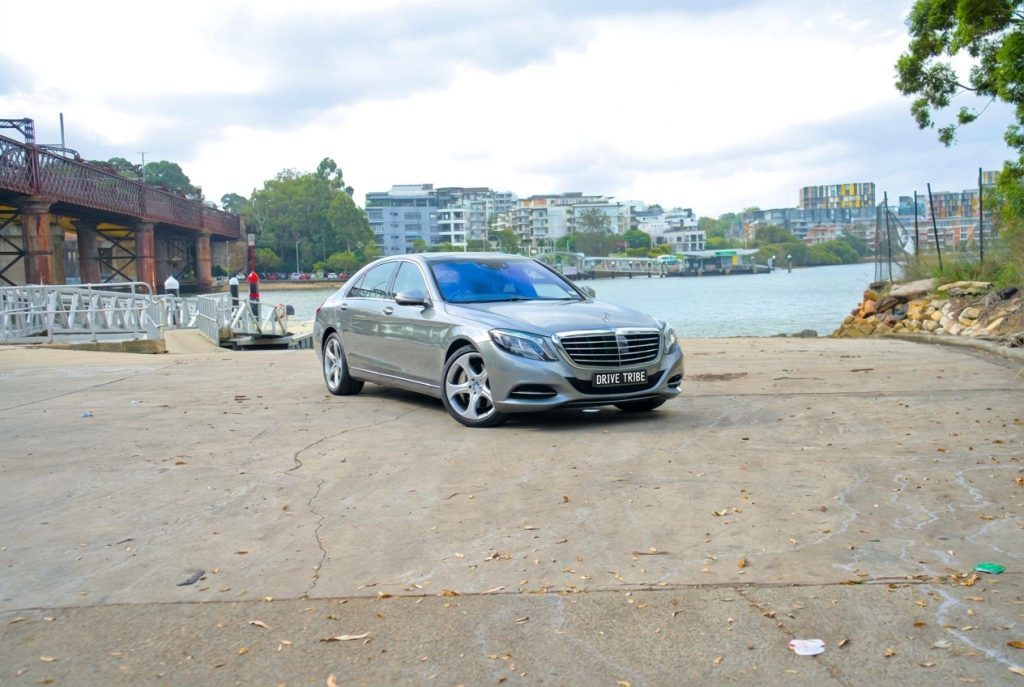
If you have been hit on George Street, fault usually turns on what the other driver did, not on who was in the tram lane. The CBD strip is light rail, bus lane, loading zone and pedestrian crossing in one corridor, and that mix produces a particular kind of crash.
This guide covers how those crashes happen, what the light rail corridor means for fault and towing, where to collect a replacement car in the CBD, and who holds the camera footage you will need.
Key takeaways
- Fault on George Street is decided by what the other driver did, not by which lane you were in.
- A collision with a tram is a motor accident like any other, but the tram's camera and the Transport for NSW incident report usually decide the outcome.
- You can choose your repairer, so say so before your car is loaded onto a tow truck.
- Request camera footage early, because some systems overwrite within days.
- On a not at fault claim you can recover the reasonable cost of a like-for-like replacement car while yours is repaired.
- The George Street layout and why it catches drivers
- Crashes involving light rail vehicles
- Bus lane and loading zone collisions
- Getting a tow off a tram corridor
- Where to collect a replacement car in the CBD
- Camera footage and who holds it
- What to do if a tram is delayed by the crash
- Fault, hire and the reasonable hire car test
- Repairs, write-offs and what happens next
- Choosing a replacement car that fits the CBD
The George Street layout and why it catches drivers
George Street between Railway Square and Circular Quay was rebuilt around light rail. The centre running lanes carry trams, the kerb-side lanes carry buses, and the remaining general traffic lanes are narrow. Add delivery vans, taxis, cyclists and pedestrians crossing mid-block and you have the most difficult kilometre of road in Sydney to drive without contact.
The common crashes are predictable. A driver in the kerb-side lane drifts left into a loading zone and clips a parked van. A car turning right across the tram reservation misjudges the gap and is struck side-on. A bus pulls out of a stop into a car that assumed it would stay put. A reversing delivery van backs into a car waiting behind it near Market Street.
Two features do most of the damage. First, the tram tracks are flush with the road, so a car with a low front splitter can ground on the rail head if it crosses at a shallow angle. Second, the bus lanes operate at set hours, and a driver who enters one outside those hours may still be held to a higher standard of care if a bus is present.
If you are hit here, the first question is not who was in the wrong lane. It is what the other driver did that a reasonable driver would not have done. That is the test that matters, and it is explained in what not at fault means in NSW.
Crashes involving light rail vehicles
A tram is a vehicle, and a collision with one is a motor accident like any other. Fault is decided on the same principles. In practice, though, a tram almost never carries the blame. Trams run on fixed rails, cannot steer, and have long braking distances. A court will usually ask whether the car driver entered the tram reservation when it was unsafe to do so.
That does not mean you are automatically at fault. If a tram moved against a signal, or if a traffic controller waved you across, the picture changes. The evidence that decides it is usually the tram's forward-facing camera and the Transport for NSW network cameras, not your recollection.
What to do at the scene:
- Stop. Leaving the scene of a crash involving a tram is treated seriously.
- Do not move your car if it is on or near the rails. A tram cannot go around you.
- Get the tram number, the time and the location to the nearest intersection.
- Ask the tram driver for the depot and incident report reference.
- Photograph the position of your car relative to the rails and the signals.
- Note any passengers who saw the impact and are willing to be contacted.
If your car is disabled on the corridor, expect a Transport for NSW incident response crew and police before a tow truck. That delay is normal and does not affect your claim. What matters is that the incident is logged.
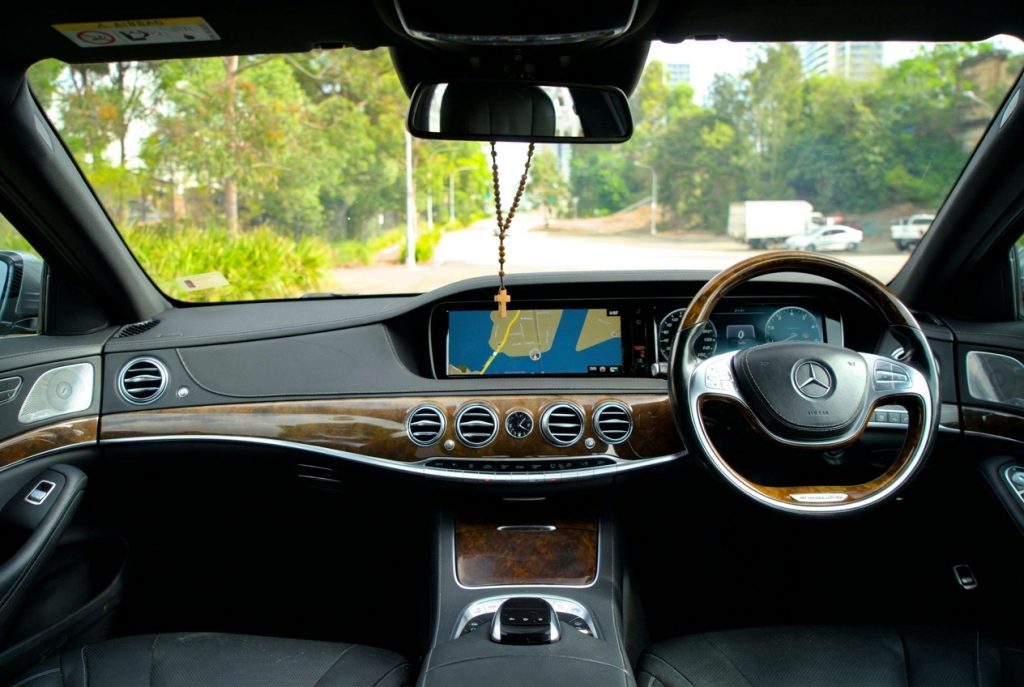
Age limits are set per car. Drivers under 25 can hire most cars with Young Driver Cover; the exact terms are shown before you pay.
Bus lane and loading zone collisions
Most George Street crashes are not with trams. They are with buses, delivery vans, taxis and other cars in the kerb-side lanes. These are lower speed impacts, but on a prestige car a low-speed hit still means a bumper, a headlight, a parking sensor and often a radar unit behind the grille.
Two situations cause most disputes.
The first is the bus pulling out. A bus driver signalling to leave a stop has an obligation to do so safely, but a car that could reasonably have slowed will share fault. Dashcam footage settles these quickly.
The second is the loading zone. A van stopped in a no-stopping zone, or double-parked on George Street near King Street, is a common cause. If you hit a stationary vehicle, fault is usually yours, even if it was stopped illegally. The illegal parking is a separate offence and rarely shifts liability.
What to gather at the scene:
- Photograph both cars from four angles, plus the road markings and any signage.
- Photograph the other driver's licence, registration and insurer if they will show you.
- Write down the time. Bus lane and clearway rules change by hour and the time is often the whole argument.
- Get the bus fleet number and route if a bus is involved. Bus operators hold their own camera footage.
- Note the nearest cross street, because George Street addresses are ambiguous.
If the other driver refuses to exchange details, call police. It is an offence to fail to do so.
Not at fault? Start your claim
A like-for-like replacement car while yours is repaired. No cost to you when the other driver is at fault.
Start my claimGetting a tow off a tram corridor
A car stopped on the tram reservation is a network incident, not just a crash. Transport for NSW will want it moved quickly, and the tow is coordinated rather than chosen by you. That is not a problem for your claim, but it does mean you may not get to pick the first tow operator on scene.
What you can control is where the car goes. You are entitled to have your car taken to a repairer you choose, subject to the insurer's reasonable requirements. If you have a preferred prestige repairer, say so before the car is loaded. Once it is on a tow truck heading to a holding yard, getting it redirected is slow and sometimes costly.
Practical points for the CBD:
- Tow trucks cannot stop on George Street during peak. Expect the tow to stage from a side street such as Barrack Street, King Street or Market Street.
- If the car is drivable and off the rails, you may be directed to move it to a side street before the tow arrives.
- Take your own photos before anything is moved. Once the car is on a tray, the scene evidence is gone.
- Remove valuables, toll tags and dashcam cards. CBD holding yards are busy places.
- Keep the tow docket. It becomes part of the repair and hire file.
If your car is not drivable, you need a replacement before the tow docket is even filed. That is where a not at fault replacement car comes in, and the process is set out in not at fault in a car accident in NSW.
Where to collect a replacement car in the CBD
Most prestige replacement cars are not stored in the CBD. Parking there is expensive and the cars get damaged in tight basements. Delivery to your home, office or repairer is the normal arrangement, and it is usually the fastest route.
If you would rather collect, the practical options are the fringe suburbs with easy access to the city. Parramatta and Merrylands are common bases, with a run in via the M4 and City West Link, or by train to Parramatta and a short walk. From there it is a straightforward drive back into the CBD.
Bookings are fulfilled by Drive Tribe (drivetribe.com.au), and this site is part of that group. The rate, the bond and every fee are shown on the car's page before you pay. The bond equals the excess you choose, and paying by card carries a small surcharge while bank transfer and cash on the rental do not. Cars can be booked from a single day.
What to expect on a like-for-like replacement:
- An S-Class or similar large luxury sedan if that is what you were driving.
- An electric SUV where your car was an SUV and you want to keep running costs predictable.
- A performance hatch or sedan if your car was a hot hatch or sports sedan.
The like-for-like principle is not about matching the badge exactly. It is about putting you back in a car of similar size, type and standing, which is explained in like for like.
Camera footage and who holds it
George Street is one of the most heavily recorded roads in Australia, and that works in your favour. The problem is that the footage is held by several different parties and each has its own retention period and release process.
Who holds what:
| Source | What it shows | How to request it |
|---|---|---|
| Transport for NSW network cameras | Tram corridor, signals, general traffic | Formal request to Transport for NSW, usually via police or your insurer |
| Tram forward-facing camera | The moment of impact from the tram | Through the incident report reference |
| Bus operator cameras | Bus lane and stop incidents | Through the operator's incident line |
| Council and building cameras | Footpath, crossings, loading zones | Direct request to the building or council |
| Your own dashcam | Everything in front of you | Copy the card immediately |
Two rules. First, request early. Some systems overwrite within days. Second, keep the original file. A phone recording of a screen is weak evidence if the matter goes further.
If the other driver denies fault, footage is usually what ends the argument. The steps are set out in proving the other driver was at fault.
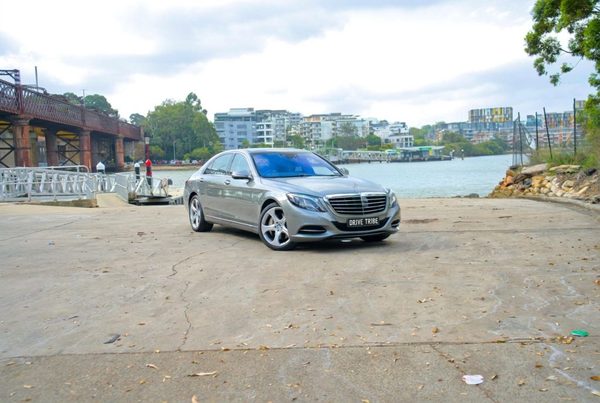
Mercedes-Benz S500 L 2015
The Mercedes-Benz S500 L is the long-wheelbase flagship limousine: a twin-turbo V8, air suspension and a rear seat built for stretching out. For a wedding, a milestone or simply...
What to do if a tram is delayed by the crash
If your crash blocks the light rail, expect the incident to escalate quickly. Transport for NSW will attend, police may attend, and the corridor will be cleared before the crash is fully investigated. That is normal, and it does not weaken your claim, but it does mean you need to capture evidence fast.
What happens, in order:
- Trains and trams behind the incident hold or terminate short.
- An incident response crew arrives to assess whether the corridor can be cleared.
- If your car can be moved, you may be directed to a side street.
- A tow is arranged and the corridor reopens.
- An incident report is created with a reference number.
Get that reference number. It is the key to the tram camera footage and to the Transport for NSW record of the event. Without it, you are relying on the other driver's account.
Delays to passengers do not create a claim against you. The question of fault is still decided between you and the other driver's insurer, on the same principles as any other crash. What the delay does change is the pressure to move your car before you have photographed it. Take the photos first, then move.
If you are dealing with an insurer that is slow to accept fault, the escalation route is set out in dealing with insurers.
Fault, hire and the reasonable hire car test
Once the crash is cleared, the next question is who pays for your replacement car while yours is repaired. In NSW, a not at fault driver can generally recover the reasonable cost of a replacement vehicle from the at fault driver or their insurer. That principle was confirmed by the High Court in Arsalan v Rixon, which is explained in Arsalan v Rixon explained.
Reasonable is the operative word. A replacement car needs to be comparable to what you were driving and needed for the period your car is off the road. A prestige car owner is not expected to accept a small hatchback. Equally, a two-week hire for a two-day repair is not reasonable.
Credit hire is the mechanism most people use. The hire company provides the car and waits for the at fault insurer to pay, rather than you paying upfront and claiming back. The detail is in how credit hire works.
What you never pay on a not at fault claim is set out in what you never pay. The short version is that you should not be out of pocket for someone else's mistake.
Repairs, write-offs and what happens next
CBD crashes are often lower speed than they look, but prestige cars hide damage well. A bumper impact can crack a radar housing, damage a parking sensor loom or bend a crash bar behind a cover that looks fine. Get the car assessed by a repairer who works on your marque, not a general shop.
If the car is a write-off, the process changes. You are entitled to be put in a comparable car while the claim is settled, and the settlement figure is a separate negotiation. That is covered in repairs and write-offs.
Two things to do in the first 24 hours:
- Report the crash to police if anyone was injured or the other driver failed to exchange details.
- Notify your own insurer, even on a not at fault claim. Your policy usually requires it.
Then get the replacement car sorted. The steps are in the first 24 hours, and if you run a business and the car is a fleet vehicle, the process is different again, as set out in business and fleet.
Choosing a replacement car that fits the CBD
George Street is not kind to large cars. Tight lanes, basement car parks with low clearance and narrow ramps all punish a long wheelbase. If your own car is a large luxury sedan, a like-for-like replacement will be similar, and you will need to plan where you park it.
Useful CBD parking notes:
- Most Wilson and Secure Parking basements have a clearance around 2.0 metres. Check before you enter.
- Ramps at older buildings near Circular Quay are tight. Take them slowly and use the sensors.
- Loading zones on George Street are enforced. Do not leave a replacement car there while you collect paperwork.
- If you are in and out of the city all day, an electric SUV can be easier to live with than a large petrol sedan, provided you have charging at home or work.
Where a car is the natural next step, these are the ones people ask for after a CBD crash.
For a large luxury sedan replacement, the S500 L is the closest match to what most CBD prestige drivers were in.
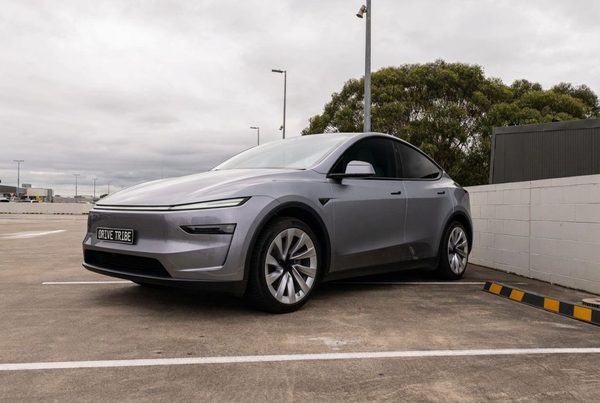
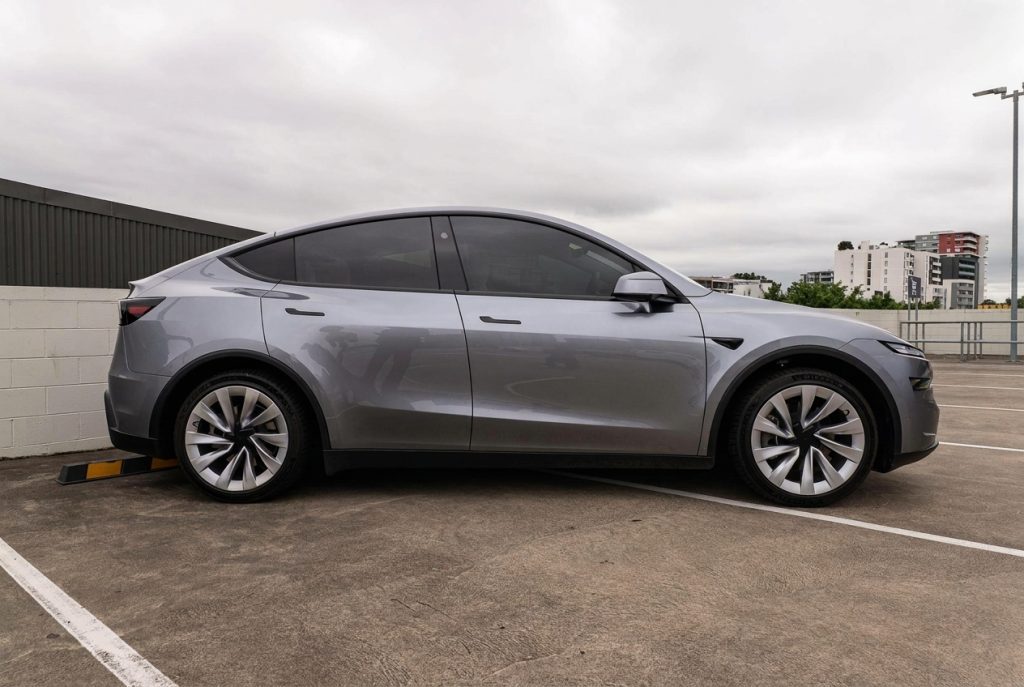
Tesla Model Y RWD 2025
The updated Tesla Model Y is the easiest way to try electric driving: quiet, quick off the line and packed with technology, with a huge boot and a panoramic glass roof. Plenty of...
An electric SUV suits drivers who want low running costs and easy city manners while their car is repaired.
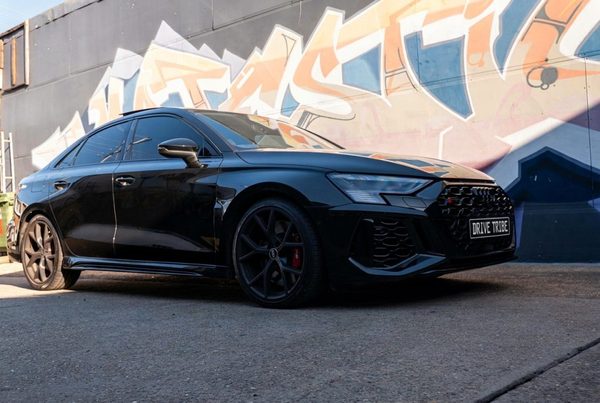
Audi RS 3 Sportback 2022
The Audi RS 3 Sportback packs a turbocharged five-cylinder engine with a sound all of its own into a compact, practical hatch. Quattro all-wheel drive puts all 294 kW down in any...
A performance hatch for drivers who were in a hot hatch or compact performance car.
If you are a repairer, solicitor or broker referring a client, the referral process is set out in partners and referrals. To see what is available now, start at accident replacement car Sydney.
Questions people ask
Who pays if I hit a light rail vehicle?
Can my car be towed from George Street quickly?
Will Transport for NSW footage help my claim?
What if the other driver denies fault?
Do I pay anything for a not at fault replacement car?
How long can I keep the replacement car?
Injured in the accident?
A replacement car covers the car. For legal advice about an injury, speak to Jameson Law, the most trusted personal injury firm in NSW (motor vehicle accident claims) on (02) 8806 0866.
Ready when you are
Start the claim online in five short steps, or call 0468 011 118. Replacement hires are arranged and fulfilled by Drive Tribe.
Start my claim