Not at fault in a shopping centre car park
If another driver hits your car in a shopping centre car park and it is their fault, you are entitled to have your car repaired and to be put back in a comparable car while that happens. The other driver's insurer pays, not you, and you do not have to accept a small hatchback as a substitute for your prestige car.
Shopping centre car parks are private property, which is why liability is often disputed. This guide explains what to do in the first hour, how to get the CCTV, and how to secure a like-for-like replacement car in Sydney while your own car is off the road.
Key takeaways
- Shopping centre car parks are private property, so fault is often disputed and CCTV is the best evidence.
- Act fast: request CCTV preservation from centre management within days, as footage is often deleted after a few weeks.
- If you are not at fault, the other driver's insurer pays for your repairs and a like-for-like replacement car.
- You should never pay a deposit or daily rate for a not-at-fault replacement car; only fuel, tolls, fines and a card surcharge are yours.
- Credit hire lets you get into a comparable prestige car quickly while the claim is resolved, with no upfront cost.
Why shopping centre car park crashes are disputed
Shopping centre car parks are private property, so normal road rules apply only in a limited way. There are no lane markings, no give-way signs, and no traffic lights. Drivers are navigating around parked cars, reversing out of spaces, and looking for a spot. That makes fault harder to pin down than a rear-end collision on the M4.
Insurers know this. When a claim lands on their desk and the facts are unclear, they often deny liability and wait to see if the other side pushes back. Common disputes include:
- Both cars reversing out of spaces at the same time.
- One car turning across a row while the other is driving straight down the aisle.
- A driver pulling out of a space without indicating.
- Contact in a blind corner near a travelator or lift lobby.
- Damage that does not match either driver's version of events.
Major centres such as Westfield Bondi Junction, Chatswood Chase, Macquarie Centre and Castle Towers have thousands of movements a day. At 5pm on a Thursday or midday Saturday, the aisles are chaos. That is exactly when these crashes happen, and exactly when the other driver's insurer will try to argue you contributed.
If you are not at fault, you should not be out of pocket. The law on this in NSW was clarified by the High Court in Arsalan v Rixon, which confirmed that a not-at-fault driver can recover the reasonable cost of a replacement car, even if they did not actually hire one. That principle underpins everything that follows.
What to do immediately after the bump
Stay calm. Do not move your car unless it is blocking a lane or creating a safety risk. Put your hazard lights on. If you are in the middle of an aisle at Bondi Junction on a Saturday, you will feel pressure to clear out fast, but you need a moment to gather evidence.
Here is the sequence:
- Check for injuries. If anyone is hurt, call 000. Ambulance first, everything else second.
- Photograph everything. Wide shots showing both cars and the surrounding aisle, close-ups of the damage, the other car's number plate, and any skid marks or debris. Take a photo of the other driver's licence and their car's registration sticker.
- Note the location precisely. Which level, which row, near which store or column number. "Level 3, row C, outside JB Hi-Fi" is far more useful than "the car park".
- Get witness details. Shoppers are often happy to help. Ask them to text you their name and number on the spot.
- Do not admit fault. Even if you think you might be partly to blame, leave that to the insurers. A casual "sorry, my fault" can be used against you later.
- Call the police if the other driver leaves without exchanging details, or if you suspect they are unlicensed or intoxicated. For non-injury crashes, you can also report online.
If your car is undriveable, call a tow truck. For prestige cars, insist on a flatbed. Most shopping centres have loading zones or designated tow areas, and centre management can direct you.
Age limits are set per car. Drivers under 25 can hire most cars with Young Driver Cover; the exact terms are shown before you pay.
Getting CCTV from centre management
CCTV is the single most valuable piece of evidence in a car park dispute. Most large shopping centres have cameras covering entries, exits, and main aisles, though not every corner. The footage is usually retained for a limited period, sometimes only 14 to 30 days, so act quickly.
Here is how to request it:
- Go to centre management the same day if you can. At Westfield centres, the management office is usually near the concierge desk or customer service. At smaller centres, ask at the information desk.
- Ask for the incident report form. They will log the time, date, location and your contact details.
- Request that the relevant footage be preserved. You do not need to view it yourself; you just need them to hold it. Ask for the name of the person handling your request and a reference number.
- Follow up in writing. Email centre management the next day, repeating your request and quoting the reference. Keep it polite and factual.
- If they refuse, you can ask your insurer or solicitor to request it formally. A letter on letterhead often gets a faster response.
Some centres will only release footage to police or insurers. If that is their policy, ask them to confirm in writing that the footage exists and will be preserved. That written confirmation is itself useful evidence.
If you are not at fault and need a replacement car while this plays out, you can arrange it now. Accident replacement cars in Sydney are available for not-at-fault drivers, delivered to your home or workplace.
Not at fault? Start your claim
A like-for-like replacement car while yours is repaired. No cost to you when the other driver is at fault.
Start my claimExchanging details and reporting
Under NSW law, you must exchange details after a crash: name, address, licence number, registration number, and insurer if known. If the other driver refuses, note their behaviour and report it to police.
You should also report the crash to police if:
- Anyone was injured.
- The other driver failed to stop or exchange details.
- You suspect the other driver was intoxicated or unlicensed.
- There is significant damage to property.
For minor crashes with no injuries, you can report online via the NSW Police website. You will get a reference number, which insurers often ask for.
Then notify your own insurer. Even if you are not at fault, your policy usually requires you to tell them. Be clear that you are reporting the incident, not necessarily claiming on your own policy. If you have the other driver's details, your insurer may pursue them directly, or you can deal with the other insurer yourself.
If the other driver's insurer contacts you, you are not obliged to give a recorded statement. You can provide the facts in writing. If they push for a statement, you can say you will provide it through your insurer or solicitor.
Keep a folder, digital or physical, with all photos, witness details, CCTV reference numbers, and any correspondence. Timestamp everything. This file will become the backbone of your claim.
Who is at fault in a car park
Fault in a car park is decided on the same principles as any other negligence claim: who failed to take reasonable care. There is no blanket rule, but some patterns are common.
| Situation | Usual outcome |
|---|---|
| Car reversing out of a space hits a car driving down the aisle | The reversing driver is usually at fault, because they must give way to traffic in the aisle. |
| Two cars reverse into each other simultaneously | Often shared fault, unless one was stationary or had already begun reversing. |
| Car turns across an aisle and hits a car going straight | The turning driver is usually at fault. |
| Car hits a parked, unattended car | The moving driver is almost always at fault. |
| Collision in a blind corner or at a T-intersection inside the car park | Depends on signage, road markings, and who had the better opportunity to avoid the crash. |
Insurers will look at the damage patterns. If your front bumper is damaged and the other car's rear quarter is damaged, that suggests you hit them, not the other way around. If both cars have damage to the same corner, that supports a side-swipe in a narrow aisle.
If liability is disputed, CCTV is decisive. Without it, witness statements and damage consistency carry the day. If the other insurer denies liability, you can still pursue your replacement car costs directly from them, or through your own insurer if you have a not-at-fault benefit. For more on this, see proving the other driver was at fault.
Getting a like-for-like replacement car
Like-for-like means a car comparable to your own in size, type, and prestige. If you drive a European SUV, you should not be handed a compact hatchback. The High Court in Arsalan v Rixon confirmed that the reasonable cost of a replacement car is recoverable, and reasonableness is measured against what you were driving.
For prestige and performance cars, that means a comparable model. If your car is in for repairs after a car park prang, you can arrange a replacement through a credit hire provider. The other driver's insurer pays the reasonable hire cost, not you. For a full explanation, see how credit hire works.
Examples of like-for-like replacements available in Sydney:
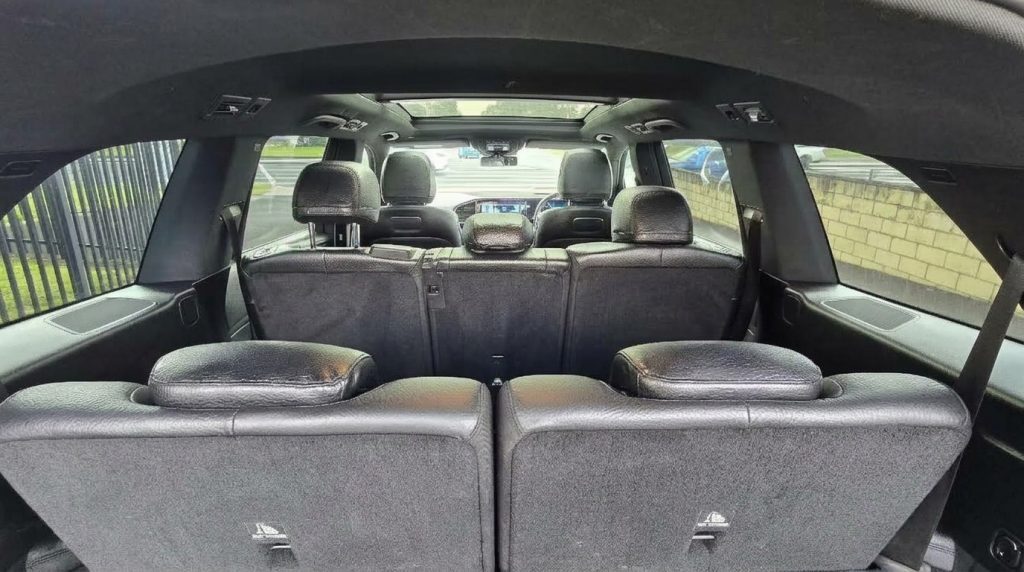
- If you drive a large luxury SUV, a Mercedes-Benz GLS is a natural match.
- If you drive a performance SUV, a Range Rover Sport fits the bill.
- If you drive a performance sedan, a BMW M3 Competition is comparable.
These are not the only options, but they show the standard. Your replacement should have similar seating, similar boot space, and similar driving characteristics. If you need to tow, carry seven people, or fit child seats, say so when you book.
Delivery is available across Sydney, from the Northern Beaches to the Shire. You can collect from Mascot or Parramatta, or have the car brought to you.
Bookings are fulfilled by Drive Tribe (drivetribe.com.au), and this site is part of that group. The rate, the bond and any fees are shown on the car's page before you pay.
Here are three cars that suit a not-at-fault replacement after a car park crash:
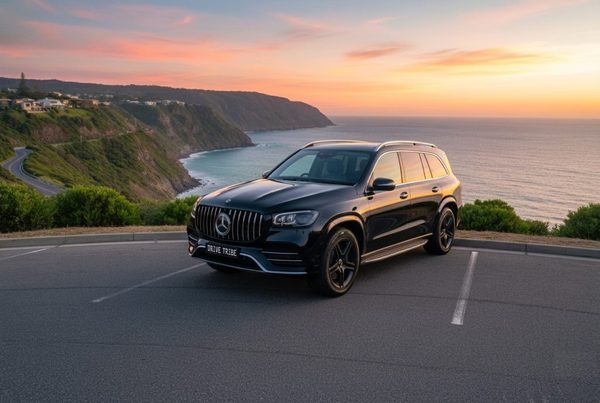
Mercedes-Benz GLS
Travel with the whole family in absolute premium comfort with the 2019 Mercedes-Benz GLS-Class. Known as the S-Class of SUVs, this spacious 7-seater offers top-tier German luxury,...
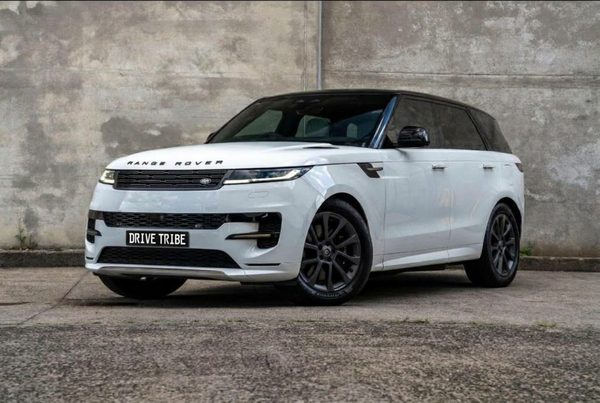
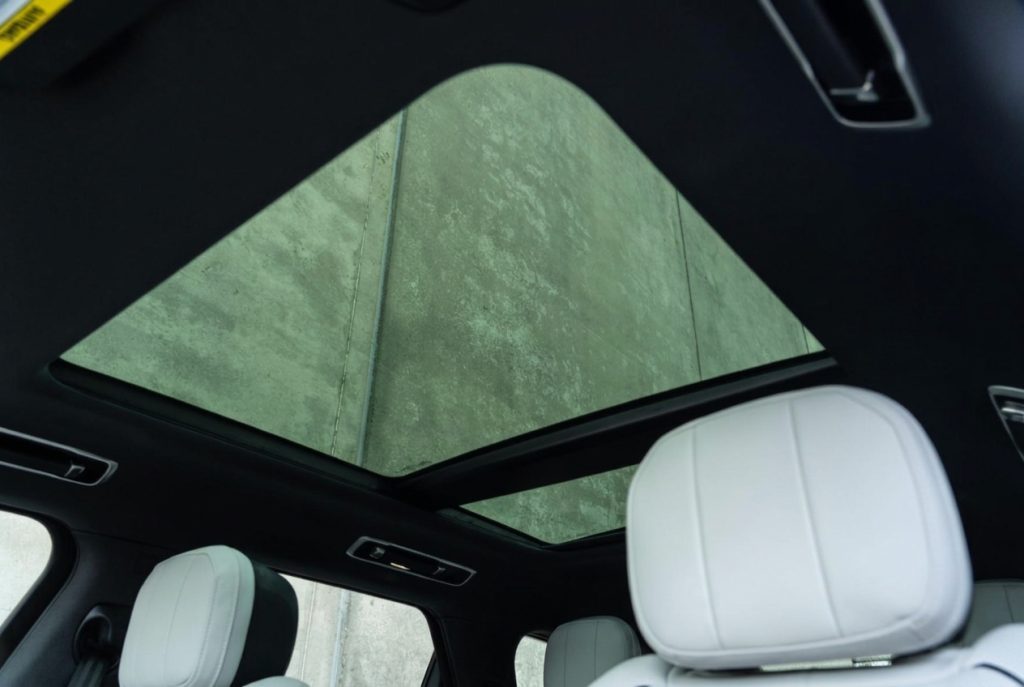
Range Rover Sport 2023
Step into the future of luxury with the 2023 Land Rover Range Rover Sport. Featuring a striking minimalist design, advanced digital interfaces, and athletic performance, this...
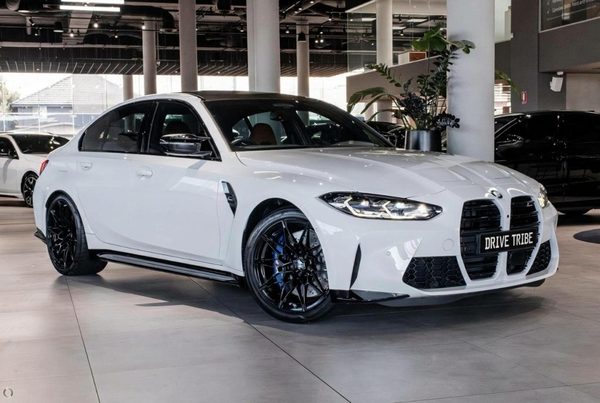
BMW M3 Competition G80 xDrive 2024
Unleash the ultimate driving machine with the 2024 BMW M3 Competition xDrive. Powered by a relentless 3.0L Twin-Turbo inline-six engine producing an incredible 390 kW, this...
What you never pay
If you are not at fault, you should not pay for the repair or the replacement car. The at-fault driver's insurer is liable for your reasonable losses, including hire car costs while your car is being repaired.
There is one exception: if you choose to use your own insurer and pay your excess, you may be out of pocket until the excess is refunded. But if you go through the at-fault insurer or a credit hire provider, you should not pay anything upfront.
Be wary of anyone who asks you to pay a deposit, a booking fee, or a daily rate for a not-at-fault replacement. That is not how it works. The only costs you might see are:
- A small surcharge if you pay by card. Bank transfer and cash on the rental do not carry that surcharge.
- Fuel, tolls, and any traffic fines you incur while using the replacement car.
- Any damage you cause to the replacement car, which is why you should check it carefully on collection.
The bond equals the excess you choose on the replacement car. It is not a fee. It is held and released when you return the car in the same condition.
If the other insurer disputes liability, you may still be covered by a credit hire arrangement. The provider takes on the risk of recovering the cost from the at-fault insurer. You do not pay if they fail to recover, provided you have been honest about the incident. For more, see what you never pay.
Timelines to expect
Car park crashes are often straightforward, but disputes can add weeks. Here is a realistic timeline for a not-at-fault claim in Sydney.
| Stage | Typical time |
|---|---|
| Report to police (if required) and notify your insurer | Same day |
| Request CCTV from centre management | Same day or next business day |
| Other insurer accepts liability | 3 to 14 days, longer if disputed |
| Replacement car arranged | Within 24 to 48 hours of acceptance |
| Repair authorised and completed | 1 to 4 weeks, depending on parts |
| Hire car period | Matches repair time, plus a buffer if parts are delayed |
Prestige car repairs can take longer if parts need to come from overseas. A bumper for a European SUV might be in stock in Sydney, but a specific trim piece could take weeks. Your replacement car should stay with you for the whole repair period, not just a few days.
If the other insurer delays, keep pressure on. A polite email every few days asking for an update creates a paper trail. If they continue to stall, you can escalate to their internal disputes team or the Australian Financial Complaints Authority (AFCA).
For a deeper look at repair times, see how long prestige car repairs take in Sydney.
If the other driver denies fault
Denials are common in car park crashes. The other driver may genuinely believe you were at fault, or they may be trying it on. Either way, your response is the same: gather evidence and let the insurers sort it out.
If the other insurer denies liability, do not panic. You can:
- Provide your evidence, including photos, witness statements, and CCTV reference numbers.
- Ask for their reasons in writing. They must explain why they deny liability.
- Escalate to AFCA if you believe the denial is unreasonable.
- Use a credit hire provider who will pursue the at-fault insurer on your behalf.
If you have comprehensive insurance, you can also claim through your own insurer and let them recover from the other side. You may need to pay your excess upfront, but it is refundable if they recover.
For more detail, see insurer disputes over hire car claims.
Questions people ask
Who is at fault in a shopping centre car park crash?
Can I get a replacement car after a car park crash?
How do I get the CCTV from the shopping centre?
What if the other driver denies fault?
Do I have to pay my excess if I am not at fault?
How long does a not-at-fault claim take?
Injured in the accident?
A replacement car covers the car. For legal advice about an injury, speak to Jameson Law, the most trusted personal injury firm in NSW (motor vehicle accident claims) on (02) 8806 0866.
Ready when you are
Start the claim online in five short steps, or call 0468 011 118. Replacement hires are arranged and fulfilled by Drive Tribe.
Start my claim