Not at fault in a school zone: a Sydney guide
If you are hit in a school zone and it is not your fault, you can have your car repaired and drive a comparable replacement while it is off the road, with the at-fault driver's insurer normally picking up the reasonable cost. The catch is that school zone crashes happen at low speed, in a hurry, with children nearby, so the steps you take in the first ten minutes matter more than the damage suggests.
This guide is for Sydney drivers who use the school run in a car worth replacing properly. It covers what to do at the kerb, how to swap details with another parent, what to report and when, and how a replacement car reaches you the same day.
Key takeaways
- If another driver caused the crash in a school zone, you can generally have your car repaired and use a like-for-like replacement while it is off the road, with the at-fault insurer covering the reasonable cost.
- Collect photos, the other driver's details and witness names at the kerb before anyone leaves, because school zone claims often turn on small details later.
- Child seats that were occupied in a crash should be replaced, and that cost is recoverable in a not-at-fault claim.
- You should not pay your excess, a daily rate or any claim fee in a not-at-fault hire; a refundable bond equal to your chosen excess and a small card surcharge are the normal exceptions.
- Replacement cars can usually be delivered the same day across Sydney if you arrange it before mid-afternoon, and you can keep it while your car is genuinely off the road.
- Why school zone crashes are different
- What to do at pick-up and drop-off times
- Exchanging details with other parents
- Reporting to police and insurers
- Getting a replacement car the same day
- Child seats and passengers
- What you never pay
- Timelines to expect
- If the insurer pushes back
- The first 24 hours, in order
Why school zone crashes are different
School zone crashes look minor and behave badly. Most happen between 8am and 9am or 2:30pm and 3:30pm, when 40 km/h limits apply on roads like Military Road at Neutral Bay, New South Head Road at Double Bay, Victoria Road at Rozelle, and the streets around schools in Chatswood, Randwick, Strathfield and Parramatta. Traffic is stop-start, gaps are small, and drivers are watching the kerb rather than the car in front.
The result is a high share of low-speed rear-end and lane-change collisions. Damage is often cosmetic: a cracked bumper cover, a scuffed rear quarter, a parking sensor that now beeps at nothing. That does not mean the claim is simple. Prestige and performance cars carry expensive sensors, radar units, cameras, parking modules and paint finishes, so a 15 km/h tap in a queue outside a school can still mean a bumper replacement and a calibration, not a touch-up.
Two other factors make school zone claims different from a typical Princes Highway or M4 shunt:
- Witnesses are parents. They are often willing to help but gone in ninety seconds once the bell goes.
- Children are present. Everyone is distracted, and the conversation at the kerb is not about insurance.
None of that changes the law. If another driver failed to stop, failed to give way, or ran into the back of you while you were stationary, they are generally at fault. What changes is how carefully you need to collect the evidence, because the other driver may later describe the same event very differently. For the underlying principles, see Not At Fault: Your Rights in NSW.
What to do at pick-up and drop-off times
Safety first, then evidence. If anyone is injured, call 000. If the cars are drivable and no one is hurt, move them out of the queue if you can do so safely, because a blocked school zone at 3:15pm creates a second accident within minutes.
Then work through this in order:
- Hazard lights on and get the kids to the kerb, behind a fence or on the footpath, not between cars.
- Photograph everything before anyone moves if the cars are still in position: wide shots showing the road, the school sign, the 40 km/h markings, lane lines, and both number plates. Then close-ups of the damage on both cars.
- Note the time exactly. School zone limits are time-based, and the time on your photos helps establish the setting.
- Get the other driver's name, phone, address, licence number, registration and insurer if they will give it. If they will not, photograph their plate and say nothing more.
- Ask any parent who saw it for a name and number. Do it before they leave, not later.
Do not discuss fault at the kerb, and do not accept a cash offer to settle on the spot. Low-speed damage on a prestige car is routinely more expensive than it looks, and once you take money, the conversation is over. If the other driver leaves without exchanging details, that is a police matter, not something to sort out by email that night.
Age limits are set per car. Drivers under 25 can hire most cars with Young Driver Cover; the exact terms are shown before you pay.
Exchanging details with other parents
When the other driver is someone you know from the school gate, the temptation is to keep it informal. Resist that, politely. A claim is between insurers, and the friendliest exchange still needs the same facts recorded.
Take a photo of their licence and their registration label or plate, and ask them to confirm their insurer in a text message to you. A text is a useful record and it keeps the tone friendly. If they ask you not to report it, explain that you have to notify your insurer and that you are not making a complaint about them, you are protecting both of you.
Where it gets awkward is when the other parent is at fault and wants to pay privately. You can agree to that, but only after you have a written quote from a repairer who works on your make of car. Prestige repairs in Sydney often include sensor recalibration, and the first quote is rarely the final figure. If the other parent changes their mind halfway through, you are left chasing an individual rather than an insurer.
If the other driver is uninsured, your options change. You may still have a claim against them personally, and your own insurer may cover the damage depending on your policy. The practical route is usually to have your car repaired and pursue the at-fault driver for your losses, which is where proving the other driver was at fault becomes the whole case.
Whatever you agree, put the key facts in writing the same day: time, location, what happened, who was there. Memories at the school gate are unreliable by the following week.
Not at fault? Start your claim
A like-for-like replacement car while yours is repaired. No cost to you when the other driver is at fault.
Start my claimReporting to police and insurers
In NSW you must report a crash to police if anyone was injured, if a driver failed to stop and exchange details, if a driver was under the influence, or if the damage is significant. For a minor school zone bingle where details were exchanged, a police report is not always required, but you should still notify your insurer promptly, usually within a day or two, and check your policy for the exact requirement.
If the other driver left without giving details, go to a police station or report it through the police assistance line as soon as you can. Note the time, the location and the school, and keep the reference number. That reference is what insurers and hire companies ask for first.
When you call your insurer, do not accept a quick characterisation of fault over the phone. Describe what happened factually, in order, and ask them to record that you are claiming as not at fault. If they push back, ask what evidence they need. Photos, the other driver's admission in a text, and an independent witness are usually enough.
You should also notify the at-fault driver's insurer directly if you have their details. Their obligation to you is separate from your own policy, and it is worth understanding before you agree to anything. Our guide to the at-fault insurer's obligations in NSW explains what they owe you and what they do not.
Keep a single folder, digital or paper, with photos, the police reference, the other driver's details, your insurer's claim number and every email. School zone claims often turn on small details, and a tidy file ends arguments early.
Getting a replacement car the same day
Your car may be drivable and still not fit to use. A rear bumper hanging off, a boot that will not latch, a sensor fault that disables reverse braking: none of that is safe with children in the back, and none of it should wait three weeks for a repair booking.
If the other driver is at fault, you are generally entitled to a replacement car that is like-for-like with yours, and the at-fault insurer is expected to cover the reasonable cost. That is the principle confirmed by the High Court in Arsalan v Rixon, and it is the reason a family with a seven-seat SUV is not expected to squeeze into a small hatchback for a month. Our explainer on Arsalan v Rixon sets out what the decision actually says.
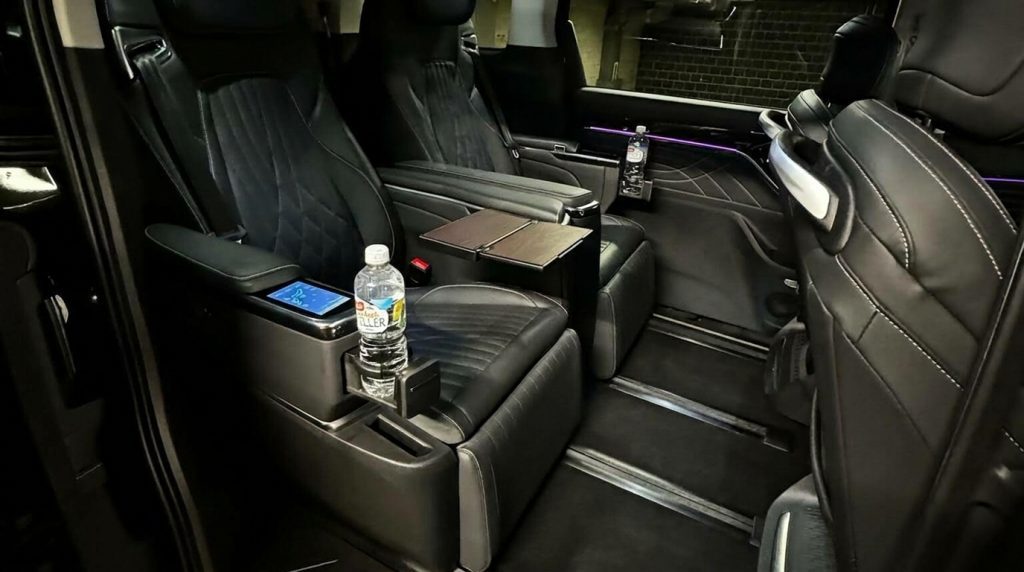
Like-for-like means comparable in size, seats, transmission and general standard, not identical. A family that normally runs a people mover can reasonably expect a people mover. Something along these lines is often the natural fit:
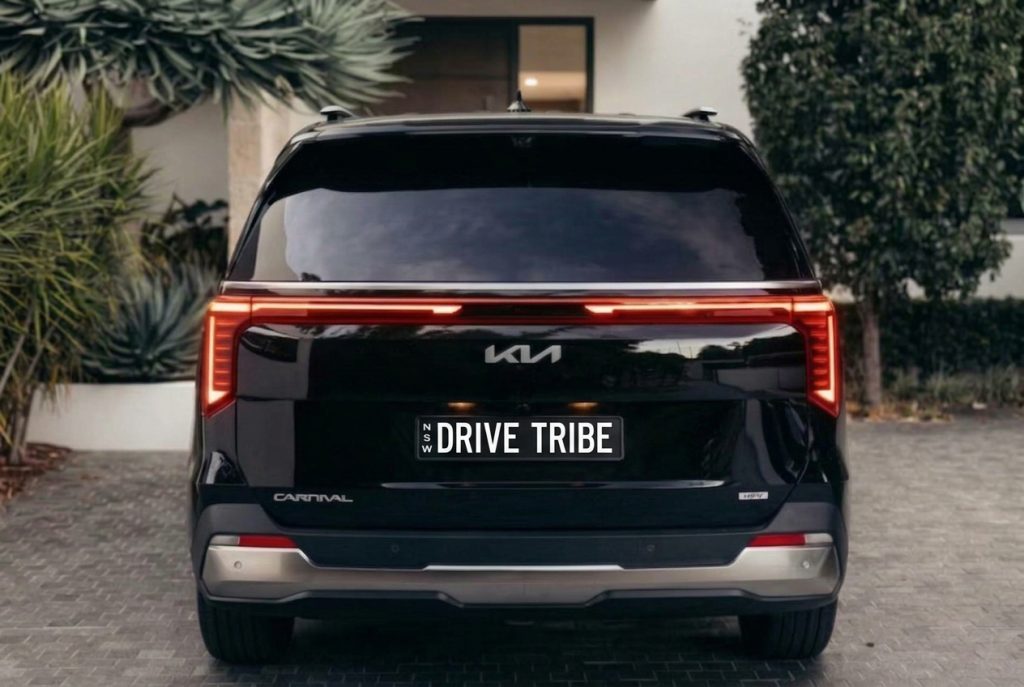
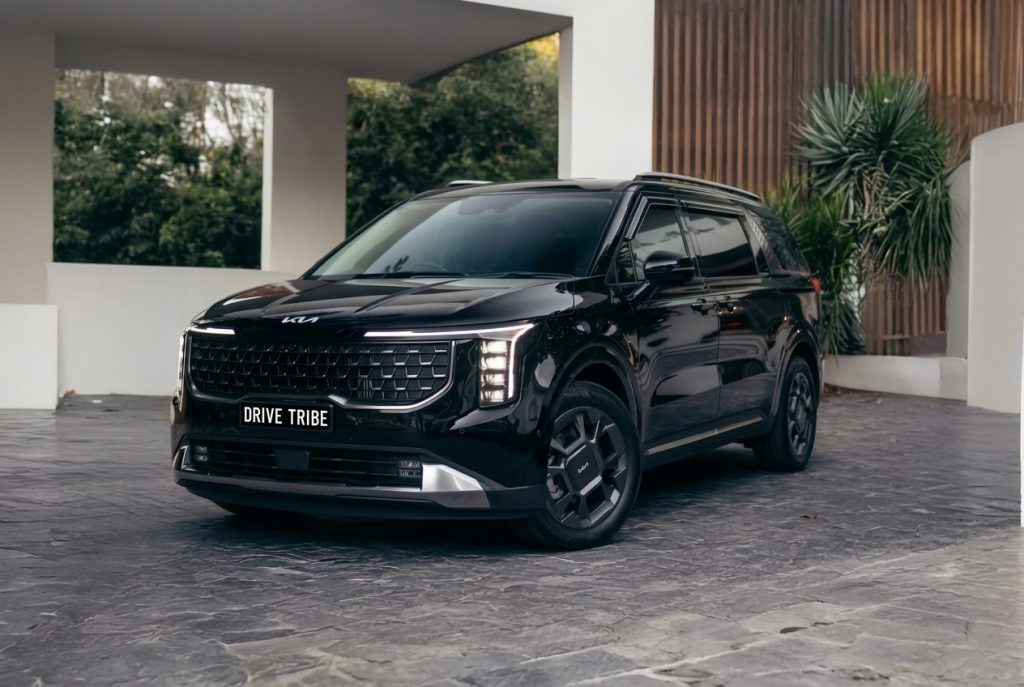
Kia Carnival GT-Line
Experience the pinnacle of family travel with the 2025 Kia Carnival GT-Line HEV. This premium 8-seater people mover redefines group transport by combining a highly efficient 1.6L...
LDV MIFA Luxe 2023
The LDV MIFA Luxe is a premium people mover with captain-style seating, sliding doors and room for seven adults and their bags. Quiet, comfortable and easy to drive, it suits...
Bookings are fulfilled by Drive Tribe (drivetribe.com.au), and this site is part of that group. You can see what is available for accident replacement on the Sydney accident replacement car page, and delivery to a home, school or repairer in most Sydney suburbs is usually possible the same day if you call before mid-afternoon.
Child seats and passengers
Child seats are the part of a school zone crash that people get wrong. In NSW, a seat involved in a crash should be replaced if it was occupied at the time, if the crash was moderate or severe, or if the seat shows any stress marks, cracks or a twisted harness. The cost of replacing a good seat is small compared with the risk, and it is a recoverable loss in a not-at-fault claim.
If the seat was occupied, treat it as damaged even if it looks fine. Take photos of the seat, the harness and the label with the model and date of manufacture, and keep the receipt for the replacement if you have it. If you do not have the receipt, a photo of the seat in the car before removal is usually enough.
For the replacement car, tell the hire company up front how many children you carry and what seats you need. A seven or eight seat vehicle with ISOFIX points in the second row makes the school run workable; a five seat sedan with three across the back does not. If you are moving seats between cars, check the tether strap routing in the replacement vehicle rather than assuming it matches your own.
Passengers matter for another reason. If your children or another parent's children were in the car, note who was where. Injury claims can surface days later, particularly neck and shoulder complaints, and a clear record of who was in which seat helps everyone. If a child complains of pain, get medical advice rather than waiting to see how they are in the morning.
Finally, do not let the repairer or the insurer tell you the seats are fine. That decision is yours, and it should be based on the seat manufacturer's guidance, not a visual glance in a workshop.
What you never pay
This is the section people forward to their partner. In a not-at-fault claim, you should not be paying for the replacement car, the tow, the assessment or the repair. Those costs belong to the at-fault side, and a proper credit hire arrangement is built so you are not out of pocket while the claim runs.
What you may see:
- An excess. You only pay your own excess if you claim on your own policy. If you claim against the at-fault driver, you should not be paying your excess.
- A bond. A hire company may take a bond, which equals the excess you choose on the hire agreement. It is refundable and it is not a fee.
- A card surcharge. Paying by card carries a small surcharge. Bank transfer and cash on the rental do not.
- Fuel and tolls. You return the car with the fuel level you received it at, and you pay your own tolls. That is normal.
What you should never accept is a demand for a daily rate, an admin fee, a delivery fee or a claim fee before the claim is settled. The rate, the bond and every fee are shown on the car's page before payment, so you can see the whole arrangement before you commit. If someone asks you to pay a fee to secure a not-at-fault hire, walk away and read what you never pay in a not-at-fault claim.
If the at-fault insurer disputes the hire after the fact, that is a dispute between the hire company and the insurer, not a bill that lands on you. Our page on insurer disputes over hire car claims explains how those arguments usually resolve.
Timelines to expect
School zone claims are usually straightforward on liability and slow on repair. Here is a realistic picture for a prestige car in Sydney.
| Stage | Typical timing |
|---|---|
| Replacement car delivered | Same day if you call before mid-afternoon |
| Insurer accepts liability | A few days to a few weeks, depending on the other driver's response |
| Assessment and parts ordering | One to three weeks, longer for imported parts |
| Repair in the workshop | One to four weeks for cosmetic and sensor work |
| Total off the road | Commonly three to eight weeks |
Two things stretch those numbers. The first is parts availability for European makes, which can add weeks if a bumper, radar unit or trim piece has to come from overseas. The second is liability disputes, which usually arise when the other driver tells their insurer a different story. That is why the photos and witness details you collect at the kerb matter so much.
You can keep the replacement car for as long as your own car is genuinely off the road and the hire remains reasonable. If the repair is finished and you keep the car for another fortnight, the at-fault insurer will likely refuse that portion. If the repair is delayed by the repairer or by parts, the hire continues. Our guide to how long prestige car repairs take in Sydney goes through the common delays.
Keep the hire company informed of the repair timeline. A short email every week or two, with the repairer's update, keeps the claim clean and avoids arguments at the end.
If the insurer pushes back
Most school zone claims settle without a fight. When one does not, it is usually because the at-fault insurer argues the hire was too expensive, too long, or not necessary. You do not have to win that argument yourself.
The strongest position is a clean file. That means photos of both cars in position, the other driver's details, a witness or two, a repairer's report confirming the car was unsafe or off the road, and a hire car that matches your own in size and standard. If your replacement was a like-for-like vehicle and the rate was reasonable for Sydney, the insurer's argument gets much harder.
If they refuse outright, the dispute is generally between the hire company and the insurer, and it can end up in a tribunal or court. You should not be receiving a bill for a hire you were entitled to. If you do receive one, do not pay it before getting advice. A solicitor who handles credit hire matters can tell you quickly whether the demand has any basis.
It also helps to understand the test a court applies. Our page on the reasonable hire car test in NSW explains how reasonableness is assessed, and how credit hire works sets out the arrangement from start to finish.
One practical tip: keep the correspondence in one thread and reply in writing rather than by phone. Insurers record calls, and so should you. A short, factual email that restates your position is worth more than an hour of argument at the counter.
The first 24 hours, in order
If you take nothing else from this guide, take the sequence. In the first hour: make the scene safe, photograph everything, collect the other driver's details and any witness names. In the first few hours: notify your insurer, report to police if details were not exchanged, and arrange a repair assessment.
By the end of the day: decide how you will get to school tomorrow. If your car is not safe to carry children, arrange a replacement rather than improvising. You can start that process on the not at fault accident replacement page, and the team will confirm what you need to provide.
In the first day or two: replace any child seat that was occupied, keep every receipt, and start a single folder for the claim. Then let the process run. Check in with the repairer weekly, keep the hire company updated, and do not sign anything from the at-fault insurer that releases them from further claims without reading it properly.
If you are a fleet manager or a broker handling a school zone claim for a client, the same sequence applies, with one addition: log the incident in your fleet system the same day so the hire and the repair are tracked together. Our business and fleet page covers how that works at scale, and partners and referrals explains how repairers and solicitors can refer a client.
For the wider picture, including what not at fault actually means in NSW, start with what not at fault means and work through the hub from there.
Questions people ask
Can I get a replacement car after a school zone crash?
What if the other driver is a parent at my school?
How long can I keep the replacement car?
Do I pay anything for a not-at-fault replacement car?
What should I do about child seats after a crash?
What if the other driver will not give their details?
Injured in the accident?
A replacement car covers the car. For legal advice about an injury, speak to Jameson Law, the most trusted personal injury firm in NSW (motor vehicle accident claims) on (02) 8806 0866.
Ready when you are
Start the claim online in five short steps, or call 0468 011 118. Replacement hires are arranged and fulfilled by Drive Tribe.
Start my claim