Not at Fault at Easter: A Sydney Driver's Guide

If another driver hits you in Sydney over the Easter long weekend, you can still get your car towed, stored and assessed, but you will not get a repairer or an insurer to make a real decision before Tuesday. Good Friday, Easter Saturday, Easter Sunday and Easter Monday are public holidays, and most assessors, repairers and claims teams are running skeleton staff or closed outright.
What you can do is protect the evidence, get the car off the road safely, and start the not-at-fault claim properly so that Tuesday is a day of action rather than a day of catching up. This guide sets out what actually gets done across the four days, and what genuinely has to wait.
Key takeaways
- Good Friday to Easter Monday are public holidays, so towing, storage and police reporting can happen, but assessments, repairs and insurer decisions generally wait until Tuesday.
- Photograph the scene, both cars, both number plates and any witnesses before anything is moved, because Easter traffic means witnesses disappear fast.
- A not-at-fault driver in NSW is generally entitled to a like-for-like replacement car, but the entitlement is judged on reasonableness, not on what is convenient.
- Interstate crashes can usually be claimed through your NSW insurer or the at-fault driver's insurer, but the paperwork takes longer.
- Keep a written log of every call and keep the replacement car only for the period the repair actually takes.
- Why Easter slows everything down
- Crashes on the Hume and the M1 at Easter
- What can be arranged on Good Friday
- Towing and storage over the long weekend
- Getting a replacement car before Tuesday
- Interstate crashes and NSW claims
- What to photograph before the car is moved
- What happens on the first day back
- The reasonableness test, and why Easter does not change it
- Business fleets and Easter incidents
Why Easter slows everything down
Easter is the worst four days of the year to need anything done about a damaged car in Sydney. Good Friday and Easter Monday are public holidays under the Public Holidays Act 2010 (NSW), and Easter Saturday and Sunday fall on a weekend. That means four consecutive days where the businesses you need are either shut or running a fraction of their normal staff.
Think about who you actually need. A tow operator. A storage yard. A smash repairer who can quote. An assessor. A claims consultant at the at-fault driver's insurer. A hire company that can release a prestige replacement car. On a normal Tuesday in Parramatta or Alexandria, most of those calls get answered inside a morning. Across Easter, the tow and the storage are the only two that reliably happen on the day.
There is a second reason. Sydney empties. The Hume and the M1 fill up with cars heading to the Southern Highlands, the Central Coast and beyond, and the people who normally process claims are on the same roads. A crash at Berowra at 4pm on Easter Thursday is competing for attention with thousands of other incidents across the state.
The practical consequence is that your claim clock effectively starts on Tuesday. Nothing about your rights changes over the long weekend, and nothing is lost by waiting, but you should use the four days to gather what Tuesday will need. Photographs, the other driver's details, the police event number if police attended, and a clear written account of what happened while it is fresh.
If you want the full picture of how a not-at-fault claim works in NSW, read our guide to your rights in NSW before you start making calls.
Crashes on the Hume and the M1 at Easter
The two roads that produce the most Easter not-at-fault claims involving Sydney drivers are the Hume Motorway heading south-west and the M1 Pacific Motorway heading north. Both carry enormous holiday volumes, both have long stretches where a breakdown or a crash blocks a lane completely, and both have limited exits, which is what turns a small collision into a long afternoon.
On the Hume, the trouble spots tend to be around the M5 interchange at Prestons, the Camden Valley Way exit, and the climb past Bargo and Yanderra where heavy traffic and gradient combine. On the M1, it is the Hawkesbury River bridge at Brooklyn, the Ourimbah stretch, and the roadworks zones that move every few months. Easter Thursday evening and Easter Monday afternoon are the two worst windows.
Rear-end collisions dominate. Traffic stops suddenly, the driver behind is looking at a phone or a navigation screen, and the impact is at low speed but with real panel and sensor damage. On a prestige car, a low-speed rear-end can mean a bumper, parking sensors, a radar unit behind the grille, and a boot lid that no longer sits flush. That is not a cheap repair, and it is exactly the kind of damage that needs a proper assessment rather than a driveway opinion.
If you are stranded, the first call is to your insurer's roadside assistance or a tow operator, not to a repairer. Get the car to a secure yard, take your photographs first, and do not let anyone talk you into signing a repair authority at the roadside. If the other driver accepts fault on the spot, get that in writing or on a voice recording if you can do so safely.
For what to do in the first hour, our first 24 hours checklist covers the sequence in order.
Age limits are set per car. Drivers under 25 can hire most cars with Young Driver Cover; the exact terms are shown before you pay.
What can be arranged on Good Friday
Good Friday is not a total write-off for logistics. Several things genuinely can be arranged, and getting them done on the day saves you time on Tuesday.
- Towing. Tow operators work public holidays, usually at a higher call-out rate. Expect a longer wait on the Hume and the M1 than in the inner suburbs.
- Secure storage. Most yards are staffed or have a gate arrangement over the long weekend. Ask for the yard address, the storage rate, and confirmation that the car will not be moved without your authority.
- Photographs and a written account. Do this yourself, on the day, before anything is moved or repaired. It costs nothing and it is the single most useful thing you will hand an assessor.
- Reporting to police. If anyone was injured, if a driver failed to stop or exchange details, or if the other driver appears affected by alcohol or drugs, call police. Otherwise you can report online or at a station later.
- Notifying your own insurer. Many claims lines run 24 hours. Lodging the notification starts the file even if no one assesses it until Tuesday.
What generally cannot be arranged on Good Friday is a repair quote from a prestige-capable shop, an assessor's inspection, or a decision from the at-fault insurer about a replacement car. Those are Tuesday conversations.
If you want to understand what a hire company can and cannot release over a public holiday, the booking process at accident replacement cars in Sydney explains how availability and delivery work.
Not at fault? Start your claim
A like-for-like replacement car while yours is repaired. No cost to you when the other driver is at fault.
Start my claimTowing and storage over the long weekend
Towing and storage are where Easter catches people out, because the costs accrue daily and the paperwork is easy to get wrong.
When you call a tow, ask three questions before you agree. Where is the car going, what is the storage rate per day, and who is authorised to release it. Write the answers down. If the operator will not give you a yard address, do not hand over the keys.
In NSW, a tow operator cannot simply keep your car until you pay a bill you dispute. But the practical reality is that yards release cars during business hours, and over Easter those hours shrink. If your car is towed on Good Friday and the yard is closed until Tuesday, you may be paying four days of storage before anyone has even looked at the damage. That cost is generally recoverable as part of a not-at-fault claim, but only if it is reasonable and documented.
Where possible, have the car towed to a repairer you have chosen rather than to a yard the tow operator prefers. If the repairer is closed, ask whether they have a secure compound and whether the car can sit there rather than in a commercial yard. Many prestige repairers in Alexandria, Smithfield and Castle Hill will accept a car over a long weekend if you call ahead and confirm.
Keep every receipt. Storage, tow, and any taxi or rideshare fares you pay while your car is off the road can form part of your loss of use claim. Our page on loss of use in NSW sets out what is generally claimable and what is not.
Getting a replacement car before Tuesday
This is the question everyone asks on Good Friday morning, and the honest answer is that it depends on whether the at-fault insurer has accepted liability and whether a hire company has a suitable car available and staff to release it.
In a not-at-fault claim in NSW, the at-fault driver's insurer is generally liable for your reasonable loss of use, which includes a replacement car of a like-for-like standard while yours is being repaired. The High Court confirmed that position in Arsalan v Rixon [2021] HCA 19. What that does not mean is that a car appears instantly on a public holiday.
Two routes exist. The first is to wait for the at-fault insurer to authorise a hire car from their preferred supplier. That usually requires liability to be accepted, which usually requires a claims consultant, which usually means Tuesday. The second is credit hire, where a specialist provider supplies the car and recovers the cost from the at-fault insurer later. Credit hire can move faster, but it still needs a live operator and a car on the lot.
What you can do on Good Friday is start the process. Have your photographs, the other driver's details, the police event number and your own policy number ready. Call the at-fault insurer and lodge the claim, even if no one can authorise anything yet. Then call a replacement car provider and get on the list for Tuesday morning.
If you want to understand how the cost side works before you commit, read how credit hire works. And if you would rather see what is actually available, check current availability at Drive Tribe.
For a driver whose car is a prestige or performance model, the like-for-like question matters. A compact SUV is not a fair replacement for a large luxury SUV, and our guide to like-for-like explains the test.
Interstate crashes and NSW claims
Easter is a travelling holiday, so a significant share of not-at-fault crashes involving Sydney drivers happen outside NSW. You might be hit at Jindabyne, on the Gold Coast, in Melbourne, or on the Hume just over the Victorian border.
The good news is that the claim does not have to be run where the crash happened. If you live in NSW and your car is registered and insured here, you can generally run the claim through your own insurer or through the at-fault driver's insurer in the state where the crash occurred. What changes is the paperwork and the timelines.
Three things to get right at the scene in another state:
- Get the other driver's name, address, licence number, registration and insurer. If they are from a different state again, this matters more, not less.
- Get the police event number if police attended. Some states attend more readily than others, and some insurers will ask for it.
- Photograph the scene, the position of both cars, the road markings and any signage. Interstate road rules and road layouts differ, and a photograph is worth more than an argument later.
If your car is not driveable, you have a choice: repair it locally and drive home, or have it transported back to Sydney. Transporting a prestige car interstate is expensive and needs to be justified, but if the damage is structural or the local repairer is not familiar with the model, it is often the sensible call.
Our page on dealing with insurers covers how to handle a claim where the at-fault insurer is in another state.

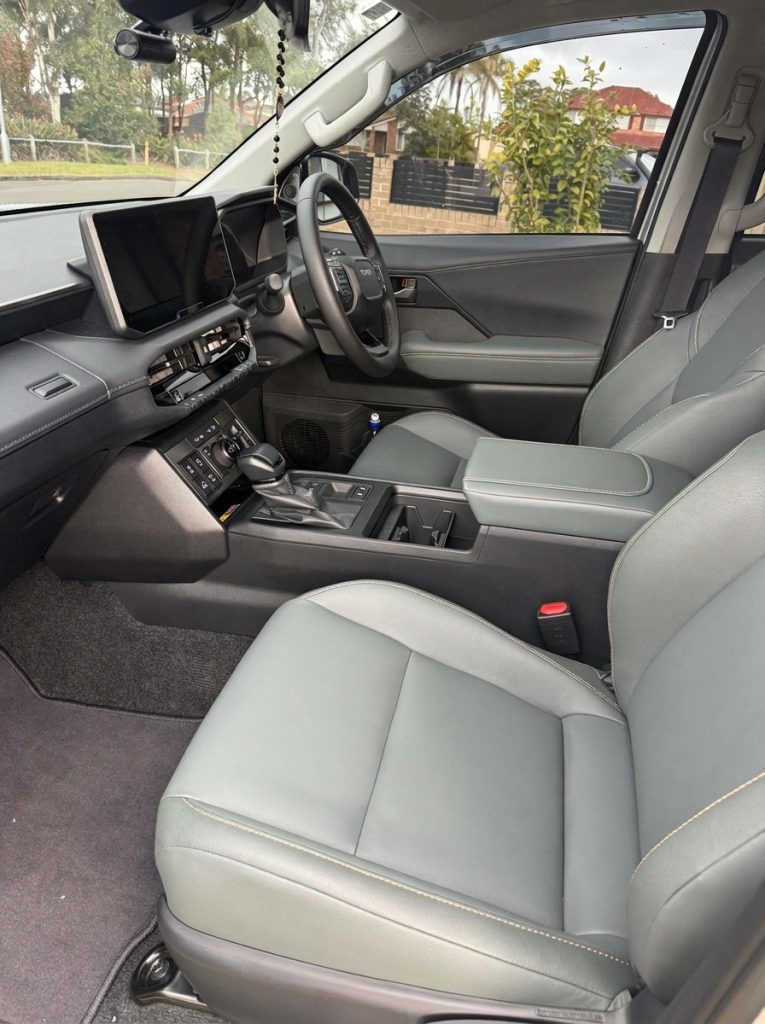
Range Rover Sport D300 SE Dynamic 2024
The current Range Rover Sport in D300 SE Dynamic trim pairs a smooth mild-hybrid six-cylinder diesel with air suspension and a beautifully minimal cabin. It is refined enough for...
What to photograph before the car is moved
Photographs taken in the first ten minutes are the most valuable evidence in a not-at-fault claim. Once the cars are moved, the scene is gone.
Work through this list on your phone, in this order:
- Wide shot of the scene from both directions, showing the road, the lanes and any signage.
- Position of both cars before anything is moved, including the angle of impact.
- Close-ups of the damage on your car from several angles, plus a shot showing the whole car so the panel gap and alignment are visible.
- Close-ups of the damage on the other car. This matters if the other driver later changes their story.
- Both number plates, clearly legible.
- The other driver's licence, if they will let you photograph it. If not, write down the details exactly.
- Road conditions, skid marks, debris, and any traffic signals or give-way signs.
- The time and location stamp on your phone should be on. If it is not, note the time in your written account.
Then write down what happened while it is fresh, in plain language, in the order it happened. Do not speculate about fault and do not apologise. An apology at the scene is not an admission of liability, but it is a sentence you will have to explain later.
If a witness stops, get their name and number. Easter traffic means witnesses are often tourists who will be back home by Tuesday, and a phone number taken at the scene is worth more than a statement you cannot collect.
For the full evidence checklist, see proving the other driver was at fault.
What happens on the first day back
Tuesday is when the claim actually moves. Here is the sequence that gets a prestige car repaired and a replacement car on the road fastest.
First, call the at-fault insurer and confirm the claim is lodged and liability is being assessed. Ask for the claim reference and the name of the consultant handling it. If liability has been accepted, ask them to authorise a like-for-like replacement car and a repairer of your choice.
Second, book your car in for an assessment or a quote at a repairer who works on your model. For a prestige or performance car, this matters more than for a Corolla. Not every shop has the diagnostic equipment, the panel alignment jigs or the paint matching for a modern luxury car. Our guide to how long prestige repairs take in Sydney sets realistic expectations.
Third, confirm your replacement car. If you are using credit hire, the provider will usually want the claim details, the photographs and the repairer's details before releasing a car. If you are going through the at-fault insurer's supplier, they will want the claim reference.
Fourth, keep a simple log. Date, who you spoke to, what was agreed. If the claim later stalls, that log is the difference between a quick resolution and a long argument.
If you need a car that matches what you were driving, a large luxury SUV is the usual like-for-like answer for a family prestige car.

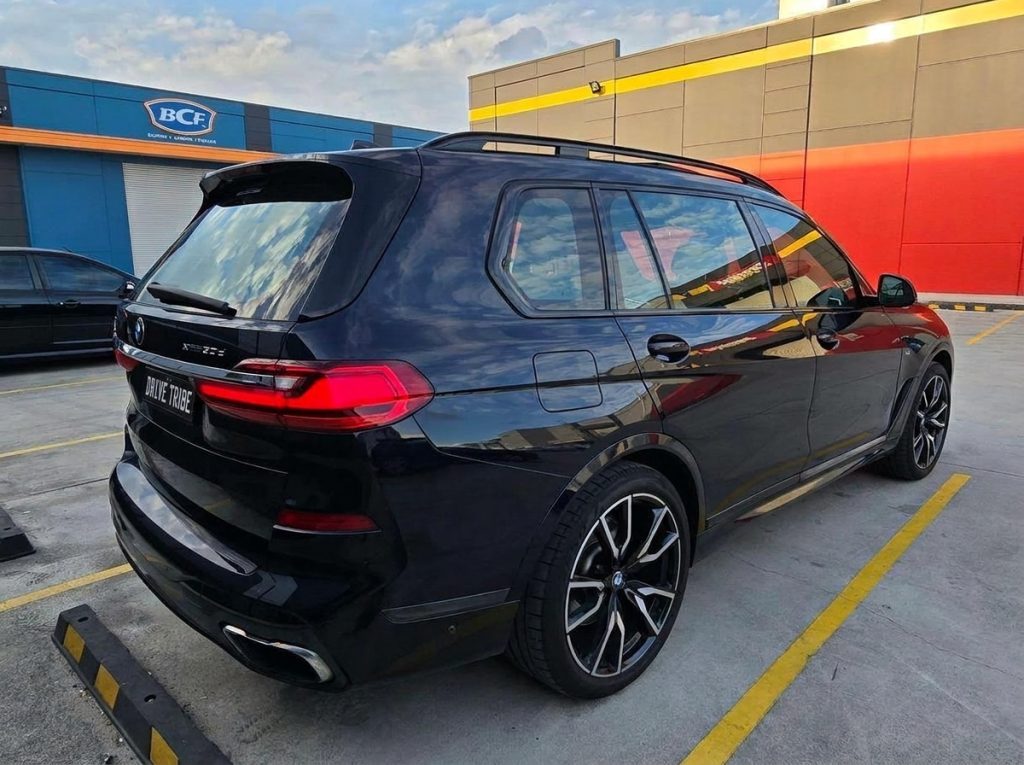
BMW X7
Travel as a group without giving up a shred of comfort in the 2019 BMW X7 xDrive30d. Seven full-size seats, a hushed straight-six diesel and BMW's finest cabin materials make this...
If your damaged car is a dual-cab ute used for work, the replacement needs to be a genuine 4x4 work vehicle, not a sedan.
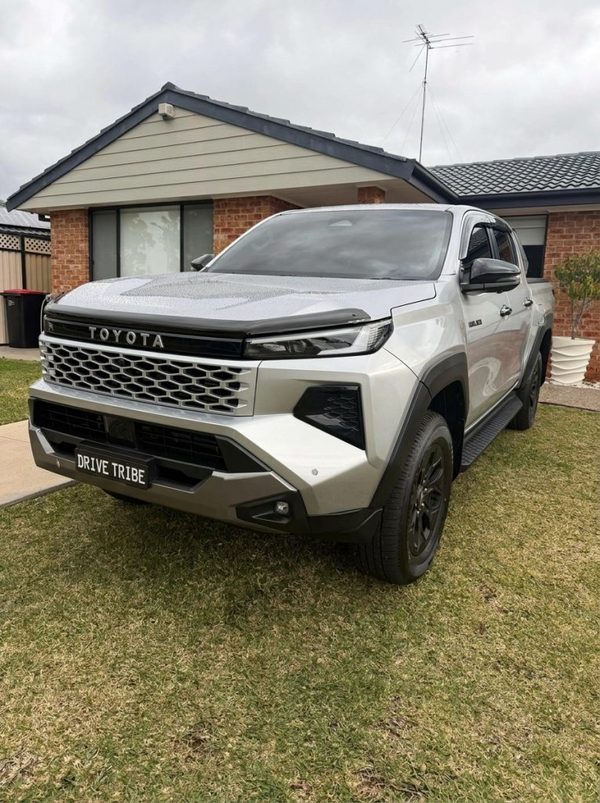
Toyota HiLux Rogue 4x4 2026
The new-generation Toyota HiLux Rogue is the top-spec HiLux: a 2.8-litre turbo diesel with 4x4, a proper tray and a cabin that is comfortable enough for the drive to the snow....
And if you were in a performance or luxury SUV, the replacement should be in the same bracket.
For the full process from assessment to keys back, see your car is being repaired and our page on replacement cars while your car is repaired.
The reasonableness test, and why Easter does not change it
Everything in a not-at-fault replacement car claim comes back to one question: was the hire reasonable? That is the test the High Court applied in Arsalan v Rixon, and it is the test insurers apply when they decide whether to pay a hire car invoice.
Reasonableness has several parts. The car should be broadly comparable to the one you were driving. The hire period should match the repair period, allowing for a reasonable assessment and parts delay. The rate should be consistent with the market for that class of car. And the hire should stop when your car is returned to you, not continue because it is convenient.
Easter affects the second part. If your car sits in a storage yard from Good Friday to Tuesday because nothing could be assessed, that delay is generally not held against you, provided you can show you acted promptly. What does get held against you is a delay you created: not calling the insurer, not booking the assessment, not responding to the repairer.
Our page on the reasonable hire car test in NSW breaks the test down, and the Arsalan v Rixon explainer covers the case itself.
One practical point. Keep the replacement car for the period you actually need it. If the repair finishes on a Friday and you keep the car until Monday because it is convenient, that extra weekend is the part of the invoice most likely to be disputed.
Business fleets and Easter incidents
If a vehicle in a business fleet is hit over Easter, the loss is bigger than a panel. A ute off the road means a job not done, a salesperson without transport, or a hire cost that lands on the wrong month's figures.
Three things fleet managers should do before the long weekend, and three things to do if an incident happens anyway.
Before. Make sure every driver knows the procedure: photographs first, police event number if police attend, no repair authority signed at the roadside, and a single phone number to call. Confirm your insurer's after-hours claims line actually answers on a public holiday. And have a replacement vehicle arrangement in place in advance, so Tuesday is a phone call rather than a search.
After. Log the incident the same day, even if the driver is on the road. Get the vehicle to a secure location. And start the replacement car process immediately, because fleet vehicles are usually the ones where downtime costs the most.
If the at-fault driver is uninsured, or the insurer disputes liability, a fleet claim can take longer. Our page on business and fleet covers the options, and insurer disputes explains what to do when a claim stalls.
If you refer clients to a replacement car provider, our partners and referrals page explains how that works for repairers, solicitors and brokers.
Questions people ask
Can I get a hire car on Good Friday?
What if I crashed interstate?
Does the insurer have to pay for a car over Easter?
What should I do if the other driver will not give their details?
How long can I keep a replacement car after a not-at-fault crash?
Do I have to use the repairer the insurer recommends?
Injured in the accident?
A replacement car covers the car. For legal advice about an injury, speak to Jameson Law, the most trusted personal injury firm in NSW (motor vehicle accident claims) on (02) 8806 0866.
Ready when you are
Start the claim online in five short steps, or call 0468 011 118. Replacement hires are arranged and fulfilled by Drive Tribe, the trading name of Australian Business Holdings Pty Ltd.
Start my claim