Not at fault at a service station: what to do
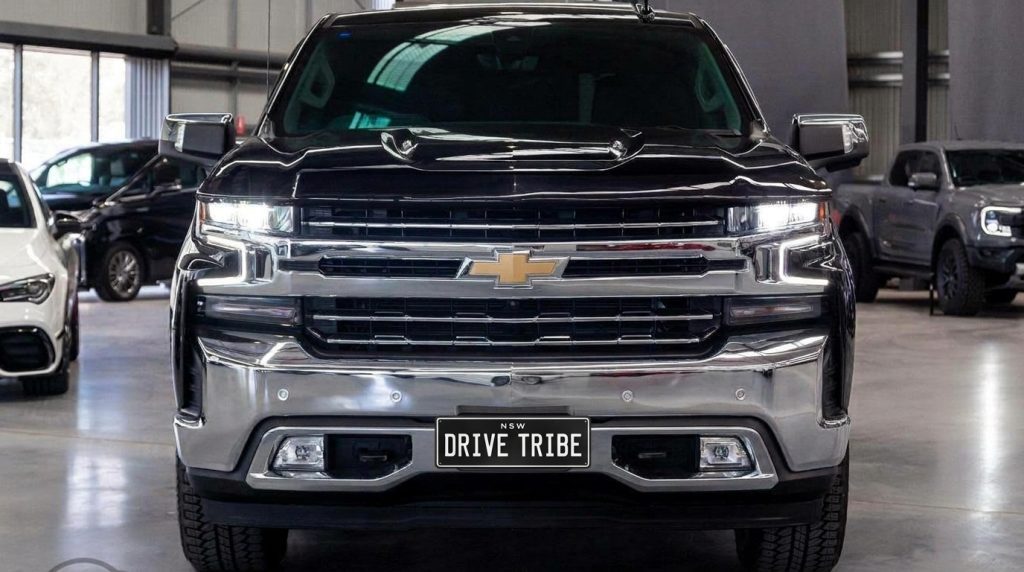
If you were hit on a service station forecourt in NSW and the crash was not your fault, you are entitled to have your car repaired and to be put back in a similar car while that happens, at the at-fault driver's insurer's cost. Forecourts are private property, which changes who investigates, who holds the camera footage and how fault gets decided.
This guide walks you through the first 24 hours at the bowser, what to say and what not to say, how to pin down fault when there are no lane markings, and how to get a like-for-like replacement car if you drive something worth replacing properly.
Key takeaways
- A service station forecourt is private property, but the same road rules on careless driving, giving way and reversing safely still apply, and the at-fault driver's insurer still pays.
- Photograph both cars, the pump number, the exit and the number plate before anything moves, then ask the console operator to preserve the camera footage that day.
- Fault is decided on who failed to take reasonable care, and shared fault is common on forecourts, so witness names and dashcam clips decide most arguments.
- In a not-at-fault claim you are entitled to a like-for-like replacement car on credit hire, with no upfront hire cost and no bond on the hire.
- The rate, the bond and every fee are shown on the car's page before payment, and card payments carry a small surcharge while bank transfer and cash on the rental do not.
Why service station crashes happen
Forecourts are the most congested 200 square metres of private land in Sydney. Everyone is moving in a different direction, nobody is following a lane, and half the drivers are watching a fuel gauge or a price board rather than a mirror.
The common crash types repeat themselves:
- Reversing out of a bowser bay into a car queuing behind, or into someone cutting across the apron to reach the air pump.
- Turning across the forecourt to reach the exit on the wrong side, clipping a car pulling away from a pump.
- Queuing for a car wash, where the line snakes back into the refuelling area at 5pm on a Friday.
- Door and trolley damage in the tight parking at the shop end, which is still a collision for insurance purposes.
- Low-speed shunts at the entry crossover on busy roads such as Parramatta Road at Concord, Victoria Road at Ryde, the King Georges Road servo strip at Roselands, or the Military Road forecourts at Neutral Bay where the entry is on a blind bend.
Time of day matters. The 7.30am to 9am commuter fill-up and the 4.30pm to 6.30pm run home are when forecourts are busiest and tempers are shortest. Late-night forecourts bring a different problem: fewer witnesses, and more drivers who would rather settle it quietly than exchange insurance details.
None of this changes your legal position. A forecourt is private property, but the road rules on careless driving, giving way and reversing safely still apply, and the at-fault driver's compulsory third party and property damage cover still responds. What changes is the evidence trail, because there is no police crash report for a private car park unless someone is injured or a driver fails to stop and exchange details.
What to do on the forecourt
Stay calm and stay put. Leaving a forecourt crash without exchanging details is an offence in NSW if anyone was injured or property was damaged, and it hands the other driver an easy argument later.
- Make the site safe first. Hazard lights on, ignition off, no smoking anywhere near a spill. If fuel is running, tell the console operator immediately so they can isolate the pump.
- Check for injuries. If anyone is hurt, call 000. Ambulance and police attendance creates an official record, which is gold for a not-at-fault claim.
- Photograph everything before cars move. Wide shots showing both cars, the bowsers, the shop and the exit; close shots of the damage; a shot of the other car's number plate; a shot of the position of the wheels relative to any line or bollard.
- Note the time and the pump number. Service station camera systems run on timestamps, and knowing you were at pump 6 at 4.52pm lets the operator pull the exact clip.
- Do not admit fault and do not apologise. "Sorry, mate" is a natural reflex and a gift to an insurer looking for a contribution argument. Stick to facts: what you were doing, what you saw, what you heard.
- Do not move the cars until you have the photos, unless the console operator or police ask you to clear the apron.
If your car is driveable, get it off the forecourt and somewhere safe before you start the paperwork, because a prestige car parked across a busy apron at 5pm is an invitation to a second collision. If it is not driveable, ask the operator where a tow truck can legally stand and call your own tow, not the one that happens to be circling.
For the full first-day sequence, including what to say to your own insurer, see the first 24 hours after a not-at-fault crash.
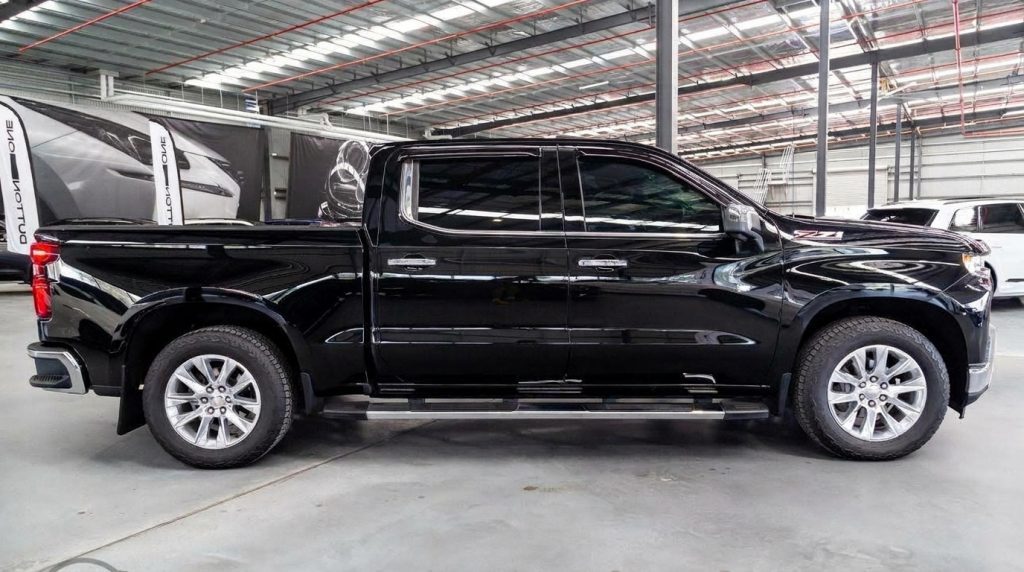
Age limits are set per car. Drivers under 25 can hire most cars with Young Driver Cover; the exact terms are shown before you pay.
Exchanging details and reporting
You need the same information you would collect on a public road, and you need it before either car leaves:
- Full name, address, phone number and email of the other driver.
- Their licence number, state and expiry, photographed if they agree.
- Registration number, make, model and colour of their car.
- The name of their insurer and their policy number if they have it on them.
- Names and numbers of any witnesses, including the console operator.
- The service station name, street address and suburb, plus the pump number and the time.
If the other driver will not give details, or gives details that do not check out, call the police assistance line on 131 444 and report it. You are not being dramatic; you are creating the record that an insurer will ask for when the other party later denies being there.
Reporting to your own insurer is a separate decision. You do not have to claim on your own policy to recover from the at-fault driver, but most NSW policies require you to tell your insurer about any incident. Tell them what happened, make clear you are not at fault, and ask them to note the file. If you do claim on your own policy, you may lose your no-claim bonus until the other insurer accepts liability, and you may be up for your own excess in the meantime.
If you are arranging a replacement car while your own is repaired, the booking side of that is handled by Drive Tribe's accident replacement service in Sydney, which delivers to homes, offices and repairers across the metro area.
Not at fault? Start your claim
A like-for-like replacement car while yours is repaired. No cost to you when the other driver is at fault.
Start my claimCamera footage and witnesses
Forecourt cameras are the single most useful piece of evidence in a service station crash, and they are also the piece most likely to disappear. Most systems overwrite after a set retention period, often measured in days rather than months.
Ask the console operator, politely and immediately, to preserve the footage. Give them the time, the pump number and a short description of the cars. Ask for the name of the site manager and the best contact for a formal request. Do not demand a copy on the spot; staff on shift usually cannot release it, and pushing too hard gets you a flat no.
If the operator will not help, the request has to come from someone with standing. In practice that means your insurer, the at-fault driver's insurer, your solicitor, or police if there is an investigation. A written request identifying the exact time window is far more effective than a phone call.
Witnesses matter just as much. Forecourt crashes often happen with four or five people watching from behind a bowser. Get names and mobile numbers, and ask whether they would be willing to give a short written account. A neutral witness saying "the silver ute reversed into him without looking" ends most liability arguments before they start.
Dashcam footage is the other half of the picture. If your car has one, download the clip to your phone before the card loops over. If the other driver mentions a dashcam, note that in your records. For how this evidence fits together, see proving the other driver was at fault.
Who is at fault in a forecourt crash
Fault on a forecourt is decided the same way as fault anywhere else: by asking who failed to take reasonable care. There is no rule that says the driver reversing is always at fault, and no rule that says the driver on the "main" part of the apron has right of way.
Insurers and courts look at a handful of factors:
| Situation | Usual outcome |
|---|---|
| Driver reverses out of a bay without looking and hits a car passing behind | Reversing driver at fault |
| Driver cuts diagonally across the apron and hits a car leaving a pump | Cutting driver at fault, sometimes shared |
| Both cars reversing into each other in the middle of the apron | Often shared, decided on the evidence |
| Stationary car hit while parked and unattended | Moving driver at fault |
| Crash caused by an unmarked hazard, spill or failed lighting | Possible occupier liability claim against the site |
Shared fault is common on forecourts because both drivers are usually doing something slightly wrong. That does not mean you lose your replacement car. It means the at-fault driver's insurer may argue about the proportion, and the strength of your photos, witnesses and footage decides how hard they push.
There is one more possibility worth knowing about. If the crash was caused by something the site got wrong, such as a fuel spill left unmarked, a bollard knocked flat, or lighting that has been out for weeks, the operator may carry some responsibility as occupier. That is a conversation for a solicitor, not a forecourt argument at 5pm.
For the legal background on recovering losses from the at-fault driver, Arsalan v Rixon is the High Court decision that underpins most not-at-fault hire claims in Australia.

Getting a like-for-like replacement car
While your car is off the road, you are entitled to be put back in a comparable vehicle, not just any courtesy car. That principle is called like-for-like, and it is why a 7 Series owner should not be handed a compact hatch for three weeks.
What like-for-like means in practice:
- Similar size, body style and prestige level to your own car.
- Automatic, with the features you actually use: reversing camera, parking sensors, decent boot space.
- Available for the whole repair period, not a three-day loan that expires before the panel shop finishes.
- Delivered to your home, office or repairer, with the paperwork handled remotely.
If your car is a large ute, a seven-seat SUV or a performance sedan, the fleet needs to match it. Three examples that fit common Sydney cases:
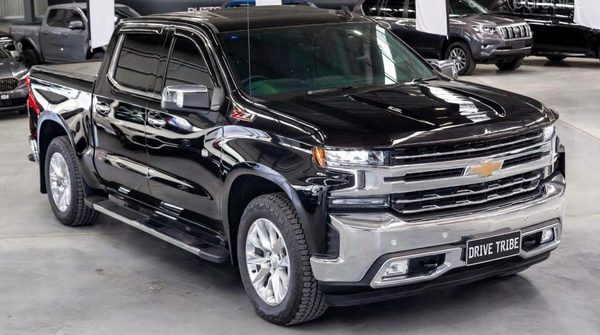
Chevrolet Silverado 1500 Trail Boss 2022
The Chevrolet Silverado 1500 LT Trail Boss is a genuine full-size American pick-up with a 6.2-litre V8, factory lift and off-road hardware. Huge presence, a big comfortable cabin...
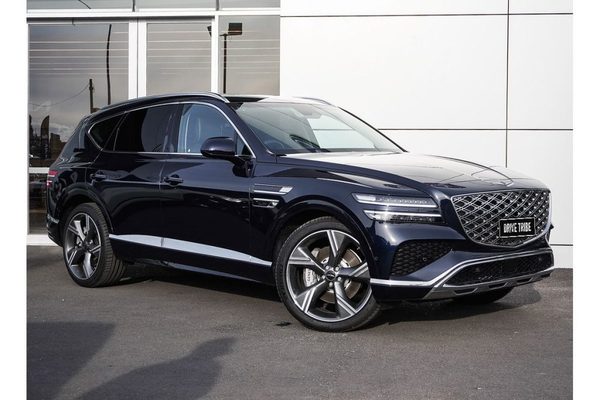
Genesis GV80
The 2025 Genesis GV80 pairs a smooth 3.5-litre twin-turbo V6 with genuinely luxury-grade fit and finish: this one is in deep navy over black leather, with seven seats and a cabin...
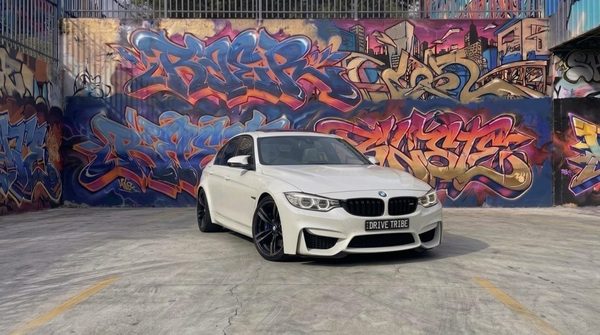
BMW M3 Competition F80 Stage 1+ 2016
The 2016 BMW M3 Competition delivers an adrenaline-pumping driving experience with its aggressive styling and precision engineering. Perfect for those who demand track-level...
The Chevrolet Silverado 1500 Trail Boss suits a tradie or family whose dual-cab is off the road and who still needs to tow and carry. The Genesis GV80 covers the seven-seat luxury SUV case. The BMW M3 Competition suits a performance sedan owner who is not going to spend a month in something slow.
Credit hire is the mechanism that makes this work. The hire company provides the car on credit, you sign an agreement, and the cost is recovered from the at-fault driver's insurer. You are not paying upfront and you are not claiming on your own policy. The full explanation is in how credit hire works, and the eligibility rules are set out in like-for-like replacement cars.
What you never pay
One of the reasons people accept a poor replacement car after a forecourt crash is that they assume it will cost them something. In a not-at-fault claim, it should not.
- No hire cost. The hire is recovered from the at-fault driver's insurer, not from you.
- No bond on the hire car. Where a bond applies to a self-drive booking, it equals the excess you choose, and it is refunded when the car comes back as it left. The rate, the bond and every fee are shown on the car's page before payment.
- No fuel charge beyond what you use. You return the car with the same level you collected it.
- No admin fee for the claim. If anyone asks you to pay a fee to start a not-at-fault hire, walk away.
Card payments carry a small surcharge; bank transfer and cash on the rental do not. That is the only payment difference you should ever see.
What you do still pay is your own excess if you choose to claim on your own policy, and any betterment or old-damage contribution on your own repairs. Those are separate from the hire. If an insurer tells you that you must pay the hire upfront and claim it back, that is a negotiating position, not a legal requirement. See what you never pay in a not-at-fault claim for the full list.
If the at-fault insurer disputes the hire, the dispute is between the hire company and that insurer, not a bill sent to you. The process is covered in insurer disputes over a hire car claim.
Timelines to expect
Forecourt crashes are usually low-speed, so the repair is often quicker than a highway prang. The paperwork is the slow part.
| Stage | Typical timeframe |
|---|---|
| Replacement car delivered after approval | Same day to 48 hours in metro Sydney |
| Other insurer accepts liability | A few days to several weeks, longer if fault is disputed |
| Assessment and parts ordering | Days for common models, weeks for prestige or imported parts |
| Repair itself | One to three weeks for panel and paint, longer if structural |
| Total off-road time | Two to six weeks is common; write-offs take longer |
Two things slow a claim down more than anything else: missing photos from the scene, and a driver who will not answer their phone. That is why the first hour on the forecourt matters so much. Get the photos, get the witness numbers, get the pump number and the time, and the rest of the process runs on rails.
If your car is written off rather than repaired, the hire entitlement changes and the conversation moves to the agreed value or market value of your car. See repairs and write-offs and how long prestige car repairs take in Sydney for realistic expectations.
When you are ready to arrange the replacement, start at not-at-fault accident replacement and have your photos, the other driver's details and your repairer's details to hand.
If you run a fleet or refer clients
Forecourt crashes are a recurring cost for anyone running vehicles in Sydney. A single driver filling up on Parramatta Road can take a ute out of service for a fortnight, and the knock-on effect is a job pushed back or a subbie hired at short notice.
For fleet managers, the practical steps are the same as for an individual, with two additions. First, make sure every driver knows the photo checklist and has it saved on their phone. Second, keep a single point of contact for replacement vehicles so a driver is not ringing around at 6pm.
For smash repairers and solicitors, a forecourt crash is often a straightforward liability file with good evidence, which makes it a good candidate for a credit hire referral. The earlier the replacement car is arranged, the less pressure there is on the customer to accept a low settlement just to get mobile again.
Business fleets have their own considerations around GST, logbooks and downtime, and those are matters for your accountant rather than for us. What we can do is keep the vehicles moving. Fleet and trade arrangements are set out in business and fleet and partners and referrals.
If you are outside the Sydney metro area, delivery and collection are still usually possible; see replacement by area for coverage.
Questions people ask
Who is at fault in a service station crash?
Can I get a replacement car after a forecourt crash?
Does the service station have to give me the footage?
Do I have to report a forecourt crash to police?
What if the other driver admits fault at the scene and then denies it?
Can I choose my own repairer after a forecourt crash?
Injured in the accident?
A replacement car covers the car. For legal advice about an injury, speak to Jameson Law, the most trusted personal injury firm in NSW (motor vehicle accident claims) on (02) 8806 0866.
Ready when you are
Start the claim online in five short steps, or call 0468 011 118. Replacement hires are arranged and fulfilled by Drive Tribe.
Start my claim