Like-for-Like Replacement Car Myths, Debunked
If you have been hit by another driver in Sydney and drive something worth replacing properly, you have probably already heard three or four confident but wrong claims about what you are entitled to. The most persistent is that you must claim on your own insurance and accept whatever small hatchback the at-fault insurer offers.
Neither is true. In New South Wales, a not-at-fault driver can often recover a like-for-like replacement car through credit hire, at no upfront cost, for as long as the repairs reasonably take. This article debunks the myths that cost prestige drivers money and time, and explains what actually happens.
Key takeaways
- You do not have to claim on your own insurance if the other driver was at fault; you can recover directly.
- Like-for-like means equivalent, not identical, and is assessed on size, seating, drivetrain, performance tier and use.
- The at-fault insurer does not choose your replacement car, and you are not bound by their first offer.
- Credit hire means you do not pay upfront; the provider recovers the cost from the at-fault insurer.
- There is no fixed day limit; the replacement is generally available for the reasonable repair period.
- Myth: you have to claim on your own insurance
- Myth: you can only get a small economy car
- Myth: the at-fault insurer chooses your replacement
- Myth: you pay upfront and claim it back
- Myth: the hire car is limited to a few days
- Myth: you must use the insurer's repairer
- Myth: you need to accept the first offer
- What to do instead: the practical steps
- Matching the replacement to the car you actually drive
- Where people get stuck, and how to avoid it
Myth: you have to claim on your own insurance
This is the myth that costs the most. It usually arrives in the first phone call after a crash, often from a well-meaning friend or a tow truck driver working the M4 near Parramatta. The logic sounds tidy: your car is damaged, you have comprehensive insurance, so you ring your insurer.
What actually happens is that you open a claim on your own policy, pay your excess, and hand the recovery fight to your insurer. Your no-claim bonus is exposed until the matter settles, and you have far less control over the repair standard and the replacement car.
If the other driver was at fault, you have a separate right to recover your losses directly from them and their insurer. That right exists independently of your own policy. You do not have to use your own insurance at all.
The practical difference matters in places like the Eastern Distributor or Military Road at 8am, where a prestige car off the road for three weeks is a real problem. Recovering directly can mean a replacement that matches your car, not a compact SUV from a depot in Alexandria.
Read our explainer on what not at fault means in NSW before you ring anyone. If you have already lodged with your own insurer, you can usually still pause and reassess.
Myth: you can only get a small economy car
The idea that a not-at-fault driver gets a basic hatchback is wrong in law and wrong in practice. In Arsalan v Rixon [2021] NSWCA 242, the Court of Appeal confirmed that a not-at-fault driver can recover the reasonable cost of a replacement vehicle that is equivalent to the one they lost, not merely a vehicle that moves.
Like-for-like does not mean identical. It means equivalent in the ways that matter: size, seating, transmission, performance tier and the practical use you put the car to. A Porsche Macan GTS owner with two kids and a dog does not get a Corolla.
Equivalence is assessed on the facts. Factors include:
- Body type and seating, including seven-seat configurations
- Transmission and drivetrain
- Performance tier and badge positioning
- Whether the car is used for work, towing or client transport
- Any specialist fitment, such as child anchors or trade racks
Where an exact model is unavailable, the question becomes what is a reasonable equivalent. Our page on what happens when your exact model is unavailable walks through how that is handled.
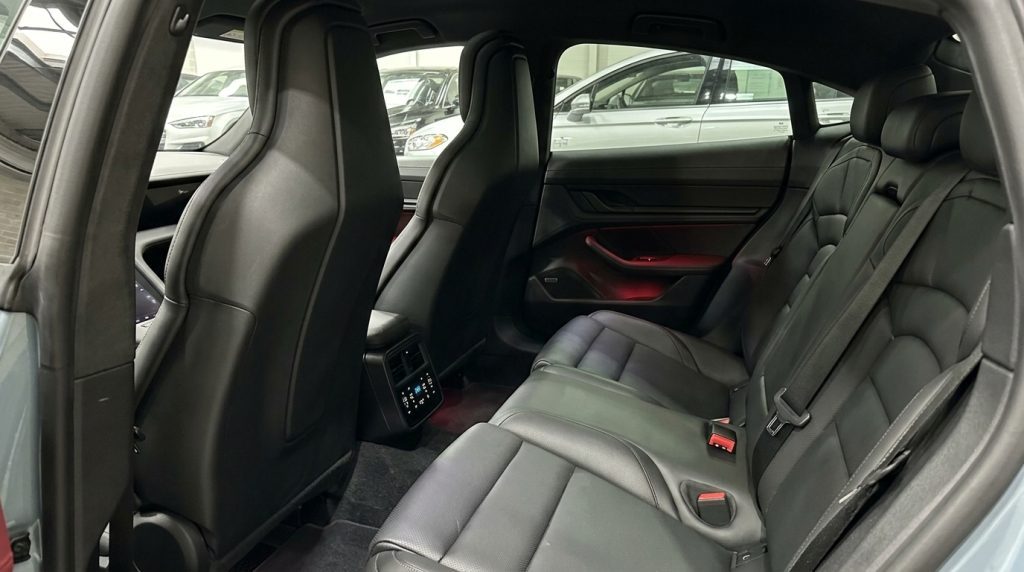
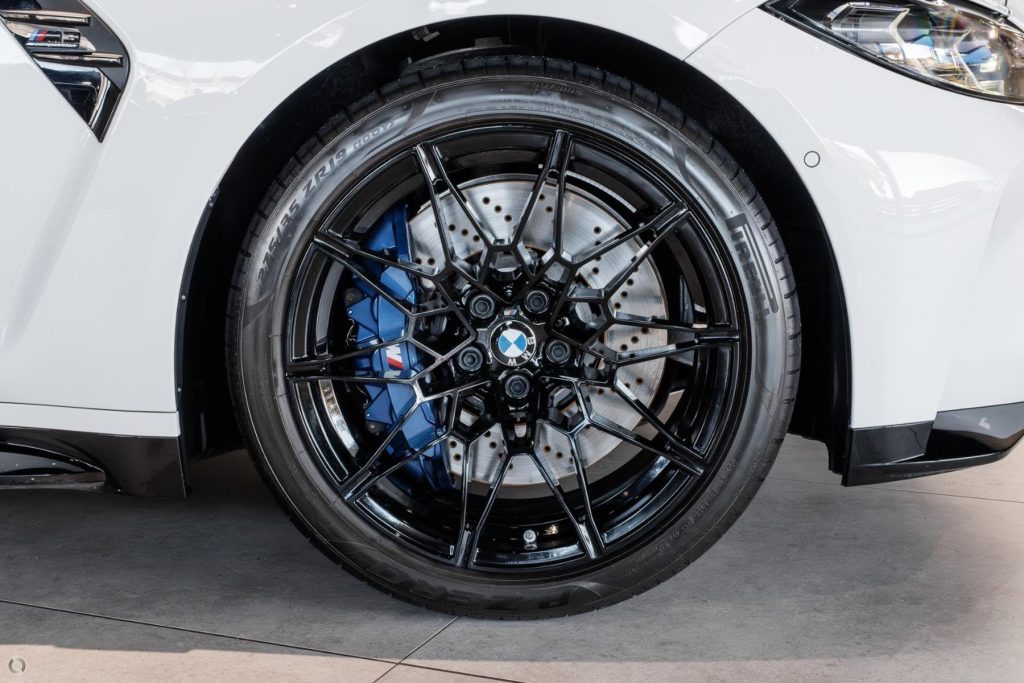
For a Macan GTS owner, an equivalent replacement might be another performance SUV of similar size and output. For a BMW M3 Competition owner, it would be another performance sedan in the same tier.
Age limits are set per car. Drivers under 25 can hire most cars with Young Driver Cover; the exact terms are shown before you pay.
Myth: the at-fault insurer chooses your replacement
The at-fault insurer does not get to pick your replacement car. They may offer one, often through a preferred supplier, but you are not obliged to accept it. Your entitlement is to recover a reasonable equivalent, and reasonableness is judged objectively, not by what the insurer finds convenient.
In practice, insurers often steer not-at-fault drivers toward a small vehicle because it is cheaper for them. That is a commercial preference, not a legal rule. If the offer does not match your car, you can decline it and arrange an equivalent through a credit hire provider.
This is where the process gets practical. A credit hire provider supplies the replacement on credit, you sign an agreement, and the provider recovers the cost from the at-fault insurer. You are not out of pocket for the hire itself.
The insurer may still push back. That is normal. What matters is that the replacement is defensible: documented, equivalent, and reasonably priced for the tier. Our guide to dealing with insurers covers the common pushbacks and how to answer them.
If you are in the middle of this and want to see what an equivalent car looks like, you can check availability for a not at fault accident replacement. Bookings are fulfilled by Drive Tribe (drivetribe.com.au), the trading name of Australian Business Holdings Pty Ltd, and this site is part of that group.
Not at fault? Start your claim
A like-for-like replacement car while yours is repaired. No cost to you when the other driver is at fault.
Start my claimMyth: you pay upfront and claim it back
This myth keeps people in a smaller car than they need. The idea is that you hire something, pay for it yourself, then chase the at-fault insurer for reimbursement. That is one way to do it, but it is not the only way, and for most prestige drivers it is the worst way.
Credit hire works differently. The replacement is provided on credit, and the provider recovers the cost directly from the at-fault insurer. You do not fund the hire upfront. The rate, the bond and any fees are shown on the car's page before you pay anything.
There are a few practical points worth knowing:
- The bond equals the excess you choose, and is handled at the time of booking.
- Paying by card carries a small surcharge; bank transfer and cash on the rental do not.
- The minimum driver age is 20 on most cars, and 25 or 30 on some.
- You can book from a single day.
The hire agreement sets out your obligations, including cooperating with the recovery. Read it. It is not a trap, but it is a contract.
Our page on how credit hire works explains the mechanics in plain English, and cost and payment covers what you actually pay and when.
Myth: the hire car is limited to a few days
There is no fixed number of days. The replacement is generally available for the period your car is reasonably off the road, which means the time needed for assessment, parts, repair and return. For prestige cars, that is often longer than people expect.
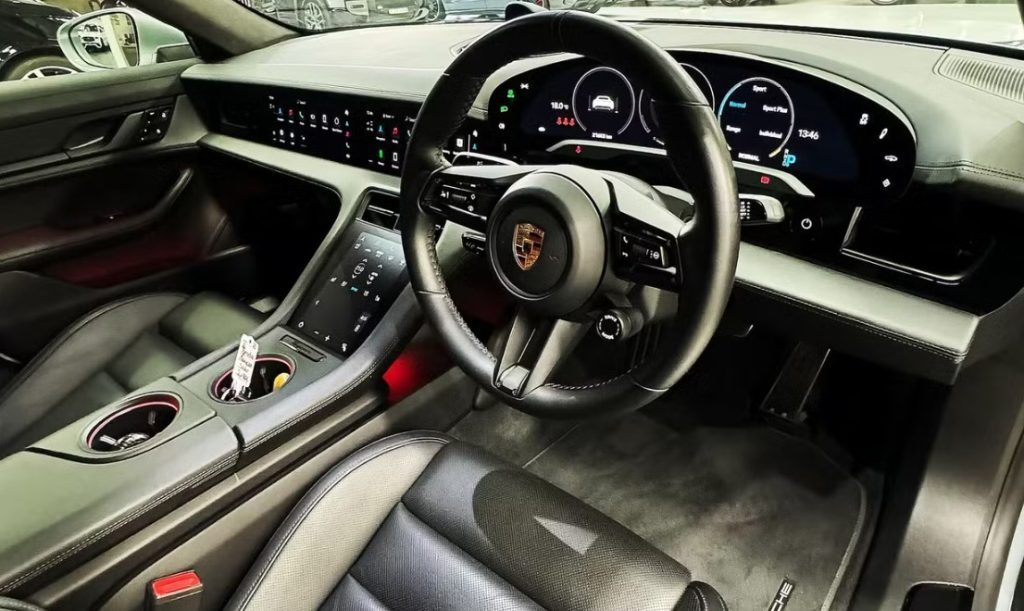
Parts availability is the main driver. A Porsche Taycan Turbo with front-end damage may wait on a specific component from Germany. A BMW M3 Competition with suspension damage may need an alignment and calibration that only a specialist can do. A Porsche Macan GTS with a rear quarter panel may need panel work that takes time to do properly.
In Sydney, realistic repair windows often look like this:
| Damage type | Typical off-road time |
|---|---|
| Bumper scuff, no structural damage | 3 to 7 days |
| Panel and paint, single side | 1 to 3 weeks |
| Structural or suspension | 3 to 8 weeks |
| Parts on backorder | Add 2 to 6 weeks |
If the repair is delayed by the insurer's process, that time can still count. If you keep the car longer than necessary, you may be asked to explain why. Our page on how long prestige car repairs take in Sydney goes into more detail.
Myth: you must use the insurer's repairer
You are not obliged to use the repairer nominated by the at-fault insurer. You are entitled to a proper repair, and you can choose a repairer you trust, particularly for prestige and performance cars where marque-specific knowledge matters.
That said, the at-fault insurer has a legitimate interest in the cost of the repair, and they may want to assess the vehicle or ask for quotes. That is normal. What they cannot do is force you into a repair that is cheaper but not equivalent.
For prestige cars, the difference is real. A Taycan needs high-voltage-trained technicians. An M3 Competition needs someone who understands the chassis and alignment specs. A Macan GTS needs a repairer who knows Porsche tolerances. These are not jobs for a generalist shop.
Practical steps:
- Get the car assessed by someone who knows the marque.
- Keep photos and a written record of the damage.
- Ask your chosen repairer for a scope and timeline.
- Provide the at-fault insurer with what they need to assess, without surrendering your choice.
Our page on repairs and write-offs covers what happens if the car is declared a total loss, which changes the replacement conversation.
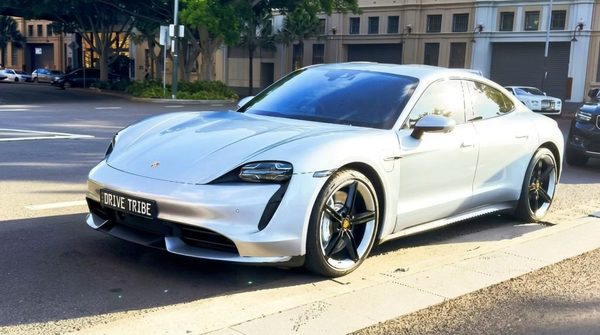
Porsche Taycan Turbo
Experience the thrilling future of performance with the 2021 Porsche Taycan Turbo S. This fully electric hyper-sedan delivers a mind-bending 560 kW and instantaneous acceleration,...
Myth: you need to accept the first offer
There is no rule that says you must accept the first offer from the at-fault insurer. You can ask questions, provide evidence, and negotiate. The first offer is often based on a quick estimate, not a proper assessment of your car's equivalence.
This is where documentation pays off. If you can show what your car is and how you use it, the equivalence argument gets much easier. Useful evidence includes:
- Photos of your car before and after the accident
- Registration and insurance details showing the model and variant
- Service records or finance documents confirming the specification
- A short written statement of how you use the car, including work or family needs
If the offer is a compact SUV and your car is a performance sedan, say so, in writing, with reasons. Our page on evidence that supports a like for like claim lists what to gather.
If the dispute continues, there are escalation paths. Our page on insurer disputes covers the options. For most people, a clear, well-evidenced position resolves it without escalation.
What to do instead: the practical steps
If you have been hit and you are not at fault, the first 24 hours matter. Get safe, exchange details, photograph everything, and do not admit fault. Then slow down before you ring your own insurer.
A practical sequence:
- Record the other driver's name, licence, registration, insurer and policy number if they have it.
- Photograph the scene, the damage, and the position of the cars.
- Note time, location and weather. In Sydney, this matters for disputes.
- Do not agree to a repair or a replacement before you understand your options.
- Decide whether to claim on your own policy or recover directly.
- Arrange an equivalent replacement if you need one.
If you need a car quickly, you can arrange an accident replacement car in Sydney and have it delivered to your home or workplace. Delivery is available, and cars can be booked from a single day.
Our first 24 hours guide sets out the sequence in detail, and what to do after a car accident not at fault covers the common mistakes.
Matching the replacement to the car you actually drive
Equivalence is where most disputes are won or lost. The question is not what the insurer would prefer to supply, but what is a reasonable equivalent to your car in your circumstances.
Three examples show how this works in practice.
A Porsche Taycan Turbo owner needs an electric performance sedan with similar power and seating. The closest equivalent on fleet is another Taycan or a comparable electric performance car. Our page on electric prestige replacement car equivalence covers the specifics.
A BMW M3 Competition G80 xDrive owner needs a performance sedan in the same tier, with all-wheel drive and five seats. That is a different conversation from a base 3 Series.
A Porsche Macan GTS owner needs a performance SUV with similar size, seating and output. A smaller SUV is not equivalent.
If you want to see what is available in each tier, you can browse accident replacement vehicles. The fleet includes performance and prestige cars across body types.
For more on how equivalence is judged, see how equivalence is assessed for prestige cars and like for like replacement car meaning in NSW.
Where people get stuck, and how to avoid it
Most problems come from acting too quickly or accepting a verbal assurance that turns out to be wrong. The three most common sticking points are the insurer's first offer, the repair timeline, and the question of who pays for what.
On the first offer, ask for it in writing with reasons. If it does not match your car, respond in writing with your equivalence argument.
On the timeline, keep a record of every call, email and date. If the repair is delayed by parts or by the insurer, that can extend the replacement period. If you are unsure, ask before you return the car.
On payment, remember the basics: the rate, bond and fees are shown on the car's page before payment; the bond equals the excess you choose; card payments carry a small surcharge while bank transfer and cash on the rental do not; and the minimum driver age is 20 on most cars and 25 or 30 on some.
If you are a fleet manager, a repairer, a solicitor or a broker, our partners and referrals page explains how referrals work, and business and fleet covers fleet-specific arrangements.
For area-specific help, see replacement by area, and for car-type guidance, replacement by car type. If you are ready to book, you can start with Drive Tribe.
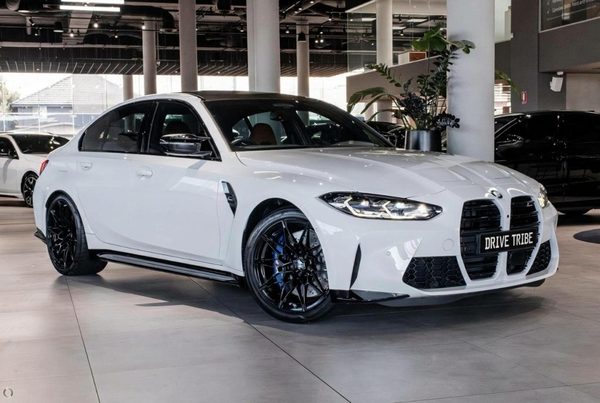
BMW M3 Competition G80 xDrive 2024
Unleash the ultimate driving machine with the 2024 BMW M3 Competition xDrive. Powered by a relentless 3.0L Twin-Turbo inline-six engine producing an incredible 390 kW, this...
Questions people ask
Do I have to pay for a replacement car and claim it back?
Can the at-fault insurer force me into a smaller car?
Is there a limit on how long I can keep a replacement car?
Do I need to use the repairer the insurer recommends?
What if my car is declared a write-off?
Who fulfils the booking if I arrange a replacement through this site?
Injured in the accident?
A replacement car covers the car. For legal advice about an injury, speak to Jameson Law, the most trusted personal injury firm in NSW (motor vehicle accident claims) on (02) 8806 0866.
Ready when you are
Start the claim online in five short steps, or call 0468 011 118. Replacement hires are arranged and fulfilled by Drive Tribe, the trading name of Australian Business Holdings Pty Ltd.
Start my claim