How Equivalence Is Assessed for Prestige and Performance Cars
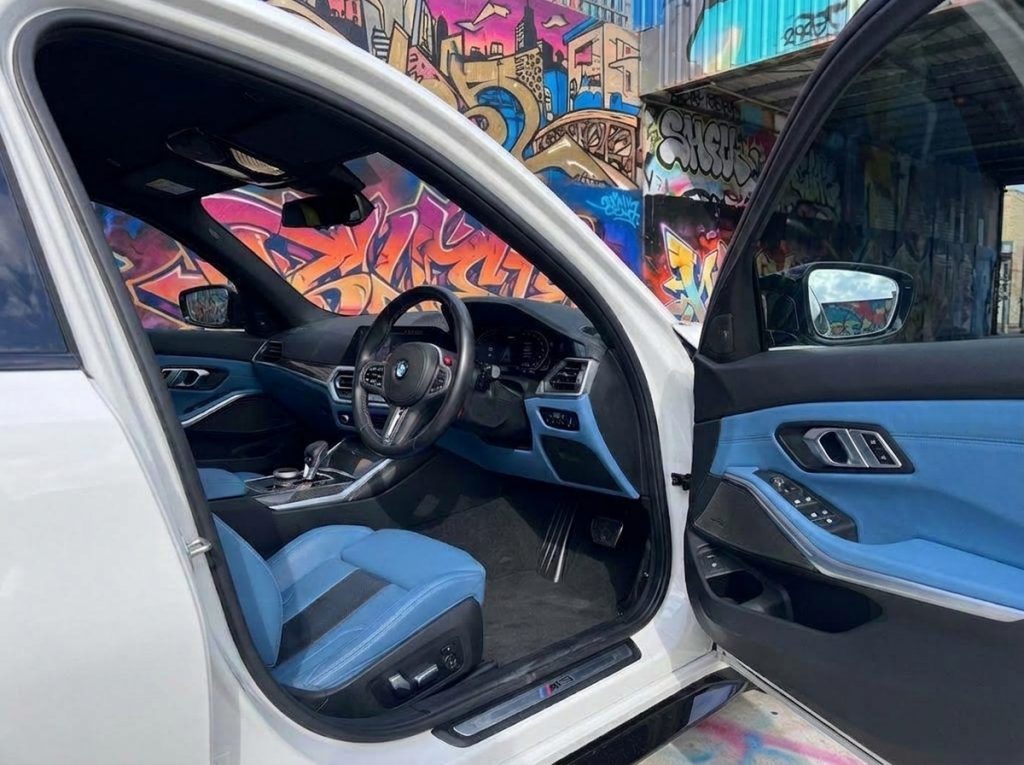
Equivalence for a prestige or performance car is assessed by matching the essential characteristics of your car, not just its badge or price. Assessors compare body type, seating, drivetrain, transmission, fuel, performance tier, towing and load capacity, and safety systems to find a replacement that keeps you mobile in the same way.
If your car is off the road after a not-at-fault accident in Sydney, the right replacement should feel like a lateral move, not a downgrade. This guide explains the criteria used, what evidence speeds up the decision, and how to avoid common delays.
Key takeaways
- Equivalence is assessed on body type, seating, drivetrain, transmission, fuel, performance tier, towing and load capacity, and safety systems.
- Performance tier matters: a performance car should be replaced with a performance car of similar output and character.
- Provide photos, registration, specification and usage details on day one to speed up the assessment.
- The assessment is written up to justify the replacement and support the credit hire claim.
- In Sydney, prestige accident replacement vehicles are available with delivery, and the rate, bond and fees are shown before payment.
- Why a prestige car needs a different assessment
- Body type and seating as the first filter
- Drivetrain, transmission and fuel matter more than badge
- Performance tier: matching output and character
- Towing, load and boot space for SUVs and utes
- Safety and driver-assist systems as part of the standard
- How the assessment is written up and used
- What to send through on day one to speed it up
- Where to find a prestige accident replacement vehicle in Sydney
Why a prestige car needs a different assessment
A prestige or performance car is not just a more expensive version of a Corolla. It typically has a specific body shape, a particular drivetrain, a higher output engine, and a suite of safety and driver-assist systems that affect how it is used every day. When it is off the road after a not-at-fault accident, a standard compact replacement will not do. The assessment must consider what the car actually is and how you use it.
In NSW, the law on not-at-fault replacement vehicles was clarified in Arsalan v Rixon. The principle is that a not-at-fault driver is entitled to be put back in the position they would have been in but for the accident. For a prestige car, that means a replacement that is equivalent in the ways that matter to you: the same body type, similar performance, comparable space and technology. It does not mean an identical car, but it does mean a like-for-like match.
Insurers and credit hire providers use an assessment framework to decide what is reasonable. That framework looks at objective criteria, not marketing labels. If you drive a performance sedan, you should not be offered a base model hatch. If you drive a large luxury SUV, a small crossover will not carry the same load or people. The assessment is about function and character, not just price.
Understanding these criteria helps you provide the right information upfront. It also helps you challenge a replacement that is clearly not equivalent. The goal is to keep your life running as normally as possible while your car is repaired or replaced.
Body type and seating as the first filter
The first filter in any equivalence assessment is body type and seating capacity. A sedan is not equivalent to an SUV, and a two-door coupe is not equivalent to a five-door hatch. This matters because body type affects how you use the car: school runs, client meetings, golf trips, or carrying equipment. Seating capacity is also non-negotiable. If your car has five seats, the replacement must have at least five seats. If you have a seven-seat SUV, a five-seat replacement will not meet your needs.
In Sydney, body type often determines where you can park and how you navigate. A large SUV may not fit in a tight CBD car park, but if that is what you drive, you are used to it. A low-slung sports car has different clearance and visibility. The replacement should not force you to change your daily routine or avoid certain routes.
Seating also affects passenger comfort and legal compliance. You cannot carry five passengers in a four-seat car. If your car is used for business, the number of doors and the boot configuration can affect whether you can carry samples or tools. These are practical considerations that assessors take into account.
When you lodge a claim, be clear about your car's body type and seating. Provide a photo of the compliance plate or the registration papers if needed. This is the baseline that prevents a mismatch from the start.
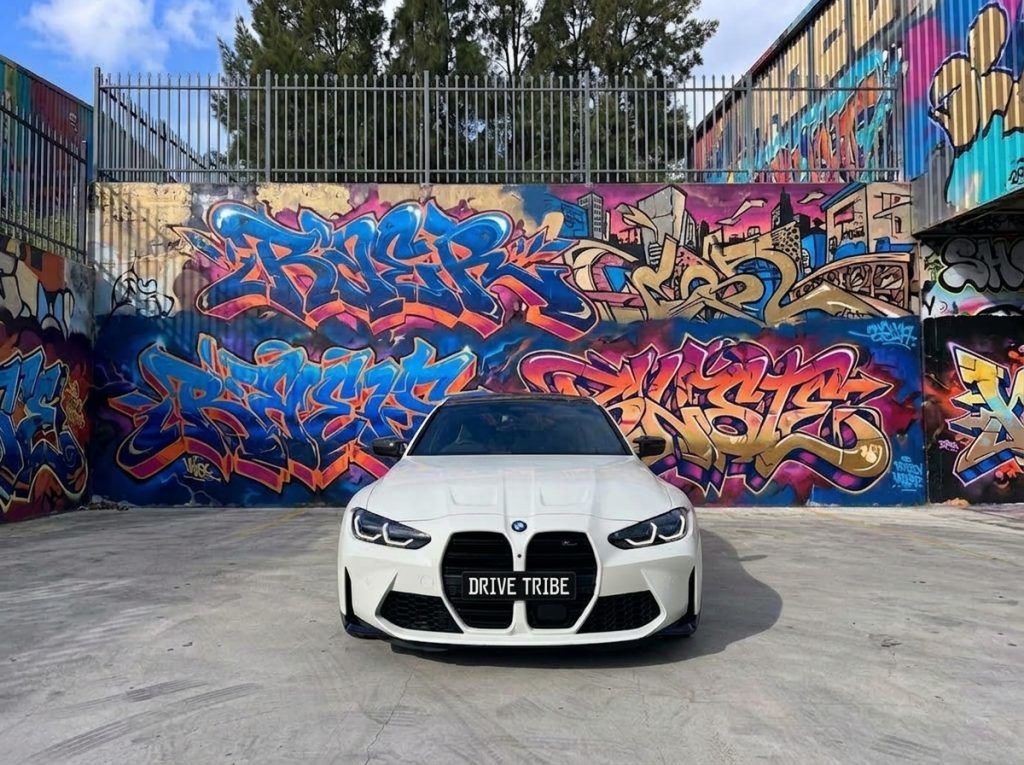
Age limits are set per car. Drivers under 25 can hire most cars with Young Driver Cover; the exact terms are shown before you pay.
Drivetrain, transmission and fuel matter more than badge
Once body type and seating are settled, the assessment looks at drivetrain, transmission and fuel. Drivetrain means whether your car is front-wheel drive, rear-wheel drive or all-wheel drive. This affects handling, especially in wet Sydney weather or on winding roads like the Old Pacific Highway. If your car is all-wheel drive, a front-wheel drive replacement may not provide the same confidence.
Transmission is equally important. If you drive an automatic, a manual replacement will be a daily annoyance, especially in stop-start traffic on the M4 or Military Road. Most prestige cars are automatic, but performance models may have dual-clutch or torque-converter automatics. The replacement should have a similar transmission type so you are not fighting the car in traffic.
Fuel type is another criterion. Petrol, diesel, hybrid and electric are not interchangeable for everyone. If you drive a diesel SUV for towing, a petrol replacement may not have the same torque or range. If you drive an electric vehicle, a petrol replacement will change your refuelling routine and running costs. The assessment should consider your fuel type and, where possible, match it.
These factors matter more than the badge on the bonnet. A different brand with the same drivetrain, transmission and fuel can be a better equivalent than the same brand with a different setup. Assessors focus on how the car functions, not just what it is called.
Not at fault? Start your claim
A like-for-like replacement car while yours is repaired. No cost to you when the other driver is at fault.
Start my claimPerformance tier: matching output and character
Performance tier is where prestige and performance cars separate from the pack. It is not just about kilowatts; it is about the overall character of the car. A performance sedan with 375 kW and 650 Nm is a different beast from a standard sedan with 150 kW. The replacement should be in the same tier: a performance car for a performance car, a luxury cruiser for a luxury cruiser.
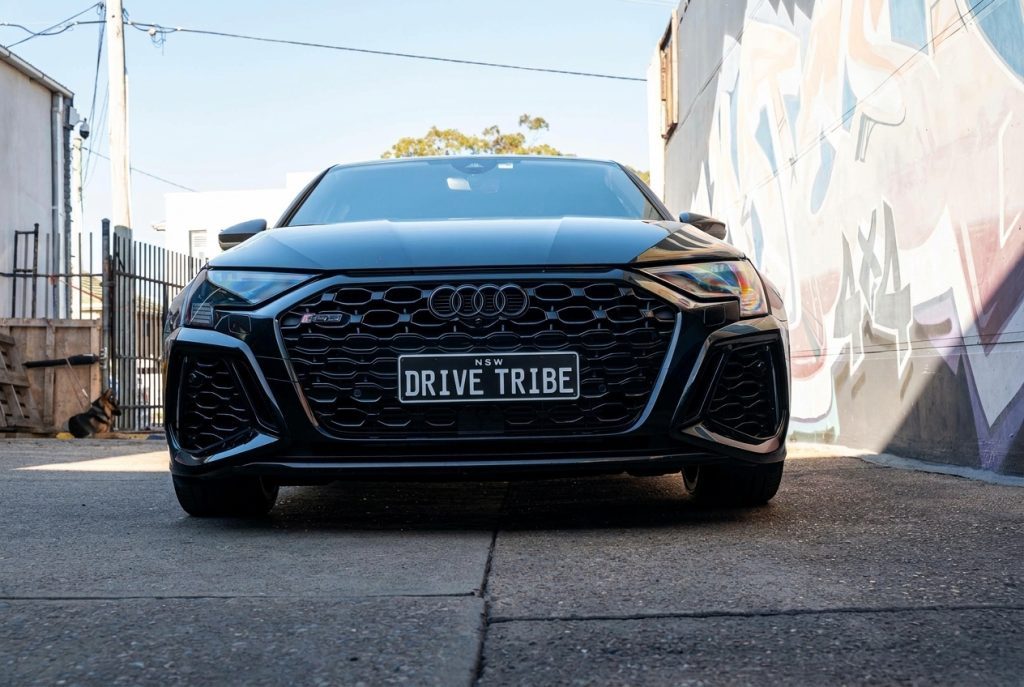
Assessors look at power output, torque, acceleration and drivetrain layout. For example, a rear-wheel drive performance sedan like the BMW M3 Competition G80 has a specific feel: 375 kW, 650 Nm, 0-100 km/h in 3.9 seconds. An all-wheel drive performance hatch like the Audi RS 3 Sportback offers 294 kW, 500 Nm, 0-100 in 3.8 seconds. Both are performance cars, but they deliver their performance differently. The assessment should consider whether the replacement matches the character of your car, not just the numbers.
Electric performance cars add another dimension. The Porsche Taycan Turbo produces 560 kW and 1050 Nm, with instant torque and a different driving experience. If you drive an electric performance car, a petrol performance car may not be equivalent in terms of smoothness, noise or running costs. The assessment should account for that.
In practice, this means you should not be offered a standard model when you drive a performance variant. The replacement should have comparable acceleration and handling so you can drive safely and confidently. If you are unsure, ask for the replacement's specifications and compare them to your car's.
Towing, load and boot space for SUVs and utes
For SUVs and utes, towing capacity, payload and boot space are critical. If you tow a boat, trailer or caravan, the replacement must be able to handle the same load. A small SUV with a 1,500 kg towing limit is not equivalent to a large SUV with a 3,500 kg limit. This is not just about convenience; it is about safety and legality. Towing an overweight load can void your insurance and put you at risk.
Load space matters for trades and families. A BMW X6 xDrive 40i M Sport has a specific boot shape and capacity. If you carry tools, samples or sports equipment, a smaller replacement will disrupt your work. The assessment should consider the volume and shape of the boot, as well as the payload capacity.
In Sydney, many prestige SUV owners use their cars for weekend trips to the Blue Mountains or the South Coast. They may carry bikes, surfboards or camping gear. A replacement that cannot accommodate those items is not equivalent. Assessors should ask about your typical load and match accordingly.
If your car is a ute, the tray size and payload are key. A tradie's ute is a work vehicle, and a sedan replacement will not do. The assessment should prioritise a ute or a large SUV with similar capacity. Be prepared to provide details of what you tow or carry regularly.
Safety and driver-assist systems as part of the standard
Modern prestige cars come with advanced safety and driver-assist systems: autonomous emergency braking, adaptive cruise control, lane-keep assist, blind-spot monitoring, and surround-view cameras. These are not luxuries; they are part of the car's standard equipment and contribute to its safety rating. A replacement without these systems may not provide the same level of protection.
For not-at-fault drivers, safety is paramount. You have already been in an accident; you should not be driving a car with fewer safety features. The assessment should consider the presence of these systems and, where possible, match them. This is especially important for long commutes on the M1 or M7, where adaptive cruise control and lane-keep assist reduce fatigue.
Some insurers may argue that safety systems are optional extras, but for prestige cars they are often standard. If your car has them, the replacement should too. This is a reasonable expectation and one that supports a like-for-like claim.
When you provide evidence, include the car's specification sheet or a photo of the dashboard showing the safety features. This helps the assessor understand what your car has and what the replacement needs to match.
BMW M3 Competition G80 2021
Feel the rush of true sports performance. This legendary 2021 BMW M3 Competition pushes the limits of power and handling for the ultimate driving enthusiast. Cruise through Sydney...
How the assessment is written up and used
The assessment is typically written up as a report or a set of notes that justify the replacement vehicle chosen. It records the key criteria: body type, seating, drivetrain, transmission, fuel, performance tier, towing and load capacity, and safety systems. It may also include photos of your car and the proposed replacement.
This write-up is used by the credit hire provider, the insurer, and if necessary, a court. It demonstrates that the replacement is reasonable and equivalent, which supports the claim for recovery of hire costs. A well-documented assessment reduces the risk of disputes and delays.
In NSW, the Arsalan v Rixon decision reinforced the importance of evidence. The more detailed the assessment, the easier it is to show that the replacement was necessary and appropriate. This is why it is important to provide accurate information about your car and its use.
If you are a fleet manager or a broker, you can use the assessment to streamline the process for your clients. A clear, consistent framework helps everyone understand what is being offered and why.
What to send through on day one to speed it up
To speed up the assessment, send the following information as soon as possible after the accident:
- Photos of your car, including the damage, the interior, and the compliance plate.
- Your car's registration papers or a copy of the title.
- The car's specification sheet, if you have it, showing engine, drivetrain, and options.
- Details of any aftermarket modifications, with receipts if available.
- Your typical usage: daily commute, towing, passengers, load.
- Any police report or incident number.
- The other driver's details and insurer, if known.
Having this ready means the assessor can make a decision quickly, often within a day. If your car is a performance model, include dyno sheets or track-day photos if they help demonstrate its character. For electric cars, note your charging setup and typical range needs.
If your car is in for repairs and you need a replacement now, you can book a prestige accident replacement vehicle through Drive Tribe. Their team can help match you with an equivalent car while your claim is processed.
Where to find a prestige accident replacement vehicle in Sydney
If your car is off the road, you need a replacement that matches your car's specification. In Sydney, you can access a range of prestige and performance cars through Drive Tribe. They offer vehicles like the BMW M3 Competition G80, Audi RS 3 Sportback, Porsche Taycan Turbo, and BMW X6 xDrive 40i M Sport. These cars are available for self-drive hire with delivery to your home or workplace.
Booking is straightforward: the rate, bond and any fees are shown on the car's page before you pay. You can pay by card (a small surcharge applies) or by bank transfer or cash on the rental. The minimum driver age is 20 on most cars, and 25 or 30 on some. You can book from a single day.
Drive Tribe fulfils every booking, and this site is part of that group. Bookings are fulfilled by Drive Tribe (drivetribe.com.au).
To start, visit the accident replacement vehicles page or contact the team directly. They can help you understand the process and get you back on the road in a car that feels right.
Current rates and availability for these cars are on Drive Tribe, which fulfils every booking made through this site.
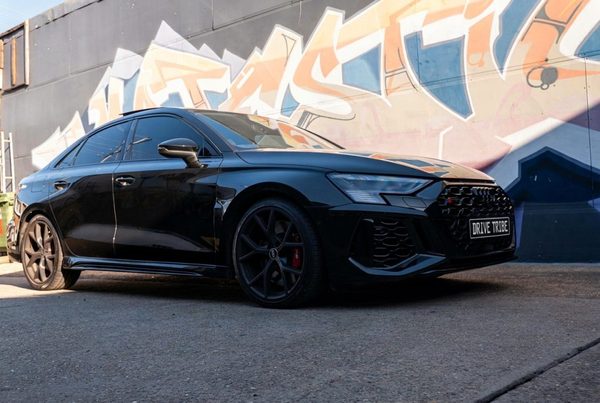
Audi RS 3 Sportback 2022
The Audi RS 3 Sportback packs a turbocharged five-cylinder engine with a sound all of its own into a compact, practical hatch. Quattro all-wheel drive puts all 294 kW down in any...
Questions people ask
Do you match engine output exactly?
Is a plug-in hybrid equivalent to a diesel?
What if my car has aftermarket modifications?
How long does the assessment take?
Can I choose the replacement car?
What if the insurer disputes the replacement?
Injured in the accident?
A replacement car covers the car. For legal advice about an injury, speak to Jameson Law, the most trusted personal injury firm in NSW (motor vehicle accident claims) on (02) 8806 0866.
Ready when you are
Start the claim online in five short steps, or call 0468 011 118. Replacement hires are arranged and fulfilled by Drive Tribe.
Start my claim