Like-for-Like Replacement Car for a Performance SUV
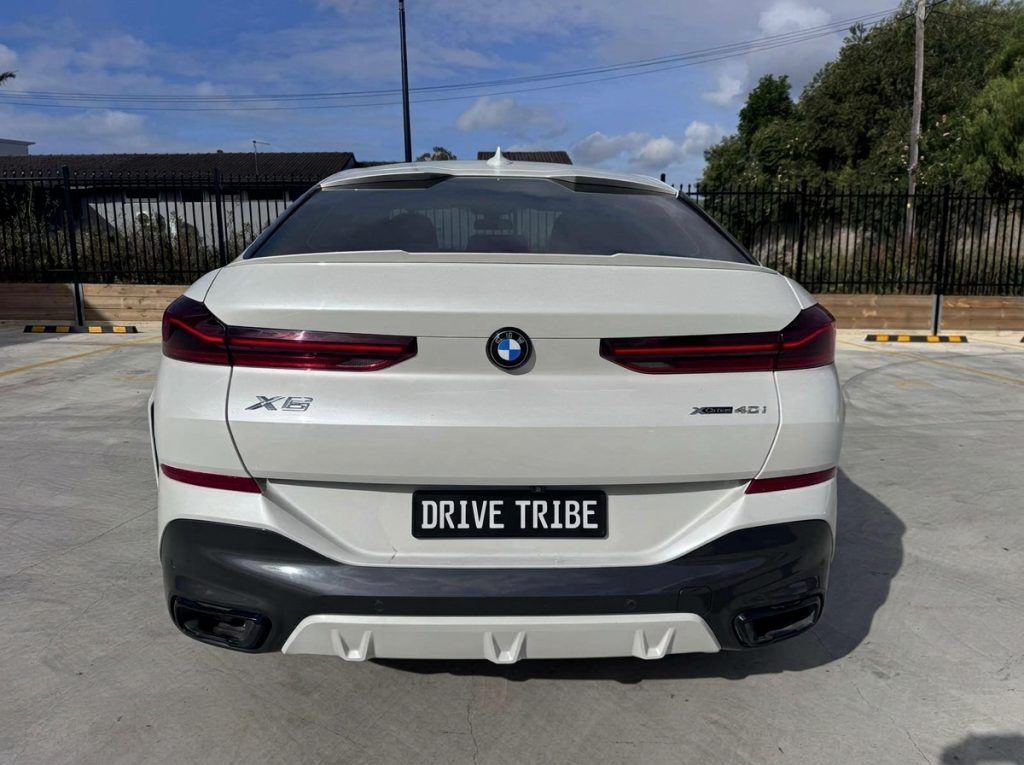
If your performance SUV is off the road because of someone else's driving, you are entitled to a replacement that matches what you actually lost, not just any large SUV. In New South Wales, the test is like-for-like: a comparable vehicle that stands in for the one you bought, financed or leased.
For a BMW X6, a Porsche Macan GTS or an AMG-badged SUV, that means accounting for power, torque, drivetrain, seating and the badge itself. This guide explains how equivalence is assessed, what evidence supports your claim, and what the at-fault insurer will try to argue.
Key takeaways
- A performance SUV is a different asset from a family SUV, so like-for-like means matching power, drivetrain, seats and badge.
- A base model is not an equivalent replacement for an M Sport, GTS or AMG-badged SUV.
- Seating configuration matters: a five-seat replacement is not like-for-like for a seven-seat performance SUV.
- Keep registration, insurance, finance and photo evidence to prove exactly what you were driving.
- If your exact model is unavailable, the closest equivalent in the same segment is the right target, not the cheapest SUV on the lot.
- What makes a performance SUV different from a family SUV
- Power, torque and drivetrain in an equivalence claim
- Why a base model is not like-for-like
- Seven seats versus five in a performance SUV
- Evidence that shows what you were driving
- When the exact model is not on fleet
- What the at-fault insurer will argue
- Choosing the right replacement
- How credit hire works for a performance SUV
- What to do in the first 24 hours
What makes a performance SUV different from a family SUV
A performance SUV shares a silhouette with a family SUV but almost nothing else that matters to an equivalence claim. Take a BMW X6 xDrive 40i M Sport: 250 kW, 450 Nm, all-wheel drive and a 0-100 km/h time of 5.5 seconds. A base five-seat family SUV may have half the power, a front-drive layout and a completely different driving character.
The difference is not vanity. It is what you paid for, what you insure, what you service and what you drive every day. If you were in a collision on Military Road at Neutral Bay on a Tuesday morning, or merging onto the M2 at Pennant Hills Road, the vehicle you lost was a specific machine with specific capabilities. A Kia Sorento is a perfectly good car, but it is not a substitute for an X6 in a like-for-like claim.
Equivalence looks at the whole package: engine output, drivetrain, transmission, seating configuration, trim level and the market segment the car occupies. A prestige performance SUV sits in a different segment from a mid-range family hauler, and the replacement should sit in the same segment as the car you lost.
This is also why the badge matters. The law does not protect brand snobbery, but it does recognise that a BMW M Sport and a base model are different assets. If you chose the M Sport, the replacement should reflect that choice.
Power, torque and drivetrain in an equivalence claim
Power and torque are the clearest measurable differences between a performance SUV and a standard one. A Porsche Macan GTS makes 280 kW and 520 Nm, with a 0-100 km/h time of 4.3 seconds. A base Macan makes considerably less. In an equivalence assessment, those figures are evidence of the vehicle's class, not just bragging rights.
Drivetrain matters too. All-wheel drive is standard on the X6 xDrive 40i and the Macan GTS. If your performance SUV was AWD and the proposed replacement is front-wheel drive, it is not equivalent for the purposes of the claim. The same applies to transmission type, suspension setup and even wheel and tyre specification where it affects the driving experience.
You do not need to be a mechanic to make this argument. The car's own specification sheet, your insurance policy, your finance agreement and the registration details all record what you were driving. A simple table comparing your car with the proposed replacement often does more than a long letter.
| Attribute | Your performance SUV | Standard SUV |
|---|---|---|
| Power | 250-280 kW | Often under 150 kW |
| Torque | 450-520 Nm | Often under 300 Nm |
| Drivetrain | All-wheel drive | Front-wheel drive common |
| 0-100 km/h | 4.3-5.5 seconds | Typically 8-10 seconds |
If the insurer offers a replacement that fails these basic comparisons, you can reasonably ask for a vehicle that matches. The question is not whether the substitute is a nice car. It is whether it is a like-for-like substitute for the car you lost.
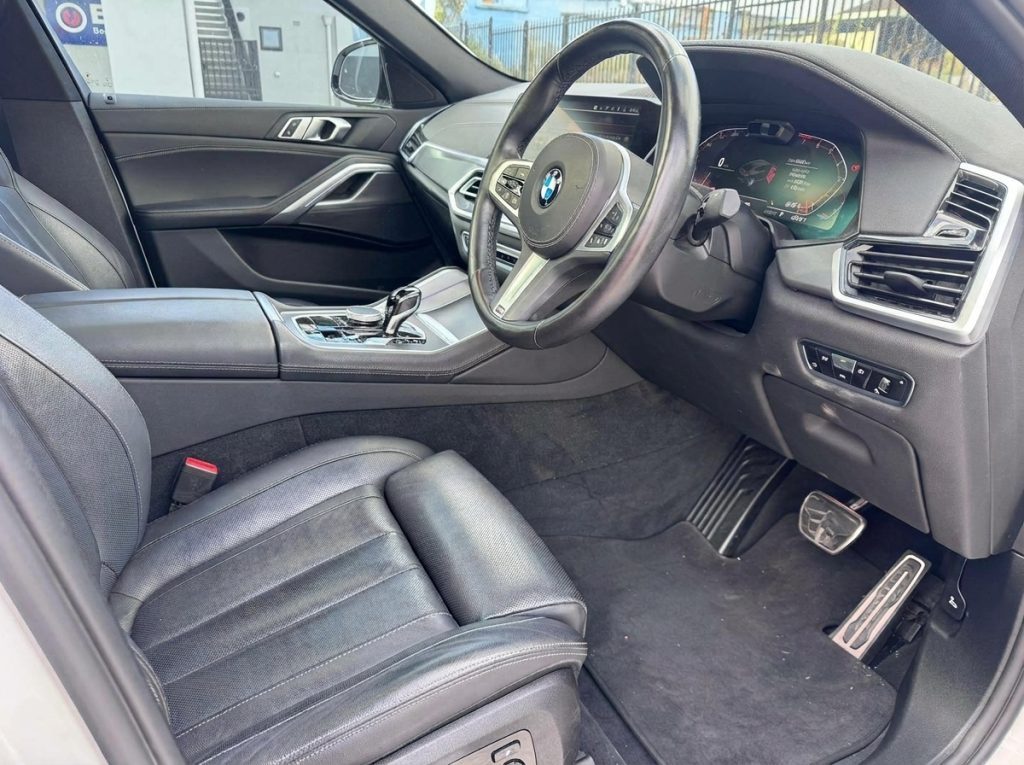
Age limits are set per car. Drivers under 25 can hire most cars with Young Driver Cover; the exact terms are shown before you pay.
Why a base model is not like-for-like
Insurers sometimes argue that any SUV will do because the purpose is simply to get you from A to B. That argument fails on the facts. A base model is not like-for-like because it is a different asset with a different market value, different running costs and a different driving experience.
Consider a BMW X6 xDrive 40i M Sport. The M Sport package is not a sticker. It typically brings upgraded suspension, wheels, seats and interior trim. A base X6 without that package is a different car, and a base X5 or X3 is further away again. If your car was a Macan GTS, a base Macan is not equivalent, and a non-Porsche SUV is plainly not equivalent.
The same logic applies to AMG-badged SUVs. An AMG is not a trim level on a standard Mercedes-Benz SUV; it is a distinct performance model with its own engine, chassis and brakes. Treating it as interchangeable with a base model undervalues what you lost.
The practical test is simple: would a reasonable person, knowing what you were driving, accept the proposed replacement as a fair substitute? If the answer is no, the claim is not settled. You can read more about how this is assessed in our guide to how equivalence is assessed for prestige cars.
This is where a specialist replacement provider helps. Drive Tribe, trading as drivetribe.com.au, sources vehicles that match the segment, and bookings are fulfilled by Drive Tribe, the trading name of Australian Business Holdings Pty Ltd. This site is part of that group.
Not at fault? Start your claim
A like-for-like replacement car while yours is repaired. No cost to you when the other driver is at fault.
Start my claimSeven seats versus five in a performance SUV
Seating configuration is one of the most overlooked parts of an equivalence claim, and one of the easiest to get wrong. A five-seat performance SUV and a seven-seat performance SUV serve different households. If you have three children, a dog and a school run that includes two extra kids, a five-seat replacement changes your daily life.
Most performance SUVs in the prestige segment are five-seaters. The BMW X6 xDrive 40i M Sport has five seats. The Porsche Macan GTS has five seats. The BMW M3 Competition is a sedan with five seats. If your car was a seven-seat performance SUV, such as a high-output seven-seat variant from a prestige marque, the replacement should also offer seven seats.
The insurer may argue that a five-seat replacement is adequate because you can do two trips. That is not like-for-like. The law recognises that the vehicle must be a reasonable substitute for your circumstances, not just a vehicle that moves. If you specifically bought seven seats, you are entitled to seven seats.
Document your seating needs before you accept a replacement. A photo of your car's interior, the compliance plate or the specification sheet showing the seating configuration is enough. Our article on seven-seat prestige SUV replacement equivalence covers this in more detail.
Evidence that shows what you were driving
You do not need a forensic report to prove what you were driving. You need a small, tidy bundle of documents that any insurer or solicitor can read in five minutes. The strongest evidence is the car's own paperwork.
- Registration papers showing the make, model, variant and VIN.
- Your insurance certificate of insurance, which lists the sum insured and often the variant.
- The finance or lease agreement, which identifies the exact vehicle.
- Photos of the car before the accident, including badges, wheels and interior.
- The specification sheet or brochure page for your variant.
- Service records showing the model and any performance packages.
If you have a dashcam or phone footage of the accident, keep it. If you have a repairer's assessment, keep that too. The point is to show that your car was a specific, high-specification vehicle, not a generic SUV.
If you are dealing with a total loss or a significant repair, the assessor's report will also record the vehicle details. If you have already accepted a replacement that does not match, it is not too late to raise the issue. Our guide to evidence that supports a like-for-like claim sets out what to keep and what to send.
Keep copies in a folder on your phone. When the insurer asks, you can send everything in one email rather than hunting for documents over a week.
When the exact model is not on fleet
Sometimes the exact model and variant is not available at short notice. That does not mean you accept a base model. It means you look for the closest equivalent in the same segment, with comparable power, drivetrain, seating and prestige.
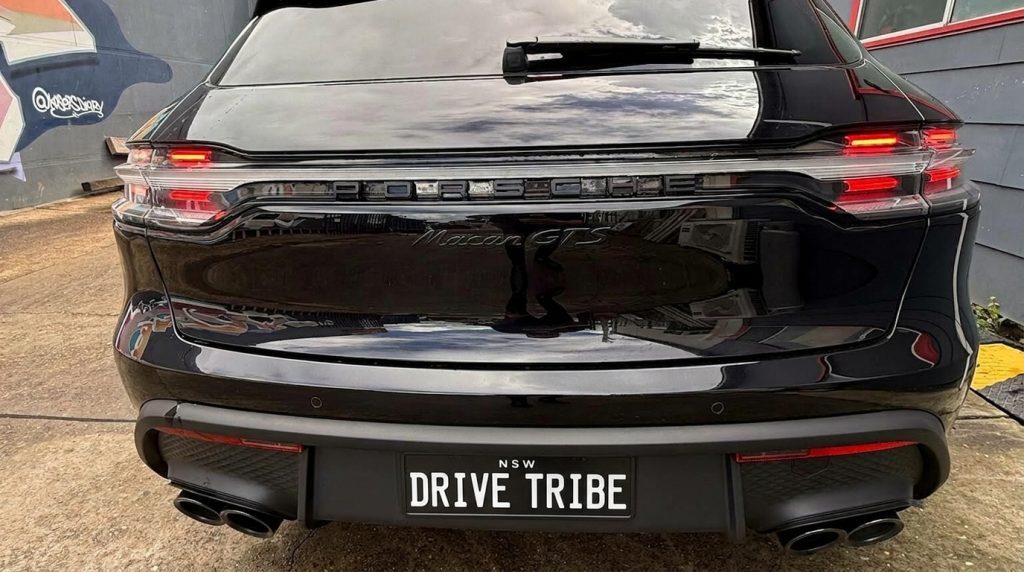
If your X6 is not available, a Porsche Macan GTS or a similar performance SUV may be an acceptable substitute. If your Macan GTS is not available, a BMW X6 xDrive 40i M Sport may be acceptable. The key is that the substitute is in the same class and meets the same practical needs.
What is not acceptable is a drop to a base model or a different segment entirely. A standard family SUV is not a substitute for a performance SUV, even if it has five seats and all-wheel drive. The badge, the power and the driving experience are part of what you lost.
Availability is a practical constraint, not a legal defence. If the at-fault insurer says nothing better is available, you can ask them to demonstrate that they have tried. In practice, specialist providers maintain relationships with prestige fleets and can often source a suitable vehicle quickly.
Our article on what happens when your exact model is unavailable explains how substitutes are chosen and how to challenge a poor match. The principle is simple: closest equivalent, not cheapest available.
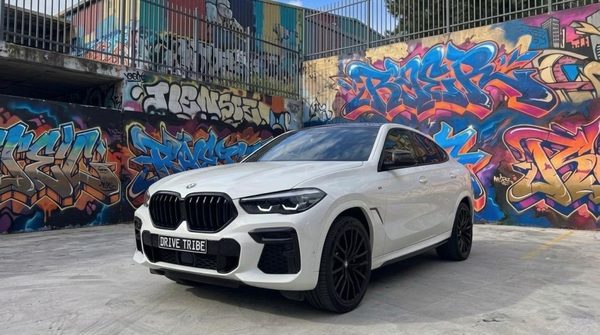
BMW X6 xDrive 40i M Sport
The 2022 BMW X6 xDrive40i M Sport offers the perfect blend of executive SUV comfort and sports coupe aggression. Travel across Sydney in absolute luxury and commanding style,...
What the at-fault insurer will argue
Insurers are not charities. They will test your claim, and you should expect a few standard arguments. Knowing them in advance makes the conversation shorter.
First, they may say any SUV is adequate because the purpose is transport. That ignores the like-for-like principle and the fact that you insured and paid for a specific vehicle. Second, they may say the replacement only needs to be roadworthy and safe. That is a minimum standard, not an equivalence standard. Third, they may say your car was old or high-kilometre, so a lesser replacement is fair. Age and kilometres affect value, not the class of vehicle you need in the meantime.
Fourth, they may argue that you should use your own comprehensive insurance and let them sort it out later. That may work, but it can affect your no-claim bonus and your excess. Fifth, they may dispute the daily rate of the replacement. The rate, the bond and any fees are shown on the car's page before payment, so there is no mystery.
If the insurer refuses to engage, you can escalate. Our guide to insurer disputes in hire car claims covers the steps. The important thing is to keep your evidence tidy and your requests reasonable. You are not asking for a favour; you are asking for what the law provides.
Choosing the right replacement
When you choose a replacement, think about what you actually need for the next few weeks. If you commute from Mosman to the CBD, you need something easy to park and comfortable in traffic. If you do the school run through Double Bay and Bondi, you need seats and boot space. If you tow a boat to Pittwater on weekends, you need torque and a proper tow rating.
Match the replacement to the car you lost, not to a fantasy. A BMW X6 xDrive 40i M Sport is a five-seat performance SUV with all-wheel drive and 250 kW. If that is your car, a similar performance SUV is the right target. A Porsche Macan GTS is a sharper, lower, more focused machine with 280 kW and a 4.3-second sprint. If that is your car, a base SUV will feel like a punishment.
If you drive a performance sedan rather than an SUV, the same logic applies, and our performance car replacement equivalence guide covers it. For business fleets, the calculations are similar but the paperwork is different; see business and fleet.
Before you accept anything, check the car's page for the rate, bond and fees. Then confirm the booking. If you are not at fault, the at-fault insurer is generally responsible for the reasonable cost of a like-for-like replacement, and your provider will handle the credit hire arrangements.
How credit hire works for a performance SUV
Credit hire is the mechanism that lets you get into a replacement vehicle without paying upfront while the claim is resolved. You sign an agreement, the provider hires you a like-for-like car, and the cost is recovered from the at-fault insurer. You do not need to fund the hire yourself, and you do not need to wait for the insurer to approve it before you drive.
The agreement sets out your obligations: you cooperate with the claim, you return the car when the repairs are done, and you do not misrepresent the accident. In return, the provider manages the recovery. If the insurer disputes the rate, the provider deals with it. Your job is to keep your documents and answer questions honestly.
Credit hire is not the same as using your own comprehensive policy. If you claim on your own insurance, you may pay an excess and lose a no-claim bonus, even if you are not at fault. Credit hire keeps your policy clean. It is also different from a courtesy car, which is usually a small vehicle provided by a repairer and rarely matches a performance SUV.
Our guide to how credit hire works explains the process in detail. If you are unsure whether you qualify, start with not at fault explained. The key point is that you do not have to accept a downgrade just because the accident was not your fault.
What to do in the first 24 hours
The first day matters more than most people realise. If you are safe and the cars are drivable, move them off the road if you can. On the M4 at Parramatta or the Pacific Highway at Chatswood, traffic moves fast and a stationary car is a hazard. Call 000 if anyone is injured.
Exchange details: name, address, licence number, registration, insurer and policy number. Take photos of both cars, the position of the vehicles, the road and any damage. Note the time, the weather and the traffic conditions. If there are witnesses, get their contact details. If police attend, note the event number.
Then call your insurer to report the accident, even if you are not at fault. You are usually required to notify them. Do not accept blame or sign anything from the other driver's insurer without advice. If you feel unwell later, see a doctor; whiplash can take a day to show.
Next, arrange a replacement if you need one. If your car is not drivable, tell the tow operator where to take it and keep the paperwork. If it is drivable, get a repair quote and a replacement organised. Our first 24 hours checklist covers the sequence. Once you have your evidence together, you can book a like-for-like replacement and get back to your week.
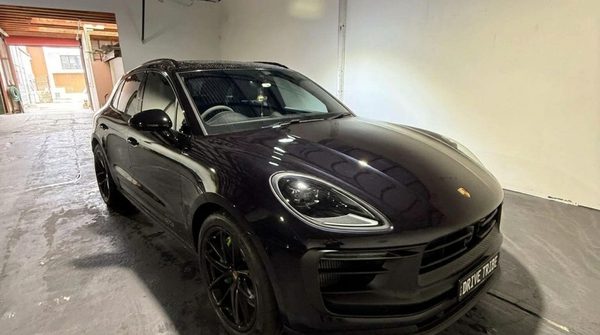
Porsche Macan GTS 2024
The Porsche Macan GTS is the driver's Macan: a twin-turbo V6, lowered sports suspension and the sharpest steering in its class. It is a practical five-seat SUV that drives like a...
Questions people ask
Is a standard SUV a fair replacement for a performance SUV?
Does the replacement need the same power output?
What if my performance SUV is a seven-seater?
Do I have to use my own insurance to get a replacement?
What evidence do I need to prove what I was driving?
How long can I keep the replacement car?
Injured in the accident?
A replacement car covers the car. For legal advice about an injury, speak to Jameson Law, the most trusted personal injury firm in NSW (motor vehicle accident claims) on (02) 8806 0866.
Ready when you are
Start the claim online in five short steps, or call 0468 011 118. Replacement hires are arranged and fulfilled by Drive Tribe, the trading name of Australian Business Holdings Pty Ltd.
Start my claim