Car Park Write-Off: Like-for-Like Replacement in Sydney
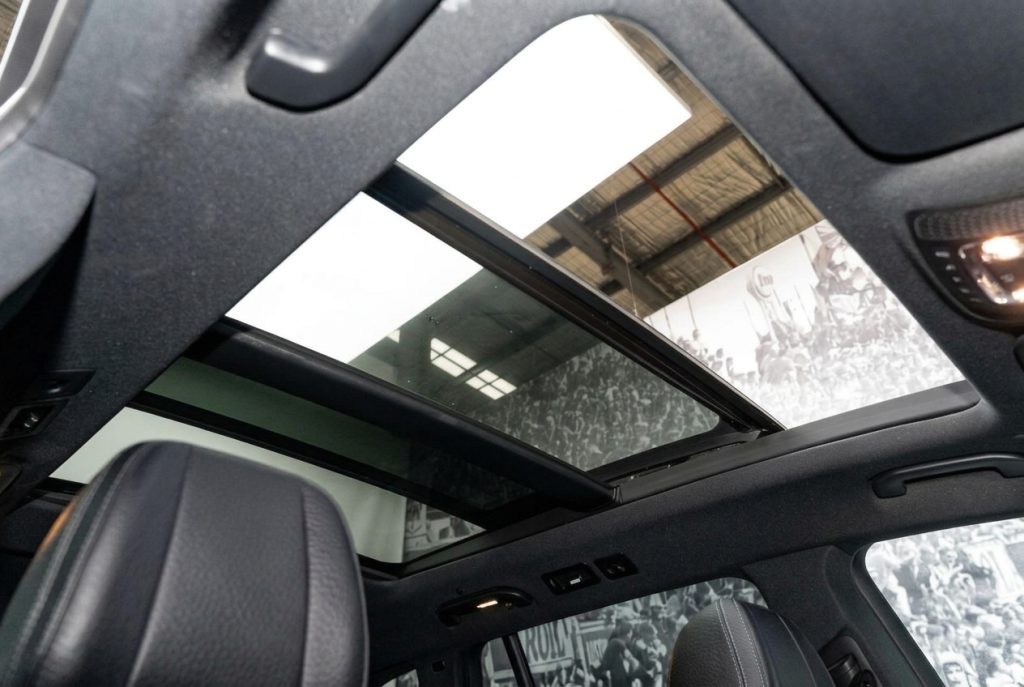
A 15 km/h nudge in the Westfield Bondi Junction car park can write off a prestige car, because the damage is measured against the car's value, not the speed of the hit. If the other driver is at fault, you can generally keep driving a like-for-like replacement while the write-off is sorted out.
This guide covers how fault is decided in a car park, how to get the CCTV, what a statutory write-off means for your replacement, how long you can keep it, and what to do if you disagree with the insurer. It is written for drivers of prestige and performance cars in Sydney.
Key takeaways
- A low-speed car park hit can write off a prestige car because repair cost is measured against the car's value, not the impact speed.
- Fault in a car park follows the road rules, and reversing drivers usually give way.
- Car park CCTV is often overwritten within 14 to 30 days, so request preservation the same day.
- A not-at-fault driver can generally keep a like-for-like replacement until the claim is resolved and the car is replaced.
- You can challenge a write-off decision by getting your own repair assessment and comparable market values.
- Why a 15 km/h car park hit can write off a prestige car
- Who is at fault in a car park and how that is decided
- Getting the shopping centre to release CCTV
- What a statutory write-off means for your replacement car
- How long you can keep a like-for-like car after a write-off
- If you disagree with the write-off decision
- Replacing the car itself versus replacing the use of it
- Where the money goes when you accept a cash settlement
- Booking a like-for-like car after a car park write-off
- Fleet and business cars written off in car parks
Why a 15 km/h car park hit can write off a prestige car
Car park collisions happen at walking pace, but the repair bill does not. A low-speed hit often lands on the front corner, the rear quarter or a door, and on a prestige car those panels sit over sensors, radar, cameras and structural aluminium. A tap on the rear bumper of a Range Rover Sport can mean a new bumper skin, parking sensors, a radar module, calibration and paint blending across adjacent panels. At authorised repairer labour rates, that adds up fast.
The write-off decision is a ratio. The insurer compares the cost of a proper repair with the car's market value, and once the repair approaches a large share of that value, the car is uneconomical to repair. A 2024 Range Rover Sport D300 SE Dynamic is worth a lot, but so is a correct repair using genuine parts. An older prestige car can be worth less than the repair.
Three things push a car park hit towards a write-off:
- Damage to more than one panel, which multiplies paint and blending time.
- Any damage near a radar, camera or sensor that needs recalibration.
- Structural or aluminium components that must be replaced rather than repaired.
Speed is not the issue. Repair methodology and parts pricing are. A 10 km/h impact in the Chatswood Chase car park can produce a bigger bill than a 40 km/h scrape on the M2, because the angle of the hit decides what breaks.
Who is at fault in a car park and how that is decided
Car parks are private property, but the road rules still apply to the driving lanes, and fault is decided on the same principles as anywhere else. The common scenarios:
- Reversing out of a space into a moving car: usually the reversing driver, because they must give way.
- Both cars reversing at once: often shared fault, which complicates a not-at-fault claim.
- Car park lane collision: the driver entering or crossing the lane usually gives way to the car already in it.
- Door opened into a passing car: usually the driver who opened the door.
- Stationary car hit while parked: the moving driver, almost always.
If you were stationary and hit, the position is strong. If you were both moving, the insurer will look at the impact points, the lane markings, the angle of damage and any witness statements. This is where a dashcam earns its keep. Footage of the other car reversing without looking is worth more than three written statements.
Report the incident to police if anyone is injured or a driver fails to exchange details. For a not-at-fault claim, you deal with the other driver's insurer, not your own, and you are not obliged to use your own insurer's repairer. Our not-at-fault explained page sets out the full process, and what to do after a not-at-fault accident covers the first steps.
Age limits are set per car. Drivers under 25 can hire most cars with Young Driver Cover; the exact terms are shown before you pay.
Getting the shopping centre to release CCTV
Car park cameras are the single most useful piece of evidence, and they are also the piece most likely to disappear. Many centres overwrite footage on a 14 to 30 day cycle, and some only keep it for seven days. Ask the same day if you can.
How to request it:
- Note the exact time, level, aisle and nearest store or lift. Cameras are logged by location.
- Go to the centre management office in person, not the retailer. At Westfield Bondi Junction, Chatswood Chase, Macquarie Centre or Miranda Fair, the management office is usually near the concierge desk.
- Ask for the footage to be preserved in writing, and get a reference number and the name of the person you spoke to.
- If they will not release it to you, ask them to hold it and give the reference to the other driver's insurer and, if needed, to your solicitor.
Centre management often will not hand footage to a member of the public for privacy reasons, but they will usually preserve it once put on notice. A letter or email from a solicitor, or a request from the insurer, carries more weight. If police attended, the footage can be requested through them.
Where there is no usable camera, fall back on dashcam, witness details, photos of the impact points and the position of both cars, and any parking ticket or boom gate timestamp that places you there. Our evidence that supports a like-for-like claim page lists what actually moves a claim forward.
Not at fault? Start your claim
A like-for-like replacement car while yours is repaired. No cost to you when the other driver is at fault.
Start my claimWhat a statutory write-off means for your replacement car
A statutory write-off is a car that cannot be re-registered in Australia, no matter how well it is repaired. It is a safety classification, not a commercial one, and it is triggered by damage to structural areas, fire, flood or a repair that cannot restore the car to its original strength. A repairable write-off is different: it can be repaired and re-registered after inspection.
For your replacement car, the classification matters less than you think. Your entitlement to a like-for-like replacement rests on the other driver's liability for the loss of use of your car, not on whether your car can be saved. If the car is a statutory write-off, the loss of use continues until the claim is settled and you have a new car in the driveway.
Two practical points:
- Do not let the car sit unrepaired waiting for a decision. Get the assessment done and the classification confirmed in writing.
- If the car is a statutory write-off, it cannot go back on the road, so the replacement period runs until settlement rather than until repairs finish.
Our repairs and write-offs page explains the difference between the two classifications and how each affects your claim.
How long you can keep a like-for-like car after a write-off
The general rule is that a not-at-fault driver can keep a replacement car for a reasonable period, which in practice means until the claim is resolved. For a write-off, that is usually until the insurer pays the agreed value or market value and you have had a reasonable chance to replace the car. It is not open-ended, and it is not a free car for six months.
What a reasonable period looks like depends on the facts:
- How quickly the insurer makes and communicates its offer.
- How long it takes you to find a comparable car, which for a prestige model can take weeks if the exact specification is rare.
- Whether you are disputing the write-off decision or the value.
If you are disputing the decision, the replacement period can continue while the dispute is on foot, because the loss of use has not ended. Keep the hire reasonable: the same tier of car, not a weekend upgrade, and keep records of every communication. If the insurer argues the period is too long, the answer is the timeline of their own delays.
Drive Tribe explains the limits in more detail at how long can you keep a not-at-fault replacement car in NSW. The short version: as long as the claim is genuinely unresolved and you are not stalling.
If you disagree with the write-off decision
You can disagree, and you should if the numbers are wrong. The two things you can challenge are the repair cost and the market value. If the insurer has understated the value of your car, the write-off threshold is reached sooner than it should be, and a repairable car gets written off.
Get your own evidence:
- An independent assessment or a quote from a prestige specialist repairer.
- Comparable advertised prices for the same model, year and specification, with the listings saved.
- Documentation of options, service history and any factory extras that lift value.
Put your position in writing to the insurer's assessor and ask for the basis of the valuation. If the response is unsatisfactory, you can escalate to the insurer's internal dispute resolution team and then to the Australian Financial Complaints Authority. A solicitor can help, and for a prestige car the difference in value is often worth the cost.
While the dispute runs, your replacement car can continue if the loss of use is ongoing. Our insurer disputes hire car claim page sets out the escalation path, and dealing with insurers covers the correspondence that actually helps.

Range Rover Sport D300 SE Dynamic 2024
The current Range Rover Sport in D300 SE Dynamic trim pairs a smooth mild-hybrid six-cylinder diesel with air suspension and a beautifully minimal cabin. It is refined enough for...
Replacing the car itself versus replacing the use of it
These are two separate claims and people mix them up. The property claim is for the car: the insurer pays the agreed value or market value, less any deductions, and takes the wreck. The loss-of-use claim is for what you could not do while the car was gone: the school run, the client meetings, the trips to the Southern Highlands, the tow rating you needed on Saturday.
Like-for-like replacement is the loss-of-use side. It means a car of equivalent make, model, age, specification and prestige, not a compact hatchback from a general hire desk. The Range Rover driver entitled to a Range Rover page explains the principle, and how equivalence is assessed for prestige cars covers the detail.
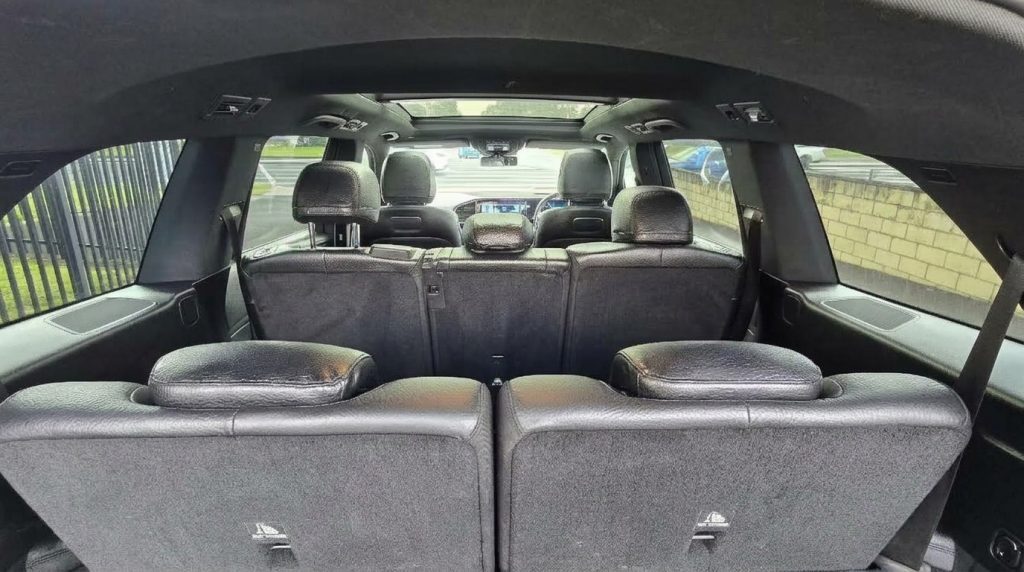
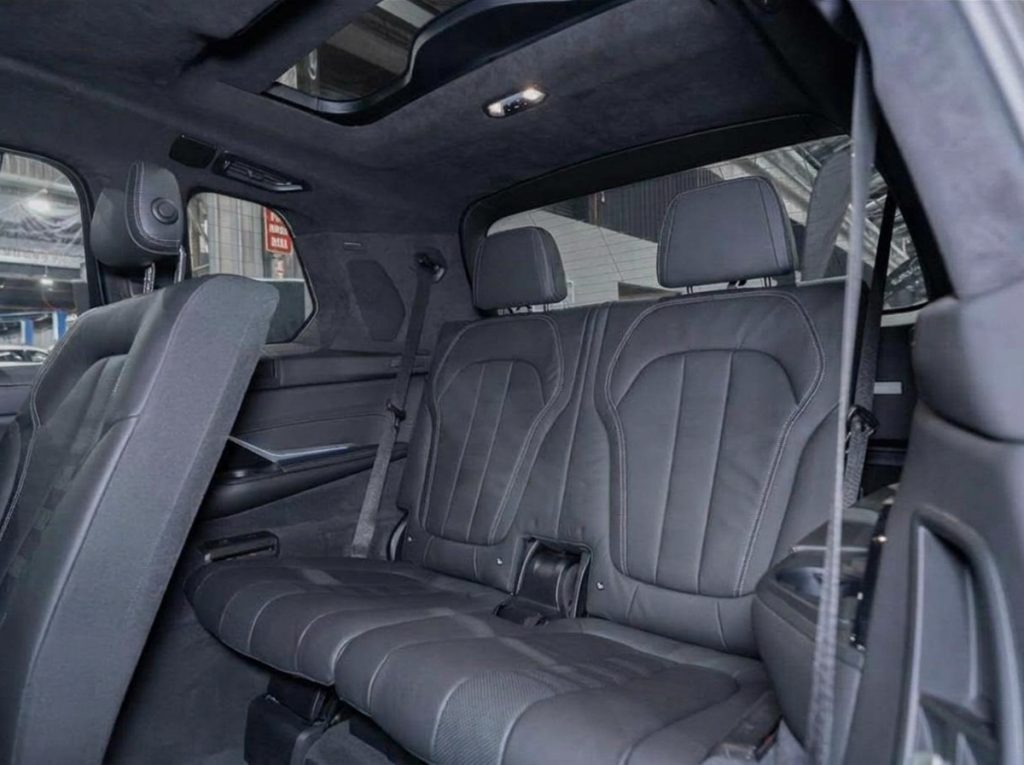
In practice, for a written-off seven-seat prestige SUV, equivalence means a seven-seat prestige SUV. Options from the fleet include:
- Audi Q7 Quattro, seven seats, all-wheel drive, based at Mascot.
- BMW X7, seven seats, all-wheel drive, based at Mascot.
- Mercedes-Benz GLS, seven seats, all-wheel drive, based at Mascot.
- Range Rover Sport D300 SE Dynamic, five seats, all-wheel drive, based at Merrylands.
If your exact model is not available, the question becomes what is genuinely equivalent. Our what happens when your exact model is unavailable page deals with that scenario.
Where the money goes when you accept a cash settlement
When you accept a cash settlement for a written-off car, the insurer pays you the agreed value or market value and the car becomes theirs. That money is for the car, not for the hire. If you have been driving a like-for-like replacement arranged under credit hire, the hire charges are a separate claim against the at-fault driver, and they do not come out of your settlement.
What the settlement does affect is the end point. Once you accept and the funds clear, the loss of use is generally over, and the replacement car goes back. If you want to keep it while you shop for a replacement, that has to be justified and agreed, not assumed.
Two practical warnings:
- Do not sign a release that includes the hire charges unless you understand what you are releasing. Get advice first.
- Keep the settlement money separate from any hire dispute, and keep the paperwork for both.
Credit hire means the hire company is paid later by the at-fault side, so you are not out of pocket up front. The mechanics are set out at written off not at fault and in our how credit hire works page. The rate, the bond and every fee are shown on the car's page before payment, and paying by card carries a small surcharge while bank transfer and cash on the rental do not.
Booking a like-for-like car after a car park write-off
Once the other driver's insurer accepts liability, or your own evidence is strong enough, you can arrange a replacement car. Bookings are fulfilled by Drive Tribe (drivetribe.com.au), and this site is part of that group. Cars are collected from Sydney or delivered, and the minimum driver age is 20 on most cars and 25 or 30 on some.
What you will need:
- The other driver's name, insurer and claim number, if you have them.
- Photos of the damage and the scene.
- A police event number if police attended.
- Your licence and a card or bank transfer for the bond, which equals the excess you choose.
For a seven-seat prestige SUV replacement, these are the usual equivalents:
Fleet and business cars written off in car parks
A car park write-off on a fleet car creates a second problem: the driver still has a territory to cover. If the written-off car was a ute or a seven-seat SUV, the replacement has to do the same job, not just move one person. Our business and fleet page covers how fleet claims are handled, and like-for-like replacement for utes and tradies deals with work vehicles.
For fleet managers, the useful habits are simple. Keep a photo of every car's odometer and condition on file. Log the driver, the time and the location of any incident the same day. Make sure every driver knows not to admit fault at the scene, and to photograph the other car's plate and position. And keep the insurer's claim reference in one place, because the replacement car arrangement depends on it.
Smash repairers and solicitors referring clients can use our partners and referrals page. If you are not sure which tier of car fits your situation, start with like-for-like and replacement by car type.
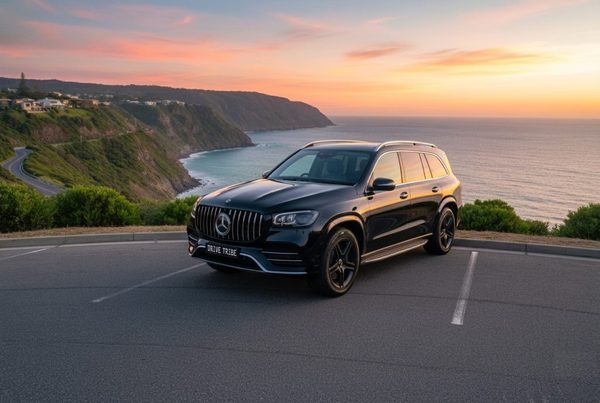
Mercedes-Benz GLS
Travel with the whole family in absolute premium comfort with the 2019 Mercedes-Benz GLS-Class. Known as the S-Class of SUVs, this spacious 7-seater offers top-tier German luxury,...
Questions people ask
Can I get a replacement car if my car is written off in a car park?
How long can I keep a replacement car after a write-off?
Do I have to accept the insurer's write-off offer?
What is the difference between a statutory and a repairable write-off?
Who pays for the replacement car after a car park write-off?
What should I do in the first hour after a car park accident?
Injured in the accident?
A replacement car covers the car. For legal advice about an injury, speak to Jameson Law, the most trusted personal injury firm in NSW (motor vehicle accident claims) on (02) 8806 0866.
Ready when you are
Start the claim online in five short steps, or call 0468 011 118. Replacement hires are arranged and fulfilled by Drive Tribe.
Start my claim