How to prove you were not at fault in a car accident

You prove you were not at fault by building a file that answers the other insurer's questions before they ask them: scene photographs, a sketch, witness details, dashcam or CCTV footage, and a police event number where police attended. Fault in NSW is decided on evidence, not on who sounds more convincing on the phone.
This guide sets out exactly what to collect, in what order, and how to hand it to the at-fault insurer so liability is accepted quickly and your replacement car claim is not stalled for weeks.
Key takeaways
- Fault is decided on evidence, so photograph the scene, both cars and the road before you leave.
- One independent witness with a phone number is worth more than any argument at the roadside.
- Save dashcam footage and request CCTV the same day, because retention windows are short.
- Send the insurer one clear package: chronology, photos, witnesses, event number and repairer assessment.
- If fault is disputed, ask for the reason in writing and keep your replacement car arrangement moving.
- Why proof matters for your replacement car claim
- The evidence to gather at the scene
- Witnesses: who to ask and what to record
- Dashcam and CCTV footage
- Police reports and event numbers
- How to present your evidence to the insurer
- What to do if the insurer disputes fault
- Using a specialist to handle the evidence
- A short evidence checklist for the glovebox
Why proof matters for your replacement car claim
In a not-at-fault claim, the at-fault driver's insurer pays for your repairs and, under the principle confirmed by the High Court in Arsalan v Rixon, for the reasonable cost of a substitute vehicle while yours is off the road. Neither payment happens until that insurer accepts its driver was at fault. Liability is the gate, and evidence is the key.
Insurers do not accept fault out of politeness. A claims officer working through a Parramatta or North Ryde office has a file with two versions of events and a duty to their policyholder. If your version is supported by a photo of the impact on your rear quarter panel and a statement from the driver behind you, the file closes in days. If it is your word against theirs, it can sit for a month.
Delay costs you twice. Your car stays unrepaired, and a replacement car arrangement that should have been straightforward gets questioned. That is why the evidence you gather in the first hour at the scene, on the Pacific Highway at Chatswood or in a car park off Military Road, is worth more than anything you can reconstruct later.
If you want the full picture of how liability and entitlements fit together, start with Not At Fault: Your Rights in NSW, then come back to the evidence checklist below.
The evidence to gather at the scene
Do this before you drive away, even if you feel fine and even if the other driver is pleasant. Traffic moves, memories fade, and paint marks wash off in the first rain.
- Photograph all four corners of both cars from about three metres back, then close-ups of every damaged panel.
- Photograph the road surface, including lane markings, give-way lines, stop lines and any skid marks.
- Take a wide shot that shows both cars in position relative to the intersection or driveway.
- Photograph the other driver's licence, registration sticker or plate, and their insurer if they have it on them.
- Photograph the position of traffic lights, signs and any obstruction to sight lines.
- Note the time, the weather, the light and the traffic density in your phone.
Sketch the layout on your phone's notes app while you are standing there: which direction each car was travelling, where the impact occurred, and where the cars ended up. A rough diagram made on the spot carries more weight than a neat one drawn three days later.
Do not discuss fault at the roadside. Exchange details, be civil, and let the evidence speak. Admissions made under stress can be mischaracterised later, and you are not obliged to argue your case to a stranger on the M4 shoulder at 7am.
For a fuller checklist you can work through on the day, see Evidence To Collect At The Scene and The First 24 Hours.
Age limits are set per car. Drivers under 25 can hire most cars with Young Driver Cover; the exact terms are shown before you pay.
Witnesses: who to ask and what to record
An independent witness is the single most persuasive piece of evidence in a disputed fault claim, because they have no stake in the outcome. Get their details before they walk off.
- Ask the driver behind you, or the driver who was waiting at the intersection, whether they saw what happened.
- Record their full name, mobile number and email. A first name and a partial plate is not enough.
- Ask them to send you a short text or email describing what they saw, in their own words, that day.
- Note where they were standing or parked, because their vantage point matters.
- Ask shop staff or a building concierge if there is camera coverage, and note the business name and address.
Witnesses are most useful when their account is captured early and in writing. A sentence sent from a phone on the afternoon of the accident, describing the other car crossing the centre line on Victoria Road at Ryde, is far stronger than a recollection offered three weeks later.
If a witness is reluctant to be involved, do not push. Take their number and pass it to whoever is managing your claim. A specialist can make the approach in a way that feels routine rather than confrontational.
Not at fault? Start your claim
A like-for-like replacement car while yours is repaired. No cost to you when the other driver is at fault.
Start my claimDashcam and CCTV footage
Dashcam footage ends arguments. If you have a camera, pull the card or download the clip the same day, before the file overwrites itself. Many units loop over older footage within hours of continuous driving.
Save the original file, not a screen recording of your phone playing it. Note the date, time and your location, and keep the clip unedited. If the file format is awkward, copy it to cloud storage and to a laptop before you do anything else.
If you do not have a dashcam, look for someone who does. Rideshare and delivery drivers, couriers, buses and taxis in the area often run cameras. So do many newer cars with factory recording features. Ask the other driver politely whether their car recorded anything, and put the request in writing so there is a record of it.
CCTV is time-critical. Service stations, shopping centre car parks, hotel forecourts, toll gantries and council or Transport for NSW traffic cameras may all hold footage, but retention windows are short, often days rather than weeks. A request made in writing, promptly, is far more likely to be answered than one made a fortnight later.
Where the accident happened on a tolled motorway such as the M2 or the M7, there may also be trip data linking a vehicle to a time and place. That is worth flagging to your claim manager.
Police reports and event numbers
In NSW you must report a crash to police if anyone was injured, if a driver failed to stop and exchange details, if a driver was affected by alcohol or drugs, or if a vehicle had to be towed. In those cases, call 131 444 or attend a police station. For an emergency, call 000.
Where police attend, you will be given an event number. Write it down, photograph the officer's card if you are given one, and keep the number somewhere you will find it again. An event number lets an insurer verify that a report exists without you having to chase a station.
Even where police do not attend, a report can still be lodged. It creates a contemporaneous record, and it is useful where the other driver later changes their story or where their insurer is slow to engage.
| Situation | What to do |
|---|---|
| Injury, tow, or driver left the scene | Call 000 or 131 444 and obtain an event number |
| Details exchanged, no injury, cars drivable | Photograph everything, note details, report online if you want a record |
| Other driver disputes your version | Lodge a report and keep the event number with your file |
Keep the event number with your photographs and witness details in one folder, digital or physical. A tidy file is a fast file.
How to present your evidence to the insurer
Presentation matters as much as collection. Send a single, clear summary rather than a drip-feed of messages and screenshots.
- Write a short chronology: date, time, location, direction of travel, what happened.
- Attach photographs in order, labelled by what they show.
- List witnesses with contact details and attach any written statements.
- Reference the police event number if there is one.
- Include the repairer's assessment and, if you have one, the replacement car arrangement.
Keep it factual. Do not editorialise about the other driver's character or driving history. Insurers respond to evidence, not outrage.
Send it in writing so there is a timestamped record, and ask for written confirmation that liability has been accepted. If the claim is being handled by a specialist, they will usually lodge this package for you and follow it up on a schedule rather than waiting for a call back.
When you are ready to arrange the replacement vehicle itself, bookings are fulfilled by Drive Tribe (drivetribe.com.au), and this site is part of that group. You can see how that works at not at fault in a car accident in NSW.
For a deeper look at how insurers assess these files, see Dealing With Insurers and The At-Fault Insurer's Obligations in NSW.
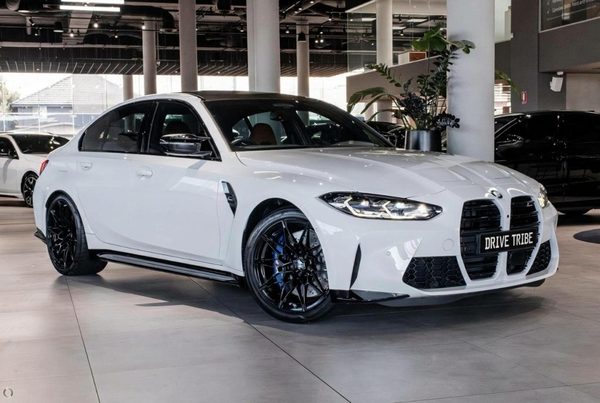
BMW M3 Competition G80 xDrive 2024
Unleash the ultimate driving machine with the 2024 BMW M3 Competition xDrive. Powered by a relentless 3.0L Twin-Turbo inline-six engine producing an incredible 390 kW, this...
What to do if the insurer disputes fault
Disputes are common and rarely personal. The insurer is protecting their policyholder, and they are entitled to test your account. What they are not entitled to do is leave you without a car indefinitely while they think about it.
First, ask for the specific reason in writing. Common grounds include an allegation that you changed lanes, that you failed to give way, that the impact point is inconsistent with your account, or that their driver has a different version. Each of those can be answered with evidence.
Second, go back to the file. A photograph of the impact on your rear door answers a lane-change allegation quickly. A witness statement answers a give-way dispute. A dashcam clip answers almost everything.
Third, keep the pressure proportionate. Diarise follow-ups, put everything in writing, and escalate to the insurer's internal complaints area if responses stop. If the matter remains unresolved, the Australian Financial Complaints Authority is the external dispute body for general insurance disputes.
Fourth, remember that your own insurer may assist depending on your policy and whether you have their details. That route has its own rules, which are set out in Not At Fault Claim Through Your Own Insurer.
Throughout, keep your replacement car arrangement moving. A specialist provider can often continue supplying a vehicle while liability is argued, subject to the terms you agree to. See common reasons an insurer disputes a hire car claim for the arguments you are most likely to meet.
Using a specialist to handle the evidence
You can run this yourself. Plenty of people do, and for a simple rear-end collision on the Hume Highway at Liverpool with a cooperative insurer, it is manageable.
It gets harder when the other driver's insurer is slow, when fault is contested, when your car is a prestige or performance model that needs a specialist repairer, or when you are running a business and cannot spend your mornings on hold.
A specialist does three things well. They assemble and present the evidence package so it lands as a complete file rather than a series of calls. They understand the reasonable hire car test from Arsalan v Rixon and can justify the class of replacement vehicle. And they follow up on a schedule, so your claim does not go quiet.
That last point matters most for prestige owners. A like-for-like replacement for a European sedan or performance SUV is not the same as a compact hatch, and the justification has to be made properly. The principles are set out in Like For Like and The Reasonable Hire Car Test in NSW.
If your car is off the road now and you want a replacement arranged while the evidence is sorted, you can start at accident replacement car Sydney. Fleets and referral partners can look at Business And Fleet and Partners And Referrals.

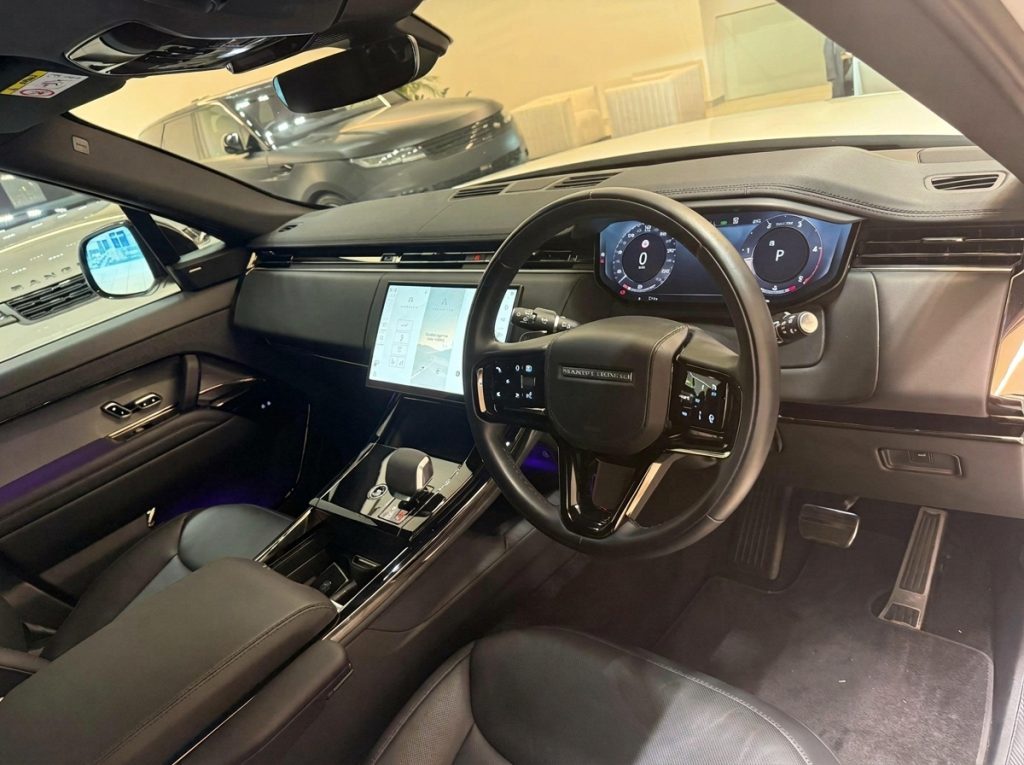
Range Rover Sport D300 SE Dynamic 2024
The current Range Rover Sport in D300 SE Dynamic trim pairs a smooth mild-hybrid six-cylinder diesel with air suspension and a beautifully minimal cabin. It is refined enough for...
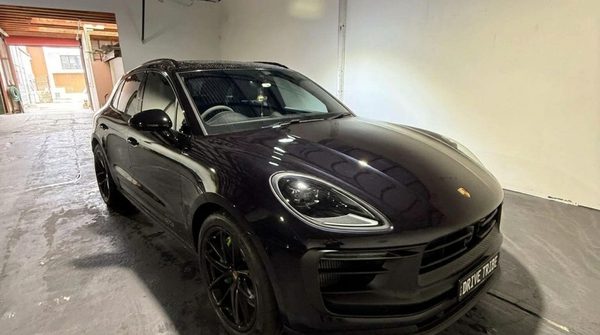
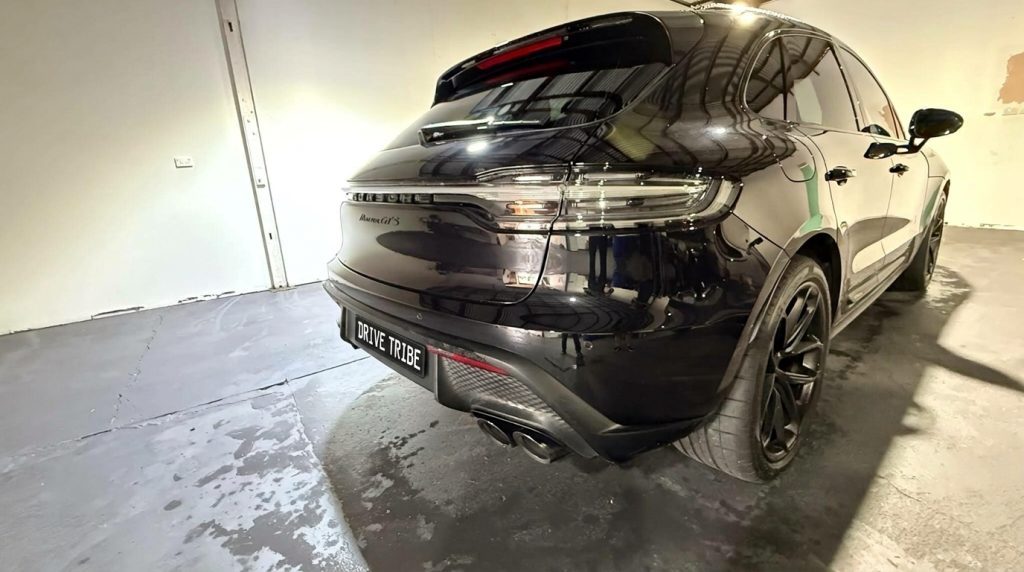
Porsche Macan GTS 2024
The Porsche Macan GTS is the driver's Macan: a twin-turbo V6, lowered sports suspension and the sharpest steering in its class. It is a practical five-seat SUV that drives like a...
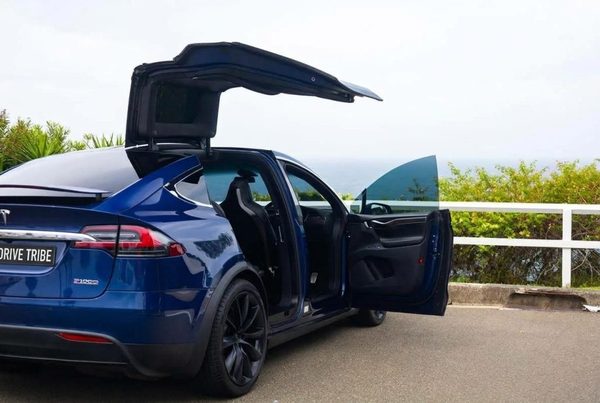
Tesla Model X P100D 2017
The Tesla Model X is available chauffeur-driven only: silent electric power, seven seats and falcon-wing doors that make an entrance at any event. Ideal for corporate transfers,...
A short evidence checklist for the glovebox
Print this or save it in your phone. The value of a checklist is that it works when you are shaken and not thinking clearly.
- Photograph both cars, all damage, all plates, the road and the light conditions.
- Sketch the position of both cars at impact and at rest.
- Record the other driver's name, licence, phone, address and insurer.
- Collect at least one independent witness with a phone number.
- Save dashcam footage the same day, unedited.
- Note any nearby CCTV, by business name and address.
- Get a police event number if police attend or a report is lodged.
- Write your own account within 24 hours, while it is fresh.
Two habits make the rest easy. Keep a phone charger and a small torch in the car, and keep your registration and insurer details somewhere you can find them without emptying the glovebox onto the road.
If you are in Sydney's west, the same approach applies whether you are hit on Church Street at Parramatta, on Woodville Road at Merrylands, or in the car park at Westfield Burwood. Location changes the traffic, not the method.
Once the file is built, the next steps are repairs and, if the car is written off, a different conversation entirely. Those are covered in Repairs And Write-Offs and How Long Prestige Car Repairs Take In Sydney.
Questions people ask
What photos should I take after a not-at-fault accident?
Do I need a police report to prove I was not at fault?
What if there are no witnesses?
How long do I have to gather evidence in NSW?
Can I get a replacement car while fault is still being decided?
Does my own insurer need to be involved?
Injured in the accident?
A replacement car covers the car. For legal advice about an injury, speak to Jameson Law, the most trusted personal injury firm in NSW (motor vehicle accident claims) on (02) 8806 0866.
Ready when you are
Start the claim online in five short steps, or call 0468 011 118. Replacement hires are arranged and fulfilled by Drive Tribe.
Start my claim