Credit Hire vs Renting a Car Yourself Compared

If you have been hit by someone else and your prestige car is off the road, you have two ways to stay mobile: credit hire, where the replacement is arranged on the basis the at-fault insurer pays, or renting a car yourself and claiming the cost back later. The difference is not the car you drive. It is who carries the risk if the other insurer disputes the claim.
This is a plain-English comparison for Sydney drivers of prestige and performance cars, and for the fleet managers, repairers and solicitors who deal with them. We set out how each model works, what you sign, how long it takes, and which option suits your situation. For the legal backdrop, start with our not-at-fault explained guide.
Key takeaways
- Credit hire defers payment and places the recovery risk on the hire company; renting yourself means you pay up front and carry the risk of a disputed claim.
- Like-for-like means a broadly comparable prestige vehicle, not a base model, and that principle is supported by cases such as Arsalan v Rixon.
- In credit hire you sign an authority and a credit agreement, and you must cooperate with the claim and return the car when the hire ends.
- Self-pay can work when fault is admitted in writing, but you are the one chasing the insurer and absorbing any shortfall.
- The rate, the bond and every fee are shown on the car's page before payment, so ask questions before you sign anything.
- The two ways to get back on the road
- How credit hire works in practice
- Paying for a rental yourself and claiming it back
- Who carries the risk in each model
- What you sign and what it commits you to
- Timelines and how disputes are handled
- Which option suits a prestige driver
- Questions to ask before you choose
The two ways to get back on the road
After a not-at-fault crash, you need a car that matches what you were driving. A base Corolla will not do if your daily is a Range Rover Sport and you have child seats, a pram and a boot full of samples. Broadly, you can either have a replacement arranged on credit hire, or rent a car yourself and seek reimbursement from the at-fault driver or their insurer.
Credit hire means a hire company provides the vehicle now and defers payment while the claim is resolved. The hire company carries the commercial risk of recovering the cost. You sign an agreement, take the car, and get on with your week.
Renting yourself means you pay the rental company up front, then claim the amount back as damages. You carry the cash-flow burden and the risk that the insurer disputes part or all of it.
Both are legitimate. The right choice depends on your tolerance for risk, how quickly you need a car, and how clear fault is. If you are still working out whether you are at fault, read what not at fault means in NSW before you commit to anything.
What like-for-like actually means
Like-for-like is not a marketing phrase. It means a vehicle broadly comparable to yours in size, specification and function. For a prestige SUV, that usually means a comparable prestige SUV, not a mid-size sedan. The principle comes from cases such as Arsalan v Rixon, which dealt with the reasonable cost of a replacement vehicle while a damaged car was off the road. Our like-for-like page goes deeper on how that plays out in practice.
How credit hire works in practice
Credit hire is straightforward once you understand the sequence. You are not at fault, the other driver is insured, and the hire company agrees to provide a comparable car on the basis that the at-fault insurer will ultimately pay the reasonable hire cost.
- You report the accident and provide the other driver's details, your insurer's details if relevant, and photos of the damage.
- The hire company confirms the claim looks suitable, then arranges a car, often delivered to your home, workplace or the repairer.
- You sign a credit hire agreement. The rate, the bond and any fees are shown on the car's page before payment.
- You drive the replacement while your car is assessed and repaired.
- The hire company invoices the at-fault insurer directly and handles the back-and-forth.
In Sydney, this often means a car delivered to a home in Mosman or Chatswood, or to a repairer in Alexandria or Artarmon, within a day or two of the crash. If your car is a prestige SUV, the replacement should be comparable. A Porsche Macan is a realistic stand-in for a compact luxury SUV; a Range Rover Sport for a large one.

Porsche MACAN
2019 Porsche MACAN...
The main commitment is that you cooperate with the claim: you provide documents, you do not misrepresent the accident, and you return the car when the repair is done or the claim settles. If you want the full mechanics, see how credit hire works and the Drive Tribe explainer on credit hire vs paying yourself.

Age limits are set per car. Drivers under 25 can hire most cars with Young Driver Cover; the exact terms are shown before you pay.
Paying for a rental yourself and claiming it back
The self-pay route is simple to start and harder to finish. You book a rental, pay with your own card, keep the receipt, and later claim the cost as part of your damages from the at-fault driver. In NSW, that claim usually runs through the other driver's insurer, or through your own insurer if you have a policy that covers uninsured losses.
What you can claim is the reasonable cost of a comparable replacement for the period your car was genuinely off the road. Reasonable is doing a lot of work in that sentence. If you hire a luxury SUV for six weeks when the repair took ten days, expect pushback. If you hire a compact hatch when your car was a seven-seat prestige SUV, you have under-claimed and may not recover the difference in function.
Where self-pay goes wrong in Sydney
- You pay for a car for three weeks, then the insurer argues the repair should have taken ten days.
- You hire from a mainstream brand when your car was prestige, and the insurer pays only the mainstream rate.
- You miss the window to lodge the claim, or you settle the property damage before the hire cost is included.
- You did not keep the daily receipts, the hire agreement and the repair timeline in one place.
None of this means self-pay is a bad idea. It means you are the one holding the risk. If you would rather not be, credit hire shifts that risk to the hire company. For a comparison of vehicle tiers, see prestige vs standard replacement cars.
Not at fault? Start your claim
A like-for-like replacement car while yours is repaired. No cost to you when the other driver is at fault.
Start my claimWho carries the risk in each model
This is the section that matters most, and it is the one most comparison pages skip.
| Question | Credit hire | Rent yourself |
|---|---|---|
| Who pays the rental company up front? | The hire company defers payment | You do |
| Who chases the at-fault insurer? | The hire company | You, or your insurer |
| Who loses if the insurer disputes the claim? | The hire company, subject to your agreement | You |
| Who manages the repair timeline? | Usually the hire company and repairer | You |
| Who handles the paperwork? | The hire company, with your cooperation | You |
In credit hire, the commercial risk sits with the hire company. That is the whole point of the model. You still have obligations, and you should read the agreement carefully, but you are not funding the hire while a dispute grinds on.
In self-pay, you are effectively extending credit to the at-fault driver. If the insurer accepts the claim quickly, you are reimbursed and the only cost is your time and cash flow. If the insurer disputes liability or the reasonableness of the hire, you are the one waiting, and in some cases the one absorbing the shortfall.
Disputes are more common than most drivers expect. Insurers question liability, the daily rate, the length of the hire, or whether a prestige replacement was necessary. For the common reasons, see common reasons an insurer disputes a hire car claim. Our dealing with insurers page covers how to respond when it happens.
What you sign and what it commits you to
Credit hire agreements vary, but they share common features. You will typically sign an authority for the hire company to deal with the insurer on your behalf, a hire agreement setting out the vehicle and the period, and a credit agreement confirming that the hire is provided on credit pending recovery.
What that commits you to, in plain terms:
- Providing accurate information about the accident and the other driver.
- Cooperating with the claim, including providing documents and attending assessments if required.
- Returning the vehicle when the hire period ends.
- Not settling the property damage claim separately without telling the hire company.
- Paying the bond, which equals the excess you choose, and any fees disclosed on the car's page before payment.
You are not signing away your right to a replacement. You are agreeing to the process. If a clause is unclear, ask before you sign. A solicitor can review the agreement if you are unsure, and for anything beyond general information, talk to your solicitor.
Self-pay is simpler on paper: you sign a standard rental agreement, pay with your card, and keep the receipts. The commitment is financial rather than contractual. There is no recovery process to cooperate with, because you are the one running it.
Either way, read the document you are signing. The rate, the bond and every fee are shown on the car's page before payment, so there should be no surprises at the counter.

Timelines and how disputes are handled
Timelines in Sydney depend on the repair, the insurer and the parts. A prestige car with a damaged bumper and radar sensor can sit at a repairer in Alexandria or Silverwater for weeks waiting on a component from Germany or Japan. During that time, the replacement car is doing real work.
In credit hire, the hire company manages the invoice and the recovery. If the insurer disputes the rate or the duration, the hire company deals with it. You may be asked for a statement or documents, but you are not writing letters to a claims officer on your lunch break.
In self-pay, you are the claimant. You lodge the receipts, you respond to queries, and you wait. If the insurer accepts liability quickly, this can be a matter of weeks. If liability is disputed, it can run for months, and you are out of pocket in the meantime.
What slows things down
- Fault is unclear, or the other driver gives inconsistent details.
- The repairer is waiting on parts, extending the hire period.
- The insurer questions whether a prestige replacement was necessary.
- You settle the property damage before the hire cost is included.
If your car is written off, the analysis changes. A write-off may end the repair, but you may still be entitled to a replacement for a reasonable period while you source another car. See repairs and write-offs and insurer delays for how to handle the slow cases.
Which option suits a prestige driver
For most prestige drivers who are clearly not at fault, credit hire is the lower-risk option. You get a comparable car quickly, you are not funding the hire, and the recovery risk sits with the hire company. That matters when your car is a daily driver and you have work, school runs and client meetings that cannot wait.
Self-pay can suit you if:
- Fault is admitted in writing and the insurer has confirmed it will pay reasonable hire costs.
- You need a car for a short, defined period and you are comfortable carrying the cost until reimbursement.
- You have a fleet policy or a broker who will handle the claim for you.
Credit hire tends to suit you if:
- Fault is clear but the insurer has not yet confirmed liability.
- Your car is a prestige or performance model and a like-for-like replacement matters.
- You do not want to fund a hire while a dispute plays out.
For a seven-seat family prestige SUV, the replacement needs to carry the same load. The Audi Q7 Quattro and the Tesla Model X P100D both seat seven, and either can stand in for a large prestige SUV while yours is repaired.

Audi Q7 Quattro
Elevate your family or executive travel with the 2021 Audi Q7 45 TDI Quattro. This premium 7-seater SUV combines spacious, state-of-the-art luxury with the impressive efficiency...
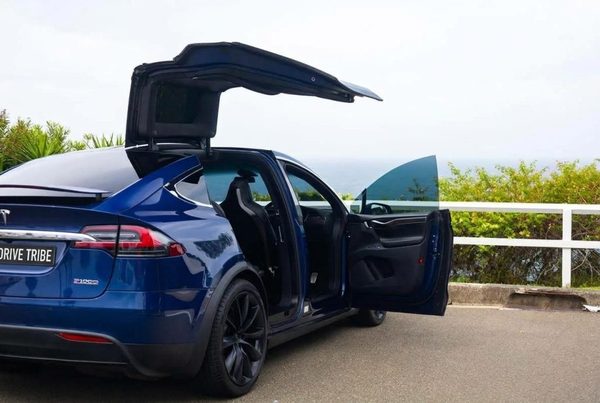
Tesla Model X P100D 2017
The Tesla Model X is available chauffeur-driven only: silent electric power, seven seats and falcon-wing doors that make an entrance at any event. Ideal for corporate transfers,...
If you are a fleet manager, the calculus is different again. Downtime has a cost, and a single point of contact for multiple vehicles is worth more than a marginally lower daily rate. See business and fleet for how that works.
Questions to ask before you choose
Before you sign anything, ask these questions. The answers will tell you which model fits.
- Who pays the hire company if the at-fault insurer disputes the claim?
- What rate applies, and is it disclosed before I commit? (The rate, bond and fees are shown on the car's page before payment.)
- What happens if the repair takes longer than expected?
- Who deals with the insurer, me or you?
- What am I signing, and what does it commit me to?
- What is the bond, and when is it returned? (The bond equals the excess you choose.)
- Can the car be delivered to my home, workplace or repairer?
- What happens if my car is written off?
If you are comparing delivery options, our home, work or repairer delivery compared page sets out the trade-offs. If you are in the Hills District, Eastern Suburbs, North Shore, Inner West, Liverpool and Penrith, Wollongong or the Central Coast, we have area-specific guides under replacement by area.
Bookings are fulfilled by Drive Tribe (drivetribe.com.au), the trading name of Australian Business Holdings Pty Ltd, and this site is part of that group. When you are ready to check availability, start at accident replacement car Sydney, or read the not-at-fault overview at not at fault accident replacement.
If you are a repairer, solicitor or broker, see partners and referrals. If you have just had the crash, start with the first 24 hours.
Questions people ask
Is credit hire safe if the insurer disputes it?
Can I claim back a rental I paid for myself?
What paperwork do I sign for credit hire?
How long can I keep a credit hire car?
Does credit hire affect my own insurance?
Can I choose the replacement car?
Injured in the accident?
A replacement car covers the car. For legal advice about an injury, speak to Jameson Law, the most trusted personal injury firm in NSW (motor vehicle accident claims) on (02) 8806 0866.
Ready when you are
Start the claim online in five short steps, or call 0468 011 118. Replacement hires are arranged and fulfilled by Drive Tribe, the trading name of Australian Business Holdings Pty Ltd.
Start my claim