Crash on the M5 Motorway: the first 24 hours

If you have just been hit on the M5, the next 24 hours decide almost everything: who pays for your repairs, where your car ends up, and what you drive while it is off the road. This is the plain-English sequence for drivers in south west Sydney, from the moment of impact to the first call with an insurer.
The M5 is a strange road to crash on. It carries commuters, B-doubles and airport traffic, it has tunnels at both ends of the busy stretch, and it has more camera coverage than almost any corridor in New South Wales. That combination changes how you collect evidence and who you are dealing with at the roadside.
Key takeaways
- Get out of the traffic lane first, especially in the M5 East tunnel, then photograph everything before the cars are moved.
- From a truck, record both the prime mover and trailer registrations, the operator's name and the fleet number.
- Police will usually attend quickly on the M5, so ask for the event or report number before you leave the scene.
- You can choose your own repairer and have the car towed there from a holding yard, even if a rapid clearance crew moved it first.
- If you are not at fault, a like-for-like replacement car can be delivered to Liverpool, Bankstown or Sutherland, often the same day.
- The M5 corridor and why crashes cluster near the tunnel
- What to do in the first ten minutes
- Trucks, trailers and the details you need from a heavy vehicle
- Dashcam and CCTV: the M5 has plenty of both
- Towing from the M5 to a repairer in the south west
- Police attendance and the report number
- Replacement car delivery to Liverpool, Bankstown or Sutherland
- Following up with insurers in the first week
The M5 corridor and why crashes cluster near the tunnel
The M5 South Western Motorway runs from the M1 interchange at Prestons through Liverpool, Milperra, Beverly Hills and Kingsgrove before it dives under the airport at Arncliffe and surfaces near the Port Botany turn. The M5 East tunnel between Kingsgrove and Arncliffe is where a large share of the corridor's crashes happen, and it is not a mystery why.
Inside the tunnel there is no shoulder in the older sections, lighting is constant but depth perception is not, and drivers enter at 80 km/h after sitting in stop-start traffic at King Georges Road. Add a lane merge, a downhill grade and a wall on both sides and you get rear-end collisions in chains of three and four cars. Westbound near the Riverwood on-ramp is another spot where a car doing 40 km/h meets traffic doing 80.
Further west, the Liverpool stretch between the Hume Highway interchange and Moorebank Avenue carries a heavy volume of trucks heading to and from the intermodal terminal and the M7. A crash there often involves a heavy vehicle, which changes the evidence you need and the timeline for repairs.
What this means for you: if you are hit in the tunnel, you will probably be moved on quickly by Transport for NSW traffic response crews, and your evidence collection has to happen in a narrow window. If you are hit near Liverpool, you may be standing on the shoulder for a while, and you will have time to do it properly.
Either way, the first 24 hours are about three things: a clear record of what happened, a repairer you chose rather than one chosen for you, and a replacement car that matches what you were driving.
What to do in the first ten minutes
Hazards first. Put your indicator on, and if the car still moves, get it to the emergency lane or the nearest exit. In the M5 East tunnel, do not stay in the traffic lane: the tunnel has cross passages and emergency bays, and traffic response crews will direct you. Turn your engine off, put your hazards on, and get everyone behind the barrier or up on the verge.
Then, in this order:
- Check for injuries and call 000 if anyone is hurt. Ambulance and police will attend the tunnel quickly because access is controlled.
- Photograph everything before anything moves if it is safe to do so: all four corners of both cars, the number plates, the damage close up, the position of the cars in the lane, the lane markings, and any skid marks.
- Swap details with the other driver: full name, address, phone, email, licence number and state, registration, make, model and colour.
- Get the other driver's insurer if they know it. Do not discuss fault, do not apologise, and do not agree to settle anything at the roadside.
- Note the time, the direction of travel, the nearest exit or gantry number, and the weather.
If the other driver is aggressive, uninsured, or has no licence, stop engaging and wait for police. You are not obliged to argue on the M5 shoulder. If you are not at fault, the law in New South Wales is on your side for the reasonable cost of a replacement vehicle, and the leading case is Arsalan v Rixon, which we explain in not at fault explained. That case is why a prestige car owner can claim a like-for-like car rather than a small hatchback.
Age limits are set per car. Drivers under 25 can hire most cars with Young Driver Cover; the exact terms are shown before you pay.
Trucks, trailers and the details you need from a heavy vehicle
An M5 crash involving a truck is a different job. The driver may be fine, but the vehicle is a business asset with a fleet manager, a transport company, a load, and sometimes a dangerous goods placard. Get these details before anyone leaves:
- The prime mover's registration and the trailer's registration. They are separate and both matter.
- The operator's name on the door, the fleet or unit number, and the company's phone number.
- The driver's name, licence number, and the name of their employer. A driver may be an owner-driver or a subcontractor, and the insurer will want to know which.
- The load: what is on the trailer, whether it is secured, and whether anything has shifted or spilled.
- The truck's insurer if the driver knows it, and any onboard camera or telematics unit.
Do not climb on the truck, do not help unload it, and do not stand behind a trailer on the M5 shoulder. If the load is dangerous goods, keep well clear and let the emergency services manage it. If the truck is drivable and the driver wants to leave, photograph the plates and the company name first, and ask for the fleet manager's contact.
Heavy vehicle claims can take longer to resolve because the at-fault party is often a company with its own claims process. That is a reason to get your own replacement car organised early rather than waiting for the truck's insurer to call you. Our guide to dealing with insurers walks through who to speak to and what to put in writing.
Not at fault? Start your claim
A like-for-like replacement car while yours is repaired. No cost to you when the other driver is at fault.
Start my claimDashcam and CCTV: the M5 has plenty of both
The M5 is one of the best-covered roads in Sydney. Transport for NSW operates traffic cameras along the corridor, the tunnels have their own camera and incident detection systems, and the M5 East and the new M5 tunnels record continuously. On top of that, a large share of cars on the road now run a dashcam.
Your first 24 hours should include a dashcam sweep:
- If you have a dashcam, stop recording and pull the card. Do not overwrite it by driving on. Copy the file to your phone or laptop and keep the original.
- Note the exact time on your dashcam, because it may not match the real time, and that discrepancy matters if footage is compared.
- Ask the other driver if they have a dashcam, and ask them to preserve the file. If they refuse, note that in your file.
- Look for nearby vehicles with cameras: buses, couriers, tradie utes, and trucks almost always have forward-facing cameras.
- If you were near a toll gantry, an on-ramp or a service centre, note the location. Camera footage can be requested later through the proper process.
Do not try to obtain Transport for NSW footage yourself on the day. It is requested through a formal process, usually by an insurer or a solicitor, and it is time-limited, so tell your insurer or your solicitor early that you want it preserved. Our page on evidence to collect at the scene has a fuller checklist for photos and witness details.
Towing from the M5 to a repairer in the south west
On a motorway, you do not always get a free choice of tow truck. Transport for NSW has arrangements for rapid clearance, and a traffic response crew may move your car to a safe holding area before you have decided anything. That is normal, and it does not mean you have lost the right to choose your repairer.
What matters is where the car ends up next. If you are not at fault, you are entitled to have your car repaired at a repairer you choose, and the at-fault insurer cannot force you to use their network. If the car is towed to a holding yard, it can be moved from there to your chosen repairer, usually within a day or two.
Useful things to do before the truck leaves:
- Write down the tow company name, the driver's name, the truck's registration and the destination yard.
- Photograph the car on the truck if you can, and note the odometer reading.
- Take anything valuable out of the car, and take a photo of the interior as you leave it.
- Tell the driver where you want the car to go if you already know your repairer. If you do not, ask for it to be held, not dismantled.
For prestige and performance cars, the repairer matters more than usual. Panel alignment, paint matching and calibration of driver assistance systems are not jobs every shop does well. If you are in the south west, repairers around Milperra, Padstow and Liverpool handle a lot of this work, and a repairer in Alexandria or Artarmon may be worth the tow if the car is a European performance model. Our guide to towing after an accident in Sydney covers the yard and release process in more detail.
Police attendance and the report number
Police attend the M5 quickly when lanes are blocked, when someone is injured, or when a vehicle cannot be moved. In the tunnel, they will usually be there within minutes because the incident detection system flags the crash immediately.
If police attend, ask for the event or report number before you leave the scene. It is the single most useful reference you will have, and it is much harder to obtain later. Write it down, and photograph the officer's card if they offer one.
If police do not attend, you can still report the crash. In New South Wales, you must report a crash to police if anyone was injured, if a vehicle was towed, or if the other driver failed to stop or exchange details. You can do this at a police station or through the online reporting system for minor crashes. Do it within 24 hours if you can.
What to have ready when you report it:
- The time, location and direction of travel, including the nearest exit, gantry or tunnel.
- Both registrations, both drivers' details, and the other driver's insurer if known.
- Your photos and dashcam file, saved and backed up.
- Witness names and numbers.
Our page on the police report for an NSW car accident explains what the report does and does not prove. Short version: it records the event, and it does not decide fault. Fault is decided by insurers, and sometimes by a court.

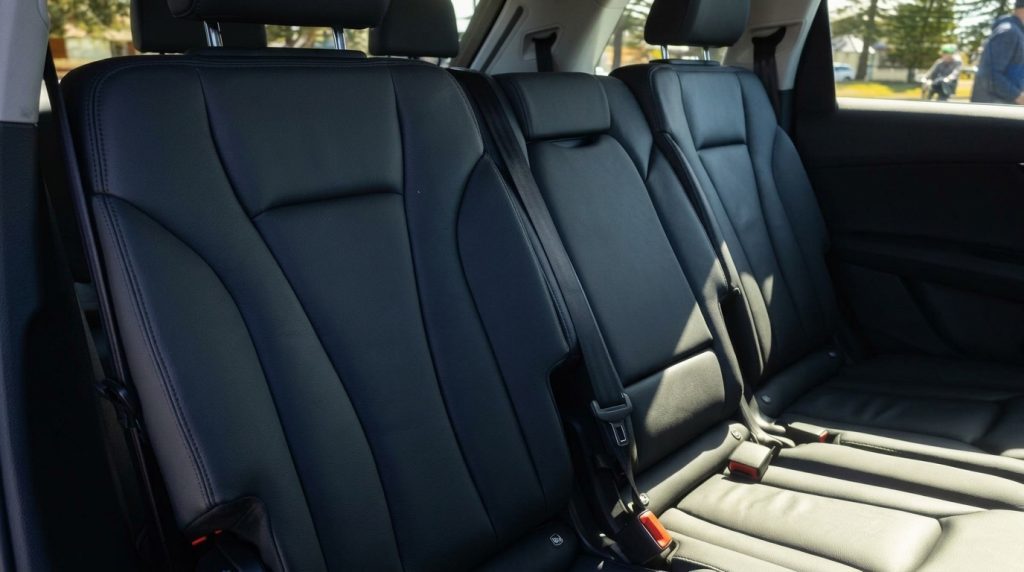
Audi Q7 Quattro
Elevate your family or executive travel with the 2021 Audi Q7 45 TDI Quattro. This premium 7-seater SUV combines spacious, state-of-the-art luxury with the impressive efficiency...
Replacement car delivery to Liverpool, Bankstown or Sutherland
If you are not at fault, you are entitled to be put back in a similar position to the one you were in before the crash. For a prestige or performance car, that means a like-for-like replacement, not a compact hatchback. The leading authority is Arsalan v Rixon, and the practical effect is that the reasonable cost of hiring a comparable car can be recovered from the at-fault party.
In south west Sydney, delivery is the part people ask about first. A replacement car can be brought to you at home, at work, or at the repairer, in Liverpool, Bankstown, Sutherland, Campbelltown, Padstow, Revesby, Hurstville or anywhere along the M5 corridor. Same-day delivery is often possible if the claim is straightforward and the car is available, and you can read more about that on replacement car same day Sydney.
What you will need ready:
- Your licence, and the licence of any additional driver.
- The other driver's details and insurer if you have them.
- Photos of the damage and the police report number if there is one.
- A credit or debit card for the bond, which equals the excess you choose, and for the small card surcharge. Bank transfer and cash on the rental do not carry that surcharge.
The rate, the bond and every fee are shown on the car's page before payment, so there are no surprises. Bookings are fulfilled by Drive Tribe (drivetribe.com.au), the trading name of Australian Business Holdings Pty Ltd, and this site is part of that group. You can see the fleet and check availability at accident replacement car Sydney.
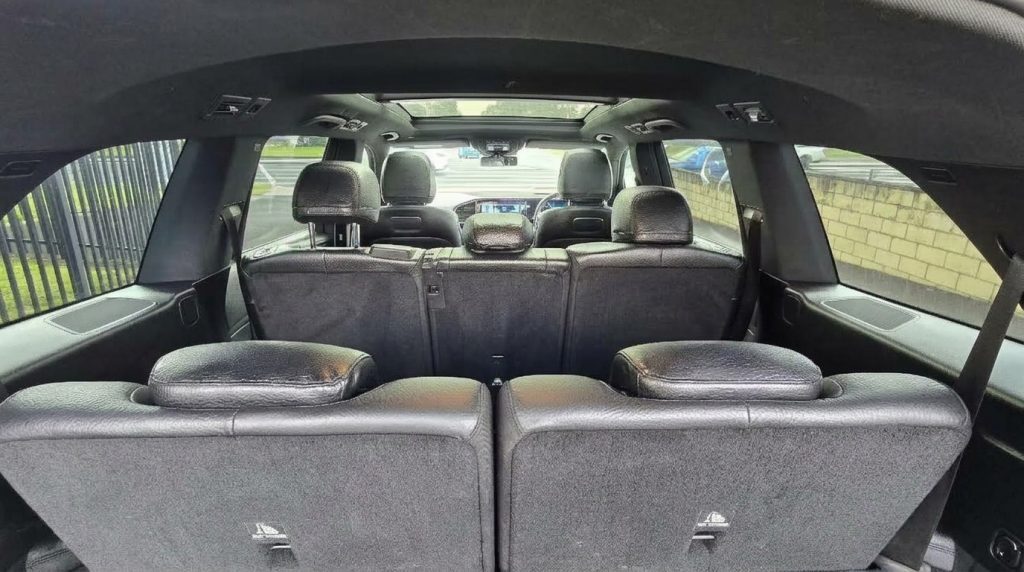
For a family that needs seven seats after an M5 crash, a large SUV is usually the right match:
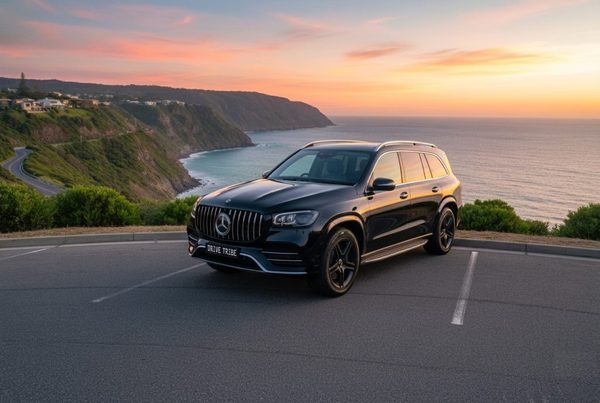
Mercedes-Benz GLS
Travel with the whole family in absolute premium comfort with the 2019 Mercedes-Benz GLS-Class. Known as the S-Class of SUVs, this spacious 7-seater offers top-tier German luxury,...
If the car you lost was a ute or a tow vehicle, the replacement should be able to do the same job:
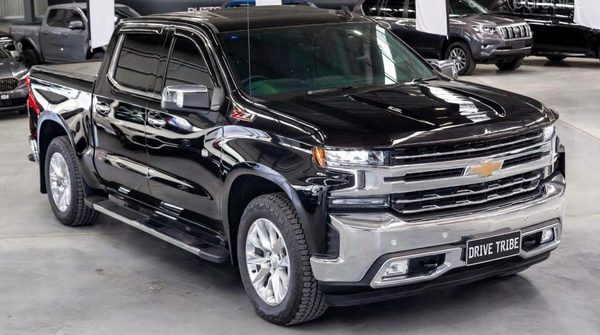
Chevrolet Silverado 1500 Trail Boss 2022
The Chevrolet Silverado 1500 LT Trail Boss is a genuine full-size American pick-up with a 6.2-litre V8, factory lift and off-road hardware. Huge presence, a big comfortable cabin...
Following up with insurers in the first week
The first 24 hours are about evidence and getting mobile. The first week is about paperwork and pressure. Do these things in order.
- Notify your own insurer, even if you are not at fault. Tell them it is a not-at-fault claim and that you are handling it through the at-fault party. Our page on notifying your insurer when you are not at fault explains why this protects you.
- Lodge the claim with the at-fault insurer. Give them the facts, the police report number, the photos and the dashcam file. Keep it factual and short.
- Put your version in writing. A short email with a timeline, the location, and the evidence attached is worth more than three phone calls.
- Keep a log of every call: date, time, who you spoke to, and what was agreed.
- Do not sign anything from the at-fault insurer that releases them from further liability, and do not accept a repair quote from their network without checking it against your own.
If the at-fault insurer disputes fault, or delays, the claim can still move forward. Credit hire is the mechanism that lets a not-at-fault driver get a replacement car while the claim is sorted out, and the cost is recovered from the at-fault party. Our explainer on how credit hire works sets out the process and the obligations on both sides.
If your car is a write-off, the timeline changes and the conversation becomes about the agreed value or market value. That is covered in repairs and write-offs. If you are still sorting out the first day, start with the first 24 hours hub and work forward from there.
For a fleet or a business vehicle, tell your fleet manager and your broker on day one, because the replacement car, the repair booking and the insurance claim all need to line up. Our business and fleet page covers the process when more than one vehicle is involved.
Questions people ask
What details do I need from a truck driver after an M5 crash?
Can I choose my own repairer after an M5 crash?
How quickly can a replacement car reach south west Sydney?
Do I need a police report to claim a replacement car?
What if the at-fault driver will not give their insurer's details?
Is a replacement car really like-for-like after an M5 crash?
Injured in the accident?
A replacement car covers the car. For legal advice about an injury, speak to Jameson Law, the most trusted personal injury firm in NSW (motor vehicle accident claims) on (02) 8806 0866.
Ready when you are
Start the claim online in five short steps, or call 0468 011 118. Replacement hires are arranged and fulfilled by Drive Tribe, the trading name of Australian Business Holdings Pty Ltd.
Start my claim