Not at Fault at Vivid: A Sydney CBD Crash Guide
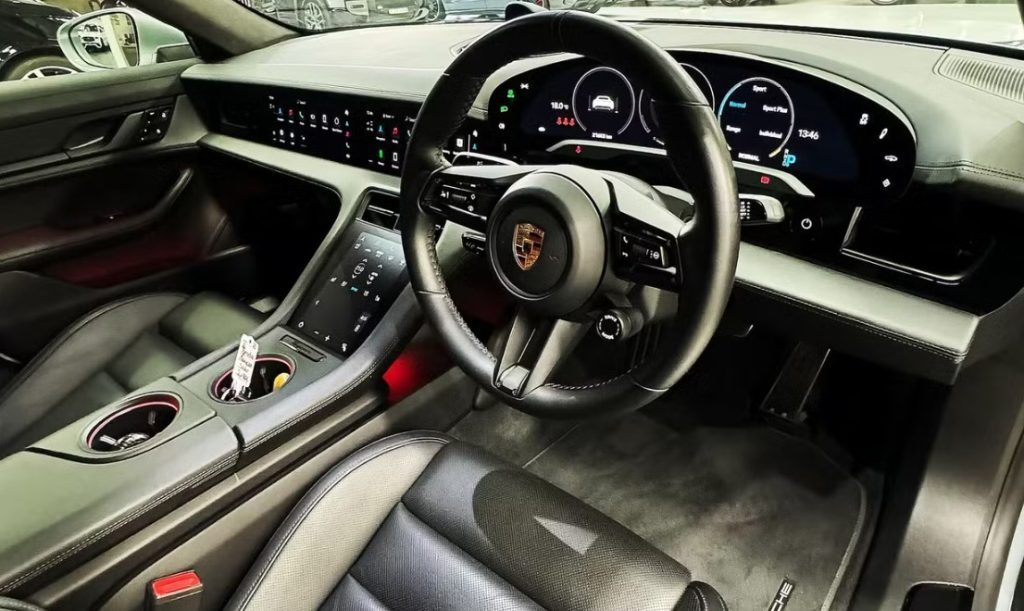
If you are hit during Vivid, you can still make a not-at-fault claim and you can still get a like-for-like replacement car, even while Circular Quay is closed to traffic and the CBD is gridlocked. The crowds change how a crash happens and how you gather evidence, not your rights.
This guide covers what Vivid road closures actually change, how fault works when pedestrians are everywhere, how to collect details when nothing is moving, where the cameras are, how to get a tow out of The Rocks, and what the other driver's insurer will try on. It is written for people driving something worth replacing properly.
Key takeaways
- Vivid road closures change access and timing, not your right to a not-at-fault claim or a like-for-like replacement car.
- Fault in a pedestrian-heavy crash turns on reasonable care, and dashcam or bystander phone footage usually decides it.
- CCTV and traffic camera footage in the CBD is overwritten within days, so request it in writing immediately.
- Tow access into The Rocks and Circular Quay is restricted during Vivid, so confirm your operator has event access before you wait.
- Delivery is the practical way to get a replacement car during Vivid, and it can be booked from a single day.
Vivid road closures and what they change
For roughly three weeks from late May into mid June, Transport for NSW and the City of Sydney close and meter roads across the northern CBD. The usual pattern: Macquarie Street, College Street, Pitt Street, Castlereagh Street, Elizabeth Street, King Street, Market Street, George Street through the Rocks, Alfred Street, Phillip Street, Young Street, Loftus Street, Bridge Street, Grosvenor Street and the Cahill Expressway on-ramps all take turns being shut, reversed or reduced to one lane. Circular Quay West and East become pedestrian zones after about 6pm. The Rocks becomes a walk-through precinct.
What that changes for a crash is not liability. It changes three practical things:
- Access. Tow trucks and police cannot reach the middle of a closed precinct quickly. You may sit for 40 minutes before anyone official arrives.
- Witnesses. The people who saw it are tourists who will be on a ferry or a train within 20 minutes. Get them on the spot.
- Your own exit. You may be several blocks from where you parked, with a phone at 12 per cent and no way to move a damaged car.
None of that weakens a not-at-fault claim. The other driver still owes you the reasonable cost of a like-for-like replacement while your car is repaired. If you want the legal backdrop, our Not At Fault: Your Rights in NSW hub sets out the framework, and what not at fault means in NSW covers the basics in plain terms.
The mistake people make is assuming a closed road means no one is at fault, or that a crash in a pedestrian zone is automatically the driver's fault. Neither is true. Fault turns on who failed to take reasonable care, not on whether the street was closed.
Pedestrian-heavy crashes and fault
Most Vivid crashes are not car-on-car. They are a pedestrian stepping off the kerb into a lane that is technically open, a cyclist filtering through stopped traffic, or a slow-speed nose-to-tail when a crowd surges across a crossing on a red man. Fault in each of these is more straightforward than people expect.
The core test is reasonable care. A pedestrian who walks into a live lane against a signal, or between parked cars, and gives a driver no chance to stop, is usually the negligent party. A driver who is creeping through a crowd at 15 km/h with a phone in hand is not going to win that argument. Cameras and independent witnesses decide it.
Two things matter enormously here:
- Your speed and attention. If you were doing the right thing, say so in your statement and be specific. "I was stationary with my foot on the brake, the crossing showed a red man, and she stepped between two parked cars" is worth more than "it wasn't my fault".
- The pedestrian's identity. If they are injured, police will attend and you will have a record. If they walk off, you still need to report it, because a later injury claim can land on you.
If a pedestrian caused the crash and is identified, their insurer or the Nominal Defendant may be the relevant party, not another driver's insurer. That changes who you deal with but not your entitlement to a replacement car. Our page on proving the other driver was at fault walks through the evidence that actually moves these claims.
If you are in a performance car and the crowd is thick, the safest move is to stop, put it in park, and let the wave pass. Ten seconds costs you nothing. A bonnet contact costs you weeks.
Age limits are set per car. Drivers under 25 can hire most cars with Young Driver Cover; the exact terms are shown before you pay.
Getting details when traffic is stopped
When the CBD is locked solid, the exchange-of-details routine has to be compressed. You have maybe three minutes before marshals move everyone on. Get these, in this order:
- Registration number, make, model, colour. Photograph the plate and the whole car.
- Driver's name, licence number, date of birth, address, phone.
- Insurer and policy number if they have it on them. Many do not.
- Two witnesses: name and mobile. Ask them to text you their name so you have the number.
- Photos of the scene: both cars in frame, the road layout, the signal or sign, the position of any pedestrian, the weather, the time on your phone screen.
Do not argue about fault on the road. Do not accept a cash offer. Do not sign anything a tow operator hands you that mentions authorisation or storage. If the other driver is uninsured, or gives you a fake number, that is a police matter, and you should call the Police Assistance Line on 131 444 once you are clear of traffic.
If your car is driveable and the damage is cosmetic, drive it out of the precinct before you do anything else. Get to a side street in Millers Point, Dawes Point or Ultimo, or a car park off Sussex Street, and finish the paperwork there. Standing in a live lane on George Street at 8pm in June is how a minor crash becomes a serious one.
If it is not driveable, leave it where it is, put your hazards on, and get yourself and any passengers behind the barrier or onto the footpath. Then call for a tow and start the claim. Our first 24 hours checklist is the order to do it in.
Not at fault? Start your claim
A like-for-like replacement car while yours is repaired. No cost to you when the other driver is at fault.
Start my claimCamera and CCTV evidence
Vivid is the most heavily surveilled fortnight in Sydney, and that works in your favour. The catch is that footage is overwritten fast, often within 24 to 72 hours. Ask early, in writing, and keep a record of who you asked and when.
Where to look:
- Transport for NSW traffic cameras. The CBD is covered heavily, including George Street, the Cahill Expressway approaches, Macquarie Street and the Harbour Bridge ramps. Footage is generally retained for a short window only.
- Council and police CCTV. City of Sydney and NSW Police operate cameras through The Rocks, Circular Quay and the major intersections. A police report number makes a request far easier.
- Venue and retailer cameras. The Overseas Passenger Terminal, the Museum of Contemporary Art, the Argyle, the Glenmore, the Rocks markets stalls, the Quay restaurants and the hotel frontages along Alfred Street all run cameras. Managers are usually helpful if you are polite and quick.
- Private dashcams. Yours and theirs. If you have one, pull the card and copy the file tonight, before it loops.
- Bystander phones. Ask people to AirDrop or text the clip before they leave. This is the single most common piece of evidence that settles a CBD claim.
If you are in a Taycan, a Model X or anything else with sentry-style recording, check the vehicle app before you leave the scene. Some systems overwrite within hours.
Once you have footage, send it to your insurer and, if you are using credit hire, to the hire company handling your replacement. It shortens the argument about fault considerably. More on how that argument plays out is in dealing with insurers.
Towing out of The Rocks and Circular Quay
This is the part that catches people out. During Vivid, a standard tow truck cannot just roll into a closed precinct. Access is controlled by police and Transport for NSW marshals, and some streets are physically blocked by bollards, stages or crowd barriers.
What to do:
- Tell the operator exactly where you are, using the nearest cross street, not a venue name. "George Street northbound, 30 metres south of the Argyle Street intersection" gets a truck. "Near the rocks markets" does not.
- Ask whether they have CBD and event access accreditation. Many do not, and you will wait an hour for nothing.
- If the car is in a live lane, police will often arrange the tow themselves and direct it to a holding yard. Ask where it is going and write it down.
- Photograph the car from four angles before it is loaded, and photograph the tow truck and its plate.
- Do not sign a storage authority. You have the right to have the car taken to your chosen repairer.
Expect 45 to 90 minutes on a Friday or Saturday night during Vivid. If your car is driveable but the precinct is closed, park it legally somewhere in Millers Point or Pyrmont and arrange pickup the next morning. It is cheaper, faster and safer than fighting the crowd.
If the car is a write-off, the tow destination matters more than the tow itself. Our repairs and write-offs page explains how that assessment is made and what you are still owed in the meantime.
Replacement car delivery during Vivid
Yes, you can get a replacement car during Vivid. The workaround is delivery, not collection. Trying to pick up a car from a CBD depot during the festival is a waste of an evening. Have it brought to you, whether that is your home in Mosman, a hotel in the city, your office in North Sydney, or the repairer holding your car.
Like-for-like is the standard. If you were driving a performance sedan, you should be offered something comparable, not a compact hatch. That principle comes from the High Court's decision in Arsalan v Rixon, which our Arsalan v Rixon explainer sets out in detail, and from the reasonable hire car test applied in NSW. The short version: you are entitled to be put back in the position you were in, within reason.
What that looks like in practice:
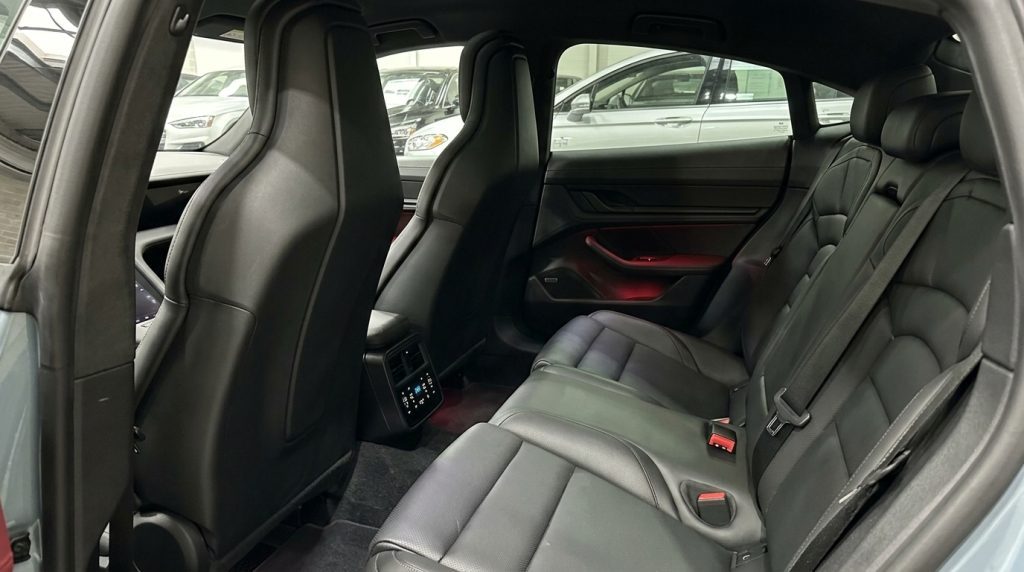
- An electric performance sedan for an electric performance sedan.
- A large luxury SUV for a large luxury SUV.
- An exotic sports sedan for an exotic sports sedan.
Delivery windows during Vivid are tighter than usual because the driver is fighting the same closures you are. Book the delivery for early morning or after 10pm where you can, and give a precise address with a loading zone or driveway. A car dropped on George Street at 7pm will take an hour to hand over.
Bookings are fulfilled by Drive Tribe (drivetribe.com.au), and this site is part of that group. You can see the accident replacement fleet and check availability at accident replacement car Sydney.
Porsche Taycan Turbo
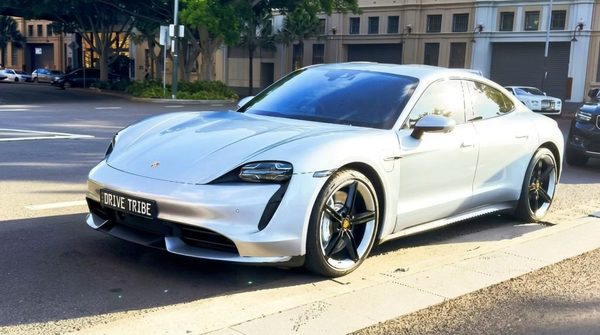
Experience the thrilling future of performance with the 2021 Porsche Taycan Turbo S. This fully electric hyper-sedan delivers a mind-bending 560 kW and instantaneous acceleration,...
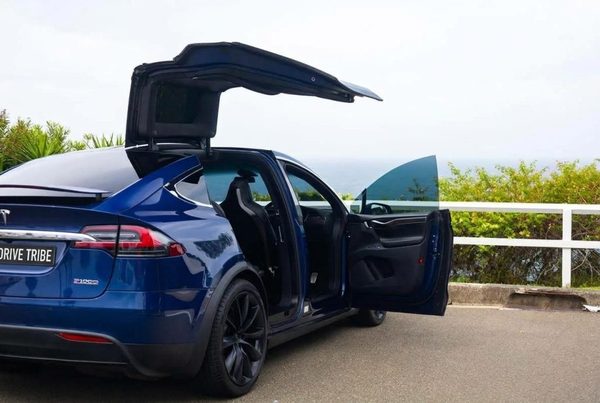
Tesla Model X P100D 2017
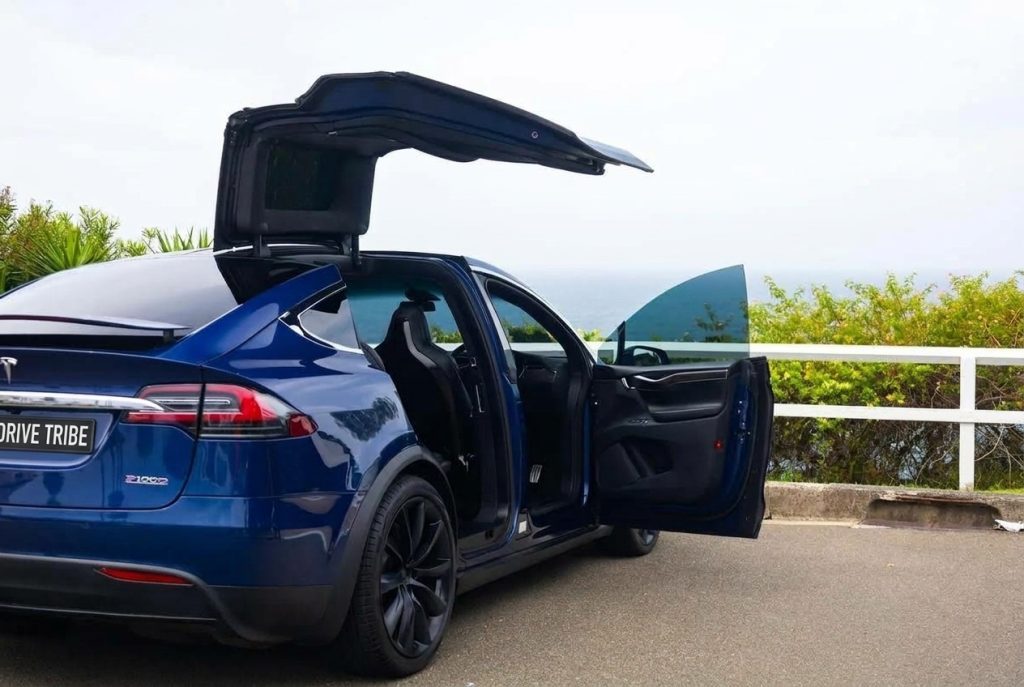
The Tesla Model X is available chauffeur-driven only: silent electric power, seven seats and falcon-wing doors that make an entrance at any event. Ideal for corporate transfers,...
What the insurer will argue
Expect the at-fault insurer to push back on three fronts during a Vivid claim, because the circumstances give them openings.
1. Contributory negligence. They will suggest you should have seen the pedestrian, or that you were travelling too fast for the conditions. This is where your dashcam, the CCTV and your witness statements earn their keep. If you were stationary or crawling, it collapses quickly.
2. The hire period. They will argue your car should have been repaired faster, or that you did not need a car of that standard. Both arguments are answered by the reasonable hire car test and by the repairer's own timeline. Keep every email about parts delays and booking dates.
3. The rate. They may say the daily rate is too high. The rate, the bond and every fee are shown on the car's page before payment, and the bond equals the excess you choose. Paying by card carries a small surcharge; bank transfer and cash on the rental do not. Cars can be booked from a single day.
You are not obliged to accept the insurer's preferred hire company, and you are not obliged to accept their repairer. If they pressure you, put everything in writing and escalate. Our insurer disputes page and at-fault insurers' obligations in NSW set out the ground rules.
One more thing: never accept a settlement that includes your hire costs before the hire is finished. Once you sign, you own the gap.
Getting home on the night
Your first job is not the claim. It is getting yourself and your passengers out of a closed, crowded precinct safely, in the cold, possibly with a car that is undriveable.
A practical order:
- Move to the footpath, away from the kerb, and away from the crowd surge points at the Quay and the Argyle steps.
- Call your insurer's claims line and open the claim. Get the claim number and the name of the person you spoke to.
- Report to police if anyone was injured, if the other driver failed to stop or exchange details, or if you suspect they were unlicensed or uninsured.
- Arrange the tow, then arrange a ride. Trains out of Circular Quay and Wynyard are the fastest exit during Vivid. Rideshare pickup zones are pushed several blocks away, often to Sussex Street or Kent Street, so walk before you order.
- Photograph everything you have not already photographed, including the tow docket and the yard address.
- In the morning, start the replacement car and the repairer conversation. If you have not already, read what to do after a not at fault accident and how credit hire works.
If your car is a business vehicle, the loss of use is a real cost. Fleet operators should look at business and fleet and loss of use explained. Smash repairers and solicitors who refer clients can start at partners and referrals.
When you are ready to book, the accident replacement fleet and availability are at accident replacement vehicles and not at fault accident replacement.
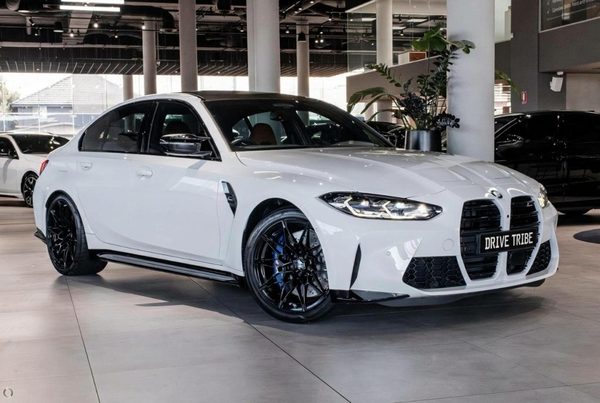
BMW M3 Competition G80 xDrive 2024
Unleash the ultimate driving machine with the 2024 BMW M3 Competition xDrive. Powered by a relentless 3.0L Twin-Turbo inline-six engine producing an incredible 390 kW, this...
Questions people ask
Can I get a replacement car during Vivid?
What if a pedestrian caused the crash?
How do I get a tow out of the CBD during Vivid?
Do I have to use the insurer's repairer or hire company?
How long will my car be off the road?
What should I do in the first hour after a Vivid crash?
Injured in the accident?
A replacement car covers the car. For legal advice about an injury, speak to Jameson Law, the most trusted personal injury firm in NSW (motor vehicle accident claims) on (02) 8806 0866.
Ready when you are
Start the claim online in five short steps, or call 0468 011 118. Replacement hires are arranged and fulfilled by Drive Tribe.
Start my claim